
At first glance, the choice between knitted and ribbed tank tops might seem purely aesthetic—after all, both styles drape over the shoulders, offer breathability, and suit warm weather. But dig deeper, and you’ll find that the construction of the fabric influences more than just appearance. From stretch and recovery to moisture management and longevity, the way a tank top is knitted can significantly impact how it feels, performs, and ages. Understanding these differences helps you make smarter wardrobe choices, especially when balancing comfort, function, and personal style.
The Basics: What Defines Knitted vs Ribbed Fabric?
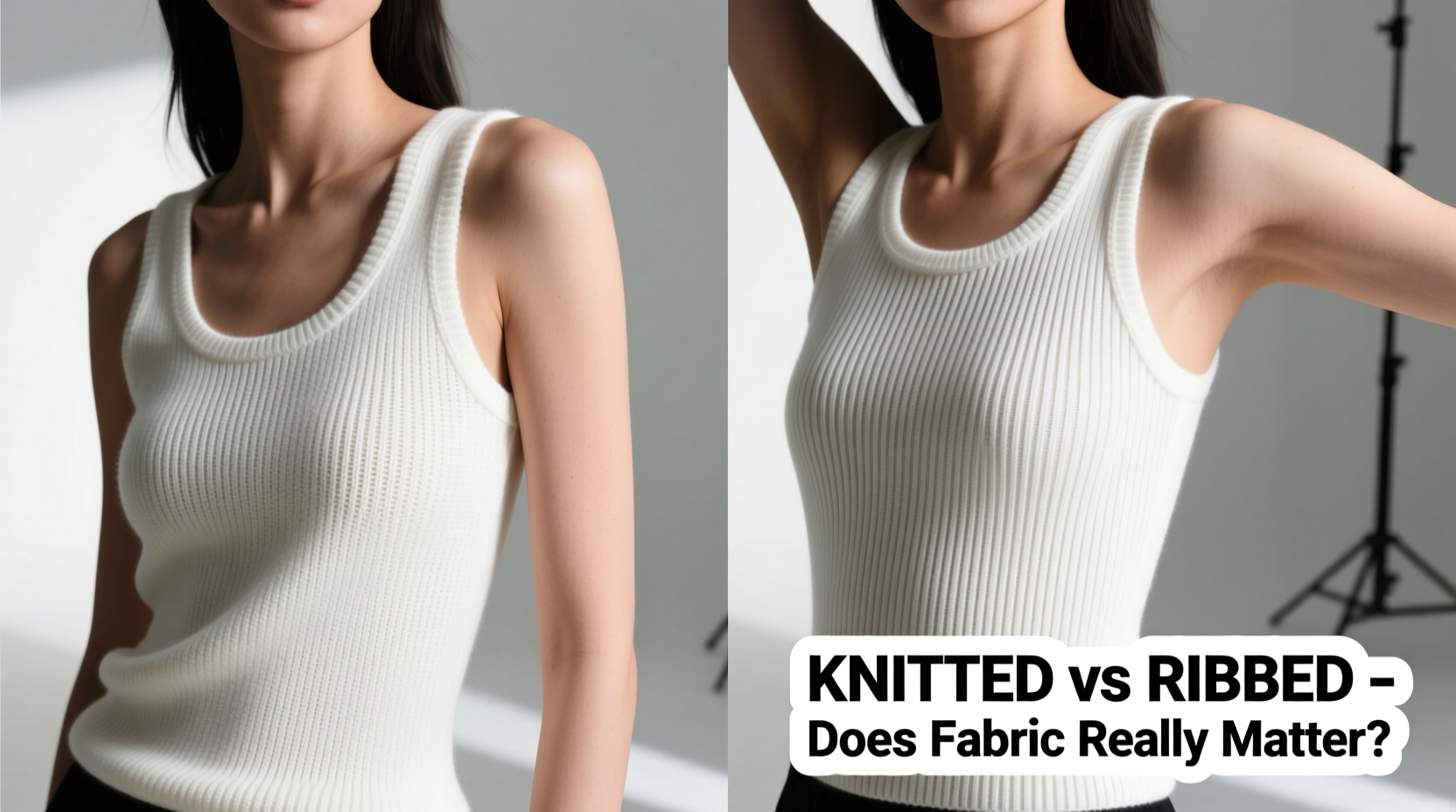
All tank tops labeled as “knit” are made from interlooped yarns, but not all knits are created equal. The term “knitted” in fashion often refers broadly to single-knit jersey fabrics, while “ribbed” describes a specific stitch pattern within the knitting process.
- Plain knitted (jersey) tanks: Made with a simple knit stitch, usually on fine-gauge machines. These fabrics have moderate stretch, typically only in one direction (width), and a smooth, flat surface.
- Ribbed tanks: Constructed using alternating knit and purl stitches, forming vertical ridges. This structure creates two-way stretch (both horizontally and vertically) and greater elasticity.
The visual distinction—smooth versus textured—is just the beginning. The structural variance affects everything from silhouette retention to how the garment drapes on different body types.
Performance Differences: Comfort, Fit, and Functionality
Fabric construction directly influences wearability. While ribbed tanks may appear tighter or more structured, their functional benefits go beyond texture.
Stretch and Recovery
Ribbed knits excel in elasticity. The alternating stitch pattern allows the fabric to stretch and snap back into place, making ribbed tanks less likely to lose shape after repeated wear or washing. In contrast, plain knits can sag over time, particularly around the neckline and armholes, because they lack the same level of rebound resilience.
Breathability and Climate Response
Despite common assumptions, ribbed fabric isn’t inherently less breathable. The raised texture actually increases air circulation slightly by creating micro-gaps between the skin and fabric. However, tightly spun ribbed cotton may feel warmer than a loosely knit jersey in humid conditions. For hot climates, opt for lightweight ribbed blends with linen or TENCEL™ for enhanced airflow.
Drape and Silhouette
Plain knits tend to drape softly, sometimes clinging or twisting with movement. Ribbed fabrics maintain a more consistent form due to their inherent structure. This makes them ideal for tailored layering or when a clean, streamlined look is desired.
“Ribbed knits offer superior shape retention. They’re engineered to move with the body without distorting—this is why high-end basics often use fine ribbing.” — Lena Patel, Textile Designer at Atelier Thread Co.
Material Quality and Longevity: What Wears Better?
It’s not just about how a tank looks on day one, but how it holds up after months of wear. Fabric structure plays a critical role in durability.
| Feature | Plain Knit Tank | Ribbed Tank |
|---|---|---|
| Stretch Recovery | Moderate – prone to neck stretching | High – rebounds well after stress |
| Pilling Resistance | Lower – smooth surface snags easily | Higher – texture disperses friction |
| Wash Durability | Good, but shape degrades faster | Excellent – maintains integrity longer |
| Neckline Stability | Often stretches out | Holds shape with proper care |
Over time, ribbed tanks generally outlast their plain-knit counterparts, especially when made from quality cotton or performance blends. That said, poor manufacturing—such as weak seams or low-twist yarns—can undermine even the best fabric structure.
Real Example: Office to Weekend Wear Test
A small informal trial followed two individuals wearing similar-colored tanks—one ribbed, one plain knit—for ten consecutive days across varied settings: office work, commuting, gym sessions, and casual outings. Both were washed every three wears using standard detergent.
By day eight, the plain-knit tank showed visible neck widening and minor pilling on the sides from bag straps. The ribbed version retained its original fit and showed no signs of distortion, despite identical use. The wearer of the ribbed tank noted it \"felt more secure throughout the day,\" especially during transitions between sitting and standing.
Style Considerations: When Does Fabric Affect Fashion?
While performance matters, aesthetics still drive many purchasing decisions. Here’s where the fabric truly shapes the look.
- Ribbed tanks create vertical lines that subtly elongate the torso. This makes them flattering for petite frames or those seeking a minimalist, elevated basic.
- Plain knits offer a softer, more relaxed vibe. They work well under open shirts or as sleepwear due to their fluid drape.
Ribbed textures also interact differently with light—creating shadows along the grooves—which adds depth to monochrome outfits. In contrast, plain knits reflect light uniformly, which can emphasize body contours more directly.
How to Choose the Right Tank for Your Needs: A Practical Checklist
Not every situation calls for the same fabric. Use this checklist to match your lifestyle with the right tank type:
- ✅ Need long-lasting shape? → Choose ribbed.
- ✅ Prioritize soft drape and flow? → Go for plain knit.
- ✅ Layering under structured garments? → Opt for ribbed for stability.
- ✅ Sensitive to texture? → Test hand-feel; some ribbing can be slightly abrasive.
- ✅ Washing frequently? → Select ribbed for better wash resilience.
- ✅ Seeking a vintage or slouchy aesthetic? → Plain knit offers that lived-in look.
- ✅ Want minimal cling? → Ribbed fabric tends to grip less during movement.
FAQ: Common Questions About Knit vs Ribbed Tanks
Do ribbed tanks shrink more than plain knits?
Not necessarily. Shrinkage depends more on fiber content and wash method than stitch type. However, ribbed fabrics may appear to shrink more noticeably because their stretched state returns to a tighter gauge. Pre-shrunk cotton or blended fibers minimize this effect in both types.
Can I machine wash ribbed tank tops?
Yes, but with care. Turn inside out, use cold water, and avoid high-spin cycles. Air drying is best to preserve elasticity. High heat in dryers can damage the yarn tension in ribbed structures, leading to permanent loss of stretch.
Are ribbed tanks more expensive? Why?
Often, yes. Ribbed knitting requires more precise machinery and tighter yarn control, increasing production costs. Additionally, higher-quality ribbed tanks use finer yarns and denser gauges, contributing to the price premium.
Final Thoughts: Beyond Appearance, Structure Matters
The debate between knitted and ribbed tank tops isn’t merely about looks—it’s about function meeting form. While plain knits offer effortless softness and drape, ribbed variants provide structure, resilience, and longevity. Choosing between them shouldn’t be based solely on trend or texture, but on how you intend to wear and care for the garment.
For everyday reliability, travel versatility, or professional layering, ribbed tanks often deliver superior value. But if you value a flowing, broken-in feel and don’t mind replacing basics more frequently, a well-made plain knit can be just as rewarding.
Ultimately, the fabric does make a difference—not in isolation, but in combination with cut, fiber, and craftsmanship. Recognizing this empowers you to build a capsule wardrobe that balances aesthetics with enduring comfort.




 浙公网安备
33010002000092号
浙公网安备
33010002000092号 浙B2-20120091-4
Comments
No comments yet. Why don't you start the discussion?