
When choosing a blanket, most people focus on fabric—cotton, wool, acrylic—but few consider the construction method behind it. The way fibers are assembled into a textile—whether knitted or woven—plays a crucial role in performance. From how warm a blanket feels to how long it lasts through washes and seasons, the weave makes more of a difference than many realize. Understanding the structural differences between knitted and woven blankets helps you make smarter choices based on comfort, climate, and longevity.
The Structural Difference Between Knit and Woven Fabrics
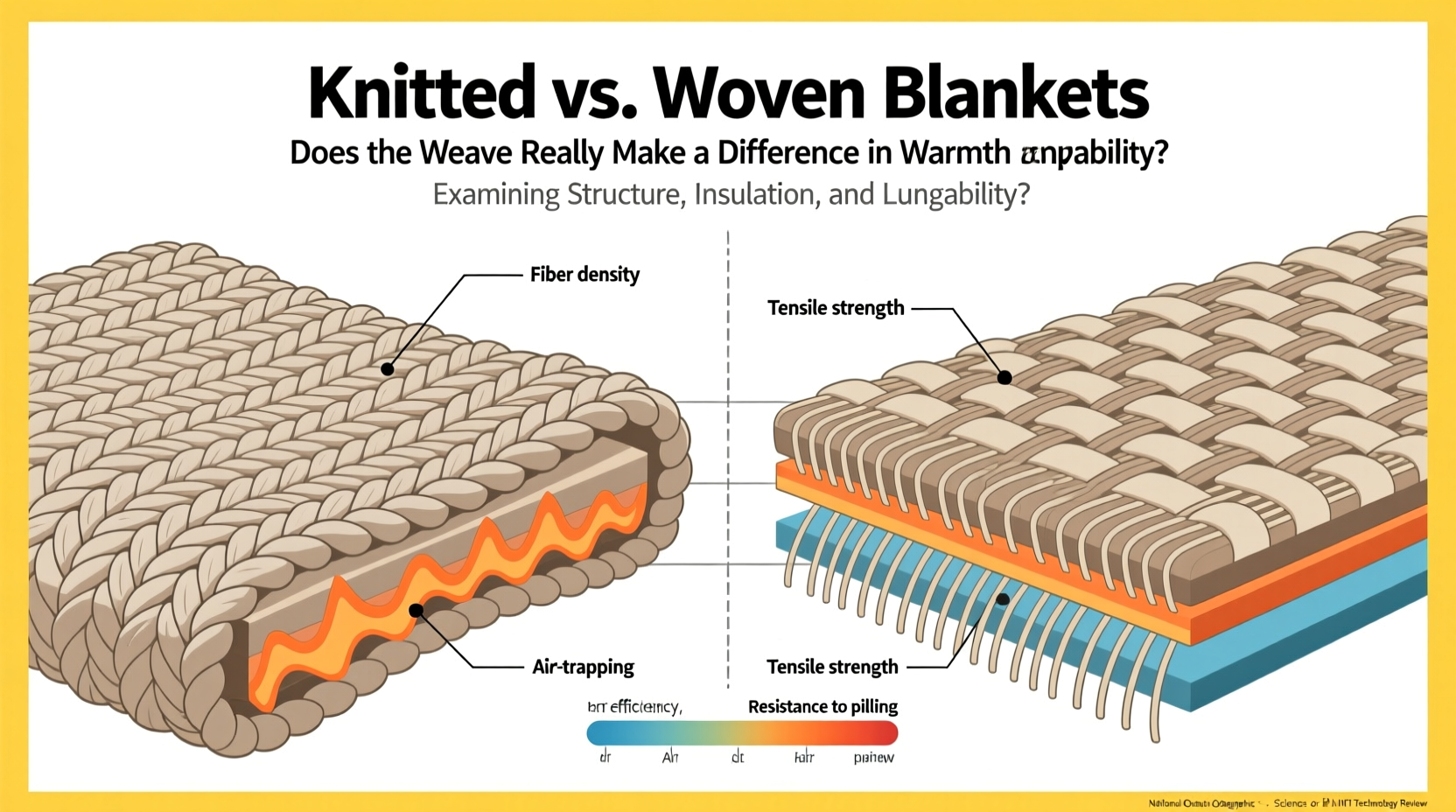
At the core of every blanket lies its fabric structure. Knitted fabrics are created by interlocking loops of yarn using needles, much like hand-knitting a sweater. This looped construction gives knit materials inherent stretch and softness. In contrast, woven fabrics are made by crossing vertical (warp) and horizontal (weft) threads over and under each other on a loom, resulting in a tighter, more stable grid-like pattern.
This fundamental distinction impacts nearly every functional aspect of a blanket: drape, breathability, elasticity, and resistance to pilling or fraying. For example, a knitted blanket tends to feel lighter and more pliable, conforming easily to the body. A woven one often holds its shape better but may feel stiffer initially.
Warmth: How Construction Affects Heat Retention
Warmth isn’t just about material; it’s also about air trapping. Knitted blankets, due to their looped structure, naturally create more air pockets within the fabric. These tiny pockets act as insulation, slowing down heat loss and making knits inherently warmer for their weight. This is why cable-knit wool throws are favorites in colder climates—they combine high-loft yarns with a porous knit that traps body heat efficiently.
Woven blankets can also be warm, especially when made from dense materials like heavy cotton flannel or tightly woven wool (e.g., traditional Navajo or Pendleton styles). However, they typically rely more on fabric density than structure for insulation. A loosely woven cotton blanket might feel drafty compared to a medium-weight knit, even if both use similar fibers.
In practical terms, knits often provide superior thermal efficiency in casual, draped settings—like curling up on the couch. Wovens excel in layered bedding systems where flat, non-shifting coverage matters more than immediate coziness.
Durability: Longevity Through Use and Washing
Durability depends on both fiber quality and fabric construction. Woven fabrics generally outperform knits in abrasion resistance and dimensional stability. Because the threads are locked in a crisscross pattern, wovens resist stretching out of shape and are less prone to snags—unless caught on sharp objects at seam edges.
Knits, while soft and forgiving, are more vulnerable to pilling and deformation over time. Repeated washing can cause knit loops to pull or distort, especially in lower-quality acrylic blends. High-quality merino wool knits, however, can last years with proper care due to the natural resilience of the fiber.
That said, modern knitting techniques like double knitting or interlock stitching have closed the durability gap significantly. These methods produce thicker, more stable fabrics that resist curling and stretching, making them suitable for everyday use.
“While traditional weaves still lead in sheer toughness, advances in engineered knits mean you no longer have to sacrifice longevity for comfort.” — Dr. Lena Patel, Textile Engineer, MIT Materials Lab
Comparative Overview: Knitted vs Woven Blankets
| Feature | Knitted Blankets | Woven Blankets |
|---|---|---|
| Stretch & Flexibility | High – conforms well to body shape | Low – maintains rigid structure |
| Warmth Efficiency | High – excellent air trapping | Moderate to High – depends on density |
| Pilling Resistance | Moderate – varies with yarn quality | High – smoother surface resists fuzzing |
| Wash Durability | Good with care – avoid aggressive cycles | Excellent – withstands frequent laundering |
| Drape & Softness | Superior – plush and cuddly feel | Firm – may soften over time |
| Best For | Casual lounging, cold-weather throws | Beds, decorative layering, travel |
Real-World Example: Choosing for a Family Living Room
Sarah, a mother of two in Vermont, wanted durable yet cozy blankets for her living room sofa. She initially chose a thick woven cotton throw for its clean look and ease of washing. While it held up well after months of use, she found it lacked the snuggle factor her kids loved. After switching to a double-knit wool-blend blanket, she noticed an immediate improvement in comfort. Despite concerns about durability, the tighter knit resisted pilling even after weekly machine washes on gentle cycle. Over two winters, the knit blanket remained intact, only showing minor wear at the corners—a testament to improved knit engineering.
This case illustrates that function doesn’t have to come at the expense of form. With thoughtful selection, modern knits can meet—and sometimes exceed—traditional expectations for household durability.
Care Tips for Maximizing Blanket Lifespan
No matter the construction, proper care extends life. Here’s how to maintain both types effectively:
- Wash less frequently – Air out blankets between uses instead of laundering after every week.
- Use a mesh laundry bag – Especially for knits, this reduces friction and snagging in the washer.
- Avoid high heat – Tumble drying on low or air-drying prevents fiber degradation and shrinkage.
- Rotate usage – Having two or three blankets in rotation reduces wear on any single one.
- Store properly – Keep in a dry, ventilated space away from moths (especially wool).
FAQ: Common Questions About Knit vs Woven Blankets
Do knitted blankets shed more than woven ones?
Not necessarily. Shedding usually occurs with low-twist yarns or unfinished edges, regardless of construction. However, loose-knit blankets with brushed surfaces (like fleece-backed throws) may release lint initially. Washing before first use can minimize this.
Which type is better for allergies?
Both can work, but tightly woven microfiber or cotton percale blankets are often recommended for allergy sufferers because they form a denser barrier against dust mites. Knits with open structures may trap allergens more easily unless washed regularly.
Can I repair a snagged knit blanket?
Yes, unlike woven fabrics that unravel quickly from a tear, knits often contain the damage. Using a crochet hook, you can gently pull the loop back through to the wrong side, minimizing visibility. Woven tears, once started, usually require sewing or patching.
Final Thoughts: Matching Weave to Lifestyle
The choice between knitted and woven blankets shouldn't come down to trend or texture alone. It should reflect how you live. If you value softness, adaptability, and instant warmth, a well-made knit will serve you best. If you prioritize neat appearance, washability, and long-term shape retention, a quality woven option is likely the smarter investment.
Modern textiles blur the lines between these categories. Hybrid constructions, such as jersey-knit cotton sheets or boiled wool wovens, offer the best of both worlds. But understanding the foundational differences empowers you to see beyond marketing claims and select based on real performance.




 浙公网安备
33010002000092号
浙公网安备
33010002000092号 浙B2-20120091-4
Comments
No comments yet. Why don't you start the discussion?