
Headbands have evolved from simple hair accessories into fashion statements. Among the most debated styles today is the knot headband—often seen with a bow-like twist at the crown or side—versus the classic plain headband, which offers a sleek, minimalist profile. While both serve the same basic purpose—taming flyaways, securing bangs, and adding polish to an outfit—their aesthetic impact couldn’t be more different. The question isn’t just about function; it’s about whether the knot adds charm or crosses into costume territory.
For some, the knot headband is a nostalgic nod to early 2000s Y2K fashion, evoking memories of pop stars and school uniforms. For others, it's a clunky detail that draws too much attention. Meanwhile, the plain headband remains a quiet workhorse: reliable, understated, and versatile across seasons and settings. So, is the extra knot worth it, or do these styles fall flat in real life?
The Aesthetic Divide: Fashion Statement vs. Functional Simplicity
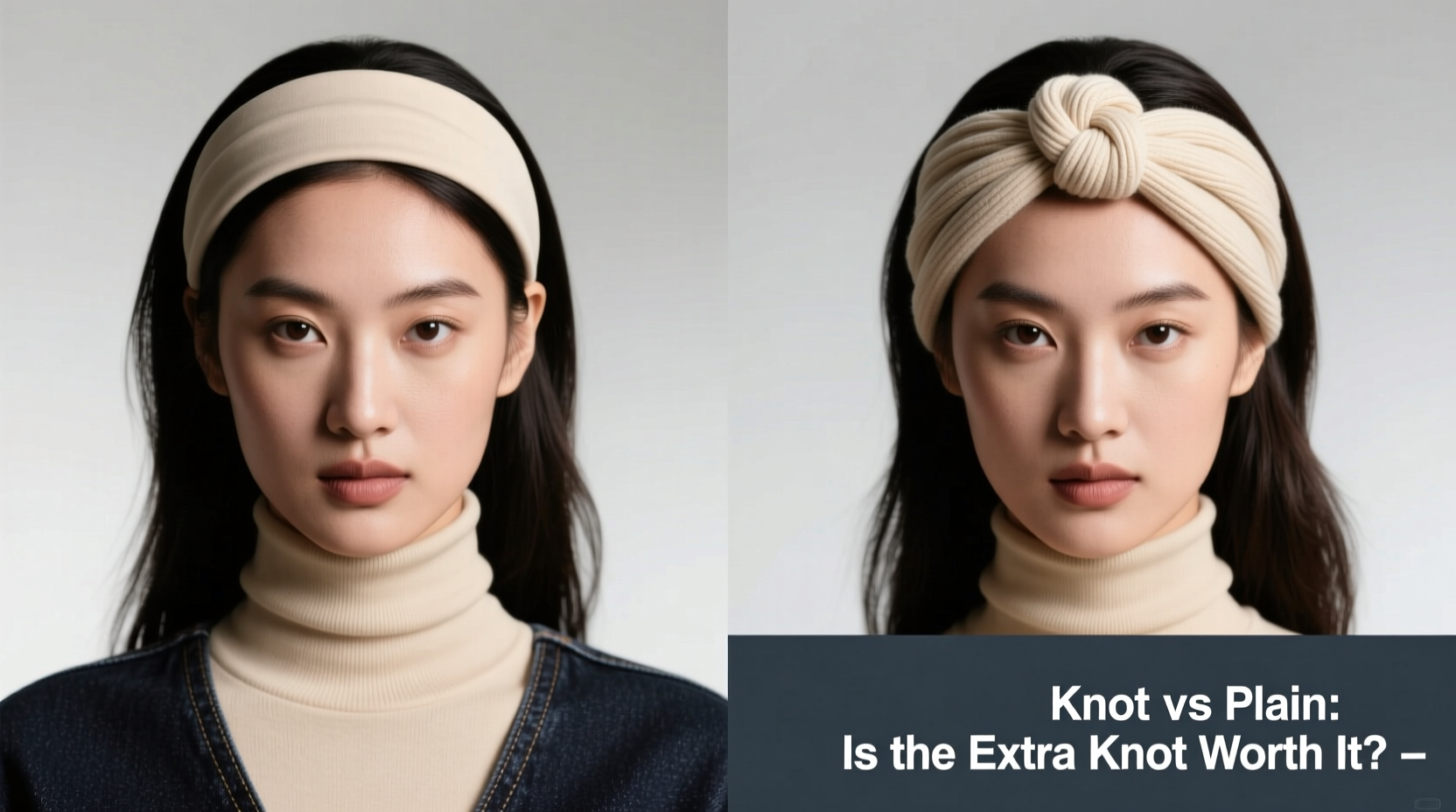
The core difference between knot and plain headbands lies in visual weight. A knot introduces volume, texture, and intentional asymmetry. It turns the headband into a focal point rather than a background accessory. This can be powerful in casual, expressive outfits—think oversized sweaters, denim skirts, or soft beach waves where the knot complements a carefree vibe.
However, this same feature can clash with more polished ensembles. Pair a chunky knotted headband with a tailored blazer or silk dress, and the contrast may feel jarring. The knot risks looking costumey or out of place, like wearing sneakers with a tuxedo. In contrast, a plain headband—especially in matte finishes like velvet, satin, or thin metal—blends seamlessly into both formal and relaxed looks.
Functionality: Grip, Comfort, and Hair Type Considerations
Beyond aesthetics, functionality matters. Knot headbands often use wider bands or elastic bases to support the knot structure, which can improve grip on slippery hair. This makes them surprisingly effective for thick, curly, or fine hair that tends to escape standard bands. The knot itself can act as an anchor point, preventing slippage during movement.
Plain headbands vary widely in performance. Thin plastic or metal bands may look elegant but struggle to hold voluminous hair without slipping. Wider fabric or padded versions offer better hold but sacrifice subtlety. If you're choosing based on practicality alone, consider the material and width—not just the presence of a knot.
That said, knots can create pressure points. Because the bulk is concentrated in one area, some wearers report discomfort after extended use, especially if the knot sits too tightly against the scalp. Plain headbands distribute pressure more evenly, making them better suited for all-day wear, workouts, or sleep (in the case of satin varieties).
Style Evolution: From Trendy to Timeless?
Knot headbands surged in popularity during the mid-2000s and have resurged with the Y2K revival. Brands like Bumpits, Scrunchies Co., and even high-end labels such as Ganni and Reformation have released variations, often in pastel hues or faux pearls. Their appeal lies in their whimsy—they suggest youthfulness, playfulness, and a touch of irony.
But trends fade. What feels fresh today might look dated in five years. Fashion stylist Lena Torres notes:
“The knot headband works because it taps into nostalgia, but only when styled with intention. Wear it like a wink, not a full sentence.”
Plain headbands, by comparison, are timeless. Think of Audrey Hepburn in *Breakfast at Tiffany’s* or modern influencers opting for black velvet bands. They don’t scream for attention; they enhance. That timelessness gives them longevity in wardrobes, especially for professional environments or minimalist aesthetics.
Who Should Wear a Knot Headband?
Not every trend suits every person. The knot headband flatters certain face shapes and styling preferences:
- Heart-shaped or oval faces: The knot adds balance to narrower chins.
- Loose, textured hairstyles: Works well with half-updos, braids, or tousled waves.
- Casual or creative settings: Ideal for brunch, festivals, or artsy photoshoots.
It tends to fall flat on those seeking sophistication or wearing structured clothing. If your wardrobe leans monochrome, tailored, or mature, a knot may disrupt the harmony.
Comparison Table: Knot vs. Plain Headbands
| Feature | Knot Headband | Plain Headband |
|---|---|---|
| Visual Impact | High – draws attention | Low to moderate – blends in |
| Hair Hold | Good – wider base often improves grip | Varies – depends on width and material |
| Comfort (long-term) | Moderate – knot can press on scalp | High – even pressure distribution |
| Versatility | Low – best for casual looks | High – works with formal and informal wear |
| Fashion Longevity | Medium – trend-dependent | High – timeless design |
| Styling Ease | Moderate – placement affects look | Easy – slip-on simplicity |
Real-Life Example: Two Days, Two Styles
Sophie, a 28-year-old graphic designer, tested both styles over a weekend. On Saturday, she wore a cream-colored knot headband with a flowy sundress and loose curls to a garden party. Guests complimented her “retro-chic” look, and the band stayed secure despite wind and dancing.
The next day, she tried the same outfit with a thin black velvet plain headband. The effect was quieter, more refined. At a friend’s job interview prep session, several attendees assumed she’d dressed up intentionally for a meeting. “I didn’t realize how much the knot changed the message,” Sophie said. “One felt fun, the other professional—even though the clothes were identical.”
This illustrates a key truth: the headband isn’t just an accessory. It’s a tone-setter.
When the Knot Adds Value—And When It Doesn’t
The knot earns its place when it serves a purpose beyond decoration. For example:
- As a corrective tool for very slippery hair
- To add volume at the crown for flat hair types
- In themed events (vintage parties, photo shoots)
But in everyday scenarios—running errands, working remotely, attending meetings—it often feels excessive. Worse, poorly made knot headbands can look cheap, with lopsided ties or synthetic fabrics that scream “fast fashion.”
Step-by-Step Guide: Choosing the Right Headband for Your Needs
- Assess your hair type: Fine or silky hair may benefit from the grip of a knotted band; thick or coarse hair often does well with wide plain bands.
- Consider the occasion: Casual outings allow for bolder choices; professional or formal settings favor minimalism.
- Evaluate comfort needs: Will you wear it for hours? Test pressure points behind the ears and across the forehead.
- Match to your wardrobe: Do you own mostly bold prints and textures, or neutral solids? Align accordingly.
- Try before committing: Borrow or rent first. Trends can look great online but awkward in person.
FAQ
Are knot headbands suitable for work environments?
Generally, no—unless your workplace embraces creative expression. In corporate or conservative settings, they may appear unprofessional. A plain satin or matte headband is a safer choice.
Can I make a knot headband look more subtle?
Yes. Position the knot at the nape instead of the crown, choose neutral colors, or flatten the knot slightly for a softer silhouette. Some brands offer “semi-knot” designs that hint at the style without exaggeration.
Do knot headbands damage hair?
Not inherently. Like any headband, risk comes from tightness and material. Avoid rubber-backed or abrasive fabrics. Satin-lined knot bands reduce friction and are gentler on strands.
Conclusion: Style With Intention
The knot headband isn’t objectively ugly—nor is it universally superior. Its value lies in context. When worn with awareness, it can elevate a look with personality and flair. But when chosen out of trend pressure or poor fit, it becomes a distraction.
The plain headband, meanwhile, remains a quiet hero: functional, adaptable, and enduring. It doesn’t need to justify its existence through novelty. It simply works.
Rather than asking whether the knot is “worth it,” ask what you want your style to communicate. Playful or poised? Bold or balanced? The answer will guide your choice far better than any trend forecast.




 浙公网安备
33010002000092号
浙公网安备
33010002000092号 浙B2-20120091-4
Comments
No comments yet. Why don't you start the discussion?