
Kodak Black, born Dieuson Octave, rose to fame as one of hip-hop’s most controversial and polarizing figures. Known for his raw lyricism and aggressive trap style, his music career has been consistently overshadowed by a long history of legal troubles. From juvenile offenses to federal charges, his run-ins with the law have shaped public perception and disrupted his professional trajectory. This article breaks down the key moments in Kodak Black’s legal journey—offering clarity on why he was jailed, how his cases unfolded, and what they reveal about accountability in the entertainment industry.
Early Legal Troubles: The Foundation of a Troubled Path
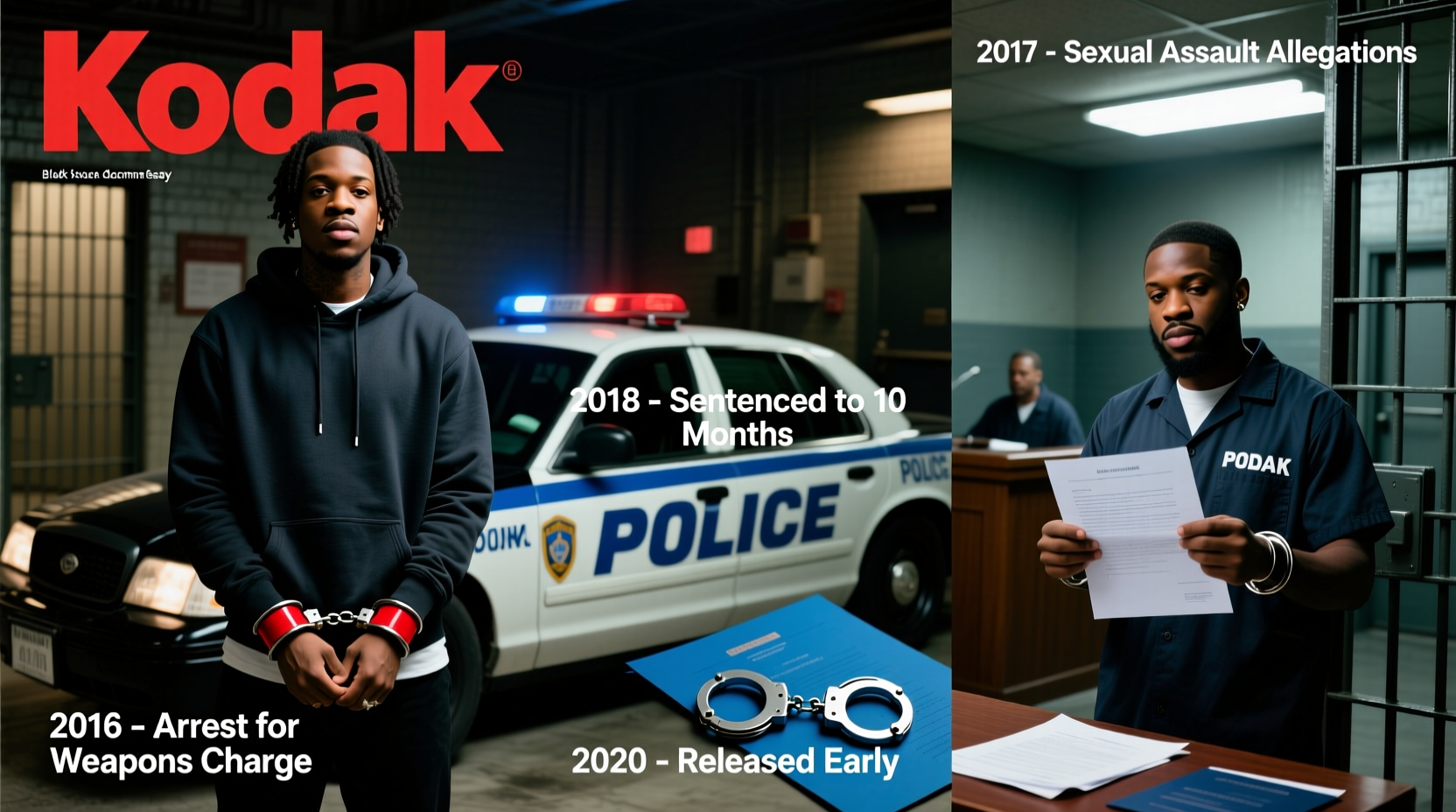
Born in Pompano Beach, Florida, Kodak Black faced adversity early. His first documented arrest came at age 13, when he was charged with armed robbery. Though details were sealed due to his age, court records later revealed multiple juvenile charges, including assault and burglary. These early incidents foreshadowed a pattern of behavior that would persist into adulthood.
By 17, Kodak was already gaining notoriety in the rap scene with tracks like “No Flockin,” but his rising fame coincided with escalating legal scrutiny. In 2016, he was arrested for aggravated battery of an officer and resisting arrest without violence—a case stemming from a traffic stop where deputies claimed he kicked and bit an officer during detention. He was released after posting bond, but the incident signaled growing tensions between his lifestyle and the justice system.
2016–2018: A Surge in Arrests and Public Backlash
The period between 2016 and 2018 marked a peak in Kodak Black’s legal entanglements. During these years, he was arrested five times across multiple states, often related to firearms, drugs, or probation violations. One high-profile case occurred in November 2016, when he was pulled over in South Carolina and found in possession of marijuana, Xanax, and a loaded .40-caliber handgun. He was charged with drug possession and unlawful possession of a firearm by a convicted felon.
In January 2017, he was arrested again—this time in Broward County—for allegedly violating probation from a prior case involving grand theft auto. The judge revoked his bond, leading to months of pretrial detention. Despite this, his debut album Painting Pictures dropped in March 2017 and went platinum, highlighting the disconnect between commercial success and personal conduct.
Later that year, in October, he was arrested in California for suspicion of sexual assault. The accuser alleged that Kodak raped her in a hotel room after a concert. He denied the allegations, and prosecutors ultimately declined to file charges due to insufficient evidence. However, the incident intensified public criticism, especially given past lyrics some interpreted as glorifying sexual violence.
Timeline of Key Legal Events (2016–2018)
- Jan 2016: Charged with aggravated battery on an officer in Florida.
- Nov 2016: Arrested in South Carolina for drugs and illegal firearm possession.
- Jan 2017: Jailed for probation violation; held for several months.
- Oct 2017: Detained in California over rape allegation; no charges filed.
- Feb 2018: Pleaded guilty to federal gun charges; sentenced to 46 months.
Federal Conviction and Prison Sentence (2018–2020)
The most consequential legal blow came in February 2018, when Kodak Black pleaded guilty to two federal charges: making false statements during a firearm purchase and possession of a firearm by a convicted felon. The charges stemmed from his 2016 South Carolina arrest, where he had used a fake ID to buy a Glock pistol despite having a prior felony conviction.
Under federal sentencing guidelines, he faced up to 10 years. Instead, he received a 46-month sentence. In December 2018, he began serving time at the Federal Medical Center in Butner, North Carolina. His incarceration drew mixed reactions: supporters cited systemic inequities in sentencing, while critics argued the punishment fit the repeated disregard for the law.
During his imprisonment, Kodak reportedly participated in rehabilitation programs and earned his GED. Advocacy groups highlighted his potential for reform, and in late 2020, his sentence was commuted by President Donald Trump in one of his final executive actions before leaving office. The decision sparked debate, with some viewing it as clemency for personal growth, others as political favoritism.
“Clemency should reflect both accountability and transformation. In Kodak’s case, there are signs of change—but only sustained behavior will determine lasting redemption.” — Dr. Marcus Reed, Criminal Justice Policy Analyst
Post-Release Legal Challenges and Ongoing Scrutiny
After his release in January 2021, Kodak Black returned to music, releasing albums like Back for Everything (2022), which debuted at number one on the Billboard 200. Yet, legal issues persisted. In August 2022, he was arrested in Palm Beach County for driving under suspension and possession of less than 20 grams of cannabis. He was released on bail, but the arrest reignited discussions about recidivism and accountability.
More seriously, in April 2023, he was indicted on federal charges of wire fraud and money laundering related to a disability benefits scheme. Prosecutors alleged he falsely claimed to be disabled due to mental illness to receive Social Security benefits while continuing a high-profile music career. If convicted, he could face up to 20 years in prison.
This case underscores a shift in the nature of his legal troubles—from impulsive street-level offenses to complex white-collar allegations. It also raises ethical questions about entitlement, privilege, and the responsibilities that come with fame.
Do’s and Don’ts: Navigating Legal Risk in the Public Eye
| Do | Don't |
|---|---|
| Hire competent legal counsel early | Speak publicly about ongoing cases |
| Comply strictly with probation terms | Engage in risky behavior post-release |
| Seek counseling or rehabilitation | Downplay the severity of charges |
| Use platform for positive advocacy | Misuse influence to evade consequences |
Expert Insight: What Kodak’s Case Reveals About Celebrity Justice
Kodak Black’s story reflects broader societal tensions around race, celebrity, and the justice system. While many young Black men face harsh penalties for similar offenses, few receive presidential commutations. His case illustrates both the disproportionate punishment some endure and the unequal leniency others may access through visibility.
Legal experts argue that his repeated encounters with the law point less to systemic bias and more to personal choices. “Fame doesn’t cause crime,” says criminal defense attorney Lisa Tran, “but it can create a bubble where consequences feel distant—until they’re unavoidable.”
Mini Case Study: The Cost of Ignoring Warnings
Consider the 2017 probation violation that landed Kodak in jail for months. At the time, his team urged him to avoid travel and maintain clean conduct. Instead, he continued touring, made reckless social media posts, and failed to report to his probation officer. The result? A preventable incarceration that delayed his career momentum. This example shows how ignoring legal boundaries—even when under supervision—can derail even the most promising paths.
FAQ
Why was Kodak Black in jail in 2018?
He was sentenced to 46 months in federal prison for lying on a firearm purchase form and possessing a gun as a convicted felon.
Was Kodak Black ever charged with rape?
No formal charges were filed. In 2017, an investigation into a sexual assault allegation in California was closed due to lack of evidence.
Can Kodak Black go to jail again?
Yes. He faces ongoing federal charges for alleged Social Security fraud and money laundering, with potential penalties of up to 20 years if convicted.
Conclusion: Accountability, Redemption, and the Road Ahead
Kodak Black’s legal timeline is not just a record of crimes and sentences—it’s a cautionary tale about talent, trauma, and the cost of unchecked behavior. While his artistic impact is undeniable, his legacy remains entangled with controversy. True redemption isn’t measured by early release or chart-topping albums, but by consistent, responsible choices over time.




 浙公网安备
33010002000092号
浙公网安备
33010002000092号 浙B2-20120091-4
Comments
No comments yet. Why don't you start the discussion?