
When planning a child’s birthday party or a themed event, entertainment is key. Two popular options—Kuromi egg machines and traditional piñatas—offer distinct experiences. While both deliver excitement, they differ significantly in engagement style, duration, and appeal. Choosing between them isn’t just about novelty; it’s about understanding what truly holds children’s attention over time. This comparison dives into mechanics, psychological engagement, reusability, and real-world performance to determine which option sustains fun longer.
How the Kuromi Egg Machine Works
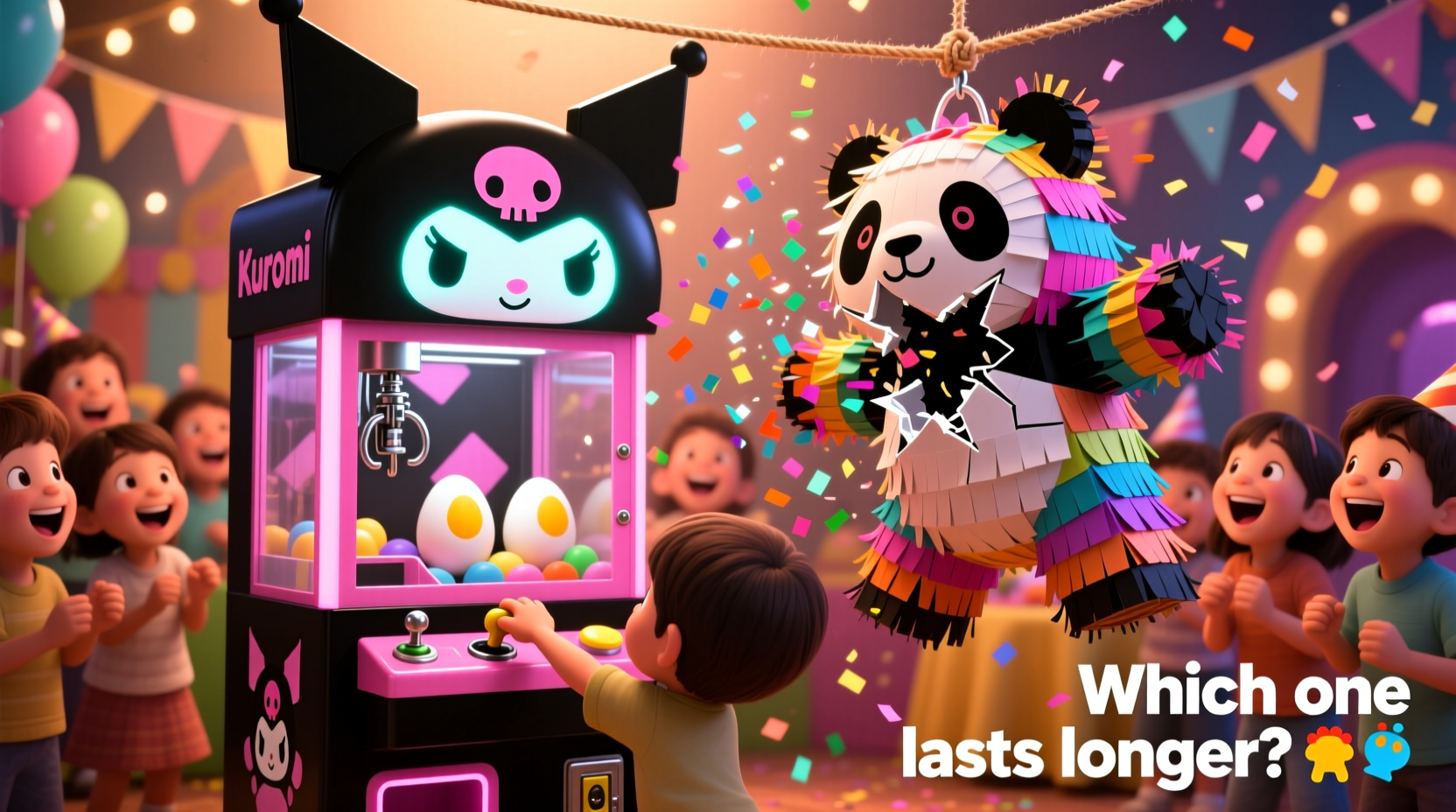
The Kuromi egg machine, inspired by Japanese gacha culture and Sanrio characters, functions as a small vending-style toy dispenser. Children insert coins or tokens to receive surprise plastic eggs containing miniature figurines, stickers, or accessories featuring Kuromi and her friends. Unlike passive activities, the machine introduces anticipation through mechanical action—the spinning wheel, the clinking of gears, and the reveal of the capsule.
These devices are often battery-operated and designed with bright colors, playful sounds, and character-themed artwork. They’re compact, safe for indoor use, and require minimal supervision. Because each play costs a token, there’s an inherent pacing mechanism that stretches out interaction across multiple rounds.
Piñatas: The Classic Party Staple
Piñatas have been a centerpiece of celebrations for generations. Typically filled with candy and small toys, they’re hung from a height and struck by blindfolded children until they burst. The climax—candy scattering everywhere—triggers a frenzied scramble among guests.
This activity is inherently short-lived. The entire process, from setup to cleanup, rarely exceeds 10–15 minutes. However, its intensity is high: loud cheers, physical movement, suspense, and immediate reward. For many children, especially those under seven, this sensory burst is unforgettable—even if brief.
Yet, once the piñata breaks, the game ends. There’s no replay value during the same event. Any remaining excitement comes from consuming candy or showing off loot, not sustained interaction.
Comparing Engagement Duration and Depth
To evaluate which option keeps kids entertained longer, we must distinguish between peak excitement and lasting engagement.
- Piñatas deliver a single, high-energy moment. The buildup is exciting, but participation is limited—one child at a time swings the stick, others wait their turn or watch. Once broken, there’s no continuation.
- Kuromi egg machines, however, support continuous, self-paced play. Multiple children can take turns without conflict. Each round offers fresh anticipation. If programmed with varied prizes (e.g., rare figures), the incentive to keep playing increases due to collectibility.
“Children thrive on predictable unpredictability—something the gacha model excels at. The thrill of not knowing what you’ll get next sustains interest far longer than one-off events.” — Dr. Lena Torres, Child Development Psychologist
Key Factors Influencing Long-Term Entertainment
| Factor | Kuromi Egg Machine | Piñata |
|---|---|---|
| Duration of Play | 30+ minutes (spread across event) | 5–10 minutes (single session) |
| Number of Participants | All children can participate repeatedly | Limited rotation; most wait passively |
| Replay Value | High (especially with collectible items) | None (cannot be reused mid-party) |
| Safety & Supervision Needs | Low (no blindfolds or swinging) | Moderate to high (risk of falls, hitting) |
| Clean-Up Time | Minimal (contained capsules) | Significant (scattered candy, paper debris) |
| Post-Event Interest | High (kids trade or display figures) | Low (candy consumed quickly) |
Real-World Example: Twin Sister Birthday Parties
In a recent case, two sisters—ages six and eight—celebrated back-to-back birthdays one weekend. The first party featured a unicorn-themed piñata; the second used a Kuromi egg machine with matching pastel decor.
At the piñata party, children gathered around eagerly as each took a swing. Screams of delight followed the burst, and candy was collected within five minutes. Afterward, most kids sat quietly eating sweets or returned to parents. Total active engagement: approximately 12 minutes.
At the second party, the egg machine was placed on a table with a basket of tokens. Kids received three tokens each upon arrival. Over the next 45 minutes, children returned repeatedly, comparing finds, trading duplicates, and cheering when someone pulled a “rare” glow-in-the-dark Kuromi figure. Parents noted spontaneous storytelling and role-playing emerged using the mini toys. No adult prompting was needed to sustain interest.
While neither activity replaced structured games entirely, the egg machine extended independent play by more than three times.
Practical Tips for Maximizing Fun
- Use themed tokens (printed with hearts or stars) to enhance immersion.
- Limit token distribution to prevent overuse but allow enough chances for discovery.
- Pair the machine with a simple “prize chart” so kids know what’s available.
- For outdoor events, place the machine under shade to protect electronics.
Step-by-Step Guide: Setting Up Sustained Play
- Choose Your Device: Select a licensed Kuromi egg machine with reliable mechanics and volume control.
- Curate Prizes: Fill capsules with a mix of stickers, tiny plushes, erasers, and 1–2 rare items.
- Assign Tokens: Give each child 3–5 tokens at check-in to pace usage.
- Position Strategically: Place near seating or food areas where kids naturally linger.
- Introduce the Game: Demonstrate how it works and explain any special rules (e.g., “Only one try per 10 minutes”).
- Monitor & Replenish: Check supply every 20 minutes and replace empty capsules discreetly.
When a Piñata Still Makes Sense
Despite its shorter lifespan, the piñata has irreplaceable emotional value. It creates a shared memory—a climactic moment captured in photos and retold in stories. For large groups, it equalizes participation: every child gets a turn or joins the candy rush.
It also requires no batteries, Wi-Fi, or spare parts. A well-made piñata costs under $20 and can be customized to any theme. For families prioritizing tradition, simplicity, or budget, it remains a valid choice.
However, if your goal is prolonged, calm, and inclusive engagement—especially for younger children or smaller gatherings—the Kuromi egg machine offers superior longevity.
Frequently Asked Questions
Can the Kuromi egg machine be reused for future events?
Yes. Most models are durable and can be refilled with new capsules. Store it in a dry place and remove batteries after use to extend life.
Are piñatas safe for toddlers?
With close supervision, yes—but risks exist. Toddlers may become frightened by blindfolding or get knocked during the candy scramble. Consider a soft fabric piñata or let them participate without blindfolds.
Which option is more cost-effective long-term?
The egg machine has a higher upfront cost ($40–$70), but reusable capsules and tokens make it economical over multiple parties. Piñatas are cheaper per use initially but offer no reuse potential.
Final Verdict: What Keeps Kids Entertained Longer?
The data and observations consistently favor the Kuromi egg machine for extended engagement. Its ability to deliver repeated micro-moments of surprise, accommodate all children equally, and inspire post-play creativity gives it a clear edge in duration and depth of entertainment.
That said, the best events often blend both. Use the piñata as a dramatic highlight early in the party, then transition to the egg machine for steady, low-pressure fun afterward. This combination leverages the emotional peak of the piñata and the sustained curiosity of the gacha experience.
Ultimately, children don’t just want excitement—they want agency, discovery, and ownership of their fun. The Kuromi egg machine supports that journey far beyond the fleeting joy of a sugar-fueled candy spill.




 浙公网安备
33010002000092号
浙公网安备
33010002000092号 浙B2-20120091-4
Comments
No comments yet. Why don't you start the discussion?