
Diamonds have long symbolized enduring love, luxury, and commitment. For decades, naturally mined diamonds were the only option for engagement rings and fine jewelry. But in recent years, lab grown diamonds have surged in popularity—offering identical brilliance at a lower price point. One of the most common questions consumers face today is whether there’s any visible distinction between lab grown and natural diamonds. The answer may surprise you.
To the untrained eye—and even under many standard inspections—there is no visual difference between a high-quality lab grown diamond and a natural one. Both share the same physical, chemical, and optical properties. However, understanding the nuances behind their origin, grading, and real-world perception can help buyers make informed decisions without compromising on beauty or value.
The Science Behind Diamond Appearance
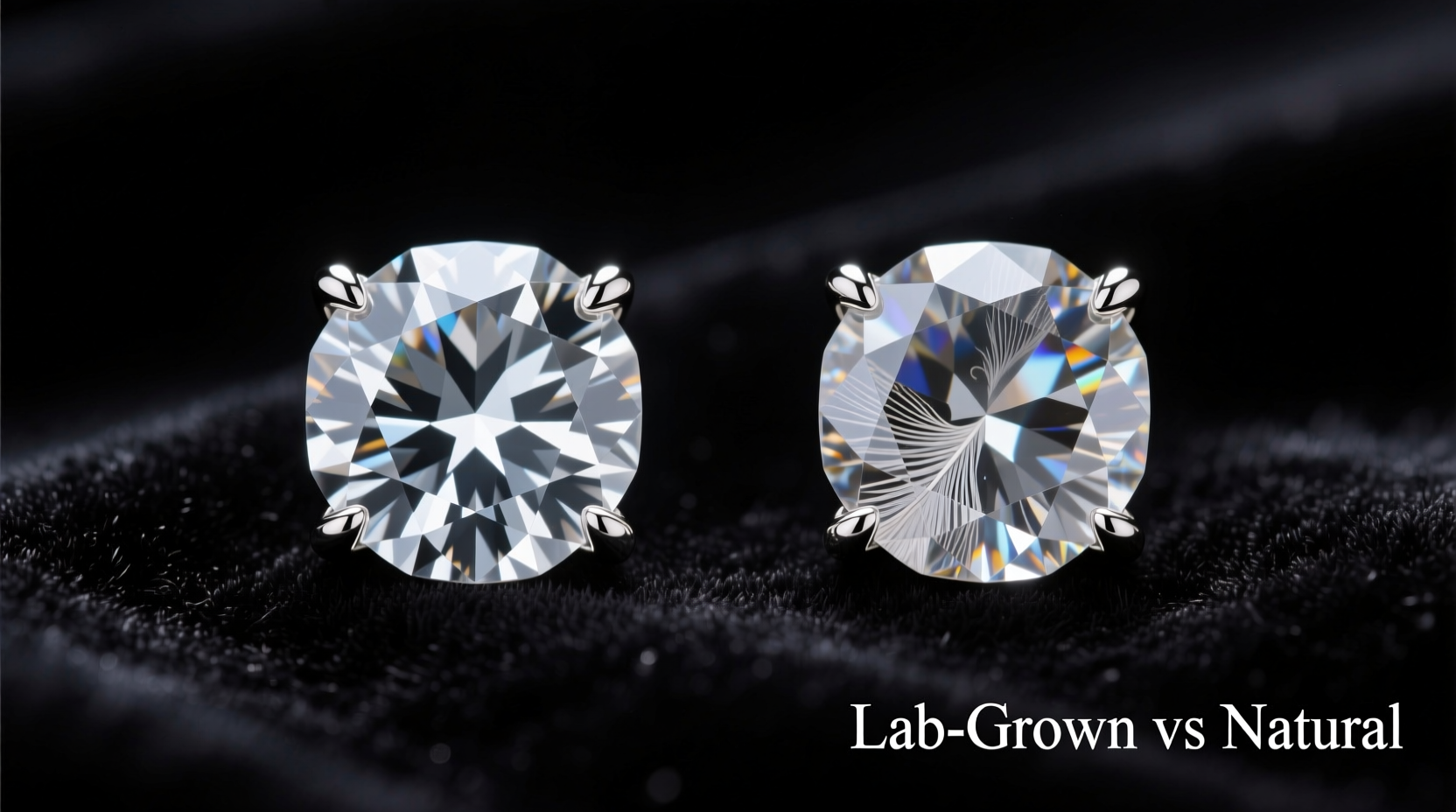
All diamonds, whether formed over billions of years beneath the Earth’s crust or created in weeks inside a controlled laboratory, are composed of pure carbon atoms arranged in a cubic crystal structure. This atomic arrangement is what gives diamonds their unmatched hardness and signature sparkle.
Two primary methods are used to grow diamonds in labs:
- High Pressure High Temperature (HPHT): Mimics the natural geological process by applying extreme pressure and heat to a carbon source.
- Chemical Vapor Deposition (CVD): Uses a hydrocarbon gas mixture in a vacuum chamber, where carbon atoms gradually deposit onto a substrate to form a diamond crystal.
The resulting stones exhibit the same refractive index (how light bends), dispersion (fire), and luster as mined diamonds. When cut and polished to the same standards, they reflect light identically. A well-cut round brilliant lab diamond will display the same scintillation pattern—those flashes of white and colored light—as its natural counterpart.
Can Experts Tell the Difference?
Even trained gemologists cannot distinguish between lab grown and natural diamonds using traditional tools like loupes or microscopes. Both types pass standard diamond testers because they are chemically identical.
However, advanced spectroscopic equipment used in professional gem labs can detect subtle differences in trace elements and growth patterns. For example:
- Natural diamonds often contain minute nitrogen impurities, while some CVD-grown stones may show silicon or hydrogen traces.
- HPHT diamonds might display magnetic properties due to metal catalysts used in the process.
These distinctions are not visible but are recorded in certification reports. Reputable labs like GIA (Gemological Institute of America) and IGI (International Gemological Institute) now clearly label diamonds as “Laboratory-Grown” or “Natural” on their grading certificates.
“With modern technology, lab diamonds are optically indistinguishable from mined ones. It takes specialized instruments—not the human eye—to tell them apart.” — Dr. Sarah Lin, Gemologist and Materials Scientist
Visual Comparison: What Matters Most
If both types look the same, why does the debate persist? The key lies in consumer perception, marketing narratives, and misconceptions about quality. Below is a detailed comparison highlighting factors that influence visual performance.
| Feature | Natural Diamond | Lab Grown Diamond |
|---|---|---|
| Composition | Carbon, crystallized over millions of years | Carbon, crystallized in weeks via HPHT or CVD |
| Brilliance & Fire | Depends on cut, clarity, color | Identical when cut to same standard |
| Inclusions | Natural imperfections (e.g., crystals, feathers) | Synthetic inclusions (e.g., metallic flux, graining) |
| Color Range | Near-colorless to fancy colors (rare) | Broad range, including vivid pinks and blues (more accessible) |
| Visibility to Naked Eye | No discernible difference in finished jewelry | No discernible difference in finished jewelry |
The takeaway? Visual appeal depends far more on the Four Cs—cut, color, clarity, and carat—than on origin. A well-proportioned lab diamond with excellent polish and symmetry will outshine a poorly cut natural stone every time.
Real-World Example: Choosing an Engagement Ring
Consider the case of Maya and Jordan, a couple shopping for an engagement ring on a $5,000 budget. Their local jeweler shows them two options:
- A 1.0-carat natural diamond, G color, SI1 clarity, very good cut—priced at $4,800.
- A 1.2-carat lab grown diamond, F color, VS2 clarity, ideal cut—priced at $2,200.
Both stones appear equally bright and eye-clean. Under store lighting, the larger lab diamond catches more attention due to its superior cut and size. With the savings, they upgrade to a platinum setting and still have funds left for insurance.
Months later, friends compliment the ring’s sparkle, assuming it’s a high-end natural diamond. No one suspects it’s lab grown—because visually, there’s nothing to suspect.
This scenario reflects a growing trend: consumers prioritizing aesthetics and value over geological origin. As long as the diamond meets their personal standards for beauty and ethics, the method of creation becomes secondary.
Common Misconceptions About Lab Diamonds
Despite scientific evidence, several myths continue to circulate:
- Myth: Lab diamonds look fake or glassy.
Reality: This was true of early synthetic simulants like cubic zirconia, but modern lab diamonds are real diamonds—just man-made. - Myth: They yellow over time.
Reality: Neither natural nor lab diamonds change color under normal conditions. Some low-quality coatings used in novelty stones may degrade, but certified diamonds do not. - Myth: They’re less durable.
Reality: Both score 10 on the Mohs hardness scale and are equally resistant to scratching and chipping when properly set.
The stigma around lab diamonds often stems from outdated information or emotional attachment to the idea of rarity. While natural diamonds are rarer geologically, lab diamonds offer accessibility without sacrificing beauty.
How to Choose Based on What You Value
Selecting between lab grown and natural isn’t just about appearance—it’s also about values. Here’s a step-by-step guide to help clarify your priorities:
- Assess your budget. Lab diamonds typically cost 30–50% less than comparable naturals, allowing for upgrades in size or quality.
- Decide what matters most: origin or optics? If the story behind the stone is important (e.g., heirloom potential, mining heritage), natural may resonate more. If brilliance and size are top priorities, lab offers better value.
- Check certification. Always request a grading report from GIA, IGI, or AGS. Ensure it specifies whether the diamond is natural or lab grown.
- Inspect in person. View both options under different lighting—natural daylight, office lights, evening ambiance. Trust your eyes over labels.
- Consider sustainability. Lab diamonds produce fewer carbon emissions and avoid ecological disruption linked to mining, though energy use varies by production method.
Expert Advice: What Industry Leaders Say
The jewelry industry has evolved rapidly in response to technological advances. Major retailers like Pandora, Lightbox (by De Beers), and Brilliant Earth now offer lab grown collections alongside traditional lines.
According to Martin Rapaport, founder of the Rapaport Group—a leading authority in diamond pricing:
“The emotional value of a diamond comes from the person who gives it, not the volcano it came from.” — Martin Rapaport, Diamond Market Analyst
This sentiment reflects a shift toward experiential value rather than geological scarcity. As younger generations prioritize transparency and ethical sourcing, lab diamonds align with modern values—even if their visual impact remains unchanged.
Frequently Asked Questions
Do lab grown diamonds get cloudy over time?
No. High-quality lab diamonds maintain their clarity and brilliance indefinitely, just like natural diamonds. Cloudiness sometimes reported online usually involves low-grade simulants or poorly cleaned settings, not genuine lab diamonds.
Will people be able to tell it’s lab grown?
Not visually. Unless disclosed—such as through a laser inscription on the girdle or a certificate—there is no way for anyone to know unless they have access to lab equipment. Even then, it requires deliberate testing.
Are lab diamonds resalable?
They hold less resale value than natural diamonds due to market saturation and lower initial cost. However, if you view jewelry as a personal purchase rather than an investment, this may not matter. Most engagement rings are kept for life or passed down, not sold.
Final Thoughts: Beauty Beyond Origin
The question of whether lab grown and natural diamonds differ visually ultimately leads to a single conclusion: they do not. In terms of sparkle, fire, durability, and elegance, both perform identically when matched for quality. The choice between them hinges not on appearance, but on personal values, budget, and long-term expectations.
For those drawn to tradition and rarity, natural diamonds remain a meaningful option. For others seeking larger carats, eco-conscious production, or transparent pricing, lab grown diamonds deliver equal beauty with added practical benefits.
What matters most is selecting a diamond that resonates with your story—one that brings joy every time you see it, regardless of how it was made.




 浙公网安备
33010002000092号
浙公网安备
33010002000092号 浙B2-20120091-4
Comments
No comments yet. Why don't you start the discussion?