
Diamonds have long symbolized enduring love, luxury, and status. But in recent years, a new contender has disrupted the traditional jewelry market: lab grown diamonds. These stones are chemically identical to mined diamonds but created in controlled environments. As consumers weigh their options, one question rises above the rest: when it comes to sparkle per dollar spent, which option truly delivers more brilliance for the price?
The answer isn’t as simple as “one is better.” It depends on understanding how sparkle is formed, what influences perceived brilliance, and how pricing dynamics differ between lab grown and natural diamonds. This article breaks down the science, economics, and aesthetics behind both types to help you make an informed decision—especially if your priority is maximum visual impact without overspending.
Understanding Diamond Sparkle: Fire, Brilliance, and Scintillation
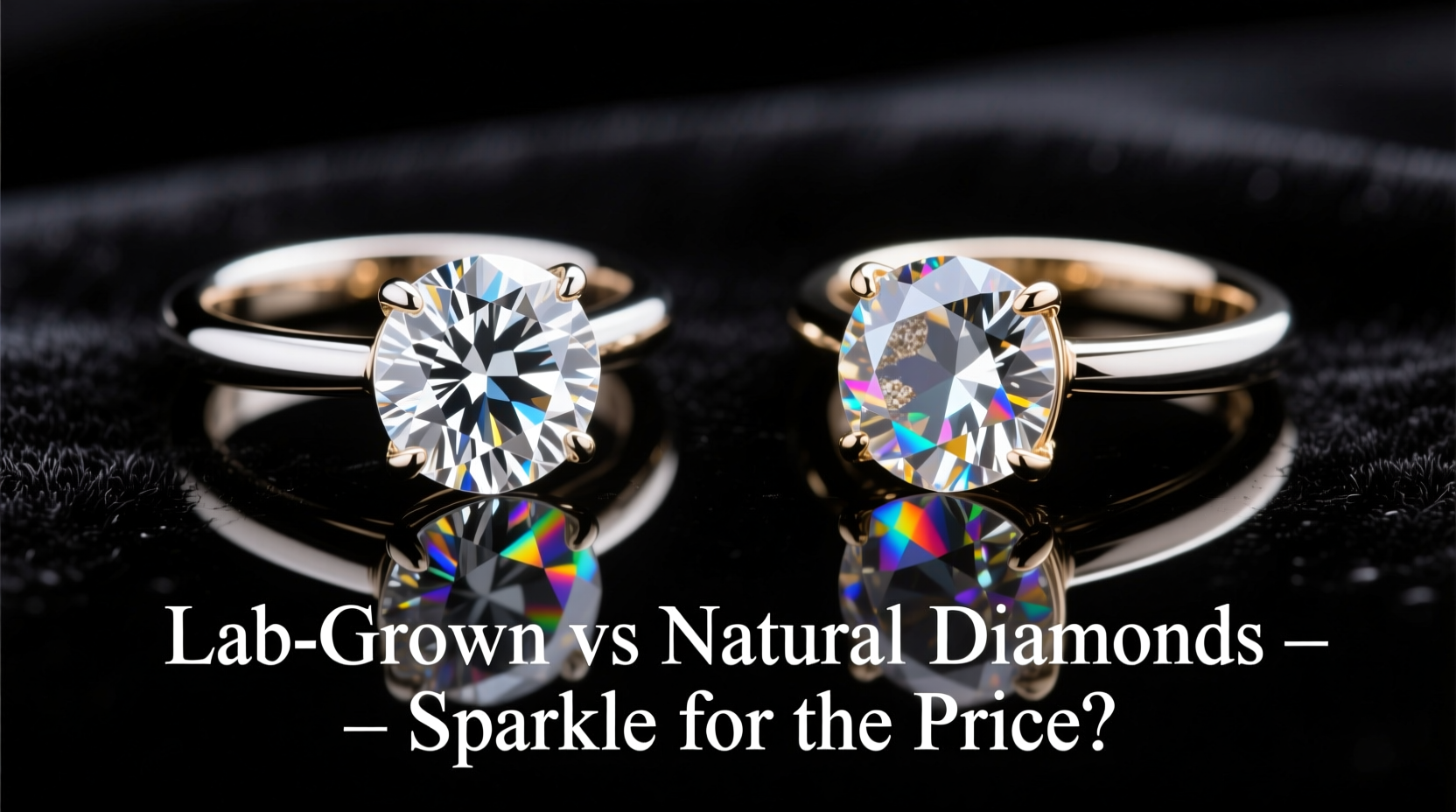
When people refer to a diamond’s “sparkle,” they’re usually describing a combination of three optical effects: brilliance (white light reflection), fire (colored flashes), and scintillation (the pattern of light and dark areas when the stone moves). These qualities depend not just on the diamond’s origin but primarily on its cut quality, proportions, symmetry, and polish.
A well-cut diamond—whether natural or lab grown—will outperform a poorly cut one in terms of sparkle, regardless of carat weight or price. The Gemological Institute of America (GIA) rates cut quality on a scale from Excellent to Poor, and this rating often matters more than whether the stone was formed over billions of years underground or synthesized in a few weeks.
“Cut is king when it comes to sparkle. Two diamonds with identical carat weights and clarity can look drastically different based solely on cut precision.” — Dr. Laura Mitchell, GIA Certified Gemologist
In practical terms, this means that two diamonds—one natural, one lab grown—with the same cut grade, color, clarity, and size will exhibit nearly indistinguishable levels of sparkle under normal lighting conditions. The human eye cannot detect the difference in origin; it responds to light performance.
Price Comparison: What You Get Per Dollar Spent
One of the most compelling arguments for lab grown diamonds is cost efficiency. On average, lab grown diamonds retail for 30% to 50% less than their natural counterparts with equivalent specifications. This gap allows buyers to get a larger or higher-quality stone within the same budget.
For example:
| Specification | Natural Diamond Price | Lab Grown Diamond Price | Savings with Lab Grown |
|---|---|---|---|
| 1.0 ct, D Color, VVS1 Clarity, Ideal Cut | $12,500 | $6,800 | $5,700 (45.6%) |
| 1.5 ct, G Color, VS1 Clarity, Excellent Cut | $16,200 | $9,100 | $7,100 (43.8%) |
| 2.0 ct, H Color, SI1 Clarity, Excellent Cut | $22,000 | $11,500 | $10,500 (47.7%) |
This significant price advantage enables lab grown diamond buyers to prioritize cut quality—the most critical factor for sparkle—without exceeding typical engagement ring budgets. A $10,000 budget might buy a 1.2-carat natural diamond with good but not ideal proportions. The same budget could secure a 1.8-carat lab grown diamond with superior cut symmetry and polish, resulting in noticeably more brilliance and fire.
Real-World Example: Choosing Between Two Rings
Consider Sarah, shopping for an engagement ring with a $7,500 budget. She’s drawn to sparkle and wants the most visually impressive stone possible.
Her jeweler shows her two options:
- Natural Diamond: 1.0 ct, G color, VS2 clarity, Very Good cut – priced at $7,200.
- Lab Grown Diamond: 1.5 ct, F color, VVS2 clarity, Ideal cut – priced at $7,400.
While the natural diamond is reputable and conflict-free, its “Very Good” cut means slightly less light return. The lab grown alternative, though synthetic in origin, features superior optical symmetry and a larger table facet, maximizing brightness and dispersion. Under store lighting and daylight, the lab grown stone appears brighter, livelier, and more radiant.
Sarah chooses the lab grown option. Her fiancé later comments that the ring “looks like it belongs in a movie,” unaware of its origin. For Sarah, the decision wasn’t about ethics or environmental concerns—it was about getting the most dazzling result for her investment.
Factors That Influence Sparkle Beyond Origin
While origin plays no direct role in sparkle, several related factors can indirectly affect performance:
Cut Precision and Consistency
Lab grown diamonds often benefit from advanced manufacturing techniques that allow for tighter tolerances in cutting. Because many are produced by companies focused exclusively on diamond synthesis and polishing, there's greater consistency in achieving ideal proportions. Natural diamonds vary widely depending on the rough crystal shape and sourcing practices.
Diamond Shape Matters
Round brilliant cuts maximize sparkle due to their symmetrical facet arrangement. Fancy shapes like emerald or princess cuts may show more inclusions or lack fire compared to rounds. Whether natural or lab grown, round brilliants consistently deliver the highest level of scintillation.
Fluorescence Effects
About 25–35% of natural diamonds exhibit blue fluorescence under UV light, which can sometimes make them appear hazy or oily in daylight. Lab grown diamonds also display fluorescence, but studies suggest slightly lower incidence rates and more predictable behavior. Strong fluorescence in either type can reduce perceived clarity and brilliance in certain environments.
Metal Setting and Ring Design
A halo setting, for instance, enhances the center stone’s apparent size and reflects additional light back into the diamond, increasing overall sparkle. Pavé bands and accent stones contribute to total brilliance. These design choices often have a bigger visual impact than the origin of the center stone.
Debunking Myths About Lab Grown Diamonds
Despite growing acceptance, misconceptions persist:
- Myth: Lab grown diamonds don’t sparkle as much. False. Identical physical properties mean identical light performance when cut to the same standard.
- Myth: They look fake or glassy. Modern lab diamonds are indistinguishable from natural ones without specialized equipment.
- Myth: They’ll become worthless quickly. While resale value is currently lower, depreciation stabilizes after purchase—just like electronics or cars. If worn and enjoyed, financial return is secondary.
The reality is that lab grown diamonds offer exceptional value for those prioritizing aesthetics over rarity. Their affordability opens access to higher-tier specifications that directly enhance sparkle.
Actionable Checklist: Maximizing Sparkle on Any Budget
To ensure you get the most brilliance for your money—regardless of diamond type—follow this checklist:
- ✅ Prioritize cut grade: Aim for GIA Excellent or AGS Ideal.
- ✅ Choose a round brilliant cut unless you prefer a specific aesthetic.
- ✅ Compare diamonds side by side under multiple light sources.
- ✅ Avoid strong fluorescence unless confirmed to be inert or beneficial.
- ✅ Allocate savings from lab grown pricing toward better cut, clarity, or carat weight.
- ✅ Inspect high-resolution magnified images or videos online before buying.
- ✅ Work with jewelers who provide full grading reports from GIA or IGI.
Frequently Asked Questions
Do lab grown diamonds pass a diamond tester?
Yes. Standard diamond testers measure thermal or electrical conductivity, both of which are identical in lab grown and natural diamonds. Only advanced gemological tools can differentiate between the two.
Can you tell the difference between a lab grown and natural diamond with the naked eye?
No. Even trained gemologists cannot distinguish them without laboratory equipment. Visual characteristics such as sparkle, color, and clarity are determined by cut and quality—not origin.
Are lab grown diamonds certified?
Yes. Reputable labs like the International Gemological Institute (IGI), GIA, and GCAL issue grading reports for lab grown diamonds, evaluating color, clarity, cut, and carat weight using standards similar to those for natural stones.
Final Verdict: Which Offers Better Sparkle for the Price?
If your goal is to maximize sparkle relative to cost, lab grown diamonds are the clear winner. Their significantly lower price point allows consumers to upgrade key attributes—especially cut quality—that directly influence brilliance, fire, and scintillation. A well-cut, larger lab grown diamond will typically outshine a smaller or lower-proportioned natural diamond in real-world settings.
This doesn’t diminish the allure of natural diamonds, which carry geological history and scarcity value. For some buyers, knowing their stone formed deep within the Earth adds emotional significance. However, from a purely optical and economic standpoint, lab grown diamonds deliver superior sparkle-per-dollar performance.
The modern jewelry market rewards informed decisions. With identical beauty, comparable durability (both rate 10 on the Mohs hardness scale), and increasingly accepted legitimacy, lab grown diamonds represent a smart, stylish choice for value-conscious shoppers who want maximum visual impact.




 浙公网安备
33010002000092号
浙公网安备
33010002000092号 浙B2-20120091-4
Comments
No comments yet. Why don't you start the discussion?