
When it comes to choosing between lace-up fringe boots and zipper boots, the decision often feels like a trade-off between style and practicality. One promises rugged authenticity and a custom fit; the other offers speed and ease with a simple pull. But which one truly delivers more value in everyday wear? For those building a functional yet expressive wardrobe, understanding the real differences—beyond aesthetics—is essential. This isn't just about fashion—it's about how your footwear fits into your life.
The Style Statement: Fringe, Fit, and Fashion Legacy
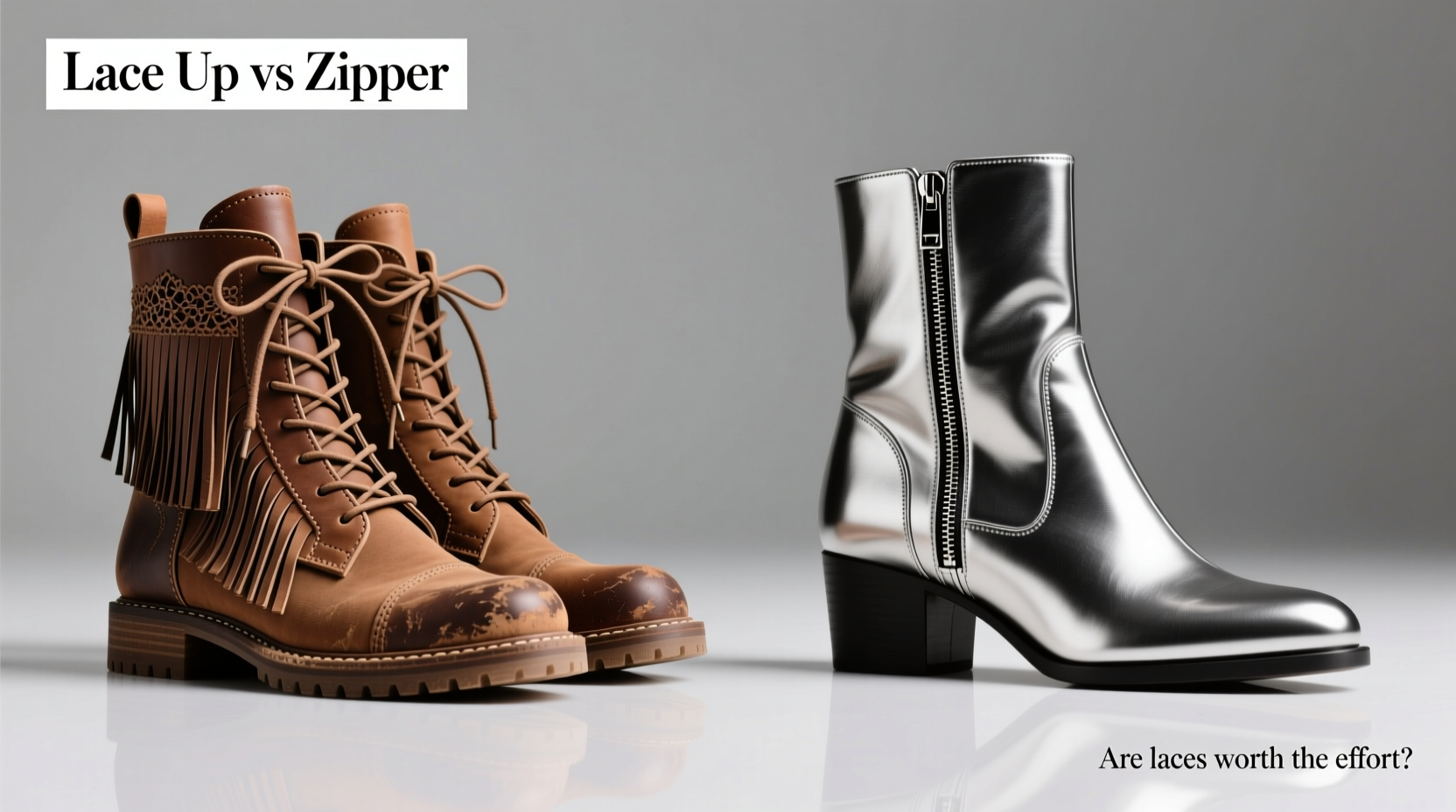
Lace-up fringe boots carry a legacy rooted in counterculture and craftsmanship. Inspired by 1970s bohemian styles and Western influences, they feature cascading fringe, hand-stitched details, and eye-catching lacing that draws attention. The intricate lacing allows for micro-adjustments, hugging the ankle and calf precisely. This customization enhances not only appearance but comfort, especially for those with unique leg shapes.
In contrast, zipper boots prioritize streamlined design. Their clean silhouette—free from laces and excess leather—makes them ideal for minimalist wardrobes or urban environments where sleekness matters. While some zipper boots incorporate decorative elements, they rarely match the visual drama of a well-crafted fringe boot.
Functionality and Daily Wear: The Real Test
Convenience is where zipper boots shine. Sliding into a pair with a side or rear zipper takes seconds. No tying, no re-lacing after removal—just fast access. This makes them ideal for commuters, parents, or anyone who values efficiency. High-quality zippers (especially YKK) are durable and reliable when maintained properly.
Lace-up boots demand more time and effort. Tying them securely every time can feel tedious, particularly during rushed mornings. However, this ritual comes with benefits: superior ankle support, adaptability to swelling feet, and the ability to loosen or tighten specific sections of the boot. Hikers and riders have long favored laces for these reasons.
The fringe itself adds another layer of complexity. While undeniably stylish, it can catch on furniture, seatbelts, or underbrush during outdoor use. In high-wind or rainy conditions, fringe may flap or absorb moisture faster than smooth leather.
Comfort Over Time: What Long-Term Wear Reveals
Leather molds to the foot, but how it’s secured affects the process. Lace-up boots allow incremental adjustments as the leather breaks in. You can keep the top looser while tightening around the heel, minimizing slippage and pressure points. This level of control often leads to better long-term comfort, even if initial break-in periods are stiffer.
Zipper boots rely on elastic gussets or stretch panels to accommodate movement. While modern designs have improved flexibility, they sometimes struggle with heel slip or tight calf fits. Once broken in, they may lose structural integrity faster than laced counterparts, especially if the zipper tension weakens.
“Laces give you control over fit distribution—critical for all-day wear. Zippers win on entry speed, but laces win on precision.” — Marcus Tran, Footwear Designer & Former Cobbler
Durability and Maintenance: Which Lasts Longer?
Durability hinges on construction quality, but design plays a role. Zipper mechanisms, though robust, are mechanical components subject to failure. Teeth can misalign, sliders can break, and repeated stress may strain the surrounding leather. Repairing a damaged zipper often requires specialized tools and expertise, potentially costing more than replacing a set of laces.
Laces, meanwhile, are easily replaced. Even if the aglets (plastic tips) wear off or the leather frays, new laces cost little and take minutes to install. The absence of hardware also means fewer weak points in the boot’s structure. Well-maintained lace-up boots frequently outlast their zipper-equipped peers by years.
Cleaning is comparable for both types, though fringe demands extra care. It traps dust and requires gentle brushing or spot treatment. Avoid machine washing at all costs—fringe can tangle or tear. Zipper teeth should be wiped regularly to prevent grit buildup that impedes movement.
Repair and Sustainability Considerations
Sustainability-minded consumers may lean toward lace-up designs. Their modular nature—replaceable soles, laces, and minimal hardware—makes them easier to restore. Cobblers routinely rebuild lace-up boots entirely, extending their lifespan indefinitely.
Zipper boots present challenges. If the zipper fails and an exact replacement isn’t available, the entire boot may be retired prematurely. Some brands now use repairable zippers, but availability varies.
Side-by-Side Comparison: Key Differences at a Glance
| Feature | Lace-Up Fringe Boots | Zipper Boots |
|---|---|---|
| Fitting Precision | High – adjustable tension zones | Moderate – fixed fit with stretch panels |
| Entry/Exit Speed | Slower – requires tying | Fast – single pull |
| Durability | Generally higher – fewer mechanical parts | Good, but zipper prone to wear |
| Style Impact | High – bold, vintage appeal | Low to moderate – clean, modern look |
| Maintenance | Easy – replaceable laces, no moving parts | Moderate – zipper care required |
| Sustainability | Higher – repairable, long-lasting | Lower – zipper failure limits lifespan |
Real-World Scenario: Two Weeks, Two Styles
Sophia, a freelance photographer based in Portland, tested both styles during a two-week assignment involving city shoots and rural landscapes. She wore lace-up fringe boots Monday through Wednesday, then switched to a premium zipper model for the remainder.
She noted that the laced boots provided better stability on uneven terrain and stayed secure during long walks. However, she spent nearly 10 extra minutes per day tying and untying them. The zipper boots were effortless to put on, especially when rushing to catch early light. But by day five, she experienced slight heel lift, leading to minor blisters. The fringe boots, though heavier, felt more integrated with her stride after breaking in.
Her takeaway: “For creative work where I want to *feel* authentic, I’ll take the laces. For quick errands or back-to-back meetings, I reach for the zipper.”
Choosing What Works for Your Lifestyle
The answer isn’t universal. It depends on how you live, what you value, and where you wear your boots.
- Choose lace-up fringe boots if: You prioritize style, plan to wear them infrequently or for statement occasions, enjoy vintage or bohemian fashion, or need maximum ankle support.
- Choose zipper boots if: You’re short on time, wear boots daily, prefer low-maintenance options, or favor contemporary silhouettes.
Many people benefit from owning both. Think of lace-ups as your weekend warrior or concert companion. Keep zippers for weekday reliability. Rotation also extends the life of each pair by reducing continuous wear.
Checklist: How to Decide Between Lace-Up and Zipper Boots
- Assess your daily routine: How much time do you spend putting on/taking off boots?
- Evaluate your calf and ankle shape: Do you need adjustable fit?
- Consider your environment: Urban sidewalks vs. trails or festivals?
- Think about long-term ownership: Do you want to repair and resole, or replace every few years?
- Define your style goals: Bold expression or understated polish?
Frequently Asked Questions
Are lace-up boots harder to walk in?
Not inherently. Once properly tied, lace-up boots often provide better support and reduce foot fatigue over long distances. The key is securing the heel first, then adjusting midfoot tension.
Do zipper boots stretch over time?
Some do, especially those with elastic side panels. Leather uppers will also mold slightly, but the fit remains largely fixed compared to laces. Try them on late in the day when feet are swollen for best sizing accuracy.
Can I add zippers to lace-up boots?
Technically possible, but not recommended. Retrofitting compromises structural integrity and voids warranties. It’s better to choose a hybrid style designed with both features from the start.
Final Thoughts: Worth the Hassle?
Yes—depending on what you’re willing to invest. Lace-up fringe boots aren’t just footwear; they’re a ritual, a statement, and a commitment to craftsmanship. The extra minute it takes to tie them pays dividends in fit, longevity, and personal expression. They reward patience with presence.
Zipper boots serve a different purpose: efficiency, consistency, and ease. They reflect a modern pace of life where seconds count. Neither is objectively better. The smartest choice is intentional—one aligned with your rhythm, needs, and aesthetic truth.




 浙公网安备
33010002000092号
浙公网安备
33010002000092号 浙B2-20120091-4
Comments
No comments yet. Why don't you start the discussion?