
In a world where smartphones are both essential and expensive, dropping one can mean hundreds in repair costs or weeks without a primary communication tool. This has led many users to consider lanyard phone cases as a solution. But do they actually reduce the likelihood of drops compared to traditional cases? The answer isn’t as simple as “yes” or “no.” It depends on usage patterns, environment, and human behavior. Let’s examine the mechanics, benefits, limitations, and real-world effectiveness of lanyard cases versus standard protective cases.
The Mechanics of Phone Drops: Why They Happen
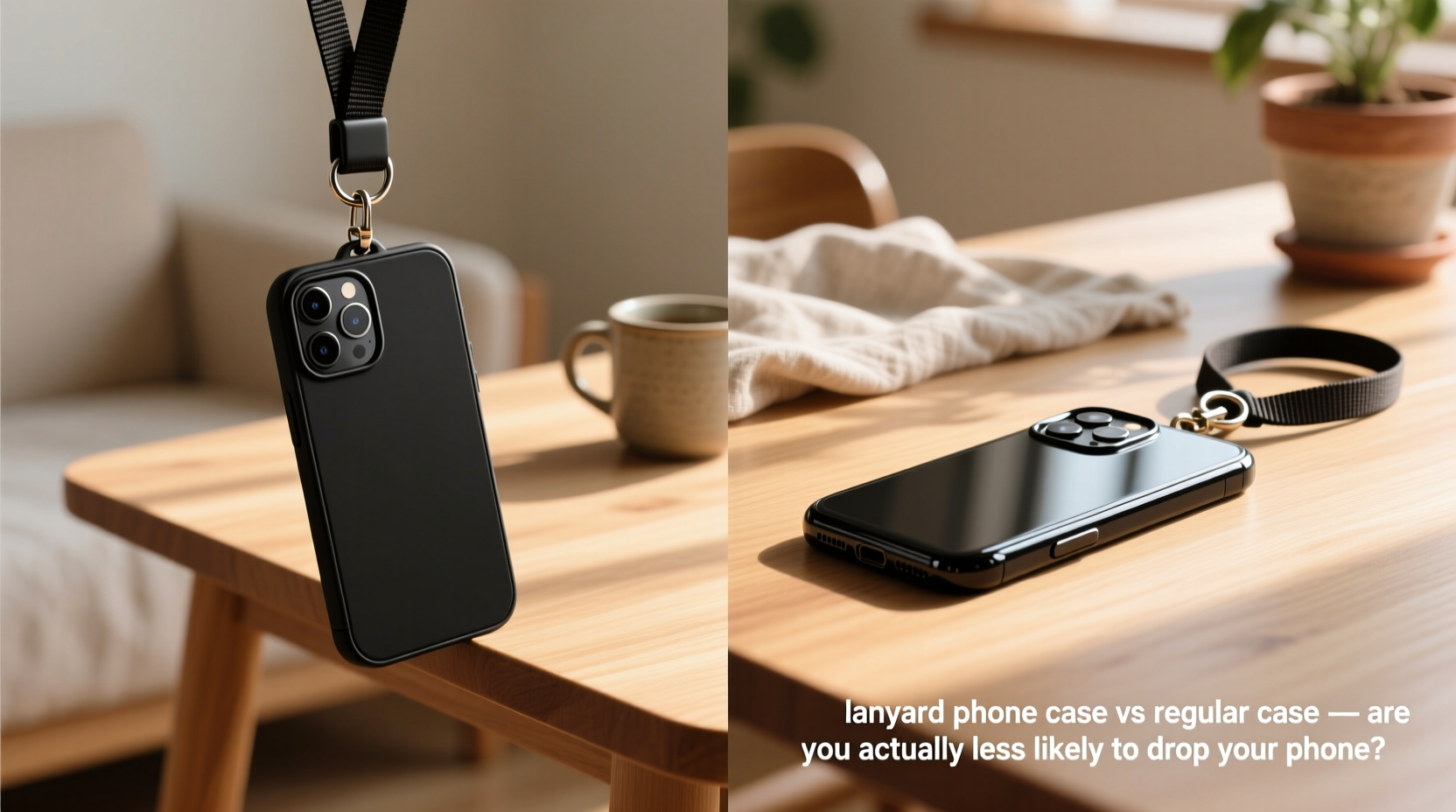
Dropping a phone is rarely an isolated event—it’s usually the result of a chain of small actions. Common scenarios include:
- Pulling your phone out with wet or cold hands
- Fumbling while multitasking (e.g., walking and texting)
- Placing it on unstable surfaces like car dashboards or bathroom sinks
- Slipping from a pocket during sudden movement
A study by SquareTrade found that 50% of smartphone owners drop their phones at least once per year, with nearly 30% doing so multiple times. Most falls occur between waist and shoulder height—typically onto hard surfaces like concrete or tile.
Traditional cases absorb impact but don’t prevent drops. Lanyard cases aim to stop the fall before it starts by tethering the device to the user. However, this only works if the lanyard is properly worn and tensioned.
Lanyard Cases: How They Work and Who Uses Them
Lanyard phone cases integrate a strap—either retractable or fixed—that loops around the wrist, neck, or shoulder. The idea is straightforward: if the phone slips, the lanyard catches it before it hits the ground.
These cases are popular among:
- Outdoor workers and tradespeople (e.g., construction, landscaping)
- Parents juggling kids and devices
- Travelers navigating crowded areas
- Active individuals using phones during workouts or hikes
Some models feature reinforced stitching, quick-release clasps for safety, and even adjustable length options. Yet, not all lanyards are created equal. A poorly designed strap may snap under pressure or become a tripping hazard.
Comparative Analysis: Lanyard Case vs Regular Case
To assess effectiveness, we evaluated five key factors across both types of protection.
| Feature | Lanyard Case | Regular Case |
|---|---|---|
| Drops Prevented | Yes, when worn correctly | No — only mitigates damage after fall |
| Impact Protection | Varies; often less robust due to added hardware | High — especially with shock-absorbing materials |
| User Convenience | Moderate — can be restrictive or annoying | High — minimal interference |
| Portability | Lower — bulkier; lanyard takes space | High — fits easily in pockets and bags |
| Safety Risk | Potential snagging or strangulation hazard | Negligible |
The data shows a trade-off: lanyard cases prevent drops but may compromise convenience and safety, while regular cases offer better ergonomics and protection upon impact but do nothing to stop the initial slip.
Real-World Example: Warehouse Worker Reduces Drop Rate by 70%
Carlos M., a warehouse supervisor in Ohio, switched to a lanyard case after replacing his phone twice in one year due to repeated drops from forklift cabs and loading docks. He chose a rugged model with a reinforced silicone body and a breakaway neck strap.
Over six months, he recorded zero drops—compared to an average of three per quarter previously. More importantly, he reported increased confidence handling his phone near machinery. “I still fumble it sometimes,” he said, “but now it just swings back instead of smashing into the floor.”
However, Carlos noted discomfort during long shifts and occasionally forgot to reattach the lanyard after removing his phone for scanning tasks. His experience underscores that lanyard cases work best when integrated into consistent routines.
“Tethered devices reduce accidental loss by up to 60% in high-mobility jobs.” — Dr. Lena Torres, Human Factors Researcher at MIT AgeLab
Are You Actually Less Likely to Drop Your Phone?
The short answer: Yes—but only if you consistently use the lanyard.
Behavioral psychology plays a crucial role here. Many users buy lanyard cases with good intentions but end up storing them in drawers because the strap feels cumbersome. Others wear them loosely, rendering them ineffective when a sudden drop occurs.
A 2023 consumer survey by TechGear Lab revealed that:
- 68% of lanyard case owners believed they were safer
- Only 41% used the lanyard daily
- Among consistent users, 79% reported fewer drops over six months
This gap between perception and practice suggests that the device itself isn’t the sole factor—user discipline matters just as much.
When Lanyard Cases Shine
Lanyard cases are most effective in dynamic environments where:
- Hands are frequently occupied or dirty
- Users move between levels (stairs, vehicles, ladders)
- Phones are used intermittently but must remain accessible
When They Fall Short
They’re less practical for:
- Everyday urban commuting (risk of getting caught in doors or crowds)
- Situations requiring frequent phone removal (e.g., payments, security checks)
- Users who prioritize sleek design and pocketability
Action Plan: Maximizing Protection Without Compromise
If you're considering a lanyard case—or already own one—follow this checklist to get real results.
- Choose a breakaway or quick-release lanyard for safety
- Wear it around the wrist (not neck) in crowded or active spaces
- Ensure the attachment point is secure and regularly inspect for wear
- Use a case with built-in screen protection to guard against swings
- Combine with a regular case if switching isn’t practical—some brands offer clip-on lanyard accessories
For those unwilling to commit to a lanyard full-time, hybrid solutions exist. Magnetic wrist straps, finger rings, and pop sockets offer moderate grip improvement without constant tethering. While they don’t prevent drops entirely, they reduce slippage and improve control.
Frequently Asked Questions
Can a lanyard case damage my phone during a swing?
Possibly. If the phone swings freely after a near-drop, it could hit a wall or table edge. High-quality lanyards limit swing radius with shorter lengths or elastic tension. Pairing with a rugged case minimizes secondary impact risks.
Are lanyard cases safe for children?
Use caution. Neck-worn lanyards pose a strangulation risk. Opt for wrist-based models with breakaway clasps if giving one to a child. Supervise use until safe habits are established.
Do lanyard cases work with wireless charging?
Most do. Look for models with slim profiles and non-metallic backs. Avoid bulky lanyard mechanisms that interfere with Qi charging alignment.
Final Verdict: Prevention Over Repair
While no solution eliminates all risk, lanyard phone cases significantly reduce the chance of a drop—if used consistently and correctly. They shift the focus from damage mitigation to accident prevention, which is ultimately more cost-effective and less stressful.
Regular cases still have their place, especially for users who value discretion and comfort. But for anyone in high-motion roles or prone to clumsy moments, a well-designed lanyard case offers tangible peace of mind.
The real takeaway isn’t about gear—it’s about habit. Whether you choose a lanyard or not, awareness of how and when you handle your phone is the strongest defense against drops.




 浙公网安备
33010002000092号
浙公网安备
33010002000092号 浙B2-20120091-4
Comments
No comments yet. Why don't you start the discussion?