
When choosing flooring for high-traffic areas like living rooms, offices, or basements, many homeowners and facility managers face a practical dilemma: should they go with a traditional large area rug or opt for modern carpet tiles? While both offer comfort, style, and insulation, their long-term performance in cleaning and replacement differs significantly. The real question isn’t just about initial appeal—it’s about sustainability, maintenance effort, and cost over time.
Understanding how each option holds up under spills, stains, foot traffic, and wear can save time, money, and frustration down the line. This article breaks down the cleaning and replacement realities of large area rugs versus carpet tiles, offering data-driven comparisons, expert insights, and actionable guidance for making the smarter long-term choice.
Cleaning: Daily Maintenance and Deep Cleaning Challenges
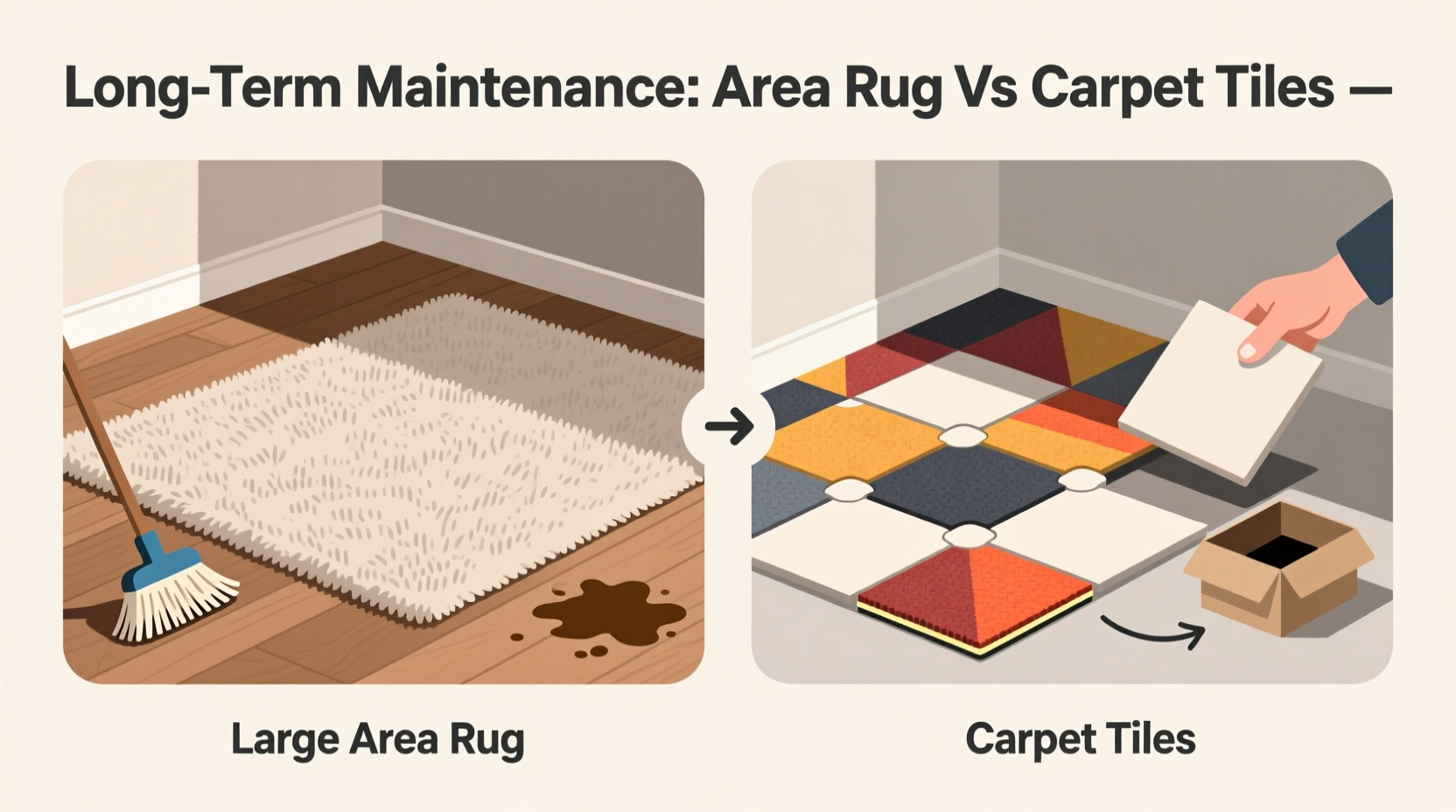
One of the most critical factors in flooring longevity is ease of cleaning. Large area rugs and carpet tiles respond very differently to routine care and accidental messes.
Large area rugs, especially those made from wool, silk, or synthetic blends, require careful vacuuming—typically twice a week—to prevent dust buildup. Spot cleaning is possible, but any spill that seeps into the padding or backing can lead to mold, mildew, or permanent staining. Professional deep cleaning is recommended every 12 to 18 months, which adds recurring costs and logistical challenges (moving furniture, scheduling services).
In contrast, carpet tiles are engineered for resilience. Most are stain-resistant, moisture-wicking, and designed for commercial environments. Because each tile is independent, spills affect only one or two units rather than the entire surface. Routine vacuuming is sufficient, and individual tiles can be removed and hand-washed if necessary. Some manufacturers even design tiles to be flipped—doubling their usable life before replacement.
Replacement and Repair: Long-Term Practicality
Durability matters, but so does repairability. A single burned spot on a $1,200 area rug may necessitate full replacement—or costly professional patching. Carpet tiles eliminate this problem through modularity.
If a tile becomes stained, torn, or faded, it can be replaced individually in minutes using basic tools. No need for adhesive removal across an entire floor; simply lift the damaged tile and install a new one. This plug-and-play approach is why institutions like schools, hospitals, and tech offices overwhelmingly choose carpet tiles—they minimize downtime and maintenance costs.
Area rugs, on the other hand, degrade uniformly. Edges fray, colors fade from sunlight exposure, and fibers compress under furniture legs. Once significant wear appears, the entire rug must be replaced—even if only 20% of the surface is compromised. This makes long-term ownership more expensive and less sustainable.
“Carpet tiles represent a shift toward circular flooring design—where components can be repaired, reused, or recycled without scrapping the whole system.” — Dr. Lena Pruitt, Sustainable Materials Researcher, University of Colorado
Comparison Table: Key Maintenance Factors
| Maintenance Factor | Large Area Rug | Carpet Tiles |
|---|---|---|
| Spot Cleaning Difficulty | Moderate to High (risk of spreading) | Low (localized, contained) |
| Deep Cleaning Frequency | Every 12–18 months (professional) | As needed per tile; rarely full floor |
| Individual Damage Repair | Difficult/expensive (patching or full replacement) | Easy (swap single tile) |
| Lifespan Under Heavy Traffic | 5–7 years (with fading/compression) | 10+ years (modular renewal extends use) |
| Installation & Reinstallation Effort | High (moving furniture, stretching) | Low (peel-and-stick or loose-lay options) |
| Eco-Friendliness (end-of-life) | Poor (often ends in landfill) | Better (many brands recyclable) |
Real-World Scenario: Office Renovation Case Study
A mid-sized marketing firm in Portland, Oregon, renovated its open-concept office space in 2019. The team debated between wall-to-wall broadloom carpet, large area rugs, and modular carpet tiles. After consulting with a facilities manager and reviewing lifecycle costs, they chose carpet tiles from a leading sustainable brand.
Within two years, three tiles near the coffee station were stained by repeated milk spills. Instead of replacing the entire floor covering, the maintenance staff ordered replacements online and swapped them out during lunch break—total downtime: 15 minutes. Three years later, the floor still looks cohesive, with only minor signs of wear in low-light areas.
Had they chosen large area rugs, a similar spill pattern would have required either steam cleaning every few months (increasing labor costs) or replacing multiple 8x10 rugs as stains set in. The modular solution saved an estimated $3,200 in maintenance and replacement expenses over five years.
Step-by-Step Guide: How to Maintain Carpet Tiles for Maximum Longevity
- Vacuum weekly with a suction-only setting to avoid fraying edges.
- Inspect quarterly for signs of lifting, staining, or edge curling.
- Rotate tiles in high-traffic zones (e.g., entryways, desks) to distribute wear.
- Remove and wash stained tiles using mild detergent and air-dry completely before reinstallation.
- Replace damaged tiles immediately to prevent tripping hazards and further degradation.
- Store extra tiles in a dry place for future use—match batch numbers for color consistency.
FAQ: Common Questions About Rugs vs. Carpet Tiles
Can I install carpet tiles over an existing area rug?
No. Carpet tiles require a flat, stable, and clean subfloor. Installing them over a plush rug creates instability, increases trip risk, and may void warranties. Remove the old rug first.
Are large area rugs ever better than carpet tiles?
Yes—in low-traffic spaces like bedrooms or formal living rooms where aesthetics take priority. Area rugs offer seamless texture and warmth underfoot, ideal for decorative purposes. However, for durability and maintenance, carpet tiles win in active environments.
Do carpet tiles look cheap compared to traditional rugs?
Not anymore. Modern carpet tiles come in hundreds of textures, patterns, and color gradients—including designs that mimic wool, sisal, or even hardwood. When installed correctly, they create a polished, intentional look suitable for homes and corporate settings alike.
Final Recommendation: Choose Based on Use, Not Just Style
The decision between large area rugs and carpet tiles shouldn't hinge solely on appearance. In high-use areas—homes with pets and children, rental properties, offices, or playrooms—carpet tiles are objectively easier to clean and replace over time. Their modular nature transforms what would be a disruptive, costly renovation into a simple swap-out process.
Large area rugs remain valuable for aesthetic impact and softness in controlled environments. But when evaluating long-term practicality, carpet tiles offer superior flexibility, lower lifetime costs, and greater sustainability. They empower owners to respond to damage instantly, reduce waste, and maintain cleanliness without professional intervention.
If you're planning a new space or reevaluating your current flooring, consider starting with carpet tiles in functional zones. Reserve area rugs for accent pieces where they can shine without bearing the brunt of daily wear.




 浙公网安备
33010002000092号
浙公网安备
33010002000092号 浙B2-20120091-4
Comments
No comments yet. Why don't you start the discussion?