
Summer brings long days at the beach, spontaneous picnics, outdoor festivals, and casual strolls through sunlit streets. With all this movement comes a simple but impactful decision: what kind of bag should you carry? The age-old debate between the spacious large beach bag and the sleek small purse resurfaces every season. Each has its strengths and trade-offs. Choosing the right one isn’t just about fashion—it’s about function, comfort, and how well it supports your lifestyle under the summer sun.
The Practicality Factor: Capacity and Daily Needs
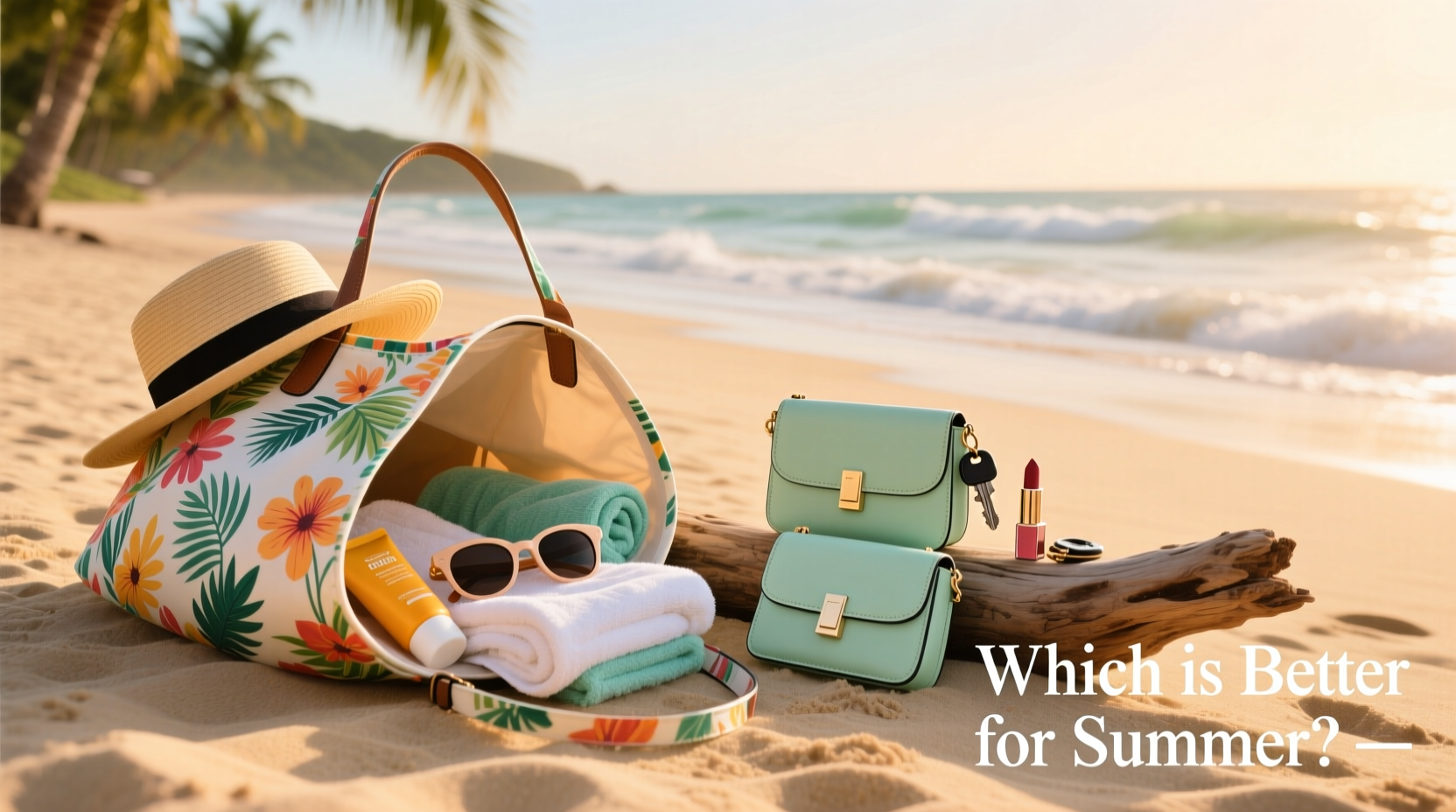
When evaluating bags for summer use, capacity is often the deciding factor. A large beach bag typically offers 20–30 liters of space, capable of holding towels, sunscreen, snacks, a book, water bottle, and even a change of clothes. This makes it ideal for full-day outings, especially near water or in open environments where you need to be self-sufficient.
In contrast, a small purse usually maxes out at 5–7 liters. It fits essentials like phone, wallet, keys, sunglasses, and lip balm—but little else. While minimalism has its appeal, limitations become apparent when plans shift. Forgetting sunscreen or needing a snack can turn a light carry into a logistical headache.
Comfort and Mobility: Carrying Weight All Day
While large bags offer more room, they also add weight—especially once filled. Carrying 8–10 pounds on a hot day can strain shoulders, particularly if the bag lacks padding or ergonomic design. Lightweight materials like canvas, raffia, or recycled nylon help, but distribution matters just as much as size.
Small purses score high in mobility. Worn crossbody or held by a strap, they allow hands-free movement and reduce physical strain. However, their compactness forces tough choices: do you bring hand sanitizer or an extra pair of sunglasses? For urban explorers or those hopping between events, convenience often outweighs capacity.
“Functionality during summer hinges on balance. A bag that fits your actual daily load—not just your ideal one—is key.” — Lena Torres, Lifestyle Organizer & Travel Consultant
Style vs. Substance: Fashion Considerations
Small purses dominate fashion editorials for good reason. They complement flowy sundresses, cropped jeans, and minimalist aesthetics. Designers release limited summer editions in pastels, metallics, and exotic textures, making them coveted accessories. But trendiness doesn’t always translate to usability.
Large beach bags have evolved beyond basic tote designs. Modern versions feature tasseled details, embroidered patterns, waterproof linings, and fold-over closures. Brands like Cuyana, Baggu, and Soludos blend utility with elegance, proving that practical doesn’t mean plain.
The real question isn’t whether one looks better—it’s whether your look supports your life. A stunning mini bag left behind because it couldn’t hold a water bottle defeats its purpose.
Comparison Table: Large Beach Bag vs Small Purse
| Feature | Large Beach Bag | Small Purse |
|---|---|---|
| Capacity | High (15–30L) | Low (3–7L) |
| Mobility | Moderate (bulkier, heavier) | High (lightweight, easy to carry) |
| Security | Lower (open tops, fewer zippers) | Higher (zippered, close to body) |
| Versatility | Best for leisure, travel, beach | Ideal for dining, shopping, city walks |
| Fashion Flexibility | Limited to casual styles | Matches diverse outfits |
| Maintenance | Easier to clean (washable fabrics) | Delicate materials require care |
Real-Life Scenario: A Weekend at the Shore
Sophie planned a weekend getaway to Cape May. She packed her chic leather crossbody—perfect for brunch and sunset drinks. But on Saturday morning, she headed to the beach with only her small purse. Inside: phone, $20 cash, and lip balm. No towel, no sunscreen, no water. Forced to buy overpriced supplies onsite, she spent $45 and still sat on damp sand. By afternoon, her shoulder ached from clutching the bag against waves of wind.
On Sunday, she borrowed a oversized straw tote from her sister. It had a zip pocket, towel loop, and room for flip-flops. She carried everything effortlessly. “I looked less ‘put together,’” she admitted later, “but I actually enjoyed the day.”
This common scenario illustrates a gap between aesthetic preference and real-world demand. Summer activities often require gear; denying that leads to stress, expense, and discomfort.
When to Choose Which: A Decision Checklist
Instead of treating this as an either-or dilemma, consider context. Use this checklist to guide your choice based on daily needs:
- ✅ Choose a large beach bag if:
- You’re spending extended time outdoors
- Your plans include swimming, sunbathing, or picnics
- You travel with kids or pets
- You dislike making multiple trips back to the car or hotel
- You value preparedness over polish
- ✅ Choose a small purse if:
- You’re attending a dinner, concert, or event
- Public restrooms or lockers are available
- You prioritize lightweight carry and freedom of movement
- You’re in a secure urban environment
- Your outfit demands a specific accessory match
Hybrid Solution: The Best of Both Worlds
Many women now adopt a dual-bag strategy. Carry a small purse for evening outings, then stash it inside a larger, collapsible tote used during daytime adventures. Others opt for structured beach bags with removable pouches—essentially turning a large bag into a system: one compartment for beach gear, another zip-out clutch for dinners.
Brands like Baggu and Dagne Dover specialize in convertible designs. Their nylon totes double as crossbody bags when cinched, offering adaptability across settings. This approach eliminates compromise: you get utility when needed and elegance when desired.
Frequently Asked Questions
Can I use a large beach bag for everyday errands?
Absolutely—if sized appropriately. Oversized market totes may overwhelm grocery runs or coffee stops. Look for medium-large bags (10–15L) with structured bases and comfortable straps. These bridge the gap between beach-ready and street-smart.
Are small purses safe in crowded areas?
Generally, yes—especially if worn crossbody and kept in front. Small bags reduce the risk of over-packing and wandering hands. Just avoid placing them on restaurant chairs or leaving them unattended.
How do I protect my belongings from sand and water?
Use waterproof-lined beach bags or insert a reusable shopping bag as a liner. For small purses, opt for water-resistant materials like silicone-coated canvas or vinyl. Always wipe down after exposure to salt or chlorine.
Final Thoughts: Match Your Bag to Your Life, Not the Trend
The large beach bag versus small purse debate isn’t about declaring a universal winner. It’s about alignment: does your bag serve your summer reality? If your days involve lounging by the ocean, chasing kids, or hiking coastal trails, a spacious, durable tote will enhance your experience. If you're dining al fresco, meeting friends downtown, or attending rooftop parties, a compact, stylish purse keeps things effortless.
Smart packing starts with honest assessment. Ask: What do I *actually* need? Where am I going? How far will I walk? Answer those, and the right bag becomes obvious—not because it’s trendy, but because it works.




 浙公网安备
33010002000092号
浙公网安备
33010002000092号 浙B2-20120091-4
Comments
No comments yet. Why don't you start the discussion?