
Choosing the right everyday bag isn’t just about style—it’s about function, comfort, and how well it fits into your daily rhythm. In recent years, the underarm bag has surged in popularity, championed by fashion influencers and urban commuters alike. Meanwhile, the classic small handbag remains a staple in many wardrobes, prized for its elegance and simplicity. But when it comes to practicality, which truly wins for day-to-day life? The answer depends on lifestyle, needs, and even body mechanics. Let’s break down the strengths and limitations of each to help you decide what works best—without compromising on convenience or confidence.
Defining the Contenders
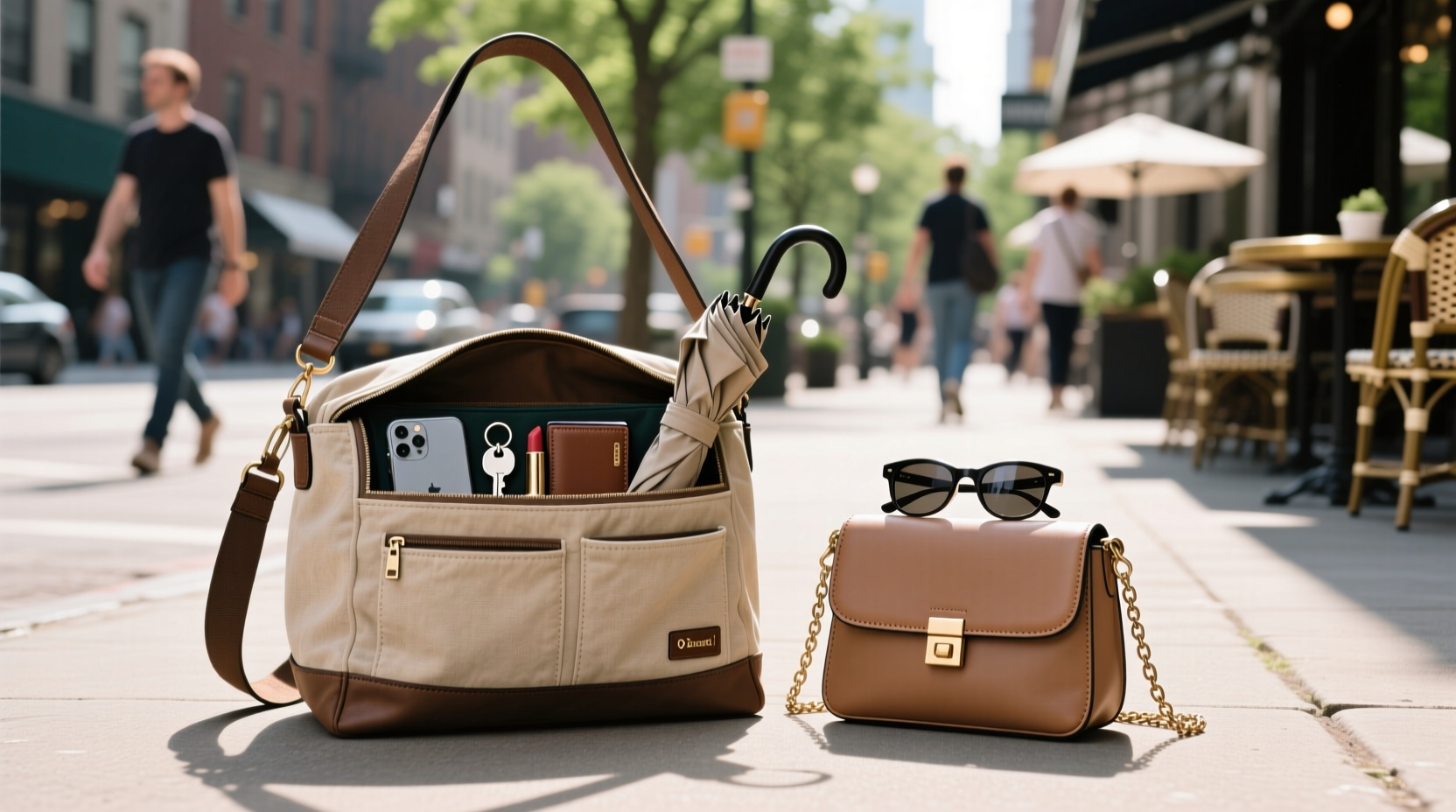
The “large underarm bag” typically refers to a compact yet structured crossbody or shoulder bag designed to be worn snugly under the arm. It often features a wide strap, minimal hardware, and enough space for essentials plus a few extras like a small tablet or gym clothes. Brands like Prada, Lululemon, and Aritzia have popularized this silhouette with functional, minimalist designs.
In contrast, the “small handbag” is usually carried by hand or over the shoulder with a short strap. It prioritizes portability and polish, often seen in clutch-style formats or micro bags that hold only the bare minimum: phone, keys, lipstick, and maybe a cardholder.
While both are marketed as everyday companions, their real-world performance varies dramatically depending on routine, mobility needs, and personal habits.
Capacity and Daily Essentials: What Can You Actually Carry?
One of the most critical factors in bag practicality is capacity. A bag that can’t hold what you need defeats its purpose no matter how stylish it is.
| Item | Large Underarm Bag (Avg. 12–14”) | Small Handbag (Avg. 6–8”) |
|---|---|---|
| Smartphone | ✓ Easily fits | ✓ Fits, but tight |
| Wallet | ✓ Spacious pocket or main compartment | △ May require slim wallet |
| Keys | ✓ Dedicated key clip or pocket | ✓ Usually fits |
| Makeup (compact + lipstick) | ✓ Room for small pouch | △ Only 1–2 items max |
| Water bottle (small) | ✓ Often possible | ✗ Rarely fits |
| Umbrella (foldable) | ✓ Frequently accommodated | ✗ No space |
| Jacket or sweater (rolled) | ✓ Can tuck outside or fit inside | ✗ Not feasible |
| Tablet or e-reader | ✓ Slim models fit | ✗ Too large |
The data shows a clear advantage for the large underarm bag when carrying more than just the basics. For professionals commuting to work, parents running errands, or travelers navigating transit, the ability to carry extra layers, tech, or personal care items makes a tangible difference.
Comfort and Wearability Over Time
A bag might look sleek, but if it causes shoulder strain or forces constant readjustment, it’s not practical. Comfort hinges on weight distribution, strap design, and how securely the bag stays in place.
Underarm bags excel here. Their wide straps distribute weight evenly across the shoulder, and the snug fit under the arm prevents swinging or slipping. This makes them ideal for walking long distances, cycling, or standing in crowded spaces like subways or concerts.
Small handbags, especially those with thin chains or short handles, often lead to hand fatigue or shoulder imbalance when worn over one shoulder. Carrying one for more than an hour can become uncomfortable, particularly if it contains a heavy phone or wallet.
“Ergonomics matter more than aesthetics when choosing a daily bag. A poorly balanced bag can contribute to posture issues over time.” — Dr. Lena Torres, Physical Therapist & Posture Specialist
Security and Accessibility
In busy environments, how easy is it to keep your belongings safe and within reach?
Underarm bags are naturally more secure. Worn tightly against the body, they’re harder for pickpockets to access. Many also feature zip closures, RFID-blocking pockets, or magnetic flaps that add peace of mind in crowded areas.
Small handbags, especially open-top clutches or those with loose flap closures, are more vulnerable. They’re often set down on restaurant tables, tucked between legs on public transport, or held loosely at events—making them easy targets.
However, small handbags win in quick-access scenarios. Need to grab your card at a checkout? A compact bag allows faster retrieval than digging through a deeper underarm tote.
- Best for security: Large underarm bag (especially with crossbody option)
- Best for speed: Small handbag (if organized with dedicated card slots)
- Best compromise: Underarm bag with external card pocket or top-zip quick-access section
Mini Case Study: Two Commuters, Two Choices
Sophie, a graphic designer in Chicago, used to carry a small leather handbag to client meetings. While elegant, she found herself lugging a separate tote for her sketchbook, laptop, and water bottle. After switching to a large underarm bag with padded interior and exterior pockets, she eliminated the second bag entirely. “I walk 30 minutes to work,” she says. “Now I don’t have to juggle anything, and my shoulders don’t ache by noon.”
Meanwhile, James, a lawyer in downtown Atlanta, prefers a slim handbag for court days. His job requires a polished appearance, and he only carries his phone, wallet, and legal notepad. “I’m in and out of elevators and courtrooms all day,” he explains. “A bulky bag would look unprofessional. My small bag stays tucked under my arm during arguments and never gets in the way.”
Their experiences highlight a crucial truth: practicality is context-dependent. There’s no universal winner—only what aligns with your lifestyle.
Checklist: Choosing Your Ideal Everyday Bag
Before making a decision, ask yourself the following:
- What do I carry daily? (List all items)
- How much walking or standing do I do?
- Do I prioritize comfort or formality?
- Am I often in crowded or high-theft areas?
- Do I need room for unexpected items (groceries, gifts, etc.)?
- Can I easily switch bags based on the day’s demands?
If most answers lean toward mobility, capacity, and comfort, the large underarm bag is likely the better choice. If your days are structured, formal, and minimal, a small handbag may suffice—especially if paired with a larger work bag kept at the office.
Frequently Asked Questions
Can a small handbag be practical for full-day use?
Yes, but only if your needs are extremely minimal. Consider using a slim wallet, digital payment, and leaving non-essentials at home or in a locker. Even then, prolonged carrying can cause discomfort due to poor weight distribution.
Are underarm bags suitable for professional settings?
Absolutely—many are designed with refined materials like pebbled leather, neutral tones, and clean lines. Opt for structured styles without visible branding for boardrooms or client meetings. Avoid overly sporty versions if formality is required.
Isn’t the underarm trend just a passing fashion phase?
While the term “underarm bag” gained traction recently, the concept—a compact, secure, body-hugging bag—has existed for decades. Its resurgence reflects a broader shift toward functional fashion. Unlike fleeting micro-trends, this style combines utility and modern aesthetics, suggesting lasting relevance.
Final Verdict: Function Over Fashion
When judged purely on practicality, the large underarm bag outperforms the small handbag for most everyday scenarios. It offers superior capacity, better ergonomics, enhanced security, and adaptability across environments—from coffee runs to weekend trips. That said, the small handbag retains value in specific contexts: evening events, formal workplaces, or minimalist lifestyles where less is genuinely more.
The smartest approach? Own both. Use the underarm bag as your default daily driver, and keep a small handbag for occasions when elegance trumps utility. This dual-bag strategy ensures you’re prepared without sacrificing style or comfort.




 浙公网安备
33010002000092号
浙公网安备
33010002000092号 浙B2-20120091-4
Comments
No comments yet. Why don't you start the discussion?