
Back pain affects millions of people worldwide, and one often-overlooked contributor is the mattress. While many focus on posture or exercise, the surface you sleep on every night plays a crucial role in spinal alignment and muscle recovery. Two popular materials dominate the comfort-focused mattress market: latex and memory foam. Both promise support and pressure relief, but they differ significantly in composition, feel, responsiveness, and long-term benefits—especially when it comes to managing chronic back pain.
Choosing between latex and memory foam isn't just about comfort—it's about finding a material that aligns your spine, reduces pressure points, and adapts to your sleeping position without trapping heat or deteriorating quickly. This guide dives deep into how each material performs under real-world conditions, backed by biomechanical principles, user experiences, and expert recommendations.
Understanding Back Pain and Mattress Support
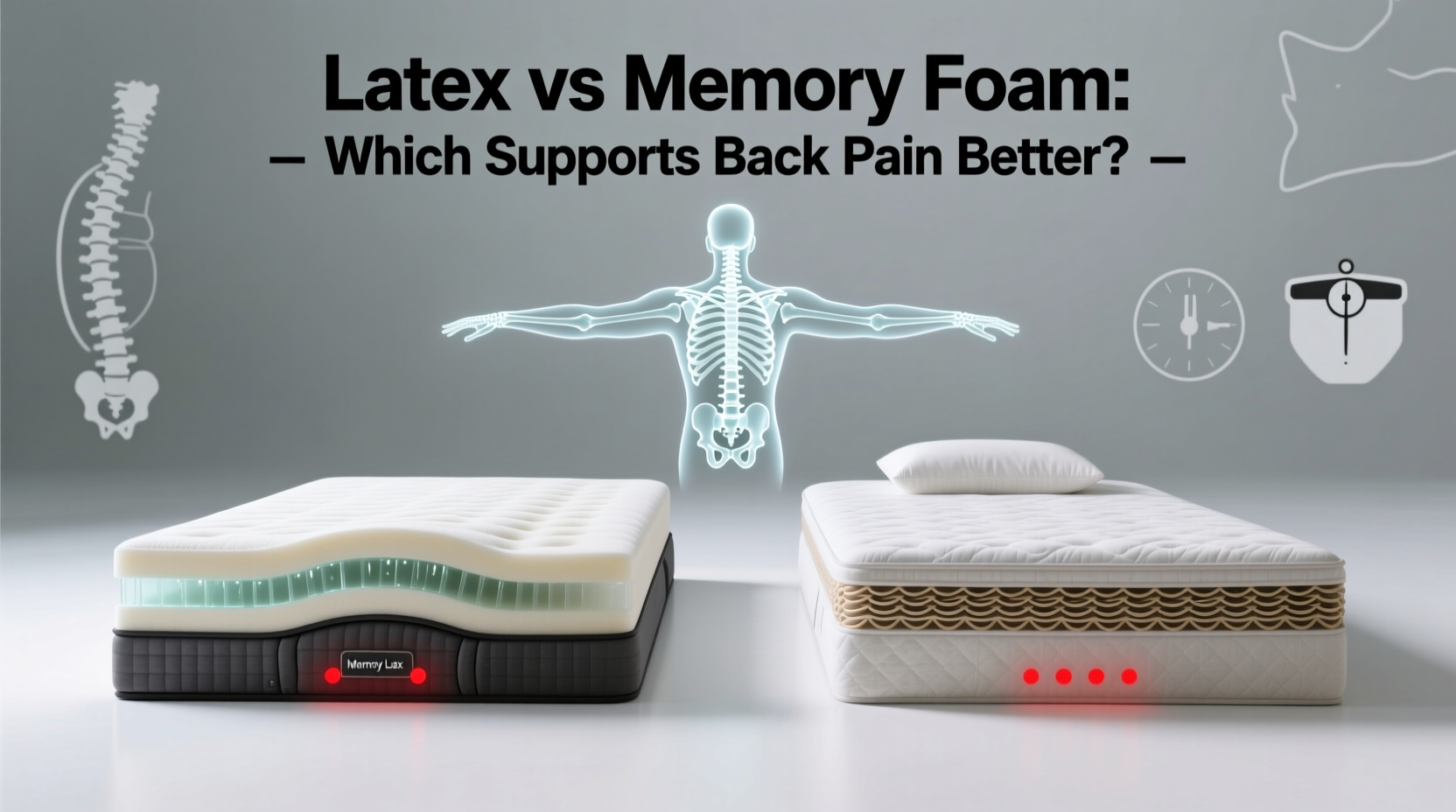
Back pain, particularly lower back pain, often stems from poor spinal alignment during sleep. When your spine isn’t properly supported, muscles and ligaments can become strained, discs may experience uneven pressure, and nerve irritation can occur over time. A supportive mattress should maintain a neutral spine position—keeping the head, shoulders, hips, and legs aligned whether you sleep on your back, side, or stomach.
The ideal mattress balances two key factors: firmness and contouring. Too soft, and your body sinks too deeply; too firm, and pressure builds up at critical points like hips and shoulders. The material’s ability to distribute weight evenly while offering targeted support determines its effectiveness for back pain relief.
“Spinal alignment during sleep is just as important as posture during waking hours. A mattress that conforms to the body’s natural curves without sagging can significantly reduce morning stiffness.” — Dr. Lena Torres, Chiropractic Specialist
Latex Mattresses: Natural Resilience and Responsive Support
Latex mattresses are made from either natural rubber tree sap (natural latex) or synthetic compounds (synthetic latex), with hybrid versions also available. They’re known for their buoyant, springy feel—a stark contrast to the slow-sinking sensation of traditional memory foam.
Natural latex is inherently breathable, resistant to dust mites and mold, and environmentally friendly when sustainably sourced. Its open-cell structure allows air to circulate freely, making it a cooler option than many foams. In terms of support, latex offers consistent push-back, meaning it resists compression and helps keep heavier parts of the body—like hips and shoulders—in proper alignment.
For back pain sufferers, especially those who sleep on their back or stomach, this responsiveness can be beneficial. Latex doesn’t allow excessive sinkage, which prevents the pelvis from dropping below the level of the spine. It also provides gentle cushioning at pressure points without compromising structural integrity.
Pros and Cons of Latex for Back Pain
| Aspect | Advantages | Drawbacks |
|---|---|---|
| Firmness Options | Available in multiple firmness levels; excellent for customizing support | May feel too firm for side sleepers needing deep contouring |
| Cooling | Naturally breathable; dissipates heat efficiently | Less effective in humid climates unless ventilated |
| Durability | Lasts 8–10 years; retains shape longer than most foams | Premium natural latex can be expensive |
| Motion Isolation | Moderate isolation; good for couples but not as quiet as memory foam | Slight bounce may disturb partner |
Memory Foam Mattresses: Deep Contouring and Pressure Relief
Memory foam, originally developed by NASA, is a viscoelastic polyurethane that responds to heat and pressure. When you lie down, it softens in response to body temperature, molding closely around your shape. This deep contouring can relieve pressure on joints and muscles, making it appealing for people with arthritis or sciatica-related discomfort.
Traditional memory foam has been criticized for trapping heat due to its dense cell structure, but newer models incorporate gel infusions, copper particles, or open-cell technology to improve airflow. These innovations have made modern memory foam much cooler than earlier versions, though they still lag behind latex in breathability.
For side sleepers with back pain, memory foam excels because it cushions the hips and shoulders, allowing the spine to remain straight even when lying at an angle. However, some users report feeling “stuck” in the mattress due to its slow response time, which can make repositioning difficult—especially for older adults or those with mobility issues.
Key Considerations for Memory Foam Users
- Off-gassing: New memory foam mattresses often emit a chemical odor for several days after unboxing. While generally harmless, sensitive individuals may find it unpleasant.
- Sinkage: High-density foams offer better support, but low-quality foams may develop permanent impressions within a year.
- Edge support: Many all-foam models lack reinforced edges, leading to reduced usable surface area over time.
“The close conforming of memory foam can reduce painful pressure points, but only if the underlying support layer is firm enough to prevent spinal misalignment.” — Dr. Rajiv Mehta, Sleep Medicine Consultant
Comparative Analysis: Latex vs Memory Foam for Back Pain
To determine which material better supports back pain, consider four core performance metrics: spinal alignment, pressure relief, temperature regulation, and longevity.
Spinal Alignment
Latex generally wins here due to its resilient, responsive nature. It supports rather than cradles the body, minimizing the risk of sinking into positions that strain the lower back. Memory foam can align the spine well for side sleepers but may cause back and stomach sleepers to sink too deeply, especially in softer models.
Pressure Relief
Memory foam leads in pressure point reduction thanks to its ability to mold precisely to the body. This makes it superior for people whose back pain is linked to joint inflammation or muscle tension. Latex offers moderate pressure relief but relies more on even distribution than deep cushioning.
Temperature Regulation
Latex naturally sleeps cooler. Its porous structure promotes airflow, and natural variants don’t retain heat like petroleum-based foams. Even gel-infused memory foams struggle to match the breathability of high-quality latex, particularly in warm environments.
Durability and Long-Term Support
Latex maintains its integrity longer. After five years, a well-made latex mattress will show minimal sagging. Memory foam, especially lower-density types, tends to soften and form body impressions over time, reducing support where it’s needed most.
Real-World Example: Choosing Based on Sleeping Position
Sarah, a 45-year-old office worker with chronic lower back pain, tried both mattress types over two years. Initially, she chose a medium-plush memory foam mattress for its soft embrace. While it eased her shoulder pain as a side sleeper, she began waking up with tightness in her lower back—likely due to excessive hip sinkage. After switching to a firm natural latex hybrid with zoned support, her spine stayed aligned throughout the night. Within six weeks, her morning stiffness decreased significantly, and she reported improved sleep quality.
This case illustrates that while memory foam may feel luxurious initially, long-term back health depends on consistent spinal support—not just surface-level comfort.
How to Choose the Right Mattress for Your Back Pain
Selecting between latex and memory foam requires evaluating your individual needs. Use this checklist to guide your decision:
✅ Back Pain Mattress Selection Checklist
- Identify your primary sleeping position (side, back, stomach)
- Assess whether you tend to overheat at night
- Determine if you need motion isolation (e.g., sharing bed with partner)
- Test firmness levels: aim for medium-firm (6–7/10) unless advised otherwise by a doctor
- Check for zoned support features (targeted reinforcement in lumbar region)
- Evaluate trial period and warranty (ideally 10+ years for latex, 8+ for foam)
- Prioritize third-party certifications (GOLS for natural latex, CertiPUR-US for foam safety)
Step-by-Step Guide to Testing Mattresses
- Research brands with strong reputations for back support and customer service.
- Read verified reviews focusing on long-term use (6+ months) and pain relief outcomes.
- Take advantage of sleep trials (at least 90 nights) to assess adaptation period.
- Sleep in your usual position during the trial, noting any changes in pain levels upon waking.
- Monitor temperature comfort, edge stability, and ease of movement.
- Track improvements in sleep duration, restlessness, and daytime fatigue.
- Compare return policies before finalizing purchase.
Frequently Asked Questions
Is a firmer mattress always better for back pain?
No. While very soft mattresses often fail to support the spine, excessively firm surfaces can increase pressure on hips and shoulders, worsening pain. Research shows that medium-firm mattresses provide optimal balance for most back pain sufferers. Individual preference and sleeping position matter greatly.
Can I use a memory foam topper on a latex mattress for added softness?
Yes, but proceed with caution. Adding a thick memory foam topper may diminish latex’s natural responsiveness and cooling properties. If you need extra cushioning, opt for a 2–3 inch gel-infused topper and monitor how it affects your spinal alignment.
Do latex mattresses help with sciatica-related back pain?
They can, especially if the model includes zoned support or layered construction that relieves pressure along the sciatic nerve pathway. The key is maintaining pelvic neutrality to avoid nerve compression. Some users prefer the slight lift of latex over the deep hug of memory foam for this reason.
Final Recommendation: Matching Material to Need
There is no universal “best” mattress for back pain—only the best fit for your body and lifestyle. For those prioritizing durability, breathability, and consistent support, natural latex stands out as a top contender. It’s particularly effective for back and stomach sleepers who need resistance against sinkage.
Memory foam shines for side sleepers or individuals dealing with joint pain alongside back discomfort. Its superior pressure relief can enhance comfort, provided the core support layer is sufficiently firm and the mattress incorporates cooling technologies.
Ultimately, the decision should be guided by personal experience. Take full advantage of sleep trials, test different firmness levels, and pay attention to how your body feels after waking—not just during initial impressions.




 浙公网安备
33010002000092号
浙公网安备
33010002000092号 浙B2-20120091-4
Comments
No comments yet. Why don't you start the discussion?