
Human emotions are rarely simple. While laughter and tears are often seen as opposites—one signaling joy, the other sorrow—they can emerge together in moments of intense feeling. You might find yourself sobbing with laughter during a heartfelt reunion, or chuckling nervously while grieving a loss. This paradoxical blend of laughing and crying simultaneously is more common than many realize, and it reflects the complex interplay between our nervous system, emotional regulation, and social behavior.
This phenomenon isn’t a glitch in our emotional programming; it’s a natural, adaptive response to overwhelming stimuli. Understanding why it happens reveals much about how humans process stress, connection, and vulnerability.
The Science Behind Mixed Emotional Responses
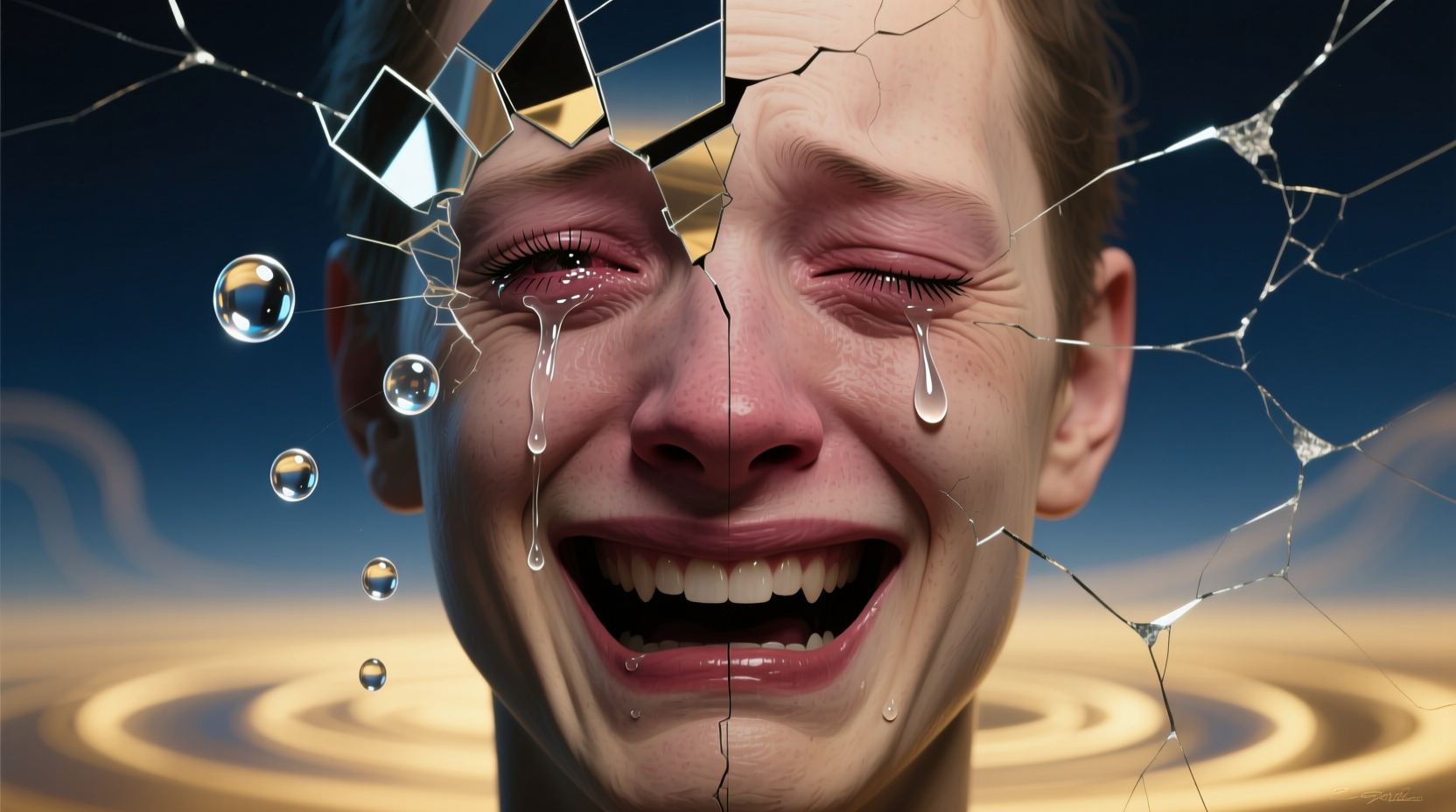
At the neurological level, laughter and crying share overlapping pathways in the brain. Both are regulated by the limbic system—the emotional control center—including structures like the amygdala and hypothalamus. When emotional intensity reaches a threshold, these systems can activate multiple responses at once.
The autonomic nervous system (ANS), which governs involuntary functions like heart rate and breathing, plays a key role. During high-stress or emotionally charged situations, the ANS may trigger both sympathetic (fight-or-flight) and parasympathetic (rest-and-digest) activity. This dual activation can result in seemingly contradictory behaviors—such as laughing while crying—as the body attempts to restore balance.
“Emotions aren’t switches that turn on one at a time. They’re more like orchestras—sometimes harmonious, sometimes dissonant, but always playing together.” — Dr. Lena Patel, Cognitive Neuroscientist
Situations That Trigger Simultaneous Laughter and Tears
Certain life experiences frequently provoke this emotional duality:
- Relief after crisis: Surviving an accident or receiving good news after a long illness can flood the system with both joy and residual fear, leading to tearful laughter.
- Bittersweet moments: A graduation, wedding, or farewell often combines pride and sadness, prompting mixed expressions.
- Nervous tension: In high-pressure environments—like public speaking or medical procedures—nervous laughter can erupt alongside tears of anxiety.
- Overwhelm: When emotions become too intense to categorize, the brain may release both responses as a pressure valve.
Psychological Theories Explaining the Paradox
Several psychological models help explain why people laugh and cry at once:
1. Catharsis Theory
This theory suggests that intense emotional buildup needs release. When words fail, the body uses whatever outlets are available—even if they appear contradictory. Tears and laughter both involve vocalization and physical exertion, making them effective tools for emotional discharge.
2. Incongruity Resolution
Humor often arises from unexpected contrasts. In emotionally complex situations—like a funeral where someone shares a funny memory—the clash between sadness and amusement can spark simultaneous laughter and tears. The brain tries to resolve the incongruity, resulting in blended emotional expression.
3. Social Bonding Mechanism
Laughter, even in sad contexts, can serve as a social signal. It may indicate shared understanding, reduce tension, or invite comfort from others. Crying signals vulnerability; combining it with laughter can soften the emotional load for both the individual and those around them.
When It Might Signal Deeper Stress
While occasional mixed emotional responses are normal, frequent or uncontrollable episodes may point to underlying psychological strain. Conditions such as anxiety disorders, depression, or pseudobulbar affect (PBA)—a neurological condition causing sudden, inappropriate emotional outbursts—can manifest through erratic laughter or crying.
PBA, often associated with conditions like ALS, multiple sclerosis, or traumatic brain injury, disrupts emotional regulation. People with PBA may laugh during serious conversations or cry without feeling sad. Unlike spontaneous emotional blending, PBA episodes are typically disconnected from actual feelings.
| Feature | Normal Mixed Emotion | Pseudobulbar Affect (PBA) |
|---|---|---|
| Trigger | Emotionally intense or bittersweet event | Minimal or no emotional trigger |
| Emotional Alignment | Aligned with internal feelings | Often mismatched with mood |
| Frequency | Occasional | Frequent, unpredictable |
| Treatment Needed? | No—natural coping mechanism | Yes—medical evaluation recommended |
Mini Case Study: A Moment of Bittersweet Reunion
Sophie, a nurse deployed during the pandemic, hadn’t seen her family in 14 months. When she finally returned home, her mother opened the door screaming with joy. Sophie burst into tears—but almost immediately began laughing through them. Her sister later described the moment: “She was crying so hard she could barely breathe, but she kept saying, ‘I’m just so happy!’ Then she laughed, and we all did. It was messy, loud, and perfect.”
This scene illustrates how extreme relief and accumulated stress can coexist. The laughter didn’t diminish the tears; it amplified their meaning. It was a full-body acknowledgment of pain endured and joy reclaimed.
How to Respond When It Happens to You
If you find yourself laughing and crying at the same time, resist the urge to suppress it. Instead, consider these steps:
- Pause and breathe: Acknowledge what you’re feeling without judgment. Take slow breaths to ground yourself.
- Name the emotions: Are you relieved? Overwhelmed? Nervous? Labeling helps integrate the experience.
- Allow space for both: Don’t force a choice between laughing or crying. Let both exist.
- Share if comfortable: Saying, “I’m just feeling everything at once,” can invite empathy rather than confusion.
- Reflect later: Journaling about the moment can clarify what triggered the response.
FAQ
Is it normal to laugh when I’m upset?
Yes. Nervous laughter is a common stress response. It doesn’t mean you don’t care—it means your body is trying to manage emotional overload.
Can laughing and crying at once be a sign of mental illness?
Not usually. But if emotional outbursts are frequent, sudden, or disconnected from your actual mood, consult a healthcare provider to rule out conditions like PBA or mood disorders.
Why do some people never seem to do this?
Emotional expression varies by personality, upbringing, and culture. Some people compartmentalize feelings more easily, while others naturally express blends. Neither is better—just different.
Conclusion: Embracing Emotional Complexity
Laughing and crying at the same time isn’t a contradiction—it’s a testament to the depth of human experience. Our emotions were never meant to be sorted into neat categories. Moments of profound connection, transition, or release often defy simple labels. When laughter breaks through tears, it doesn’t erase sorrow; it honors the full spectrum of what it means to be alive.
Rather than questioning these reactions, we can learn to welcome them. They remind us that healing isn’t linear, joy isn’t exclusive, and vulnerability isn’t weakness. In embracing emotional complexity, we become more authentic, more resilient, and more deeply human.




 浙公网安备
33010002000092号
浙公网安备
33010002000092号 浙B2-20120091-4
Comments
No comments yet. Why don't you start the discussion?