
Accessories define a bag’s personality—whether it's a sleek leather tote or a vintage backpack, a charm or keychain can elevate its style. Among the most popular options are leather bag charms and enamel keychains. Both offer distinct aesthetics and functional appeal, but when it comes to longevity, one clearly outperforms the other under certain conditions. Understanding how each material responds to daily wear, environmental exposure, and maintenance is essential for making a durable, stylish choice.
Durability by Design: Material Breakdown
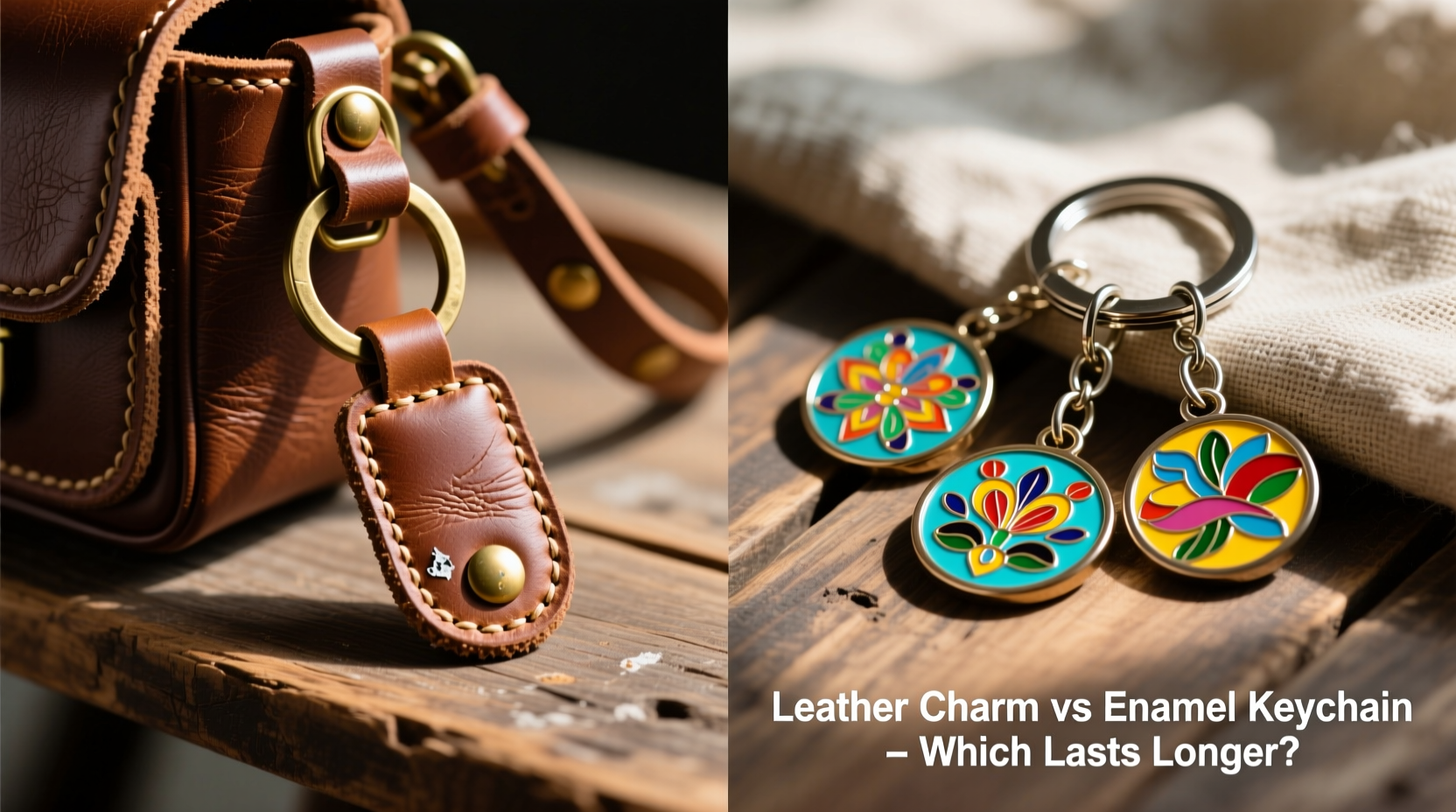
At their core, leather bag charms and enamel keychains are built from fundamentally different materials, each with unique strengths and vulnerabilities.
Leather bag charms are typically crafted from full-grain or top-grain leather—the same high-quality hides used in premium handbags and footwear. When properly conditioned, leather develops a rich patina over time, becoming more characterful with age. It resists moderate abrasion and handles light moisture well, especially if treated with protective coatings.
Enamel keychains, on the other hand, consist of a metal base (often zinc alloy or brass) coated with powdered glass fused at high temperatures. This creates a smooth, glossy finish available in vibrant colors and intricate designs. While visually striking, the enamel layer is brittle and prone to chipping when dropped or struck against hard surfaces.
Real-World Wear and Tear: How They Age Over Time
In everyday use, both accessories face similar stressors: friction, UV exposure, moisture, and frequent handling. How they respond reveals much about their long-term viability.
Leather charms, particularly those made from vegetable-tanned leather, age gracefully. Minor scuffs can often be buffed out, and natural oils in the leather help resist drying. With occasional conditioning using leather balm, these charms can last for years without significant degradation. Exposure to sunlight may darken the leather slightly, but this usually enhances its vintage appeal rather than diminishing it.
Enamel keychains, while resistant to fading and corrosion, suffer from structural fragility. The rigid enamel surface cannot flex under pressure, so even small drops can result in hairline cracks or visible chips. Once damaged, the aesthetic value declines sharply, and restoration is rarely practical. Additionally, cheaper enamel pieces may have thin plating that wears off over time, exposing the base metal to tarnish.
“Enamel is beautiful, but it’s not meant for constant impact zones. If you’re attaching it to keys or a frequently handled bag, expect cosmetic wear within months.” — Marcus Tran, Accessories Designer at Heritage Hardware Co.
Comparative Analysis: Leather vs Enamel
| Feature | Leather Bag Charms | Enamel Keychains |
|---|---|---|
| Durability | High – withstands abrasion and moderate moisture | Moderate – vulnerable to chipping and cracking |
| Aging Process | Develops patina; improves with age | Fades or chips; loses luster over time |
| Maintenance | Occasional conditioning required | Wipe clean; avoid scratches |
| Weather Resistance | Good (if treated) | Excellent (resists rust and fading) |
| Repair Potential | Yes – scuffs can be polished, edges reconditioned | No – damage is permanent |
| Cost Range | $15–$60 (handcrafted) | $8–$30 (mass-produced) |
Case Study: Two Years of Daily Use
Sophia, a freelance designer in Portland, uses her leather crossbody bag daily. She attached a full-grain leather charm with a brass clasp on one side and an enamel keychain shaped like a retro camera on the other. After two years of regular commuting, coffee shop visits, and weekend travel, the results were telling.
The leather charm showed signs of use—edges softened, color deepened—but no structural damage. A quick wipe with a damp cloth and a monthly application of leather conditioner kept it supple. In contrast, the enamel keychain had three noticeable chips—one near the top loop from being dropped, another after knocking against a doorframe, and a third where the paint wore thin from rubbing against her keys. Despite loving the design, Sophia eventually removed it due to the deteriorating appearance.
This real-world example underscores a broader trend: leather adapts; enamel degrades.
Care and Maintenance Tips for Longevity
Maximizing the lifespan of either accessory depends heavily on care habits. Here’s how to protect your investment:
For Leather Bag Charms:
- Condition every 4–6 weeks with a pH-balanced leather balm.
- Keep away from prolonged exposure to rain or direct sunlight.
- Store separately when not in use to prevent dye transfer or creasing.
- Use a soft cloth to remove dust and fingerprints regularly.
For Enamel Keychains:
- Handle gently—avoid dropping or knocking against hard surfaces.
- Clean with a dry microfiber cloth; never soak in water.
- Detach before placing in bags with heavy items like laptops or water bottles.
- Inspect periodically for early signs of chipping and rotate usage if possible.
When to Choose Which: A Practical Guide
Selecting between leather and enamel isn’t just about durability—it’s about matching function to lifestyle.
Choose leather bag charms if:
- You carry your bag daily.
- You prefer a classic, evolving look.
- You want an accessory that ages well and tells a story.
- You're investing in long-term style over short-term flair.
Choose enamel keychains if:
- You value bold colors and detailed artwork.
- The item will be used occasionally or decoratively.
- You collect themed pieces (e.g., travel destinations, pop culture).
- You’re on a budget and willing to replace them over time.
FAQ
Can I repair a chipped enamel keychain?
No effective DIY or professional repair exists for chipped enamel. Touch-up paints may mask minor flaws temporarily, but they don’t restore the original finish and often look uneven.
Do leather charms stretch or sag over time?
Quality leather charms made from firm, thick cuts do not stretch significantly. However, poorly constructed ones using thin strips or glued layers may warp. Always check craftsmanship before purchasing.
Are there hybrid options that combine leather and enamel?
Yes—some designers create layered accessories, such as enamel pendants attached to leather straps. These offer visual interest while protecting the enamel from direct impact. Just ensure the leather component is securely stitched and the metal findings are corrosion-resistant.
Final Verdict: Which Holds Up Better?
When judged purely on durability and resilience, **leather bag charms hold up significantly better** than enamel keychains in real-world conditions. Their ability to absorb minor impacts, resist environmental factors, and improve aesthetically over time gives them a clear edge for everyday use.
Enamel excels in visual appeal and color retention but falters under physical stress. It’s best suited for collectors or decorative applications where preservation is prioritized over practicality.
Ultimately, the best choice depends on your usage pattern. For lasting elegance and rugged reliability, leather wins. For expressive, temporary flair, enamel remains a compelling option—if you’re prepared for its limitations.




 浙公网安备
33010002000092号
浙公网安备
33010002000092号 浙B2-20120091-4
Comments
No comments yet. Why don't you start the discussion?