
For those who frequently misplace items or have a habit of dropping their phone, choosing the right protective accessory isn’t just about style—it’s about security. Leather iPhone cases with chains or wristlets have surged in popularity, combining vintage elegance with modern functionality. But when it comes to preventing drops and minimizing loss, which option offers better protection for clumsy users? The answer depends on how each design performs in real-life scenarios, from daily commutes to crowded events.
Understanding the Designs: Chain vs. Wristlet
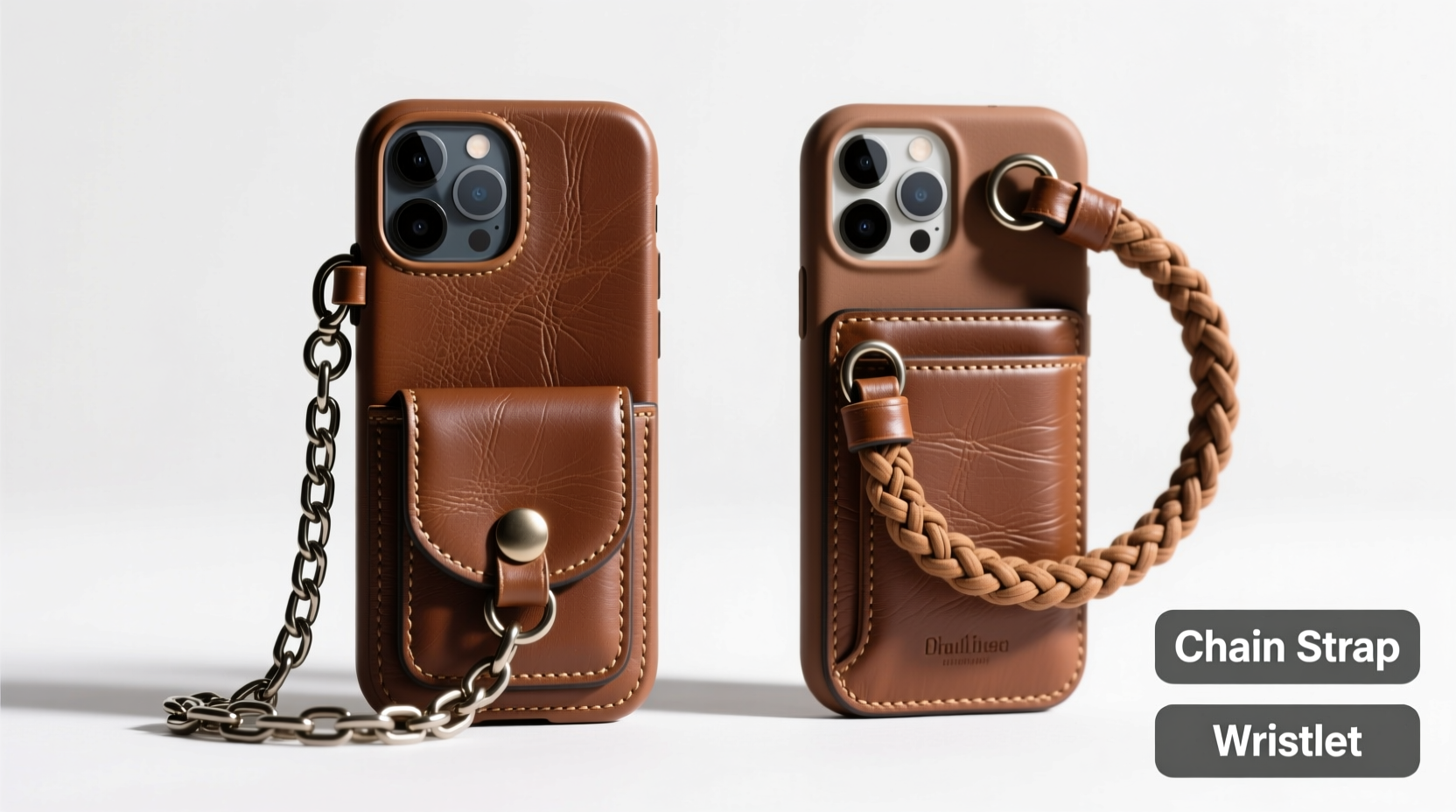
A leather iPhone case with a chain typically features a metal link strap that attaches to both sides of the case, worn either around the neck or draped over the shoulder. These are often marketed as \"crossbody\" or \"necklace-style\" cases, drawing inspiration from vintage purses and fob watches. In contrast, a wristlet-equipped case includes a short fabric or leather loop designed to slip securely around the wrist, functioning much like a lanyard.
The core difference lies in mobility and point of attachment. A chain keeps the phone suspended away from the body, while a wristlet anchors it directly to the hand. This distinction plays a crucial role in how effective each option is at preventing accidental drops—especially for individuals prone to fumbling or sudden movements.
Security Showdown: Which One Stays Put?
When evaluating security, two main risks must be considered: dropping the device and losing it entirely. Clumsy users often face both. A dropped phone can crack its screen; a lost phone means data exposure and replacement costs.
Chain cases excel in preventing total loss. Because they’re long enough to rest against the torso or drape across the chest, the phone won’t hit the ground even if slipped from the hand—assuming the chain remains clipped. However, the length introduces a new hazard: pendulum motion. When moving quickly, the phone can swing outward and collide with doorframes, countertops, or other hard surfaces.
Wristlets, on the other hand, minimize swinging by keeping the phone close to the hand. They're less likely to knock into objects and provide constant physical connection during active tasks like texting while walking or reaching for keys. But their shorter reach means that if the phone slips, it may still strike the floor—especially if the user pulls their hand back abruptly.
“Anchoring devices to the body reduces drop incidents by up to 70% compared to handheld use alone.” — Dr. Lena Torres, Human Factors & Ergonomics Research Lab, University of Michigan
Comparative Analysis: Chain vs. Wristlet Features
| Feature | Chain Case | Wristlet Case |
|---|---|---|
| Drop Prevention | Moderate – prevents full falls but allows swinging impact | High – keeps phone close to hand, reducing fall distance |
| Lose-Proof Security | Very High – long tether minimizes risk of leaving behind | Moderate – easy to forget phone is attached, leading to snags |
| Mobility & Comfort | Low – can feel bulky; may bounce during movement | High – lightweight and unobtrusive during daily tasks |
| Style Flexibility | High – doubles as fashion accessory, works with outfits | Moderate – functional look, less decorative appeal |
| Durability Risk | Medium – metal links can snag or break under strain | Low – reinforced stitching lasts longer with frequent use |
Real-World Test: A Day in the Life of a Clumsy User
Sophie, a graphic designer in Brooklyn, considers herself “professionally clumsy.” She regularly spills coffee, knocks over pens, and has replaced three phones in the past four years due to drops. Last winter, she tested both styles over two weeks.
During her first week, she used a sleek black leather case with a gold-tone chain. While she loved the aesthetic—especially how it paired with her coat—the phone constantly swung forward when she reached into her bag, once cracking the corner against a subway pole. She also found the chain difficult to manage when switching bags or sitting down.
In week two, Sophie switched to a minimalist brown leather case with a soft nylon wristlet. Though less flashy, it stayed securely on her wrist while sketching on her phone during transit. Even when she accidentally let go mid-conversation, the phone hung safely. “It felt like a seatbelt for my phone,” she said. “I didn’t worry every time I took it out.”
Her experience reflects a broader trend: while chain cases offer strong anti-loss benefits, wristlets deliver superior drop resistance—particularly for active, hands-on users.
Choosing Based on Lifestyle and Habits
The best choice depends on your specific patterns of use. Consider these factors:
- Are you constantly on the move? If you walk briskly, ride public transit, or carry multiple items, a wristlet reduces swing hazards and keeps the phone within reflexive reach.
- Do you often set your phone down? People who place their phone on counters, tables, or car seats benefit more from chain cases, which make it harder to walk away without it.
- How strong is your grip? Users with weaker hand strength or arthritis may find wristlets easier to rely on than trying to maintain a firm hold on a chain-dangling device.
- Is style a priority? Chain cases tend to make bolder fashion statements and work well with minimalist outfits or evening wear.
Step-by-Step Guide: How to Choose Your Ideal Secure Case
- Assess your biggest risk: Are you more likely to drop your phone or leave it behind somewhere?
- Test mobility needs: Spend a day using your phone without any tether. Note when and where you nearly drop it.
- Try both options: Borrow or purchase refundable versions of a chain and wristlet case to test side by side.
- Evaluate comfort after 2–3 hours: Does the chain pull on your neck? Does the wristlet chafe or restrict movement?
- Check durability details: Look for reinforced stitching, secure snap buttons, and high-quality hardware before committing.
- Make your decision: Choose based on performance, not just appearance.
Frequently Asked Questions
Can a wristlet really stop a phone from falling?
Yes—provided it's properly fastened and made with durable materials. Most quality wristlets use double-stitched straps and secure anchor points that withstand sudden tugs. However, no system is foolproof; extreme motions may still cause damage if the phone swings into an object.
Are chain cases safe for children or elderly users?
Generally, no. Neck chains pose strangulation risks for young children and tripping hazards for older adults. For these groups, a wristlet or belt-clip alternative is safer and more practical.
Do leather cases with attachments affect wireless charging?
Most do not. High-quality leather cases are slim enough to allow Qi charging, even with a wristlet or chain attached. Just ensure the metal components aren’t positioned between the phone and charger, as this can interfere with induction.
Final Recommendation: Wristlet Wins for Clumsy Users
While both designs enhance security over bare-handed use, the wristlet emerges as the more reliable option for clumsy individuals. Its proximity to the hand, reduced swing radius, and consistent tactile feedback make it ideal for preventing drops—the most common accident type among this group. Chains offer undeniable flair and excellent anti-theft properties, but their mechanical disadvantages in dynamic environments reduce their effectiveness for true klutzes.
Ultimately, the goal isn’t just to avoid losing your phone, but to protect its structure and your peace of mind. A secure grip matters more than a stylish hang.




 浙公网安备
33010002000092号
浙公网安备
33010002000092号 浙B2-20120091-4
Comments
No comments yet. Why don't you start the discussion?