
In an age where minimalism is celebrated and pocket bulk is frowned upon, the humble keychain has evolved into a battleground of utility versus excess. Once a simple metal ring holding together a few essential keys, today’s key management options range from sleek leather wraps to high-tech key organizers with built-in trackers. But as choices multiply, so does confusion: Is a key organizer truly better than a classic leather keychain—or is it just another gadget destined for drawer purgatory?
This isn’t just about aesthetics or trendiness. It’s about daily convenience, durability, and whether you’re solving a problem or creating one. Let’s cut through the marketing noise and examine what really matters when choosing between a minimalist leather keychain and a multifunctional key organizer.
The Leather Keychain: Timeless Simplicity
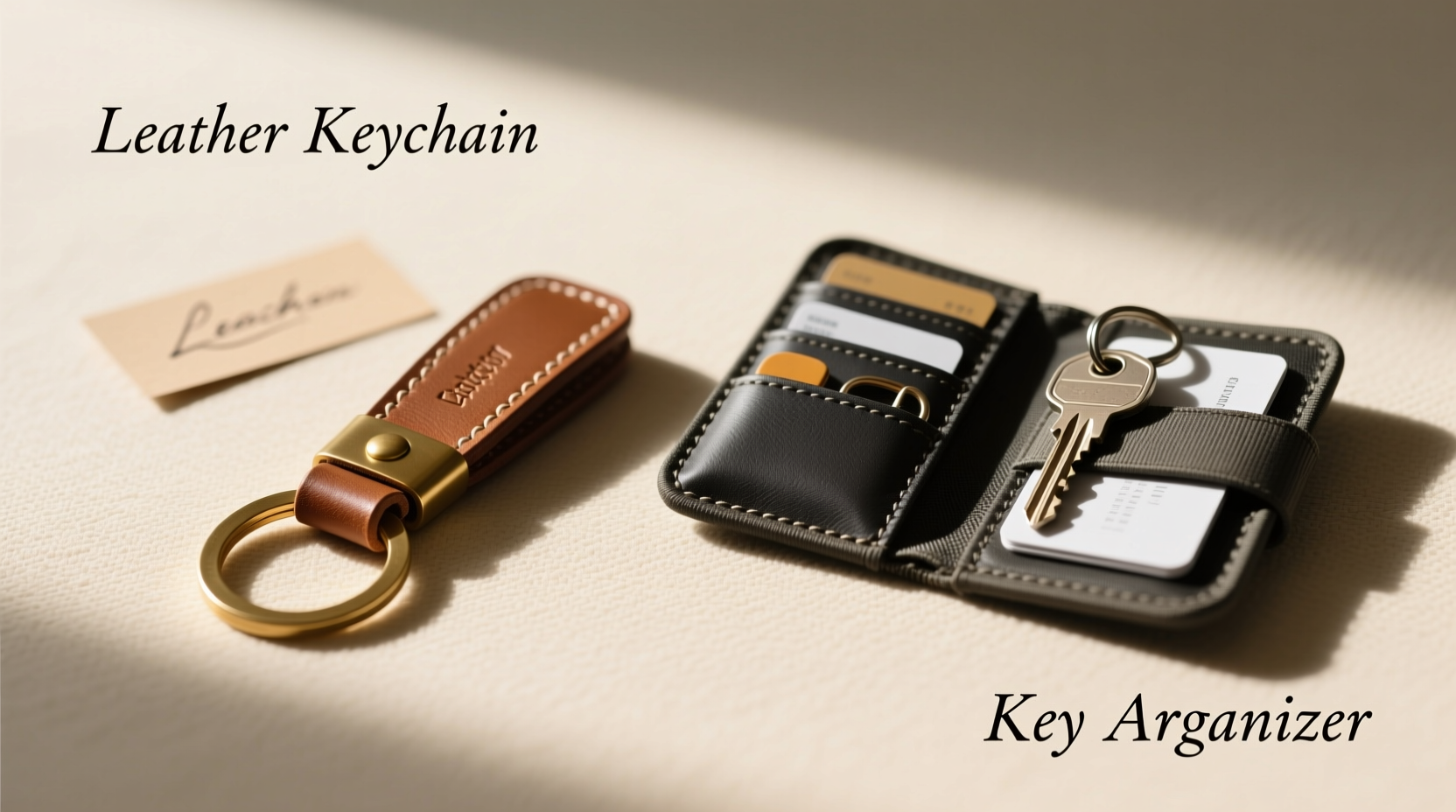
Leather keychains have endured for decades because they balance form and function without overcomplicating things. Typically made from full-grain or top-grain leather, these keychains use a loop, snap, or fold-over design to hold keys securely. Their appeal lies in their understated elegance and gradual break-in period—each crease and patina tells a story.
They're lightweight, silent in your pocket, and often double as a small statement piece. Some premium versions even integrate RFID-blocking material or hidden compartments for emergency cash or micro-tools.
However, leather isn't indestructible. Exposed to moisture, friction, or sharp key edges, it can wear down over time. And while it keeps keys together, it doesn’t eliminate jingling or tangling—a common annoyance for those who carry multiple keys.
The Rise of the Key Organizer
Enter the key organizer: a compact, often aluminum or stainless steel device designed to house keys in a flat, sliding mechanism. Brands like Maxpedition, KeySmart, and Nomatic popularized this trend by promising “no more jingle,” “slim profile,” and “organized access.”
These organizers typically feature spring-loaded arms or rotating trays that hold keys individually, allowing users to fan them out or slide them forward for easy selection. Many now include USB drives, bottle openers, or Tile tracker integration. The idea is clear: transform a chaotic bundle into a streamlined tool.
But innovation comes at a cost—both financially and physically. Most quality key organizers range from $35 to $90. They also add thickness, albeit less length, which may not suit ultra-slim pockets or minimalist wallets.
“Key organizers solve a real pain point—tangled keys—but only if used consistently. If it ends up on your nightstand, it failed its purpose.” — Daniel Reed, Urban Gear Analyst
Leather Keychain vs Key Organizer: A Practical Comparison
| Feature | Leather Keychain | Key Organizer |
|---|---|---|
| Weight | Light (15–30g) | Moderate (60–120g) |
| Thickness | Low (adds minimal bulk) | Medium (wider but flatter) |
| Noise Level | Medium (keys can still jingle) | Low (keys secured, no rattling) |
| Durability | Good (with care), ages well | High (metal resists wear) |
| Access Speed | Fast (keys exposed) | Moderate (requires sliding/fanning) |
| Price Range | $15–$50 | $35–$90+ |
| Customization | Limited (engraving, color) | High (add-ons, modular tools) |
The data shows a trade-off: leather prioritizes lightness and tradition, while organizers emphasize control and quiet. Your lifestyle determines which wins.
When a Key Organizer Makes Sense (And When It Doesn’t)
Consider this real-world scenario: Sarah, a city commuter, carries a house key, car fob, office badge, bike lock key, and gym locker key. In her bag, they clinked loudly, scratched her phone, and took forever to sort through at security checkpoints. After switching to a slim key organizer with a built-in bottle opener and tracker, she reported faster access, reduced noise, and peace of mind knowing her keys were trackable if lost.
But Mark, a retiree with two house keys and a mailbox key, found his key organizer cumbersome. He missed the simplicity of flipping open a leather loop with one hand. After six weeks, he reverted to a handmade buffalo leather wrap from a local artisan—lighter, quieter, and emotionally satisfying.
The lesson? Key organizers shine in high-key environments: urban professionals, travelers, cyclists, or anyone annoyed by pocket noise. They’re less useful for those with fewer than three keys or who value tactile simplicity over tech-enhanced order.
Step-by-Step Guide to Choosing the Right Solution
- Inventory Your Keys: Lay out every key you carry. How many do you use daily? Which are backups?
- Assess Your Pain Points: Do they jingle? Scratch other items? Take too long to find?
- Evaluate Pocket Space: Measure your front or back pocket depth. Organizers need width; leather needs length.
- Test Materials: Hold sample weights. Does 100g feel heavy? Does leather feel premium or flimsy?
- Try Before You Buy: Borrow a friend’s organizer or visit a store to handle both types.
- Commit for 30 Days: Use your chosen system exclusively. Note frustrations or wins.
- Reassess: Did it improve your routine? Or did you forget it at home?
FAQ
Can I combine a leather keychain with a key organizer?
Yes—some users attach a small organizer to a leather lanyard or strap for hybrid functionality. Just ensure the combined bulk doesn’t defeat the purpose of minimizing pocket load.
Do key organizers damage keys over time?
Poorly designed models with tight springs or rough interiors can cause micro-abrasions. Opt for ones with silicone-lined grips or smooth edges to protect key teeth and shafts.
Are leather keychains outdated?
Not at all. They remain popular among minimalists, heritage-style enthusiasts, and those who appreciate craftsmanship. Functionality hasn’t expired—just evolved alongside new alternatives.
Checklist: Is a Key Organizer Right for You?
- ✅ Carry 4 or more keys regularly
- ✅ Keys frequently tangle or scratch devices
- ✅ Noise in your pocket bothers you
- ✅ You value quick access in public settings (transit, offices)
- ✅ Willing to pay $40+ for improved organization
- ✅ Prefer modern, technical materials over natural ones
If most apply, a key organizer could be worth the investment. If not, a well-made leather keychain might be smarter—and kinder to your pocket.
Final Verdict: Worth the Hype or Just Clutter?
Key organizers aren’t inherently better—they’re situationally superior. For people drowning in keys and frustrated by chaos, they’re a legitimate upgrade. For others, they add complexity without meaningful benefit.
The danger isn’t the product itself, but the tendency to buy solutions for problems we don’t actually have. True minimalism isn’t about replacing clutter with sleeker clutter—it’s about reducing what you carry altogether.
Before buying any key system, ask: Can I carry fewer keys? Can digital access (smart locks, fobs) replace physical ones? Sometimes the best organizer is the one that holds nothing because you’ve eliminated the need.




 浙公网安备
33010002000092号
浙公网安备
33010002000092号 浙B2-20120091-4
Comments
No comments yet. Why don't you start the discussion?