
Keychains are more than just functional accessories—they’re personal expressions. Whether clipped to a bag, belt loop, or keys, they reflect taste, lifestyle, and attention to detail. Two popular styles dominate the market: leather pony keychains and enamel keychains. One offers timeless craftsmanship; the other delivers bold, colorful flair. But when it comes to longevity and aesthetics, which truly wins? This article breaks down both options with real-world insight, durability tests, and expert-backed advice to help you choose wisely.
Durability Showdown: Leather vs Enamel Over Time
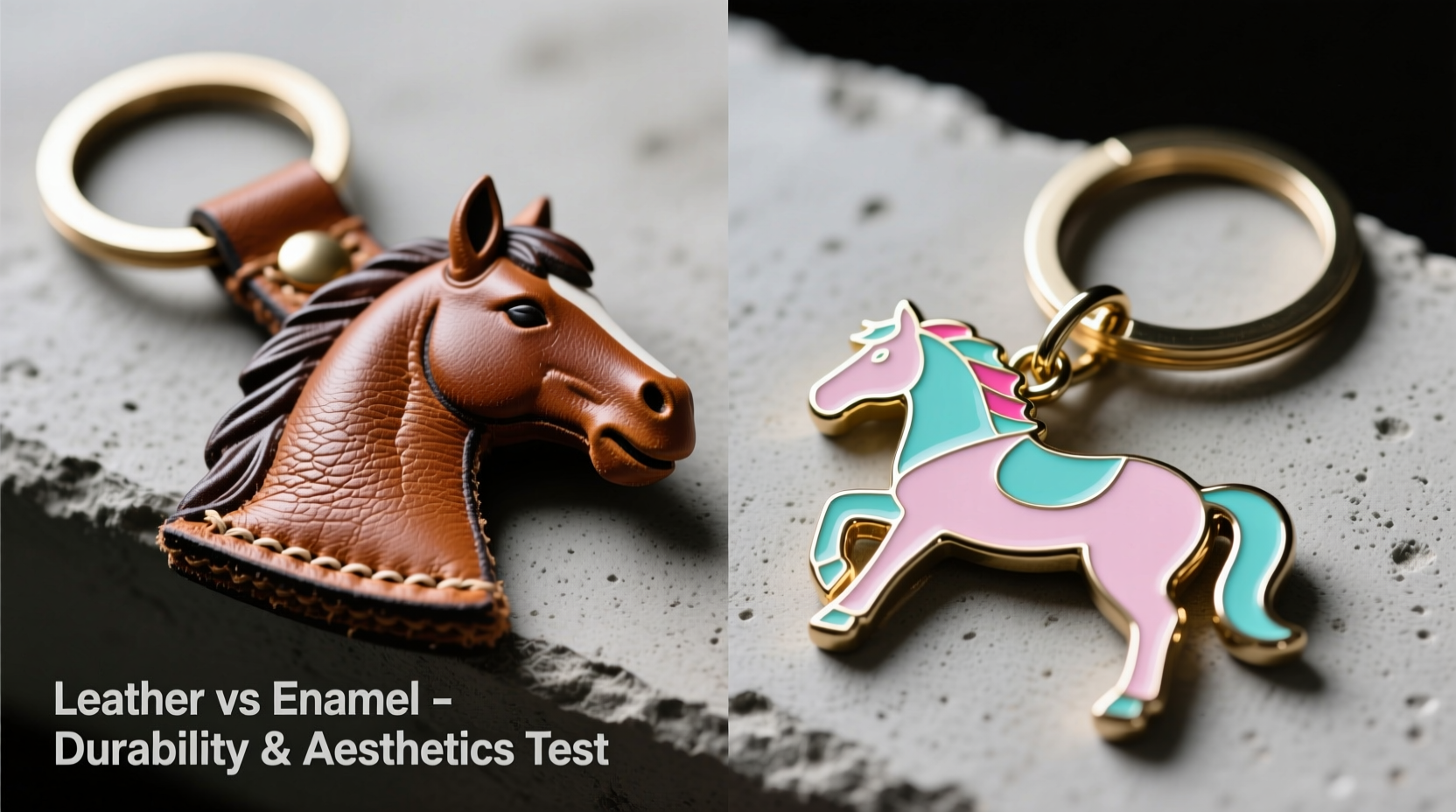
Longevity is often the deciding factor for buyers investing in quality accessories. While both leather and enamel keychains have loyal followings, their performance under daily wear varies significantly.
Leather pony keychains, typically made from full-grain or top-grain cowhide, age gracefully. When properly conditioned, leather resists cracking and develops a rich patina—a natural sheen that forms as oils interact with air and skin contact. High-quality leather can last decades, especially if shielded from prolonged moisture and UV exposure.
In contrast, enamel keychains consist of metal bases (usually zinc alloy or brass) coated with colored glass-like enamel. The finish is hard and scratch-resistant but brittle. Chipping can occur if dropped on hard surfaces or exposed to sharp impacts. Once the enamel cracks, oxidation begins underneath, leading to rust and discoloration—especially in humid environments.
Aesthetic Appeal: Style That Stands Out
Appearance matters. A keychain isn’t just about function—it’s a small statement piece.
Leather pony keychains exude classic elegance. Their minimalist design—often featuring a braided leather cord, horse charm, and snap hook—pairs well with vintage watches, denim jackets, or rugged boots. The texture evolves over time, gaining character with use. Each piece becomes unique, shaped by its owner’s habits.
Enamel keychains thrive on vibrancy. With crisp lines, metallic outlines, and saturated colors, they suit collectors and fashion-forward users. Logos, pop culture icons, and brand emblems shine in this format. However, their polished look can feel less personal and more commercial. After years of use, fading and micro-scratches dull the luster, making them appear outdated.
“Leather ages like fine wine—it tells a story. Enamel is more like a poster: bright at first, but prone to wear if not protected.” — Marcus Reed, Accessories Designer & Material Consultant
Comparison Table: Key Factors Side-by-Side
| Feature | Leather Pony Keychain | Enamel Keychain |
|---|---|---|
| Material Base | Full-grain leather, brass hardware | Zinc alloy, glass enamel coating |
| Durability (5-year outlook) | High – improves with care | Moderate – risk of chipping |
| Aesthetic Longevity | Increases with patina development | Degrades with scratches and fading |
| Weather Resistance | Low – sensitive to water and humidity | Moderate – resistant but vulnerable to corrosion |
| Maintenance Level | Medium – requires conditioning | Low – wipe clean only |
| Style Evolution | Matures into unique character | Remains static until damage occurs |
Maintenance Requirements: What Each Needs to Survive
Care routines directly impact lifespan. Neither option is maintenance-free, but their needs differ drastically.
For leather pony keychains, regular conditioning is essential. Every 3–6 months, apply a light coat of leather balm or oil (like neatsfoot or mink oil) to prevent drying and cracking. Wipe down with a dry cloth after exposure to sweat or rain. Store away from direct sunlight to avoid UV degradation.
Enamel keychains require less frequent care but demand caution. Clean with a soft, dry cloth. Avoid abrasive wipes or alcohol-based cleaners, which may erode protective coatings. Do not submerge in water—even brief exposure can seep beneath the enamel layer and cause internal rust.
Step-by-Step Care Guide for Both Types
- Monthly Inspection: Check for loose stitching (leather) or hairline cracks (enamel).
- Cleaning: Use a microfiber cloth dampened slightly with water for leather; use dry cloth only for enamel.
- Conditioning (Leather Only): Apply a pea-sized amount of leather conditioner, buff gently.
- Drying: If wet, air-dry naturally—never use heat sources.
- Storage: Keep in a breathable pouch or drawer, separate from sharp objects.
Real-World Example: Two Users, Five Years Later
Consider two individuals who bought keychains in 2019.
Jamie chose a hand-stitched leather pony keychain with a bronze horse charm. She occasionally applied leather conditioner and avoided leaving it in her gym bag after workouts. Five years later, the leather has darkened slightly, developed a smooth sheen, and shows faint creases from use—but no structural damage. The charm remains intact, though lightly tarnished, adding vintage appeal.
Riley opted for a limited-edition enamel keychain with a glossy rainbow logo. It stayed mostly indoors, clipped to a backpack. By year three, a chip appeared near the edge after being dropped on tile. By year five, tiny scratches covered the surface, and the white enamel began yellowing. Though still usable, it looked worn and less vibrant.
This scenario illustrates how material choice and usage context shape long-term outcomes.
Checklist: Choosing the Right Keychain for You
- ✅ Prioritize durability? → Lean toward high-quality leather.
- ✅ Want bold colors and logos? → Enamel offers stronger visual impact.
- ✅ Live in a humid or rainy climate? → Be cautious with leather unless stored properly.
- ✅ Prefer low-maintenance items? → Enamel wins here, despite fragility.
- ✅ Value uniqueness and aging well? → Leather develops personality over time.
- ✅ Use keys daily in rough conditions? → Reinforced leather withstands abuse better than enamel.
Frequently Asked Questions
Can I repair a chipped enamel keychain?
Minor chips can sometimes be touched up with nail polish matching the color, but it won't restore original strength. Significant damage usually means replacement. True enamel repair requires specialized tools and kilns, making it impractical for most consumers.
Does leather stretch or weaken over time?
High-quality leather fibers are strong and resist stretching under normal keyring weight. However, constant pulling or exposure to moisture weakens the fibers. Braided leather pony keychains are designed with tight weaves to minimize elongation.
Which holds resale or sentimental value better?
Leather tends to retain or increase sentimental value due to aging and personalization through use. Vintage enamel pieces can be collectible, but only if kept in mint condition—making them less forgiving for everyday carry.
Final Verdict: Which Lasts Longer and Looks Better?
The answer depends on priorities.
If you value **longevity, character, and organic beauty**, the leather pony keychain is superior. It endures with proper care, grows more attractive with age, and aligns with sustainable, slow-fashion principles. It’s ideal for those who appreciate heirloom-quality accessories.
If you prioritize **immediate visual impact, color precision, and minimal upkeep**, enamel may suit you better—provided you handle it carefully. It excels as a collector’s item or short-term fashion accent but falters under heavy daily use.
Ultimately, the leather pony keychain wins in both categories when judged over a five-plus year horizon. It combines lasting construction with evolving elegance, outperforming enamel in resilience and aesthetic depth.




 浙公网安备
33010002000092号
浙公网安备
33010002000092号 浙B2-20120091-4
Comments
No comments yet. Why don't you start the discussion?