
When choosing a backpack, most people focus on style, capacity, or price. But for those who value longevity and character, the real question is: which material ages better—leather or canvas? Both have passionate followings, and each brings unique strengths to daily use. Leather is often praised for its timeless elegance and ability to develop a rich patina, while canvas earns respect for ruggedness and practicality. Understanding how these materials respond to time, wear, and care reveals more than just durability—it speaks to personal style, maintenance habits, and long-term investment.
Durability: How Long Do They Really Last?
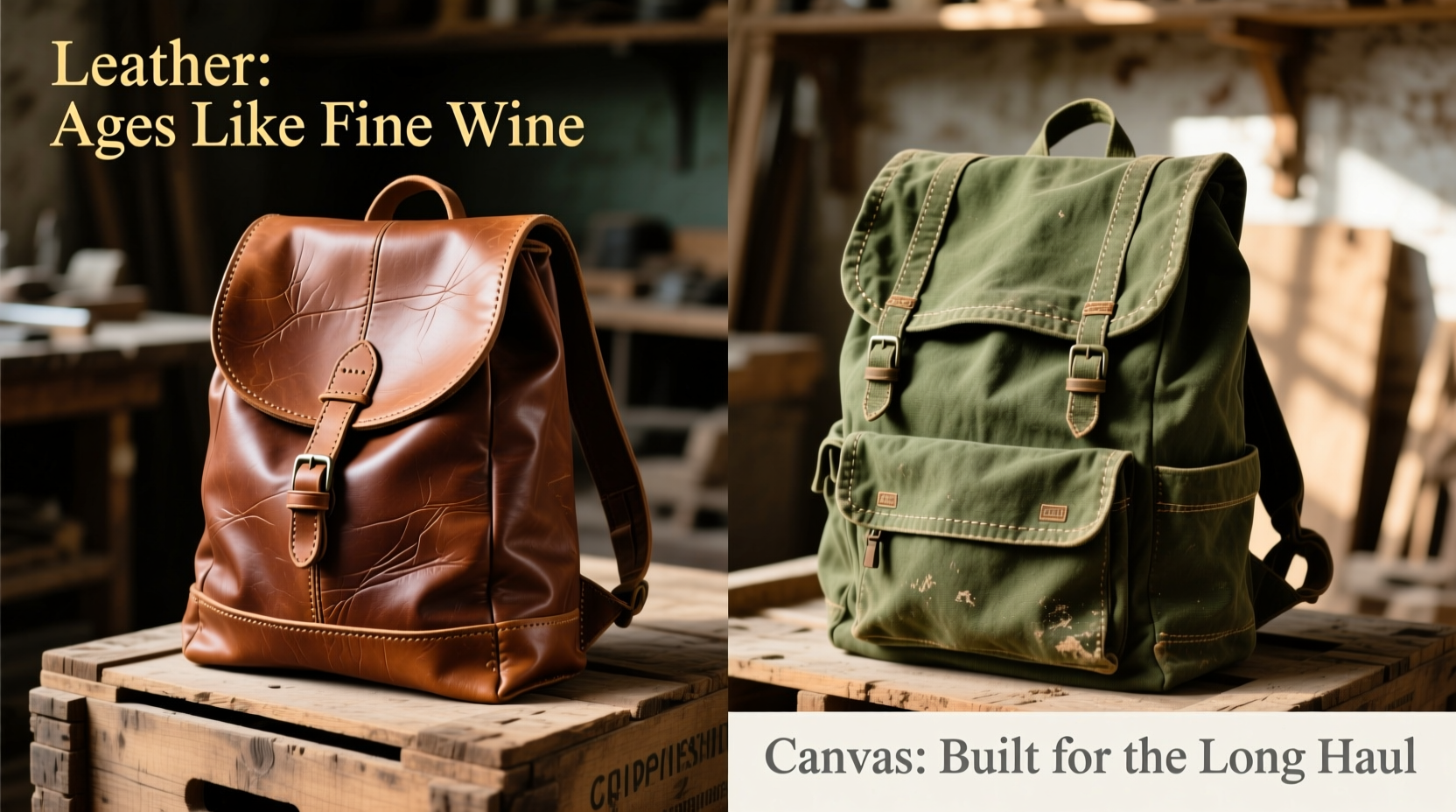
Durability isn’t just about how long a backpack survives—it’s about how well it performs under stress over time. Leather and canvas age differently due to their composition and structural integrity.
Full-grain leather, the highest quality available, is naturally dense and resilient. When properly maintained, it resists abrasion, tearing, and water damage better than most fabrics. Over years of use, high-quality leather only strengthens as the fibers compact. It can last decades, especially when reinforced with brass hardware and sturdy stitching.
Canvas, typically made from tightly woven cotton or synthetic blends, offers impressive tensile strength. Military-grade canvas (like 16-ounce duck canvas) is designed to endure heavy loads and harsh conditions. However, unlike leather, canvas doesn’t strengthen with age. Instead, it gradually wears down at stress points—straps, seams, and corners—especially if exposed to moisture or UV light regularly.
Aging Gracefully: The Look of Time
The way a backpack ages defines its soul. Some people want their gear to look pristine forever; others appreciate the story that wear tells.
Leather develops a patina—a natural sheen and color variation caused by exposure to oils, sunlight, and friction. This transformation is celebrated in heritage fashion. A well-worn leather backpack gains depth and individuality, much like a vintage watch or pair of boots. Scuffs blend into the surface, and edges soften, creating a lived-in elegance that’s hard to replicate artificially.
Canvas, on the other hand, fades and frays. Sunlight bleaches colors, and repeated washing can break down fibers. While some find charm in a faded, well-loved canvas bag, it often signals deterioration rather than maturation. Stains, thinning fabric, and loose threads are common after several years of regular use.
“Time doesn’t degrade good leather—it refines it. A decade-old leather backpack tells a story. Canvas often just shows its age.” — Marcus Reed, Artisan Bag Maker & Material Historian
Comparison Table: Leather vs Canvas Backpacks
| Feature | Leather Backpack | Canvas Backpack |
|---|---|---|
| Lifespan (with care) | 15–30+ years | 5–10 years |
| Weather Resistance | Moderate (improves with conditioning) | Poor (absorbs water unless treated) |
| Weight | Heavier initially | Lighter |
| Aesthetic Evolution | Develops rich patina | Fades, stains, frays |
| Maintenance Needs | Regular conditioning | Spot cleaning, air drying |
| Eco-Friendliness | Biodegradable, long lifespan | Often blended with synthetics; shorter life cycle |
| Cost (initial) | Higher ($150–$500+) | Lower ($40–$120) |
Real-World Example: Two Backpacks, Ten Years Later
Consider two professionals who started their careers in 2014 with similar lifestyles and commutes. Daniel chose a full-grain leather backpack from a reputable brand, spending $320. Elena opted for a durable waxed canvas model at $95.
By 2024, their experiences diverged significantly. Daniel’s leather pack shows deep scuff marks near the zippers and slight darkening on the shoulder straps from sun exposure. But the structure remains intact. He conditioned it twice a year and replaced the lining once. The bag now has a warm, burnished glow and turns heads during client meetings.
Elena’s canvas backpack began showing wear by year three. The bottom developed a permanent crease, the wax coating wore off in high-friction areas, and a seam near the main compartment split open during a rainy commute. She repaired it twice but eventually replaced it in 2020. Her second canvas bag followed a similar path.
Daniel still uses his original backpack. His initial investment averages less than $22 per year. Elena spent nearly $300 replacing bags and accessories over the same period—without achieving the same level of prestige or durability.
Care Practices That Extend Lifespan
No material reaches its potential without proper care. Here’s how to maximize longevity for each type:
For Leather Backpacks
- Condition every 6–12 months with a pH-balanced leather conditioner to prevent drying and cracking.
- Wipe spills immediately with a dry cloth; never let liquids soak in.
- Avoid direct sunlight for prolonged periods to prevent fading and embrittlement.
- Store in a breathable dust bag, away from heat sources and humidity.
- Use a leather protector spray annually, especially if used in rainy climates.
For Canvas Backpacks
- Spot clean with mild soap and water; avoid machine washing unless specified.
- Allow wet canvas to air dry completely before storing.
- Reapply wax or water repellent treatments every 6–12 months.
- Rotate usage if possible—don’t rely on one bag daily.
- Inspect seams monthly for early signs of unraveling.
Checklist: Choosing the Right Backpack for Long-Term Use
Before making your decision, ask yourself the following:
- ✅ Will I use this daily for commuting or travel?
- ✅ Do I prefer a bag that improves in appearance over time?
- ✅ Am I willing to invest time in seasonal maintenance?
- ✅ Is weight a major concern for comfort?
- ✅ Do I value sustainability and long-term ownership?
- ✅ What kind of professional image do I want to project?
If you answered “yes” to the first five, leather may be the superior choice. If lightweight utility and lower upfront cost matter most, canvas remains viable—but expect to replace it sooner.
Frequently Asked Questions
Can canvas ever age as well as leather?
Rarely. While some waxed canvas bags develop a subtle sheen, they don’t achieve the depth or complexity of leather’s patina. Aging in canvas usually means fiber breakdown, not refinement.
Are vegan leather backpacks a good alternative?
Most synthetic leathers (PU, PVC) lack breathability and degrade faster than genuine leather, especially under UV exposure. High-end plant-based alternatives (like cork or mushroom leather) show promise but aren’t yet as durable as full-grain hide.
Does all leather age well?
No. Only full-grain and top-grain leathers develop a desirable patina. Bonded or corrected-grain leathers may peel or crack prematurely. Always check the product description for leather type.
Final Verdict: Which One Wins?
When judged by longevity and aesthetic evolution, leather clearly outperforms canvas. It lasts longer, requires manageable upkeep, and grows more attractive with age. While canvas wins on initial affordability and weight, it simply cannot match the enduring appeal and resilience of quality leather.
That said, the best choice depends on your lifestyle. If you need a lightweight, washable bag for hiking or casual use, canvas makes sense. But if you're seeking a lifelong companion—one that reflects your journey and elevates your presence—invest in a full-grain leather backpack. With minimal care, it will serve you faithfully for decades, growing richer and more distinctive with every mile.




 浙公网安备
33010002000092号
浙公网安备
33010002000092号 浙B2-20120091-4
Comments
No comments yet. Why don't you start the discussion?