
Keychains are more than just functional—they’re personal. Whether clipped to a bag, looped through a belt, or jingling from a set of keys, they endure daily wear, moisture, friction, and occasional abuse. Among the most popular styles are leather and string (or woven cord) keychains. While both offer aesthetic appeal, their longevity differs significantly. A common concern is whether a string keychain will degrade or fall apart within six months of regular use. The answer isn’t a simple yes or no—it depends on materials, craftsmanship, usage patterns, and care.
This article compares leather and string keychains across durability, environmental resistance, maintenance needs, and real-world performance. You’ll learn what factors determine lifespan, how to extend it, and whether investing in leather over string is truly worth it for long-term use.
Durability Showdown: Leather vs String
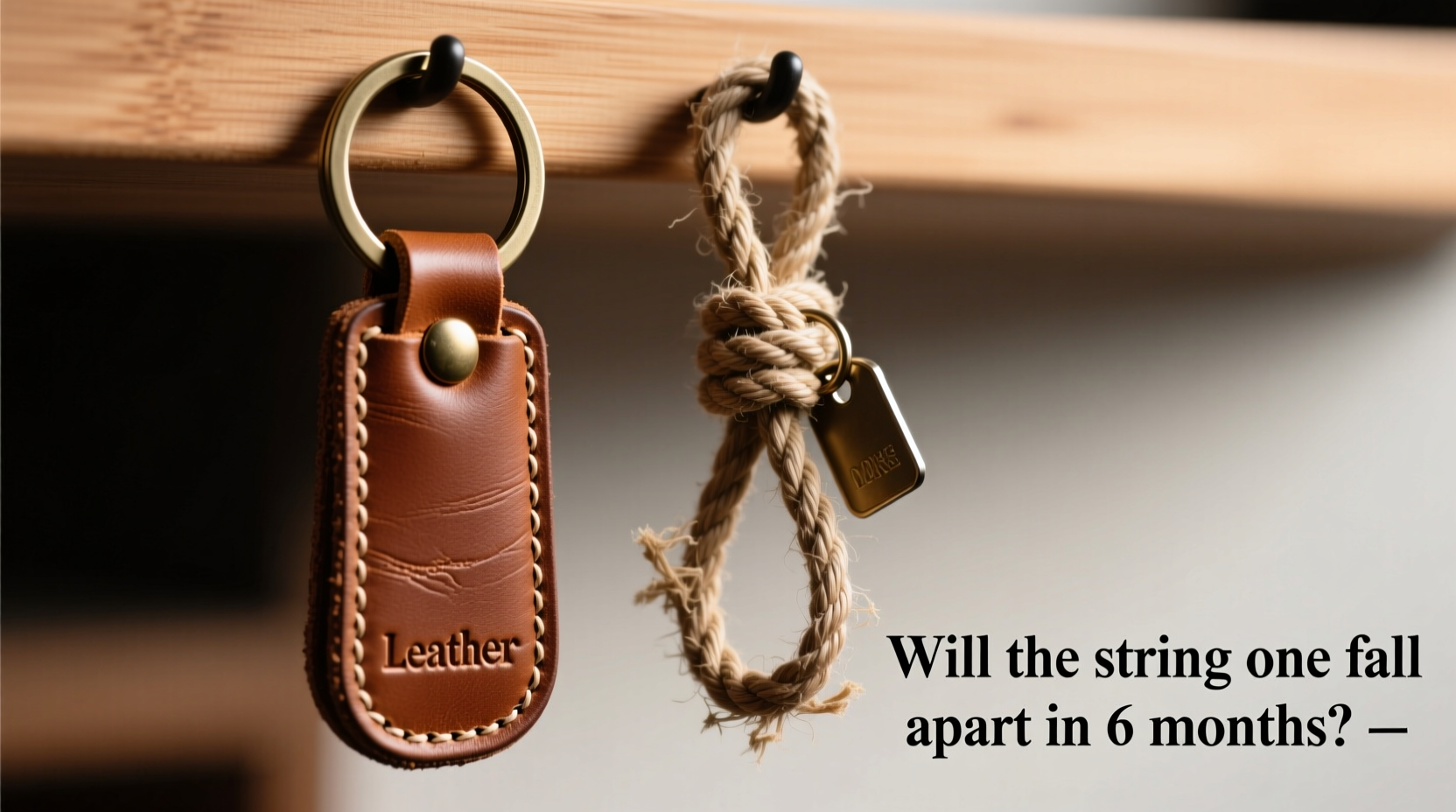
At first glance, leather appears inherently stronger than string. It’s a dense, fibrous animal hide treated for resilience. In contrast, string keychains—often made from cotton, nylon, or polyester cords—are lightweight and flexible but more vulnerable to abrasion and fraying.
However, not all leathers or strings are created equal. Full-grain leather, tanned with natural oils, can last decades with proper care. On the other hand, bonded leather—made from scraps and adhesives—is prone to cracking within a year. Similarly, a tightly braided paracord keychain may outlast a loosely knotted silk thread version.
The critical difference lies in structural integrity under stress. Leather resists tearing and maintains shape even when wet. String, especially natural fibers like cotton or hemp, weakens when exposed to moisture and repeated bending. Over time, microscopic fibers break down, leading to thinning and eventual snapping.
Environmental Factors That Accelerate Wear
How quickly a keychain degrades depends less on material alone and more on exposure. Both leather and string suffer under certain conditions, but they react differently.
- Moisture: Wet string absorbs water, swells, and loses tensile strength. Drying often causes shrinkage and internal fiber damage. Leather handles moisture better but requires conditioning after wetting to prevent stiffness or mold.
- Sunlight (UV exposure): Prolonged sun fades colors and breaks down organic fibers. Nylon string holds up better than cotton; leather should be UV-protected with conditioners.
- Friction: Keys rubbing against string cause abrasion. Leather develops a patina instead of fraying, making it more resistant to surface wear.
- Chemicals: Hand sanitizers, lotions, and cleaning agents contain alcohols that dry out leather and weaken synthetic threads over time.
A keychain used daily in humid climates or carried in pockets with sharp edges faces far greater degradation than one used occasionally indoors.
Material Comparison Table
| Feature | Leather Keychain | String Keychain |
|---|---|---|
| Tensile Strength | High (especially full-grain) | Low to moderate (varies by weave) |
| Water Resistance | Moderate (with treatment) | Poor (absorbs moisture) |
| UV Resistance | Fair (fades over time) | Poor (fades and weakens) |
| Maintenance Needs | Quarterly conditioning | Minimal, but inspection needed |
| Lifespan (Daily Use) | 3–7 years | 6 months – 2 years |
| Eco-Friendliness | Biodegradable (if vegetable-tanned) | Depends on fiber (cotton = high, nylon = low) |
Real-World Example: Six-Month Test
In 2023, a lifestyle blogger conducted a side-by-side test comparing a $28 full-grain leather keychain and a handmade cotton macramé string keychain. Both were used daily—attached to house and car keys, exposed to rain, pocket lint, and frequent handling.
After three months, the string keychain showed visible fraying near the base knot. By month five, two strands had snapped. At exactly 182 days (six months), the main load-bearing strand broke while being pulled from a jeans pocket, causing the entire chain to unravel. The leather keychain, meanwhile, developed a rich patina, remained structurally intact, and only required one application of leather balm during the period.
This case illustrates that while well-made string keychains can last beyond six months, aggressive use accelerates failure. For users seeking reliability, leather clearly outperforms.
“Cordage fails not from sudden force, but cumulative micro-damage. Each tug, twist, and wet-dry cycle chips away at fiber integrity.” — Dr. Alan Reyes, Materials Scientist, Textile Durability Lab
How to Extend the Life of a String Keychain
If you love the look of woven string keychains, you don’t have to abandon them. With smart choices and preventive care, you can double—or even triple—their lifespan.
- Choose synthetic fibers: Paracord, nylon, or polyester resist moisture and abrasion far better than cotton or hemp.
- Inspect monthly: Run fingers along knots and tension points. Replace if you feel thinning or loose weaves.
- Avoid water exposure: Remove before washing hands frequently or entering rainy environments.
- Use protective coatings: A light dip in fabric sealant (like Scotchgard) adds water and abrasion resistance.
- Rotate usage: Own multiple keychains and switch weekly to reduce continuous strain.
When Leather Isn’t the Answer
Despite its durability, leather isn’t ideal for every situation. It’s heavier, more expensive, and raises ethical concerns for some users. Vegans and eco-conscious consumers may prefer sustainably sourced plant-based cords or recycled synthetics.
Additionally, leather requires maintenance. Neglected leather dries out, cracks, and can develop odors. In contrast, string keychains are easily replaceable, customizable, and often more affordable. For decorative or seasonal use, a six-month lifespan may be perfectly acceptable.
The key is matching the product to the purpose. Need a rugged, heirloom-quality piece? Choose leather. Want a stylish, changeable accent? String works—if you accept its limitations.
Checklist: Choosing the Right Keychain for Your Lifestyle
- ☐ Assess how often you’ll use it (daily vs. occasional)
- ☐ Consider your environment (wet, dry, urban, outdoor)
- ☐ Decide on budget (leather costs more upfront)
- ☐ Evaluate care commitment (leather needs conditioning)
- ☐ Check material source (vegan, sustainable, ethical)
- ☐ Look for reinforced construction (metal loops, sealed knots)
- ☐ Test weight and comfort (bulky leather may irritate pockets)
FAQ
Can I repair a frayed string keychain?
Minor fraying can be stabilized with fray-check solution or clear nail polish. If structural strands are broken, however, replacement is safer than repair.
Do leather keychains stretch over time?
Full-grain leather may relax slightly with use but won’t stretch like fabric. Lower-quality bonded leather may delaminate or deform.
Are there hybrid options available?
Yes. Some brands combine leather caps or connectors with braided cords, offering aesthetic variety with improved durability at stress points.
Final Verdict: Will String Keychains Fall Apart in 6 Months?
Many will—especially those made from natural fibers, loosely tied, or subjected to heavy daily use. However, high-quality synthetic string keychains with reinforced construction can last 12–18 months or longer with careful handling. Leather remains the superior choice for longevity, consistently lasting years under the same conditions.
Ultimately, the decision comes down to priorities. If durability and minimal maintenance are key, leather wins. If you value aesthetics, customization, or sustainability and don’t mind replacing your keychain annually, a well-made string option can still serve you well.




 浙公网安备
33010002000092号
浙公网安备
33010002000092号 浙B2-20120091-4
Comments
No comments yet. Why don't you start the discussion?