
The debate over who is the Greatest of All Time (GOAT) in basketball has raged for decades, but it crystallized around two names: Michael Jordan and LeBron James. For years, Jordan’s six championships, five MVPs, and cultural dominance made him the default answer. But as LeBron’s career unfolds with unprecedented longevity, statistical dominance, and all-around excellence, a compelling case emerges—LeBron might not just rival Jordan, he might surpass him.
This isn’t about diminishing Jordan’s legacy. It’s about recognizing evolution in the game and acknowledging a player who has redefined what sustained greatness looks like across multiple eras, teams, and roles.
Longevity and Durability at an Elite Level
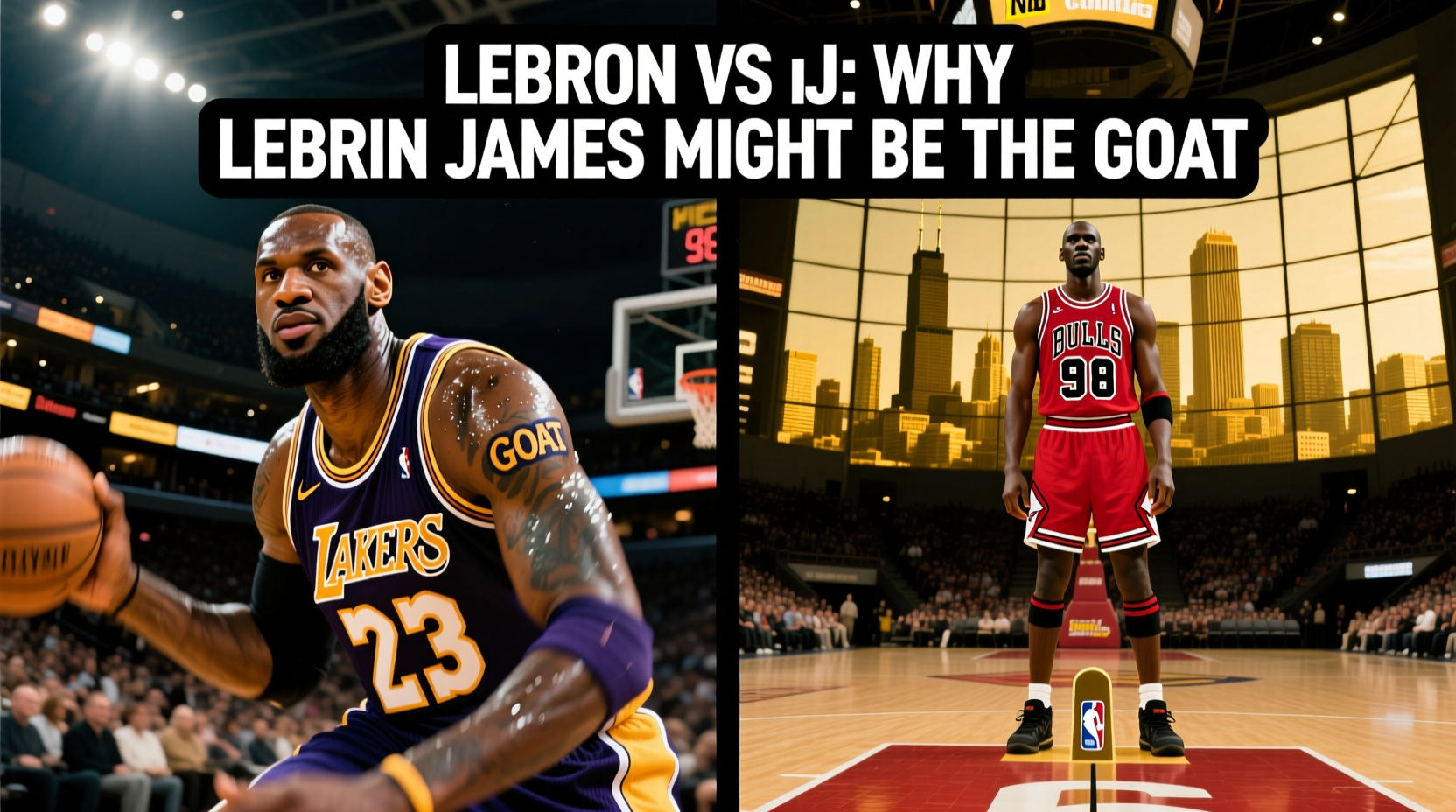
One of the most staggering aspects of LeBron James’ career is its duration at the highest level. Since entering the NBA in 2003, LeBron has played at an All-NBA caliber for over two decades—a feat unmatched in basketball history. He remains a dominant force well into his late 30s, something no guard or forward has achieved with such consistency.
Consider this: LeBron has averaged over 25 points, 7 rebounds, and 7 assists per game for his career. Even more impressively, he’s maintained elite efficiency, shooting above 50% from the field for much of his prime and sustaining high true shooting percentages throughout his career.
Versatility and Impact Across Positions
Michael Jordan was a transcendent scorer and defender, often guarding the opponent’s best wing. LeBron, however, operates as a point forward, primary playmaker, and interior presence despite being listed at 6'9\". His ability to dominate games without being a traditional scorer sets him apart.
LeBron leads the NBA in postseason points, ranks top five in assists, and is one of the few players ever to record a triple-double in the NBA Finals. He has carried three different franchises (Cavaliers, Heat, Lakers) to titles, adapting his game each time—from scoring leader in Cleveland, to a balanced force in Miami, to a floor general in Los Angeles.
“He’s the only guy who can walk into a room and say, ‘I’m going to get 30, 10, and 10 tonight,’ and everyone believes it.” — Chris Paul, NBA All-Star and teammate
Statistical Supremacy: A Comparative Overview
| Statistic | Michael Jordan | LeBron James |
|---|---|---|
| NBA Championships | 6 | 4 |
| Regular Season MVPs | 5 | 4 |
| Finals MVPs | 6 | 4 |
| Career Points | 32,292 | 39,000+ |
| Assists | 5,633 | 10,000+ |
| All-NBA Selections | 11 | 19+ |
| Postseason Points | 5,987 | 8,000+ |
| Triple-Doubles | 28 | 100+ |
The table reveals a stark contrast: while Jordan’s resume is denser in championships and MVP awards during a shorter span, LeBron’s volume, versatility, and endurance create a different kind of dominance. He doesn’t just score—he orchestrates, defends, and elevates teammates in ways few ever have.
Adaptability and Team Success Across Eras
LeBron’s ability to win in different systems and with varying rosters speaks to his basketball IQ and leadership. In 2012 and 2013, he won back-to-back titles with the \"Big Three\" Heat, sacrificing personal stats for team cohesion. In 2016, he delivered Cleveland its first championship by leading a historic 3–1 Finals comeback against a 73-win Warriors team—arguably the greatest individual playoff run ever.
In 2020, amid a pandemic bubble, LeBron led a retooled Lakers squad to a title, earning Finals MVP at age 35. Each championship came under different circumstances, requiring different versions of his game.
Mini Case Study: The 2016 NBA Finals
Down 3–1 to the Golden State Warriors, many expected the series to end quickly. Instead, LeBron averaged 29.7 points, 11.3 rebounds, and 8.9 assists, including iconic plays like “The Block” on Andre Iguodala and clutch shooting in Game 7. He became the first player to lead both teams in points, rebounds, assists, steals, and blocks for a series. This wasn’t just winning—it was authoring a legacy-defining moment under maximum pressure.
The Evolution of Greatness: A New Standard
Basketball has changed. The pace is faster, the competition deeper, and the physical demands greater due to year-round media scrutiny, travel, and load management challenges. LeBron has navigated this evolving landscape while maintaining relevance and dominance.
Where Jordan’s era emphasized isolation scoring and defensive intensity, today’s game rewards versatility, spacing, and playmaking. LeBron fits perfectly into the modern NBA—and helped shape it. His combination of size, speed, vision, and basketball intelligence has influenced how teams build rosters and how young players model their games.
- First player to rank in the top 20 all-time in both points and assists
- Only player with over 10,000 points, rebounds, and assists
- Holds the record for most All-NBA selections
- Most career playoff wins and minutes
Expert Insight on Legacy
“LeBron’s impact goes beyond rings. He’s been the best or second-best player in the league for 15 consecutive seasons. That kind of sustained excellence redefines what we thought was possible.” — Brian Windhorst, ESPN Senior NBA Writer
Addressing the Counterarguments
Skeptics point to Jordan’s perfect 6–0 Finals record versus LeBron’s 4–6. While impressive, this overlooks context: LeBron has played in ten Finals, facing superteams like the Warriors and Spurs dynasties. Making the Finals ten times with three franchises is itself a testament to greatness.
Others argue Jordan’s defensive accolades (9 All-Defensive First Teams vs. LeBron’s 6) give him an edge. But defense is harder to quantify, and LeBron has often guarded multiple positions in crucial moments, including centers in small-ball lineups.
FAQ
Has LeBron surpassed Jordan statistically?
Yes, in nearly every cumulative category—points, assists, All-NBA selections, playoff stats. Jordan holds advantages in efficiency during peak years and championships, but LeBron leads in volume, versatility, and longevity.
Why do some still believe Jordan is the GOAT?
Jordan’s cultural impact, six titles in six attempts, and peak dominance in the 1990s cemented his image as the standard. His influence extends beyond sports into global branding and media. However, as younger fans watch LeBron’s sustained excellence, perspectives are shifting.
Can longevity outweigh championship count?
For many analysts, yes. Sustained excellence across eras demonstrates adaptability and resilience. LeBron’s ability to remain elite for 20+ years—while carrying different teams to contention—adds weight to his claim, even with fewer rings.
Conclusion: Rethinking Greatness
The conversation around the GOAT is no longer binary. Michael Jordan will always be a foundational figure in basketball history. But LeBron James has built a case that challenges tradition with consistency, versatility, and evolution.
If greatness is measured not just by peak performance but by impact over time, by influence on the game, and by the ability to elevate any team he joins, then LeBron James isn’t just in the conversation—he may already be ahead.




 浙公网安备
33010002000092号
浙公网安备
33010002000092号 浙B2-20120091-4
Comments
No comments yet. Why don't you start the discussion?