
Dining with candlelight has long been associated with elegance, intimacy, and warmth. Whether it’s a romantic dinner, a family gathering, or a quiet night in, the soft glow of a candle enhances the mood. But with safety concerns around open flames and the mess of wax drips, many are turning to flameless alternatives. The two dominant options—LED candle lights and flameless wax candles—both promise realism, but they achieve it differently. When placed on a dining table, where subtlety and authenticity matter, which one delivers the most lifelike flicker?
The answer isn’t straightforward. It depends on technology, design, placement, and even ambient lighting. This article breaks down the key differences between LED candle lights and flameless wax candles, evaluates their flicker quality, and helps you make an informed decision for your dining space.
Understanding Flicker Technology: How Realism Is Achieved
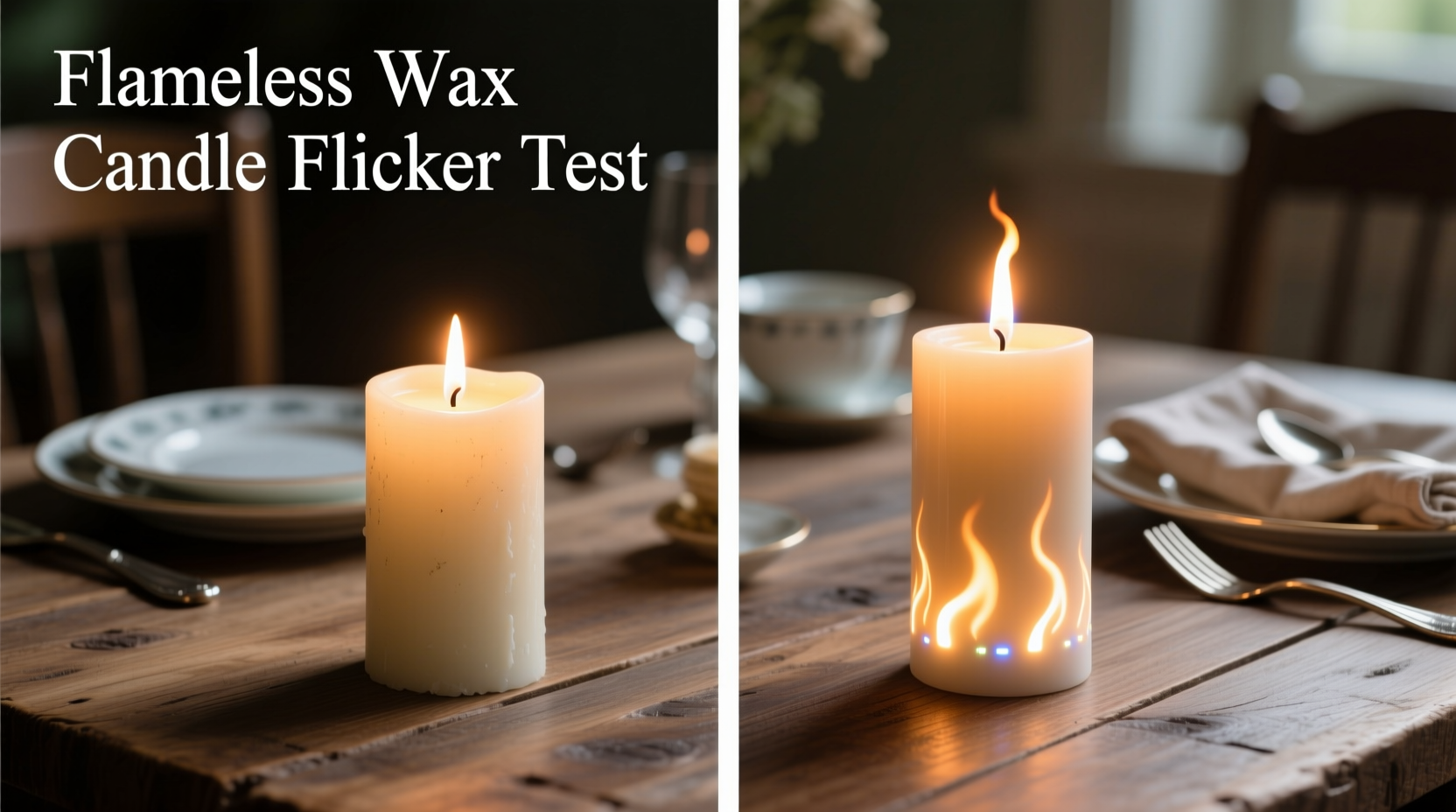
The illusion of a real flame lies not just in brightness but in movement. A genuine candle flame dances unpredictably—shifting in height, color, and direction based on air currents. Replicating this behavior electronically requires advanced engineering. Both LED candle lights and flameless wax candles use variations of flicker simulation, but their methods differ.
Basic LED candles rely on simple alternating circuits that pulse light at fixed intervals. These often produce a mechanical, repetitive glow that lacks nuance. In contrast, high-end models incorporate microprocessors that randomize brightness, timing, and intensity to mimic natural flame behavior. Some even include multiple LEDs within a single bulb to create depth and shadow variation.
Flameless wax candles take a different approach. They are typically made from real wax with embedded LED components designed to look like a wick. The LED sits beneath or inside a translucent filament that mimics the shape of a flame. This filament diffuses light in a way that closely resembles the soft edges and warm core of a real flame. Many premium models also use dual-color LEDs (warm white and amber) that shift subtly to simulate temperature changes in a burning flame.
“Flicker realism today is less about brightness and more about randomness. The human eye detects patterns instantly—so true realism means breaking them.” — Dr. Lena Park, Lighting Design Researcher, MIT Media Lab
Comparing Flicker Performance: Key Factors
To determine which type flickers more realistically on a dining table, several factors must be evaluated under typical use conditions. These include flicker pattern, color temperature, shadow play, and spatial integration.
Flicker Pattern and Randomization
LED candle lights vary widely in quality. Budget versions often use a fixed cycle—dimming and brightening every 1–2 seconds in a predictable rhythm. On a dining table, especially during conversation or when viewed peripherally, this can appear artificial.
Premium LED tea lights or pillar designs now feature “flicker chips” that generate stochastic light output. These emulate wind effects, draft responses, and flame flutter. Some even sync across multiple units via Bluetooth to avoid synchronized blinking—a common giveaway of low-quality LEDs.
Flameless wax candles, particularly those with flexible flame filaments, have an edge here. The physical structure of the fake flame allows light to scatter unevenly, creating a more organic silhouette. Combined with randomized pulsing, this results in a flicker that’s harder to distinguish from real fire—at least at conversational distance.
Color Temperature and Warmth
A real candle burns at approximately 1,800 Kelvin, producing a deep orange-yellow glow. Many LED candles emit light closer to 2,700K, which is warmer than standard bulbs but still cooler than actual flame.
High-end flameless wax candles often combine two LEDs: one at 2,000K and another at 1,900K, alternating slightly to simulate the inner blue base and outer yellow tip of a flame. This layered color effect adds depth, especially when reflected off glassware or polished table surfaces.
In contrast, most standalone LED candle lights use a single diode, limiting their ability to reproduce this gradient. While some models offer dimmable warm-white settings, they rarely match the chromatic complexity of wax-based flameless candles.
Shadow Play and Depth
On a dining table, shadows matter. A real candle casts dancing silhouettes on walls, ceilings, and faces. The three-dimensional shape of wax candles—including ridges, drips, and textured surfaces—interacts with light to create dynamic shading.
Flameless wax candles preserve this physicality. Even when unlit, their form contributes to the aesthetic. When illuminated, the light filters through translucent wax layers, producing a soft halo effect that flat LED inserts cannot replicate.
Most LED candle lights, especially tea lights or slim taper designs, lack this depth. Their plastic housings diffuse light uniformly, resulting in flatter illumination. While convenient, they often look more decorative than atmospheric.
Side-by-Side Comparison: Features at a Glance
| Feature | LED Candle Lights | Flameless Wax Candles |
|---|---|---|
| Flicker Realism | Varies; high-end models good, budget ones robotic | Generally superior due to filament diffusion and wax texture |
| Color Accuracy | Typically 2,700K – slightly cool for candle mimicry | Closer to 1,900–2,100K; better flame color match |
| Shadow Dynamics | Flat, minimal depth | Rich, textured shadows due to wax body |
| Durability | High; resistant to heat, moisture, wear | Moderate; wax can melt in direct sun or near heat |
| Aesthetic Integration | Functional but less authentic-looking when off | Blends seamlessly; looks like real candles even when unlit |
| Price Range | $5–$25 per unit | $10–$40 per unit |
Real-World Example: A Dinner Party Test
Consider Sarah, who hosts monthly dinners in her formal dining room. She previously used real taper candles but grew frustrated with wax drips on her antique tablecloth and the fire hazard around wine glasses. She tested two setups:
- Setup A: Six high-end LED taper lights in brass holders (total cost: $90)
- Setup B: Six flameless wax tapers with silicone flame filaments (total cost: $150)
Both were lit during a seven-course meal under dim ambient lighting. Guests were asked to identify which setup looked most realistic without being told the difference.
Eight out of ten guests said Setup B—flameless wax candles—looked more authentic. Comments included: “The way the light danced on the ceiling felt like real fire,” and “I kept expecting to smell smoke.” Two guests noted that the LED candles “felt digital,” comparing the flicker to a faulty bulb.
Sarah concluded that while both were safe and convenient, the wax-based version delivered a more immersive experience—worth the extra cost for special occasions.
Choosing the Right Option: A Step-by-Step Guide
Selecting between LED candle lights and flameless wax candles shouldn’t be arbitrary. Follow this process to ensure the best fit for your dining table:
- Assess your table setting. Is it formal or casual? Formal tables benefit more from the authenticity of wax candles, while casual setups may only need functional LED accents.
- Determine usage frequency. If you use candles weekly, durability and battery life matter. LED-only models often last longer and require less maintenance.
- Evaluate lighting conditions. In very dark rooms, flicker realism is more noticeable. Prioritize flameless wax candles here. In well-lit spaces, basic LEDs may suffice.
- Check for synchronization features. If using multiple units, ensure they don’t blink in unison. Look for models with “random flicker mode” or RF/Bluetooth syncing.
- Test before committing. Purchase one of each type and place them side by side on your table after dark. Observe the flicker, shadows, and overall ambiance.
- Consider replacement and upkeep. Flameless wax candles may degrade over time if exposed to heat or sunlight. LED inserts are easier to store and replace.
FAQ: Common Questions Answered
Do flameless wax candles really look like real flames?
High-quality flameless wax candles come remarkably close—especially when viewed from a distance of 2–6 feet. The combination of wax diffusion, colored LEDs, and flickering filaments creates a convincing illusion. Up close, attentive observers may notice the lack of heat shimmer or scent, but for dining purposes, they pass as real in most settings.
Are LED candle lights safer than flameless wax candles?
Safety-wise, both are excellent compared to real flames. Neither produces heat or emits smoke. However, flameless wax candles contain real wax, which can soften or melt if left in direct sunlight or near stoves. LED candle lights, typically made of plastic or metal, are more resilient in extreme conditions.
Can I mix LED and flameless wax candles on the same table?
You can, but it’s not recommended unless they’re from the same product line. Mismatched flicker patterns, heights, and colors can break the illusion. If blending is necessary, ensure all units have similar color temperatures and flicker modes to maintain visual harmony.
Final Checklist Before You Buy
- ✅ Look for randomized flicker—not steady pulsing
- ✅ Choose warm color temperature (under 2,200K preferred)
- ✅ Prefer models with dual LEDs or flame filaments
- ✅ Check battery life (minimum 40 hours on a set)
- ✅ Ensure easy on/off control (remote, timer, or touch)
- ✅ Match size and style to your tableware and centerpieces
- ✅ Read reviews focusing on “realistic flicker” and “dining use”
Conclusion: Elevate Your Dining Experience with the Right Choice
When it comes to flickering realism on dining tables, flameless wax candles generally outperform standard LED candle lights. Their physical design, material authenticity, and advanced light diffusion give them a subtle advantage in creating atmosphere. That said, high-end LED models—particularly smart, synchronized ones—are closing the gap and offer greater convenience for everyday use.
The choice ultimately depends on your priorities: authenticity for special occasions, or practicality for regular meals. For those who value ambiance as much as safety, investing in premium flameless wax candles is a worthwhile upgrade. For others, reliable LED options provide a clean, consistent alternative.




 浙公网安备
33010002000092号
浙公网安备
33010002000092号 浙B2-20120091-4
Comments
No comments yet. Why don't you start the discussion?