
Creating the right atmosphere at home doesn’t require expensive renovations or professional lighting design. For many, the magic lies in subtle illumination—soft glows that transform ordinary spaces into cozy retreats. Two popular choices for achieving this effect are LED strip lights and fairy lights. Both offer charm and versatility, but they differ significantly in application, durability, and overall value. When working within a tight budget, understanding these differences is essential to making a smart investment that delivers both aesthetic appeal and long-term functionality.
Understanding the Basics: What Are LED Strip Lights and Fairy Lights?
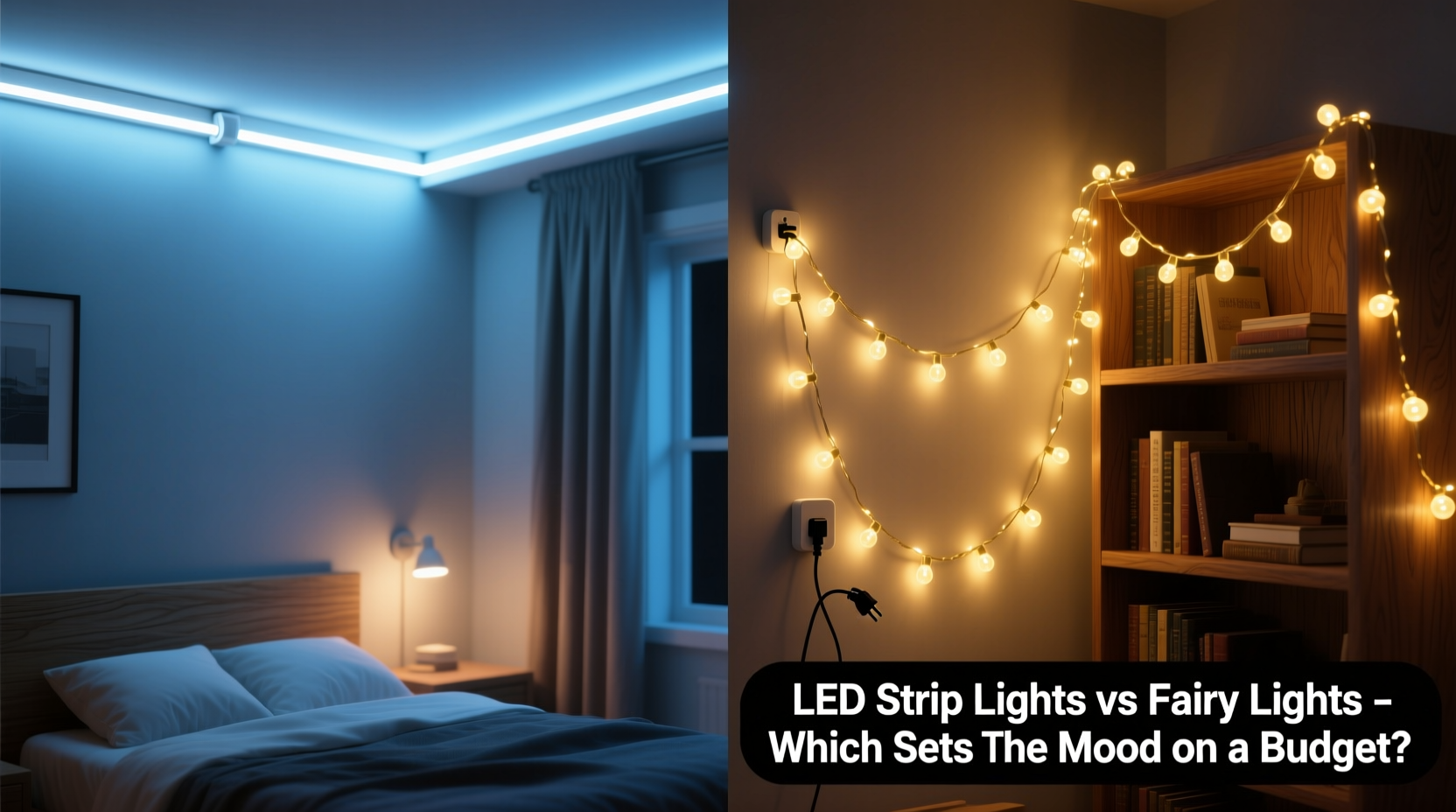
Before comparing the two, it’s important to define what each option offers.
LED strip lights are flexible circuits embedded with small light-emitting diodes (LEDs), typically mounted on adhesive backing. They come in reels and can be cut to length, allowing for custom installations along walls, under cabinets, behind TVs, or along architectural features. Available in single-color or RGB (multi-color) variants, many models are compatible with remote controls, smartphone apps, or voice assistants like Alexa and Google Home.
Fairy lights, also known as string lights or twinkle lights, consist of small incandescent or LED bulbs spaced evenly along a thin wire. Often battery-powered or plug-in, they’re commonly used decoratively—draped over headboards, wrapped around mirrors, or hung from ceilings. Their delicate, scattered glow evokes a whimsical, romantic feel, which makes them a favorite during holidays or for bohemian-style interiors.
While both aim to enhance ambiance, their construction, control options, and suitability for different environments vary widely.
Cost Comparison: Upfront Price vs Long-Term Value
When shopping on a budget, initial price is often the deciding factor—but true affordability includes longevity, energy use, and maintenance.
| Feature | LED Strip Lights | Fairy Lights |
|---|---|---|
| Average Upfront Cost (per meter) | $5–$15 | $3–$10 |
| Energy Consumption | Low (6–10W per 5m) | Very low to low (2–8W) |
| Lifespan | 30,000–50,000 hours | 3,000–15,000 hours |
| Durability | High (water-resistant options available) | Low to moderate (fragile wires/bulbs) |
| Installation Flexibility | High (cuttable, bendable, adhesive-backed) | Moderate (drape-only, limited shaping) |
| Smart Features | Common (color change, dimming, scheduling) | Rare (basic on/off or timer only) |
At first glance, fairy lights appear cheaper. A 10-meter string might cost as little as $15. However, lower-quality sets often fail within months due to broken filaments, frayed wires, or non-replaceable bulbs. In contrast, LED strips may cost more upfront but last years longer and consume less power. Over time, this translates to better value, especially if used daily.
Design & Ambiance: Matching Light to Mood
The emotional impact of lighting plays a crucial role in interior comfort. The choice between LED strips and fairy lights should align not just with budget, but with the desired atmosphere.
LED strip lights excel in creating seamless, ambient backlighting. Placed behind a bed frame or TV, they produce a soft halo effect that reduces eye strain and adds depth to a room. With RGB options, you can shift from warm white for relaxation to cool blue for focus, or even cycle through colors for parties. Their uniform glow supports modern, minimalist, or tech-forward aesthetics.
Fairy lights, by contrast, generate a nostalgic, dreamy vibe. The intermittent sparkle mimics starlight, ideal for bedrooms, nurseries, or outdoor patios. Because the bulbs are spaced apart, the light is less consistent—creating pockets of brightness and shadow. This uneven distribution enhances coziness but isn’t suitable for task lighting or clean visual lines.
“Lighting is the fastest way to alter a space’s emotional tone. Fairy lights add whimsy; LED strips bring sophistication. Choose based on the feeling you want to cultivate.” — Lena Torres, Interior Lighting Consultant
Real-Life Example: Transforming a Studio Apartment
Sophia, a freelance designer renting a 400-square-foot studio in Chicago, wanted to make her space feel larger and more inviting without spending much. She installed warm-white LED strips along the baseboards and underneath floating shelves. The continuous line of light visually expanded the floor space and created a calming evening environment. For accent, she draped a single string of copper-wire fairy lights across her window frame. The combination gave her the best of both worlds: functional ambiance from the LEDs and decorative sparkle from the fairy lights—all for under $60.
Installation & Practicality: Ease of Setup and Maintenance
How easy is it to install and maintain each type of lighting? This matters greatly when you're on a budget and prefer DIY solutions.
Step-by-Step Installation Guide
- Plan your layout: Sketch where you want light—under cabinets, along crown molding, or around a mirror.
- Measure and cut (for LED strips): Most strips can be cut every 3–5 inches at marked lines. Fairy lights come in fixed lengths.
- Prepare the surface: Clean thoroughly with alcohol wipes to ensure adhesive sticks properly.
- Peel and stick (LEDs) or drape (fairy lights): Press firmly along the strip’s length. Use clips or clear tape for fairy lights to prevent sagging.
- Connect to power: Plug in or hardwire. Test before finalizing placement.
- Conceal wires: Use cord covers or route behind furniture for a clean look.
LED strips require slightly more precision but offer greater control. Fairy lights are simpler to hang but harder to manage neatly—loose wires and tangled bulbs are common complaints.
Maintenance Considerations
Fairy lights, especially older incandescent versions, are prone to “dead bulb syndrome”—where one failed bulb shuts off the entire string. While LED-based fairy lights avoid this issue, replacing individual bulbs isn’t usually possible. Entire sections often need replacement.
LED strips are modular. If one segment fails, you can often bypass it or replace just that section. Additionally, drivers (power supplies) are separate components that can be swapped if needed. This modularity extends lifespan and reduces waste.
Budget-Friendly Lighting Checklist
To get the most out of your investment, follow this practical checklist:
- ✅ Determine the primary purpose: mood lighting, accent, or functional glow
- ✅ Measure installation areas to avoid buying excess material
- ✅ Compare lumens and color temperature (2700K–3000K for warm, cozy light)
- ✅ Prioritize LED versions—even for fairy lights—to save energy and increase lifespan
- ✅ Check for dimming capability or smart compatibility if future upgrades are likely
- ✅ Buy from reputable brands with warranties (especially for waterproof models)
- ✅ Reuse and reposition lights when redecorating instead of purchasing new sets
Frequently Asked Questions
Can I use LED strip lights outdoors?
Yes, but only if they have a proper ingress protection (IP) rating. Look for IP65 or higher for damp or exposed locations. Standard indoor strips will degrade quickly when exposed to moisture.
Are fairy lights safe to leave on overnight?
Modern LED fairy lights generate very little heat and are generally safe to leave on. However, avoid covering them with fabric or placing them near flammable materials. Never leave non-LED (incandescent) fairy lights unattended for long periods.
Can I connect LED strips and fairy lights together?
Not directly. They operate on different voltages and connection systems. However, you can power them from the same outlet using a multi-port adapter or smart plug, allowing synchronized on/off control.
Final Thoughts: Choosing the Right Light for Your Space and Budget
Both LED strip lights and fairy lights have earned their place in budget-conscious home styling. The decision ultimately depends on your priorities: precision and longevity, or charm and simplicity.
If you value customization, durability, and multi-functional lighting, LED strips are the smarter long-term investment. They blend invisibly into architecture, support dynamic color changes, and reduce electricity bills over time. They’re ideal for renters who want to upgrade a space temporarily but effectively.
Fairy lights win on emotional appeal. Their delicate sparkle brings instant warmth and nostalgia, perfect for seasonal decor, intimate corners, or creative displays. When chosen in LED form and handled carefully, they can last several seasons without issue.
The most effective approach may be a hybrid one. Use LED strips for foundational ambient lighting and layer in fairy lights as decorative accents. This layered technique maximizes visual interest while keeping costs manageable.




 浙公网安备
33010002000092号
浙公网安备
33010002000092号 浙B2-20120091-4
Comments
No comments yet. Why don't you start the discussion?