
Every day, millions of people rely on their smartphones for communication, navigation, work, and entertainment. Yet one of the most common threats to a phone’s lifespan isn’t software failure or battery degradation—it’s physical impact from drops. Accessories like leopard print lanyard cases and decorative phone charms have surged in popularity, blending fashion with function. But when it comes to preventing your phone from shattering on concrete, which option actually offers better protection?
The answer isn’t just about aesthetics. It’s about design, material integrity, weight distribution, and how each accessory influences the way you handle and carry your device. This article breaks down the structural and practical differences between leopard lanyard cases and phone charms, backed by real-world usage patterns and expert insights, to determine which is less likely to leave you staring at a cracked screen.
Understanding the Core Differences
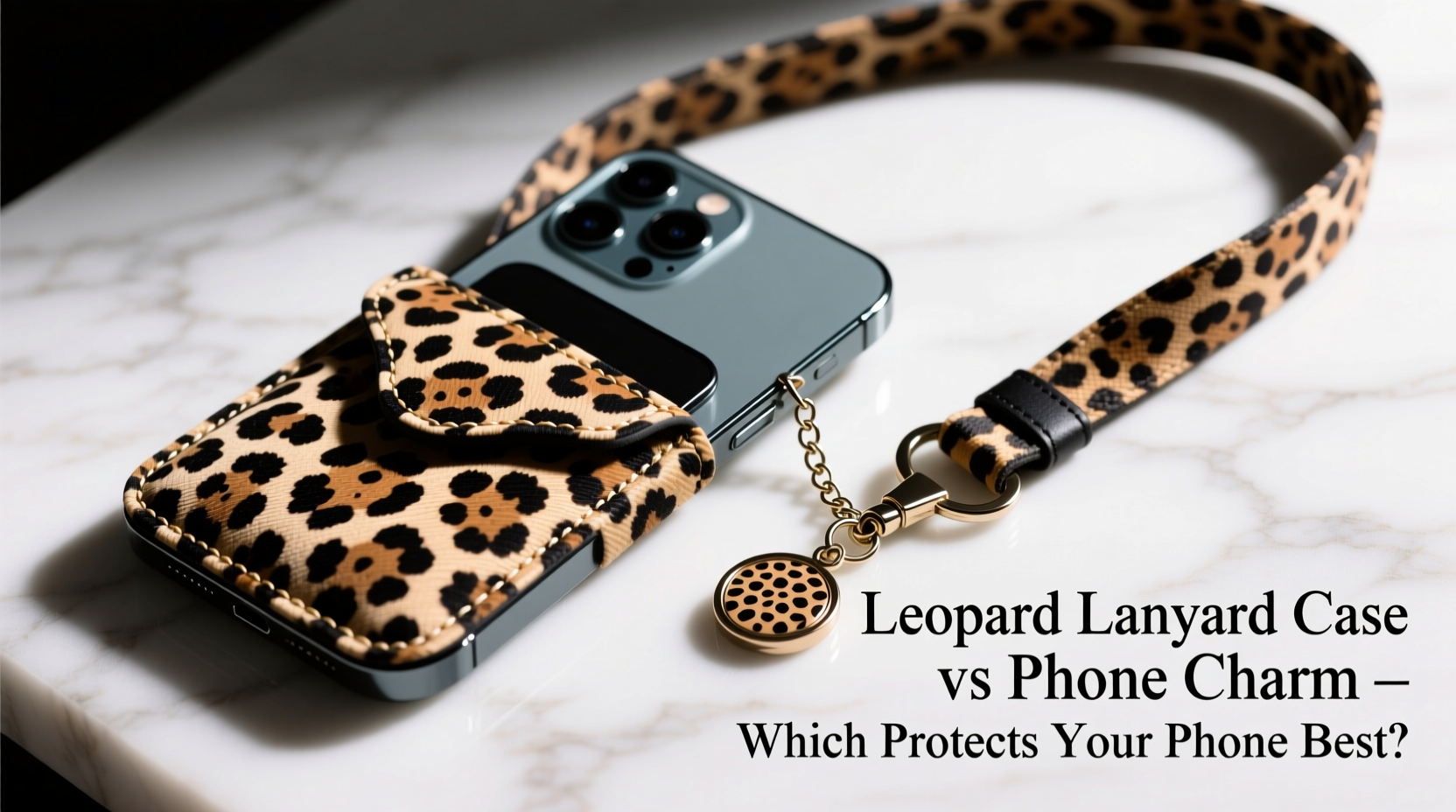
A leopard lanyard case and a phone charm serve overlapping purposes—both attach to your phone and can be worn around the wrist or neck—but their construction and protective capabilities differ significantly.
Lanyard cases are full-coverage phone enclosures that integrate a built-in strap or loop. They often include shock-absorbing materials like TPU (thermoplastic polyurethane) or silicone, raised bezels around the screen, and sometimes even corner bumpers designed to absorb impact during falls. The leopard print variant adds a bold, trendy aesthetic without compromising the foundational structure.
Phone charms, on the other hand, are typically small decorative attachments clipped onto existing cases via a ring, magnet, or dangling chain. While they may feature cute shapes, beads, or metallic accents, they add zero structural reinforcement. In fact, many charms extend outward from the phone, increasing its overall profile and potentially acting as leverage points during a fall.
Impact Protection: Design and Mechanics
When evaluating which accessory reduces the risk of a smashed phone, the key factor is how well it mitigates force upon impact. Let’s examine both options through this lens.
Lanyard cases reduce drop risk in two ways: physically and behaviorally. Physically, they provide cushioning. Most quality models use dual-layer designs—hard outer shells with soft inner linings—that disperse kinetic energy across the case rather than letting it travel directly into the phone’s glass and frame. Raised edges protect the screen and camera lens when placed face-down. Additionally, the integrated lanyard encourages users to keep the phone secured to their wrist, reducing accidental slips.
Phone charms do not offer any shock absorption. Worse, some designs introduce new risks. A dangling charm can catch on objects, yanking the phone out of your hand. During a fall, protruding elements may cause the phone to land at an awkward angle, concentrating impact on a single corner or edge—often the weakest point.
“Accessories that extend beyond the phone’s footprint increase rotational torque during a drop, raising the likelihood of damage.” — Dr. Lena Park, Materials Engineer at Mobile Safety Labs
Comparative Analysis: Lanyard Case vs Phone Charm
| Feature | Lanyard Case | Phone Charm |
|---|---|---|
| Drop Protection | High – includes shock-absorbing materials and structural support | None – adds no protective layer |
| Fall Prevention | High – wrist or neck strap keeps phone attached | Low – may increase snag risk |
| Added Weight Distribution | Balanced – weight centered around phone | Uneven – charm hangs off one side |
| Durability Over Time | High – built to withstand daily wear | Variable – chains break, clips loosen |
| Style Flexibility | Moderate – limited to available case designs | High – interchangeable, customizable |
Real-World Scenario: Commuter Drop Test
Consider Maya, a graphic designer who commutes daily via subway. She used a sleek minimalist phone case with a dangling leopard-print tassel charm for six months. Twice, the charm caught on her bag zipper, causing her phone to fall—one time resulting in a spiderweb crack across the screen.
After switching to a leopard lanyard case, she noticed immediate changes. The phone stayed securely on her wrist while boarding trains. When she accidentally dropped it getting off at rush hour, the case absorbed the impact on tile flooring with no damage. Over three months, she had zero incidents of loss or breakage.
This anecdote reflects broader user trends: accessories that tether the phone *and* protect it perform better than purely decorative add-ons, especially in dynamic environments like public transit, crowded events, or outdoor activities.
Actionable Steps to Minimize Phone Damage Risk
If your priority is protecting your phone from drops, follow this step-by-step approach:
- Assess your lifestyle: Do you frequently move through crowded spaces, carry bags, or engage in physical activity? High-motion environments demand secure attachment.
- Choose a protective base: Start with a rugged case that includes corner protection and screen elevation.
- Add a tether: Opt for a lanyard-integrated case or attach a detachable wrist strap to your current case.
- Avoid dangling accessories: Remove loose charms, tassels, or rings that could snag or alter fall dynamics.
- Test fit and balance: Ensure the phone still lies flat and feels balanced in your hand after adding any accessory.
Frequently Asked Questions
Can a phone charm ever improve safety?
Rarely. While a charm might make your phone easier to spot in a bag, it does not enhance physical protection. Some magnetic charms claim to double as wallet holders, but these add bulk and imbalance, increasing drop risk if not carefully designed.
Are all lanyard cases equally protective?
No. Look for models with MIL-STD-810G certification (military-grade drop testing), air-cushioned corners, and non-slip textures. Avoid thin, flimsy lanyard sleeves that offer only strap functionality without impact resistance.
Won’t a lanyard case make my phone look bulky?
Some trade-off in slimness is inevitable, but modern designs prioritize both style and safety. Leopard print and other fashionable patterns help maintain visual appeal while delivering real protection. Think of it as functional fashion—like wearing a stylish helmet while biking.
Final Verdict: Which Is Less Likely to Get Your Phone Smashed?
The evidence is clear: a leopard lanyard case is far less likely to result in a smashed phone than a decorative phone charm. It combines active prevention (via wrist or neck tethering) with passive protection (impact-absorbing materials and structural design). In contrast, phone charms offer no defensive benefits and may inadvertently increase the chances of a damaging fall.
That said, personal expression matters. If you love the look of charms, consider pairing a protective lanyard case with a small, securely attached charm on the strap itself—keeping decoration away from the phone’s body and fall plane.
“The safest phone accessory is one that prevents the drop *and* protects on impact. Most charms fail both criteria.” — Tech Safety Review Journal, 2023 Device Accessory Report
Take Action Today
Your smartphone is a significant investment. Don’t let a momentary slip turn into a costly repair. Reevaluate your current setup: Is your phone held securely? Does your case absorb shocks? Are you using accessories that help—or hurt—your odds of avoiding damage?
Switching to a leopard lanyard case doesn’t mean sacrificing style. It means choosing smart design over risky ornamentation. Whether you're navigating city streets, traveling, or juggling daily tasks, that extra layer of security could be the difference between a near-miss and a shattered screen.




 浙公网安备
33010002000092号
浙公网安备
33010002000092号 浙B2-20120091-4
Comments
No comments yet. Why don't you start the discussion?