
A sofa is more than just a place to sit—it’s the centerpiece of your living room. When it looks flat or uninspired, the whole space feels off. One of the quickest, most effective ways to inject personality and visual interest into your couch is through decorative pillows. Among the most debated choices: leopard print versus geometric designs. Both have strong visual appeal, but they serve different aesthetic purposes. Choosing between them isn’t just about preference—it’s about understanding how each style influences the mood, balance, and energy of your room.
The Visual Psychology of Patterned Pillows
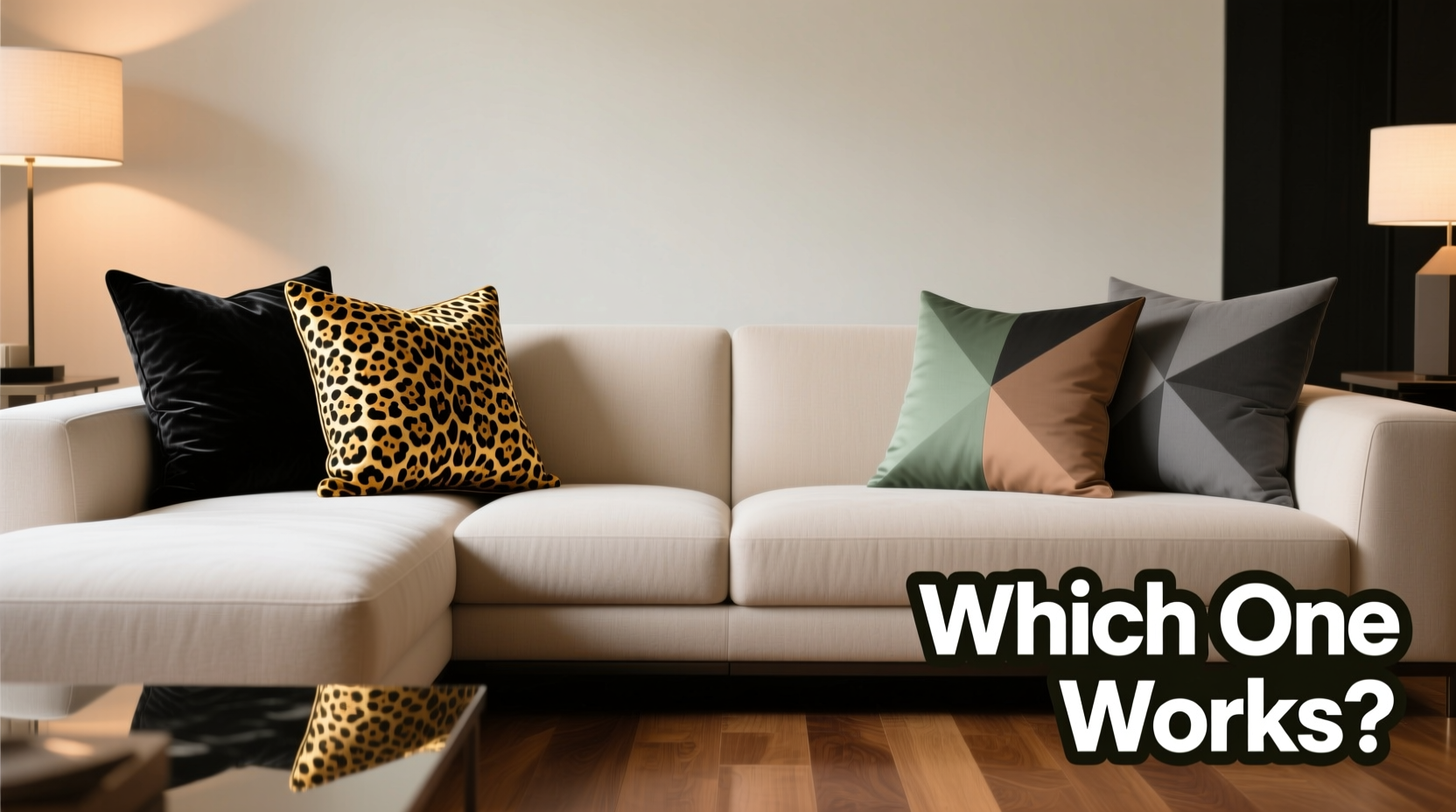
Pillows do more than provide comfort—they shape perception. A solid-colored couch can feel sterile without texture or contrast. Patterns introduce rhythm, movement, and focal points. Leopard print brings organic, wild energy; geometric shapes offer structure, order, and modern clarity. The key lies in how these patterns interact with your existing decor, lighting, and furniture lines.
Leopard print, a classic animal motif, taps into primal associations—luxury, boldness, and a touch of rebellion. It originated in fashion but has become a staple in interior design for those wanting drama without overcommitting. Geometric pillows, on the other hand, rely on symmetry, repetition, and clean lines. They resonate with contemporary, minimalist, or Scandinavian aesthetics, where precision and intentionality are valued.
Leopard Print: When Boldness Wins
Leopard print is not subtle—and that’s its strength. If your couch is neutral (beige, gray, navy, or cream), a leopard pillow instantly becomes a statement piece. It draws the eye, adds warmth, and creates an inviting sense of eclecticism. The irregular spots mimic nature, making the pattern feel dynamic rather than rigid.
Interior designer Mara Sinclair notes:
“Leopard is the ultimate neutral in disguise. Once you get past the initial ‘wild’ impression, you realize it works with almost everything—especially when grounded with solids.”
However, leopard print can overwhelm if overused. One or two pillows are usually enough. Pair them with textured solids like velvet or linen to soften the effect. Avoid combining leopard with other animal prints unless you’re aiming for a maximalist jungle theme.
Best For:
- Neutral-toned sofas needing a pop
- Spaces embracing vintage glam or Hollywood Regency style
- Homeowners who enjoy curated boldness
Geometric Pillows: Structure Meets Style
Geometric patterns—think triangles, hexagons, chevrons, or abstract grids—bring architectural interest to a couch. Unlike organic prints, geometrics are predictable and balanced. They create optical movement, guiding the eye across the seating area. This makes them ideal for long sectionals or low-profile sofas that risk looking too horizontal or static.
These pillows excel in spaces that lean modern, industrial, or mid-century. Their angular forms contrast beautifully with soft upholstery, adding definition. Monochrome geometrics (black and white, navy and cream) are timeless. Colorful versions (terracotta, sage, mustard) can tie together disparate elements in a room.
One caveat: overly complex geometric patterns can appear chaotic if not anchored. Stick to one dominant shape per pillow and limit the color palette to three tones max.
Comparing Impact: Leopard Print vs Geometric Pillows
| Feature | Leopard Print | Geometric |
|---|---|---|
| Versatility | High with neutrals; tricky with warm tones | High across styles; works with most palettes |
| Visual Weight | Heavy—acts as a focal point | Moderate to high, depending on scale |
| Style Compatibility | Vintage, glam, boho, eclectic | Modern, minimalist, Scandi, industrial |
| Mixing Potential | Limited—best with solids or tonal textures | High—pairs well with florals, stripes, solids |
| Lifespan (Trend Relevance) | Timeless with cyclical comebacks | Durable in modern design; some patterns date quickly |
Real-Life Scenario: Transforming a Dull Beige Sectional
Sophia had a large beige microfiber sectional that looked clean but lifeless. She initially bought four small solid-colored pillows, but the couch still felt flat. After consulting a local interior stylist, she tested two approaches:
- Option A: Two large leopard print pillows (buff and brown) flanking a black lumbar pillow.
- Option B: Three geometric pillows—one black-and-white triangle design, one terracotta chevron, and one navy-and-cream grid.
She lived with Option A for a week. Guests called it “dramatic” and “sophisticated,” but Sophia felt it clashed slightly with her walnut coffee table. She switched to Option B. The angular patterns created rhythm without overpowering. The terracotta tied in her rug, and the navy echoed her bookshelf accents. She added a solid mustard throw for warmth. The final result felt intentional, layered, and lively.
This case illustrates a key principle: sometimes, structure enhances neutrality better than organic chaos—even if the latter seems bolder at first glance.
How to Choose Based on Your Space
Selecting between leopard and geometric isn’t about which is “better”—it’s about alignment with your room’s personality. Ask yourself:
- Is your decor primarily warm (wood tones, earth colors) or cool (grays, metals, clean lines)? Leopard thrives in warm environments; geometrics suit cooler schemes.
- Do you prefer curated chaos or controlled harmony? Leopard leans expressive; geometric favors precision.
- Are you planning to change your decor often? Geometric pillows are easier to repurpose in new setups due to their neutral structural role.
“Pattern choice should reflect not just taste, but lifestyle. If you love change, go geometric. If you embrace character, leopard might be your signature.” — Julian Park, Interior Stylist & Author of *Textural Living*
Actionable Checklist: Picking the Right Pillow Strategy
- Assess your couch color: Neutral? Leopard may pop more. Colored? Geometrics could harmonize better.
- Evaluate your existing patterns: Do you already have rugs or art with strong lines? Geometrics may continue the flow.
- Consider scale: Large pillows with bold leopard work best on big sofas. Small geometric accents suit compact loveseats.
- Test layering: Combine one leopard with two solids, or mix two geometric types (e.g., triangle + stripe).
- Hold up samples: View both options against your couch at different times of day.
- Ask: Does it feel like “more me”? Trust personal resonance over trends.
Frequently Asked Questions
Can I use both leopard print and geometric pillows together?
Yes—but with caution. Limit the combination to one leopard pillow and one geometric, ensuring they share at least one color. Avoid placing them side by side; instead, separate them with a solid-texture pillow to prevent visual competition.
Which pattern hides wear and stains better?
Leopard print typically masks spills and fading better due to its irregular, high-contrast spots. Geometric patterns, especially light-colored ones with sharp edges, show dirt more readily along seams and lines.
Are these styles suitable for family-friendly living rooms?
Absolutely. Opt for performance fabrics like Crypton or Sunbrella for either style. These resist stains, fading, and pilling—ideal for homes with kids or pets. Darker leopard tones or grayscale geometrics are particularly practical.
Final Thoughts: Elevating Your Couch with Intention
Neither leopard print nor geometric pillows universally “makes your couch less boring.” The real magic lies in intentionality. A single well-chosen pillow can shift the entire energy of your living room. Leopard offers soul and flair; geometric brings clarity and rhythm. The best choice aligns with your existing space, your lifestyle, and your instinctive sense of comfort.
Don’t default to safe solids out of hesitation. Experiment. Layer. Step back and observe. Great design isn’t about perfection—it’s about expression. Whether you lean into the wild elegance of leopard or the crisp intelligence of geometry, your couch can become a true reflection of your taste.




 浙公网安备
33010002000092号
浙公网安备
33010002000092号 浙B2-20120091-4
Comments
No comments yet. Why don't you start the discussion?