
Initial earrings have surged in popularity over the past decade, becoming a staple in minimalist jewelry collections. From personalized gifts to everyday accessories, letter studs—featuring individual alphabetic characters—are now commonly seen on social media, celebrity red carpets, and fashion runways. But as with any rising trend, questions arise: Are letter studs merely a fleeting fashion statement, or do they hold lasting value compared to classic regular studs? To answer this, it's essential to examine design, function, personalization, longevity, and cultural significance.
The Evolution of Stud Earrings: From Classic to Custom
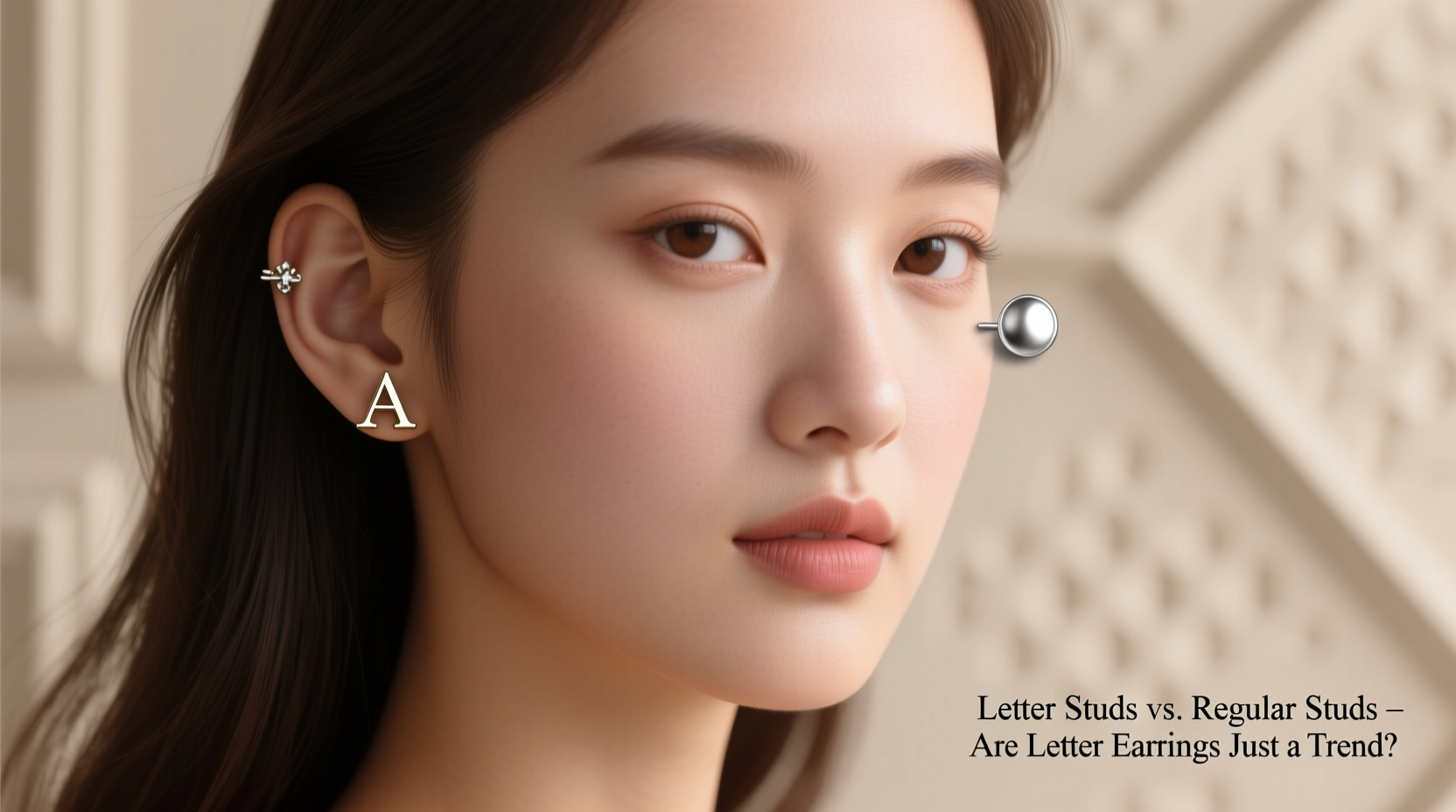
Stud earrings have been worn for centuries, evolving from ancient civilizations’ ornamental pieces to today’s refined symbols of elegance and simplicity. Traditional studs typically feature geometric shapes—circles, squares, stars—or gemstones like diamonds, pearls, or sapphires. Their timeless appeal lies in their subtlety and adaptability across styles and occasions.
In contrast, letter studs emerged more recently as part of the personalized jewelry movement. Inspired by monogrammed stationery, engraved lockets, and custom accessories, these pieces place emphasis on identity and individuality. The rise of social media has amplified demand for unique, shareable items, making initial earrings a go-to choice for self-expression.
“Personalized jewelry taps into emotional resonance—it’s not just about aesthetics, but meaning.” — Lena Park, Jewelry Historian & Curator at the Museum of Fashion Accessories
Design & Aesthetic Differences: Letter Studs vs Regular Studs
The most apparent distinction between letter studs and regular studs is visual language. While both sit flush against the earlobe and offer understated elegance, their design philosophies diverge significantly.
- Letter studs center around typography. Font choice, size, metal finish (gold, silver, rose gold), and even spacing influence perception. Some designs use bold block letters; others opt for delicate cursive or vintage-inspired serifs.
- Regular studs prioritize symmetry and form. Common motifs include solitaire diamonds, small hoops, geometric patterns, or abstract symbols. These are often chosen for their neutrality and compatibility with various outfits.
From a styling perspective, letter studs introduce narrative. Wearing an “A” might represent a name, a loved one, or even a personal mantra (“Always”). Regular studs, meanwhile, serve as functional elegance—ideal for professional settings or minimalist wardrobes where subtlety is key.
Practical Comparison: Versatility, Durability, and Care
When evaluating long-term wear, practical factors matter. Both types of studs are generally low-maintenance, but differences in material use and structure affect durability.
| Feature | Letter Studs | Regular Studs |
|---|---|---|
| Versatility | Moderate – tied to personal meaning; may feel less neutral | High – easily matches all attire and occasions |
| Durability | Varies – intricate fonts or thin metal can bend or snag | Generally high – solid backs and compact forms resist damage |
| Care Needs | Higher – crevices in letters trap dirt; require gentle brushing | Lower – smooth surfaces wipe clean easily |
| Style Longevity | Potentially trend-dependent; could feel dated if overused | Timeless – consistently fashionable across decades |
While well-crafted letter studs can last years, their structural complexity makes them slightly more vulnerable than solid gemstone or ball studs. For instance, a finely detailed script “J” may catch on hair or clothing, increasing the risk of bending or loss.
Are Initial Earrings Just a Trend?
The question of whether letter studs are “just a trend” depends on how we define trends versus enduring styles. Trends are short-lived phenomena driven by pop culture, influencers, or seasonal fashion cycles. Enduring styles, however, persist because they fulfill deeper human needs—identity, memory, belonging.
Initial jewelry has roots that predate the current wave. Monograms were prominent in Victorian England, used on handkerchiefs, cufflinks, and trunks. In the 1950s, Hollywood stars wore customized pieces featuring initials of partners or children. Today’s letter studs echo these traditions but are democratized through affordable production and online retail.
What sets today’s trend apart is scale and speed. Platforms like Instagram and TikTok accelerate adoption, turning niche accessories into overnight sensations. This rapid spread can create the illusion of impermanence. Yet, many who wear initial studs do so for deeply personal reasons—not because it’s trendy, but because it means something.
“I got my daughter’s initial in rose gold after she was born. It’s not about fashion—it’s about carrying her with me every day.” — Sarah M., teacher and mother of two
How to Choose Between Letter Studs and Regular Studs
Selecting the right stud depends on your lifestyle, aesthetic preferences, and intended use. Consider the following checklist before purchasing:
Personalization Checklist
- Do I want my jewelry to reflect a name, relationship, or personal value?
- Am I comfortable wearing something that stands out slightly more than traditional studs?
- Will I still appreciate this piece in five years, or is it tied to a current moment?
- Do I already own versatile studs and need a more meaningful addition?
- Is the craftsmanship strong enough to withstand daily wear?
If you answer “yes” to the first four, a letter stud may be a worthwhile investment. If you lean toward neutrality, professionalism, or timelessness, classic studs remain the safer, more flexible option.
Real-Life Example: Two Sisters, Two Styles
Take the case of Maya and Zoe, sisters in their late twenties with contrasting approaches to jewelry. Maya, a graphic designer, loves bold self-expression. She owns multiple letter studs—a lowercase “m” in brushed gold, a tiny “z” for her sister, and a “b” honoring her best friend. She rotates them based on mood or outfit, viewing them as wearable art.
Zoe, a corporate lawyer, prefers discretion. Her collection includes diamond solitaires, small pearl studs, and geometric titanium pairs. She finds letter studs too personal for the office and worries they might distract during client meetings. Instead, she reserves personalized pieces for necklaces tucked under blazers.
Their choices aren’t about right or wrong—they reflect different lifestyles and values. Neither is more valid; both demonstrate thoughtful curation.
FAQ: Common Questions About Letter Studs and Regular Studs
Can letter studs be worn every day?
Yes, provided they’re made from durable materials like surgical steel, solid gold, or titanium. Avoid overly delicate designs for daily wear, especially if you work with your hands or have active routines.
Are initial earrings appropriate for formal events?
They can be, depending on context. A discreet, well-finished initial in platinum or white gold works at weddings or galas. However, large or colorful letter studs may clash with traditional formalwear. When in doubt, opt for classic studs.
Do letter studs lose value faster than regular studs?
Not necessarily. If crafted from precious metals and high-quality stones, letter studs retain material value. Sentimental value often exceeds resale worth, especially for custom or heirloom pieces.
Final Thoughts: Beyond the Trend Label
Labeling letter studs as “just a trend” overlooks their emotional depth and historical continuity. While their current popularity is undoubtedly influenced by social media and influencer culture, their core appeal—personal significance—transcends fashion cycles. They are not replacements for regular studs but complements, offering a different kind of value.
The smart approach isn’t choosing one over the other, but curating a balanced collection. Own a pair of classic diamond studs for reliability and elegance. Add a set of letter studs to celebrate names, milestones, or identities. Together, they reflect both consistency and individuality—the essence of modern personal style.




 浙公网安备
33010002000092号
浙公网安备
33010002000092号 浙B2-20120091-4
Comments
No comments yet. Why don't you start the discussion?