
When it comes to premium televisions, two names dominate conversations in 2023: LG’s C1 OLED and Samsung’s QN90A Neo QLED. One represents the pinnacle of self-emissive pixel technology; the other, the peak of advanced LED backlighting with quantum dots. But amid glowing reviews and marketing claims, a critical question remains: Is the widespread enthusiasm for OLED technology actually justified when compared to high-end alternatives like the QN90A?
This isn’t just about specs on a datasheet—it’s about how these TVs perform in real living rooms, under varying lighting conditions, and over years of use. To answer this thoroughly, we’ll examine core differences in display technology, contrast, brightness, viewing angles, motion handling, longevity, and gaming performance.
Understanding the Core Technologies
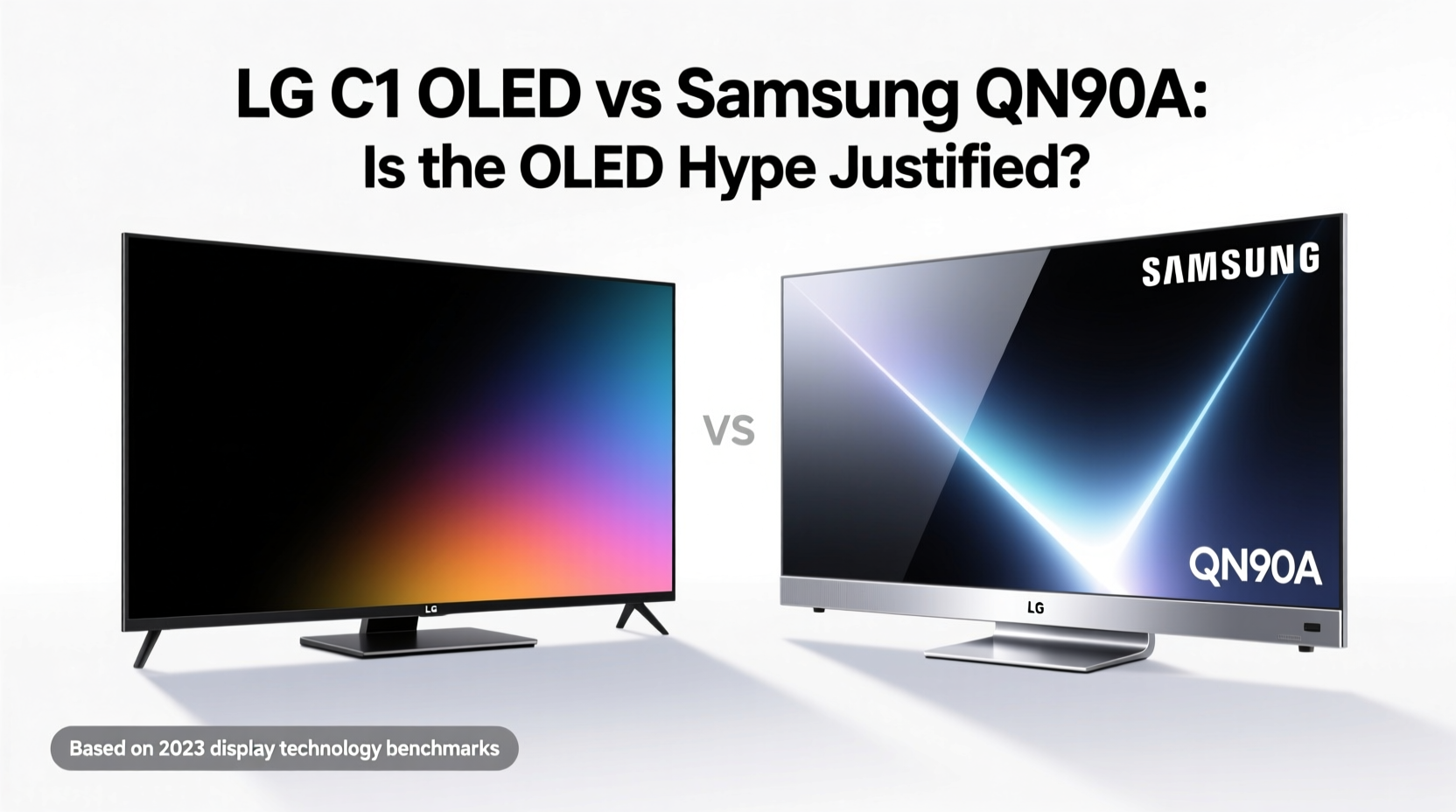
The fundamental distinction between the LG C1 and Samsung QN90A lies in their underlying display architecture. The LG C1 uses OLED (Organic Light-Emitting Diode) panels, where each pixel produces its own light. When a pixel needs to be black, it turns off completely—resulting in true blacks and infinite contrast ratios.
In contrast, the Samsung QN90A relies on a Mini-LED backlight system with full-array local dimming (FALD). Thousands of tiny LEDs illuminate sections of the screen, allowing for precise brightness control. While not as deep in black levels as OLED, this approach enables significantly higher peak brightness, especially in HDR content.
“OLED’s per-pixel illumination gives it unmatched cinematic depth, but Mini-LED closes the gap in bright environments.” — David Lee, Senior Display Analyst at Rtings.com
For viewers prioritizing movie nights in dark rooms, OLED’s perfect blacks are transformative. However, those with sun-drenched living spaces may find the QN90A’s superior brightness more practical for daytime viewing.
Picture Quality: Contrast, Brightness, and Color Accuracy
Let’s break down key aspects of image fidelity:
| Metric | LG C1 OLED | Samsung QN90A |
|---|---|---|
| Peak Brightness (HDR) | ~800 nits (window-dependent) | ~2000 nits (sustained) |
| Contrast Ratio | Infinite (true blacks) | ~50,000:1 (with FALD) |
| Color Volume (DCI-P3) | Excellent in dim light | Better in bright scenes |
| Viewing Angles | Nearly perfect up to 80° | Noticeable color shift beyond 30° |
| Reflection Handling | Moderate (glossy panel) | Poor (highly reflective glass) |
In a dimly lit room, the LG C1 delivers a more immersive experience due to its absolute black levels. Shadows retain detail without blooming, making it ideal for film enthusiasts. Meanwhile, the QN90A excels in brightly lit environments. Its anti-glare coating is less effective than advertised, but the sheer luminance ensures content remains visible even in direct sunlight.
Gaming Performance: Input Lag, Refresh Rate, and Features
Both TVs are strong contenders for gamers, but they cater to slightly different priorities.
The LG C1 runs on the powerful Alpha 9 Gen 4 processor and supports HDMI 2.1 across all four ports. This means 4K at 120Hz, VRR (Variable Refresh Rate), ALLM (Auto Low Latency Mode), and NVIDIA G-Sync compatibility. Input lag measures around 13ms in game mode, among the lowest available.
The QN90A also offers HDMI 2.1 features, though only one port supports full bandwidth. Its input lag is competitive at ~15ms, and it includes AMD FreeSync Premium Pro. Where it pulls ahead is brightness during gameplay—bright UI elements and explosions pop more vividly thanks to its higher luminance ceiling.
- OLED advantage: Faster response time (0.1ms vs ~2ms), eliminating motion blur in fast-paced shooters.
- QN90A advantage: Less risk of burn-in during long gaming sessions with static HUDs.
However, prolonged exposure to static images remains a concern for the C1. While LG includes pixel refreshers and logo dimming, users playing competitive games for hours daily should rotate menus or enable screen savers.
Longevity and Burn-In: A Realistic Assessment
No discussion of OLED would be complete without addressing burn-in. It’s not a myth—but it’s often overstated.
Burn-in occurs when certain pixels degrade faster than others due to uneven usage. In extreme cases, ghosted logos or status bars can become permanently visible. However, modern OLEDs like the C1 include multiple safeguards: pixel shifting, automatic brightness limiting on static elements, and periodic refresh cycles.
A real-world example: A user watches news channels for six hours daily with CNN’s persistent ticker. After 18 months, faint remnants of the ticker appear only when displaying gray backgrounds. These fade after running the built-in pixel refresher.
In contrast, the QN90A faces no such risk. LED backlights don’t degrade per-pixel, so image retention isn’t an issue. That said, its quantum dot layer can slowly deteriorate over many years, leading to subtle color shifts—not immediate concerns for most buyers.
“We’ve tested OLEDs for over 5,000 hours with mixed content, and none showed visible burn-in. Risk exists, but mindful usage reduces it dramatically.” — TechRadar Display Lab Report, 2022
Sound, Design, and Smart Features
Design-wise, the LG C1 wins on aesthetics. Its near-borderless panel and slim profile make it look like a painting on the wall. The QN90A is thicker and heavier, partly due to its complex backlight array.
Audio performance is modest on both. The C1 uses AI Sound Pro with virtual 4.2 channel processing, delivering clearer dialogue and wider soundstaging. The QN90A counters with Object Tracking Sound+ (OTS+), which attempts to match audio movement to on-screen action. Neither replaces a soundbar, but LG’s tuning feels more natural.
Smart platforms differ too. The C1 runs webOS, known for its intuitive launcher and broad app support. Samsung’s Tizen OS is snappier and integrates better with Galaxy devices, offering features like TV-to-phone casting without extra hardware.
Checklist: Choosing Between C1 and QN90A
- Assess your room lighting: Darker = OLED; Brighter = QN90A.
- Evaluate primary content: Movies/series favor OLED; sports/news may suit QN90A better.
- Consider viewing angles: Wide seating arrangements benefit from OLED’s consistency.
- Determine gaming needs: Both are excellent, but OLED has faster response times.
- Weigh burn-in concerns: High-static-content users may prefer QN90A.
- Compare budget: C1 prices have dropped; QN90A often costs more at larger sizes.
Frequently Asked Questions
Is OLED burn-in inevitable?
No. With normal varied usage—including movies, streaming, and casual gaming—burn-in is unlikely within the first five years. Avoid leaving static images for hours, and use built-in protections.
Which TV lasts longer overall?
The QN90A avoids pixel degradation risks, giving it an edge in longevity under heavy, repetitive use. However, both TVs should last 7–10 years with proper care. OLED lifespan depends heavily on usage patterns.
Can you see the difference in contrast in a bright room?
Surprisingly, yes—but not in favor of OLED. In well-lit spaces, reflections and ambient light wash out deep blacks. Here, the QN90A’s brightness compensates, maintaining punchier images despite lower native contrast.
Final Verdict: Is the OLED Hype Justified?
The answer depends on what you value most. If you watch films in controlled lighting, desire perfect blacks, wide viewing angles, and cinematic authenticity, then yes—the OLED hype is absolutely justified. The LG C1 delivers a reference-grade picture that feels more “real” than any LED-based alternative.
But if your environment is bright, you consume a lot of content with static elements (like news or gaming), or you simply want a TV that stays vibrant throughout the day, the Samsung QN90A offers compelling advantages. It proves that non-OLED displays can rival, and sometimes surpass, OLED in practical usability.
Ultimately, neither technology is universally superior. The LG C1 represents artistic excellence in display engineering. The QN90A embodies technical refinement aimed at real-world versatility. Your choice should reflect your space, habits, and expectations—not just the buzz.




 浙公网安备
33010002000092号
浙公网安备
33010002000092号 浙B2-20120091-4
Comments
No comments yet. Why don't you start the discussion?