
When your LG refrigerator stops producing ice, it can disrupt daily routines—especially if you rely on a steady supply for drinks, entertaining, or medical needs. The good news is that most ice maker problems have simple explanations and even simpler solutions. Before calling a technician or considering costly repairs, try these practical, step-by-step fixes. Many LG owners resolve the issue in under 30 minutes using basic tools and a bit of troubleshooting know-how.
Check the Basics First
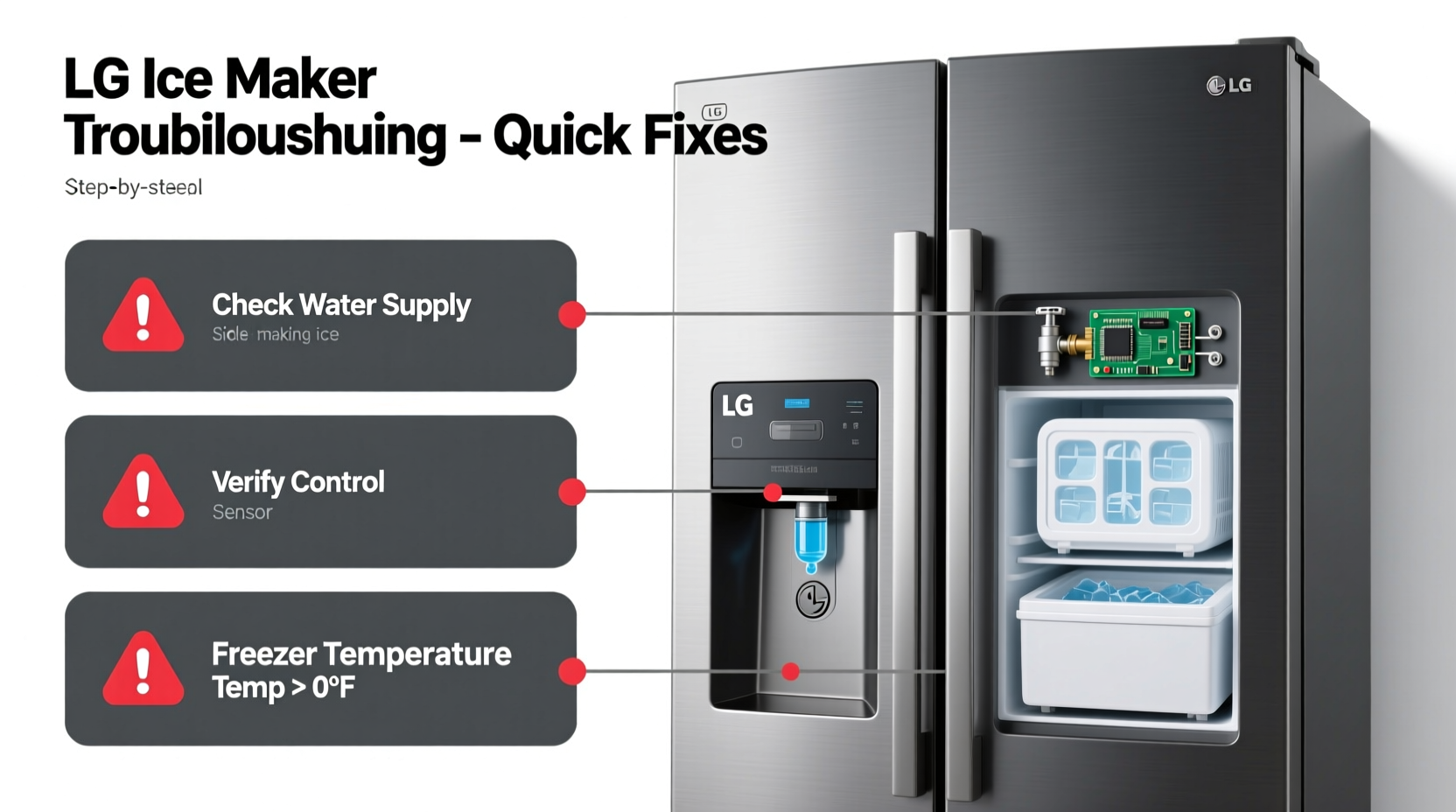
Before diving into complex diagnostics, confirm the fundamentals. A surprising number of \"broken\" ice makers are simply disabled by user settings or minor blockages.
- Is the ice maker turned on? Look for a small switch or button near the ice bucket. It should be in the “On” position (often indicated by a glowing light).
- Is the freezer cold enough? LG recommends a freezer temperature of 0°F (-18°C) or lower for optimal ice production. If the temperature rises above this, ice formation slows or stops.
- Is there water supply? Confirm the water line is connected and the shutoff valve behind the fridge is fully open.
Inspect the Water Filter
A clogged or outdated water filter is one of the top reasons an LG fridge stops making ice. Even if your water tastes fine, reduced flow can prevent the ice maker from filling properly.
LG recommends replacing the water filter every six months. If it’s been longer, that’s likely the culprit. Signs of a bad filter include:
- Small or hollow ice cubes
- Slow or no ice production
- Dull-tasting ice
To replace the filter:
- Locate the filter—usually inside the upper right or bottom grille of the fridge.
- Turn the old filter counterclockwise to remove.
- Insert the new filter and turn clockwise until it locks.
- Press and hold the “Water” button for 3 seconds to flush air from the lines.
“Over 40% of service calls for non-working ice makers are resolved by simply replacing the water filter.” — Carlos Mendez, Appliance Repair Technician with 15 years of experience
Clear Ice Jams and Check the Chute
Ice jams are extremely common, especially after long periods of high usage or power outages. When the freezer warms slightly, ice can partially melt and refreeze into a solid mass, blocking the dispenser.
To clear a jam:
- Remove the ice bucket or bin.
- Use a plastic utensil (never metal) to break up clumps.
- Wipe down the chute and auger with a damp cloth.
- Ensure the flapper door opens freely.
If the motor runs but no ice dispenses, the auger (the spiral blade that pushes ice forward) may be frozen in place. Let the freezer run for a few hours to see if it loosens. If not, unplug the fridge and allow the area to thaw completely before restarting.
Diagnose Water Supply Issues
Inadequate water pressure or flow prevents the ice maker from filling. This section walks through checking and fixing the supply line.
| Issue | How to Check | Solution |
|---|---|---|
| Low water pressure | Check flow at water dispenser; weak stream indicates low pressure | Verify home water pressure (should be 20–125 psi); clean sediment filter at shutoff valve |
| Kinked or frozen fill tube | Inspect tube behind freezer wall for bends or ice buildup | Replace kinked tubing; use hair dryer to thaw frozen section (do not overheat) |
| Defective inlet valve | No water enters ice maker during fill cycle | Test valve with multimeter; replace if no continuity (part # 5220JB2006B) |
A frozen fill tube is a frequent problem in older LG models. Water leaks slowly into the tube and freezes, eventually blocking the entire passage. To prevent recurrence, insulate the tube or ensure consistent freezer temperatures.
Reset the Ice Maker: Step-by-Step Guide
Like many electronic components, the LG ice maker can freeze up or misfire due to software glitches. A full reset often restores normal operation.
Follow this sequence:
- Open the freezer door and locate the ice maker (usually on the top left or right).
- Press and hold the “Test” button for 3 seconds until you hear a chime or see a blinking light.
- Wait 10 minutes while the unit resets and runs a diagnostic cycle.
- After resetting, check if the tray fills with water within 2 hours.
If your model lacks a test button, unplug the refrigerator for 5 minutes, then restore power. This forces a system-wide reboot and can clear communication errors between the control board and ice maker module.
Real Example: Sarah’s Kitchen Dilemma
Sarah in Denver noticed her LG LFX28968S stopped making ice after a winter storm caused a brief power outage. She checked the basics—freezer was cold, ice maker was on—but no water filled the tray. After reading online, she tried pressing the hidden test button. Nothing happened. Then she replaced the 9-month-old filter, which looked clean but had passed its lifespan. On the third day, ice began forming again. Later, she discovered the fill tube had a small ice blockage. Using a hair dryer, she thawed it gently. Since then, she sets calendar reminders for filter changes and checks water flow monthly.
Troubleshooting Checklist
Use this checklist to methodically identify and fix your LG ice maker issue:
- ✅ Ice maker switch is in the “On” position
- ✅ Freezer temperature is 0°F or lower
- ✅ Water filter is less than 6 months old
- ✅ No ice jam in bucket or dispenser chute
- ✅ Water supply valve is fully open
- ✅ Fill tube is not frozen or kinked
- ✅ Test button pressed and system reset
- ✅ Water pressure is strong at dispenser
- ✅ Inlet valve is functioning (listen for click during fill cycle)
Frequently Asked Questions
Why is my LG fridge making ice but not dispensing it?
This usually points to an auger motor failure, ice jam in the dispenser, or a faulty solenoid. Check for obstructions first. If the motor hums but doesn’t turn, it may need replacement.
How long does it take for an LG ice maker to start after a reset?
After resetting or installing a new filter, allow 24 hours for the system to refill lines and complete a full cycle. The first few batches may be smaller or irregularly shaped.
Can I bypass the water filter to test the ice maker?
Yes, most LG models allow temporary operation without a filter by installing a bypass plug. However, do not run the fridge this way long-term, as unfiltered water can damage internal components.
Final Steps and When to Call a Pro
Most LG ice maker issues stem from avoidable causes: old filters, frozen tubes, or simple power glitches. By following the steps above, you can save time and money while restoring convenience to your kitchen. However, if you’ve completed all checks and still get no ice, deeper issues may be present—such as a failed control board, defective sensor, or compressor problem.
In such cases, consult a certified LG technician. Attempting internal electrical repairs without proper training can void warranties and create safety hazards.




 浙公网安备
33010002000092号
浙公网安备
33010002000092号 浙B2-20120091-4
Comments
No comments yet. Why don't you start the discussion?