
In the mid-2010s, smartphone upgrades weren’t just about newer models—they were about meaningful shifts in performance, design, and user experience. For many LG G2 owners considering a switch to the Samsung Galaxy S5 Neo, the decision wasn’t straightforward. On paper, the S5 Neo appeared to be a logical upgrade: newer branding, updated software, and a familiar interface. But did the reality match the promise? This article dives deep into the practical differences between the LG G2 and the Samsung Galaxy S5 Neo to determine whether making the switch truly delivered value.
Design and Build Quality: A Shift in Philosophy
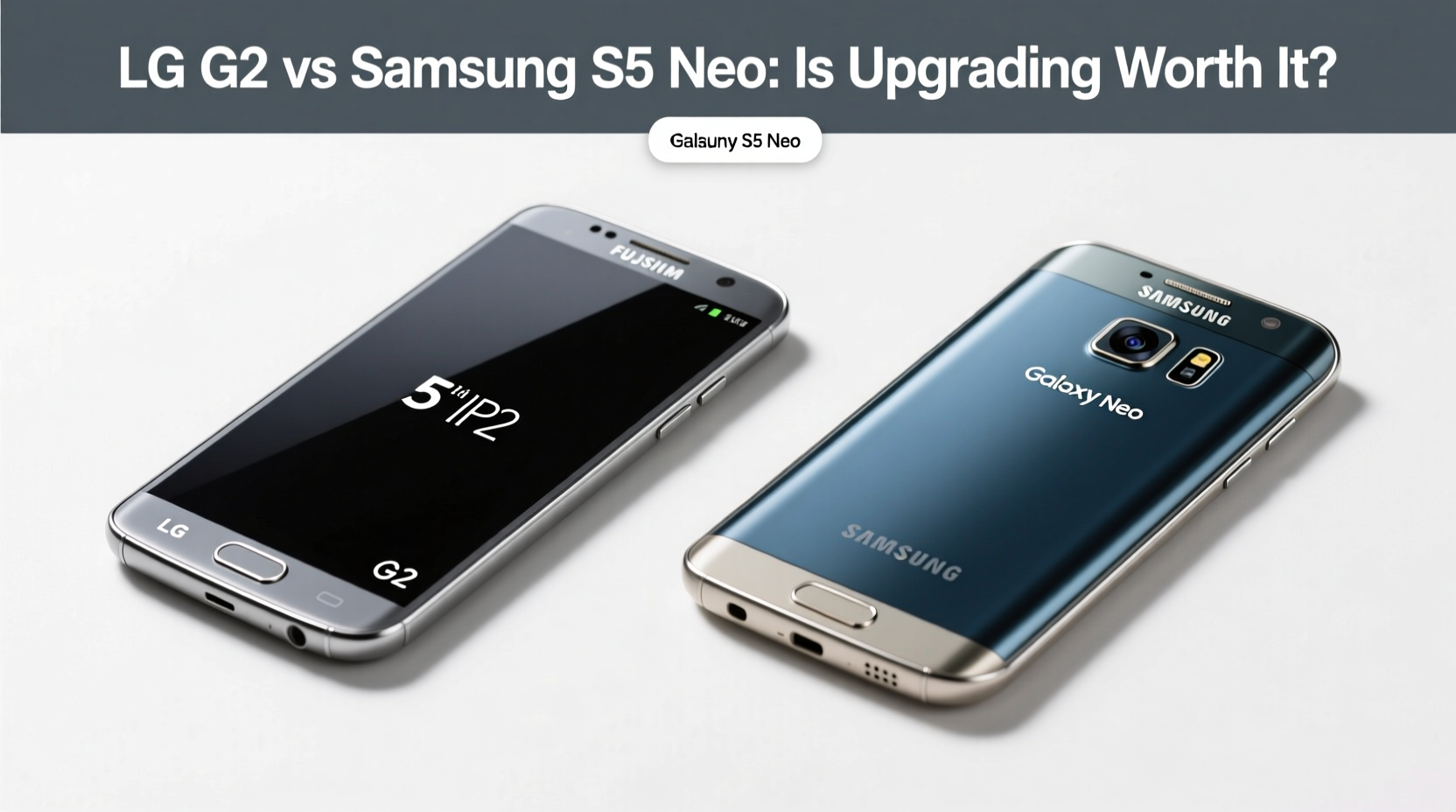
The LG G2, released in 2013, stood out for its minimalist design and innovative rear-button layout. Its brushed metal accents, slim profile, and 5.2-inch Full HD IPS display gave it a premium feel despite being primarily plastic. The placement of volume and power buttons on the back took time to get used to but eventually offered unmatched one-handed convenience.
In contrast, the Samsung Galaxy S5 Neo arrived in 2015 as a budget-friendly variant of the flagship S5. It retained the same general aesthetic—soft-touch plastic back, angular edges, and a physical home button—but lacked the IP67 water resistance and fingerprint sensor of its predecessor. While it felt slightly more “mainstream,” the build quality didn’t represent a clear improvement over the G2’s refined ergonomics.
Performance and Hardware Comparison
At the heart of any upgrade decision is performance. The LG G2 featured a Qualcomm Snapdragon 800 processor, 2GB of RAM, and an Adreno 330 GPU—top-tier specs at launch. Even two years later, it handled multitasking, gaming, and daily apps with ease.
The S5 Neo came with a less powerful Exynos 7580 octa-core processor, paired with 2GB or 3GB of RAM depending on region. While the eight cores sounded impressive, the Cortex-A53 architecture was designed for efficiency, not speed. Real-world benchmarks showed that single-core performance lagged behind the G2’s Snapdragon 800. Apps opened slightly slower, and high-end games like *N.O.V.A. 3* or *Asphalt 8* ran at lower frame rates.
| Feature | LG G2 | Samsung S5 Neo |
|---|---|---|
| Processor | Snapdragon 800 (Quad-core 2.26 GHz) | Exynos 7580 (Octa-core 1.6 GHz) |
| RAM | 2 GB | 2 GB / 3 GB |
| GPU | Adreno 330 | Mali-T720 |
| Storage | 16/32 GB (expandable via microSD) | 16/32 GB (expandable) |
| Battery | 3000 mAh | 2800 mAh |
| OS at Launch | Android 4.2.2 | Android 5.1.1 |
Despite running a newer version of Android out of the box, the S5 Neo’s hardware often struggled to deliver a consistently smooth experience. Users reported occasional stutters when switching between apps—a step back from the buttery fluidity of the G2.
Display and Battery Life: Incremental Changes
The LG G2’s 5.2-inch Full HD IPS panel was widely praised for its color accuracy, wide viewing angles, and brightness. It remained one of the best displays of its era.
The S5 Neo matched the resolution (1080p) but used a Super AMOLED panel. While AMOLED offers deeper blacks and higher contrast, early reviews noted oversaturated colors and lower peak brightness in direct sunlight. For media consumption, preferences varied, but objective tests favored the G2’s more natural color reproduction.
Battery capacity dropped slightly from 3000 mAh to 2800 mAh. Combined with the less efficient Exynos chip under load, this translated to shorter endurance. Heavy users found themselves charging earlier in the day, especially with LTE enabled. The G2, by comparison, routinely lasted a full day and sometimes stretched into a second with moderate use.
“Hardware upgrades should enhance—not hinder—daily usability. Just because a phone is newer doesn’t mean it performs better.” — David Kim, Mobile Analyst at TechPulse Asia
Real-World Example: A Year with Both Devices
Consider Mark, a freelance photographer who upgraded from the LG G2 to the S5 Neo in early 2016. He expected improvements in camera performance and battery life due to the newer model’s branding. Instead, he found that his photo editing workflow slowed down. Apps like Snapseed and Lightroom Mobile took longer to process images, and the screen made color grading less accurate.
He also missed the G2’s rear button layout, which allowed him to adjust settings without shifting his grip while shooting. After six months, Mark switched back to a rooted and updated G2 running LineageOS. “The S5 Neo felt like a downgrade disguised as progress,” he said. “I gained a newer OS version but lost responsiveness and reliability.”
Software and Long-Term Support
One area where the S5 Neo had a tangible advantage was software support. It launched with Android 5.1 Lollipop and received an update to Android 6.0 Marshmallow. The LG G2, while receiving updates up to Android 5.0.2 in most regions, saw official support end earlier.
However, the open-source community kept the G2 alive far beyond Samsung’s timeline for the S5 Neo. Custom ROMs like LineageOS provided security patches and modern features well into the late 2010s. For tech-savvy users, the G2 offered longer usable life through modding.
For average users relying on stock firmware, the S5 Neo’s slightly longer update cycle mattered—but only if they noticed the difference in minor feature additions and security fixes.
Checklist: Was the Upgrade Worth It?
Before making a similar decision, ask yourself the following:
- Are you prioritizing raw performance or brand familiarity?
- Do you rely on consistent UI responsiveness for work or gaming?
- Is water resistance or fingerprint security important to you? (Note: S5 Neo lacks both.)
- Do you plan to keep the device for more than 18 months?
- Are you comfortable with custom ROMs if official updates end?
If performance and longevity are key, the G2 still holds up better than expected. If you prefer Samsung’s TouchWiz interface and want a newer model for resale value, the S5 Neo might satisfy superficially—but not functionally.
Frequently Asked Questions
Did the S5 Neo have better camera quality than the LG G2?
Not significantly. The S5 Neo featured a 16MP rear sensor compared to the G2’s 13MP, but pixel count isn’t everything. The G2’s larger pixel size (1.1µm vs 1.0µm) and superior image processing produced cleaner low-light photos. The S5 Neo tended to oversharpen and introduce noise in dim conditions.
Can the LG G2 run modern apps in 2024?
Limitedly. While lightweight apps like messaging, email, and basic browsing still work, most modern apps require newer Android versions and more RAM. With a custom ROM, some functionality can be restored, but security risks increase without official patching.
Why did Samsung release the S5 Neo if it underperformed older flagships?
The S5 Neo targeted emerging markets and carrier subsidies. It reused existing designs to cut costs while carrying the “S5” name for marketing appeal. Performance was adequate for basic tasks, but not competitive with previous-generation flagships.
Conclusion: Upgrade Value Depends on Your Priorities
Upgrading from the LG G2 to the Samsung S5 Neo wasn’t inherently worthwhile for most users. Despite being newer, the S5 Neo failed to surpass—or even match—the G2 in critical areas: processing power, display quality, battery life, and overall responsiveness. It represented a shift toward cost-cutting rather than innovation.
The lesson here extends beyond these two devices: newer doesn’t always mean better. True value lies in real-world performance, durability, and how well a device supports your daily habits. In this case, many users would have been better off keeping their LG G2, updating it via custom ROMs, or skipping to a more capable successor like the Galaxy S6 or LG G3.




 浙公网安备
33010002000092号
浙公网安备
33010002000092号 浙B2-20120091-4
Comments
No comments yet. Why don't you start the discussion?