
Released just a year apart, the LG G7 ThinQ (2018) and Samsung Galaxy S8 (2017) were flagship contenders during a pivotal era in smartphone evolution. While both devices have long since been succeeded by newer models, some users still rely on them or consider switching between the two due to affordability, availability, or personal preference. But in today’s mobile landscape—where 5G, high-refresh displays, and AI-powered cameras are standard—is it still worth switching from one to the other? The answer depends on your priorities, usage patterns, and expectations for performance and support.
Design and Build Quality
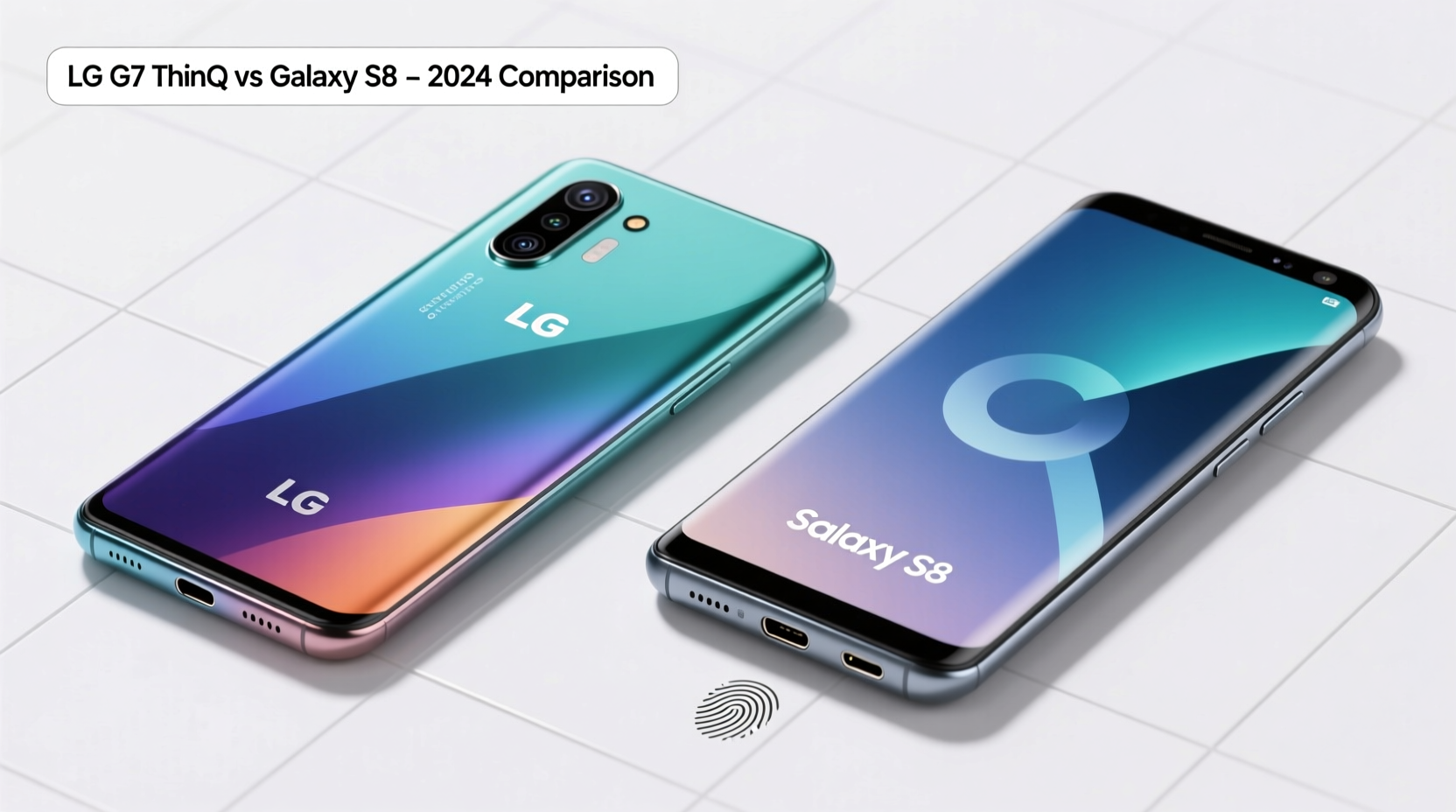
The Galaxy S8 set a new design benchmark when it launched with its edge-to-edge “Infinity Display,” minimal bezels, and sleek glass-and-metal construction. Its 5.8-inch curved OLED panel offered vibrant colors and deep blacks, while the compact form factor made it comfortable to hold despite the large screen. The device was IP68-rated for water and dust resistance, a feature that remains relevant even now.
In contrast, the LG G7 ThinQ adopted a more traditional flat display approach with a 6.1-inch LCD panel. While not as visually striking as the S8’s curved OLED, LG’s Super Bright Display technology delivered excellent outdoor visibility and peak brightness up to 1000 nits. The G7 also featured an IP68 rating and a headphone jack—a rarity among flagships at the time. However, its taller, boxier frame felt less ergonomic than the S8’s contoured design.
Display and Audio Performance
When it comes to display quality, the Galaxy S8 holds a distinct advantage. Its Quad HD+ (1440 x 2960) AMOLED screen delivers richer contrast, deeper blacks, and superior color accuracy compared to the G7’s QHD+ LCD panel. Even after years of use, the S8’s display remains impressive for media consumption and HDR content.
However, the LG G7 ThinQ counters with exceptional brightness and wide viewing angles. Its LCD panel supports HDR10 and includes features like True Natural Color and DTS:X 3D surround sound. Notably, the G7 introduced Boombox Speaker technology, which uses the phone’s sealed bottom chamber to amplify sound output—making it one of the loudest front-firing speakers on any smartphone at the time.
“Even in 2024, few mid-tier phones match the G7’s speaker clarity and volume. It’s still a top pick for audiophiles on a budget.” — David Lin, Mobile Audio Analyst
Performance and Software Experience
Both phones launched with the Qualcomm Snapdragon 835, ensuring nearly identical processing power. In day-to-day tasks like browsing, messaging, and light gaming, neither device shows significant lag—assuming they’re running clean software without heavy bloatware.
Where they diverge is in software longevity. Samsung implemented its Android One-like initiative later with the Galaxy S series, but the S8 only received three major Android updates (up to Android 9 Pie). Security patches officially ended in 2020. Similarly, the LG G7 ThinQ was updated to Android 10 but has seen no official security updates since early 2021.
This lack of ongoing support raises concerns about app compatibility, security vulnerabilities, and access to modern features like Google Assistant shortcuts or improved privacy controls. For users relying on banking apps, messaging platforms, or productivity tools, outdated OS versions can lead to restricted functionality.
| Feature | LG G7 ThinQ | Galaxy S8 |
|---|---|---|
| Processor | Snapdragon 835 | Snapdragon 835 |
| RAM / Storage | 4GB / 64GB (expandable) | 4GB / 64GB (expandable) |
| Max OS Version | Android 10 (LG UX 9.0) | Android 9 (One UI 1.1) |
| Last Security Patch | March 2021 | January 2020 |
| Headphone Jack | Yes | No |
Camera Comparison: Strengths and Limitations
The Galaxy S8 features a single 12MP rear sensor with Dual Pixel autofocus and f/1.7 aperture—an excellent shooter for its time. It excelled in low-light conditions and produced natural skin tones with accurate white balance. However, lacking a secondary lens, zoom and portrait modes relied heavily on software interpolation.
The LG G7 ThinQ introduced a dual-camera setup: a 16MP standard lens (f/1.6) and a 16MP wide-angle lens (f/1.9). The wider aperture allowed better light capture, and the inclusion of the secondary lens added versatility for landscapes and group shots. LG’s AI Cam could detect scenes and adjust settings automatically, though results were inconsistent.
In current usage, both cameras struggle with dynamic range and noise in challenging lighting. Modern computational photography far surpasses what either device offers. That said, if you prioritize wide-angle shooting and louder audio over pure image polish, the G7 might serve better in niche scenarios.
Real-World Example: Daily Use in 2024
Consider Maria, a freelance writer using her Galaxy S8 primarily for emails, web research, and audiobooks. After two years of reliable service, she noticed increasing app crashes and delayed notifications. She switched to a used LG G7 ThinQ for its headphone jack and louder speakers—critical for her podcast editing workflow. While the interface felt slower initially, she appreciated the brighter screen and microSD expansion. However, she eventually had to install a lightweight custom ROM to maintain smooth performance, highlighting the trade-offs of keeping aging hardware functional.
Battery Life and Charging
The G7 ThinQ packs a 3000mAh battery, slightly smaller than the S8’s 3000mAh unit, yet manages comparable endurance thanks to efficient LCD power management. Both support Quick Charge 3.0 and wireless charging. Neither supports modern fast-charging standards above 15W, so charging times feel sluggish by today’s benchmarks.
After years of charging cycles, battery degradation is likely significant in most surviving units. Users report needing midday top-ups even under light use. Replacing the battery is possible but often costs more than the phone’s resale value.
Is Switching Worth It in the Current Year?
For most users in 2024, switching between the LG G7 ThinQ and Galaxy S8 offers diminishing returns. Neither device receives security updates, limiting their safety for sensitive tasks. App developers increasingly optimize for newer APIs, leading to instability or missing features on Android 9 and earlier.
That said, there are specific cases where such a switch makes sense:
- You need a secondary device for music playback and prefer the G7’s headphone amplifier and Boombox speaker.
- You value compact size and curved display immersion, making the S8 a nostalgic fit.
- You're on an extremely tight budget and can acquire one of these phones for under $50.
Checklist: Before Switching Between G7 ThinQ and S8
- Verify the device boots properly and passes basic hardware tests (screen, buttons, charging).
- Check if the battery holds charge beyond 70% health.
- Confirm Wi-Fi, Bluetooth, and cellular radios function reliably.
- Ensure Google services sign in without issues (accounts.google.com access).
- Install a reputable antivirus app to scan for potential firmware-level threats.
Frequently Asked Questions
Can either phone run WhatsApp or Instagram in 2024?
Yes, but with caveats. Both apps require relatively recent Android versions. While WhatsApp currently supports Android 5.0+, future updates may drop support for pre-Android 8.0 devices. Instagram already shows reduced performance on older systems.
Which phone has better resale value now?
Neither holds significant resale value. Most secondhand listings fall between $30–$60, depending on condition. The Galaxy S8 sometimes commands slightly higher prices due to brand loyalty and display appeal.
Are custom ROMs safe to install on these devices?
Custom ROMs like LineageOS can extend usability with updated Android versions. However, they void warranties (not applicable here), may introduce bugs, and lack full hardware optimization. Only recommended for technically experienced users.
Final Verdict and Recommendation
The LG G7 ThinQ and Galaxy S8 were standout devices in their prime, but time has caught up with both. Switching from one to the other in 2024 won’t deliver meaningful improvements in speed, camera quality, or software experience. Instead, consider this: if you're still relying on either device, it may be time to look at modern budget alternatives like the Samsung Galaxy A34, Google Pixel 7a, or even refurbished iPhone SE models—all of which offer secure, supported operating systems and vastly superior performance.
If you choose to stay with legacy hardware, treat it as a backup or media-only device. Prioritize security, manage expectations, and recognize the limitations of five-year-old technology in a rapidly advancing ecosystem.




 浙公网安备
33010002000092号
浙公网安备
33010002000092号 浙B2-20120091-4
Comments
No comments yet. Why don't you start the discussion?