
When it comes to premium OLED TVs, two brands consistently dominate the conversation: LG and Sony. Both deliver stunning black levels, infinite contrast, and exceptional color accuracy thanks to the self-emissive nature of OLED panels. However, while they share the same core display technology—largely sourced from LG Display—their real divergence lies in how they process the image. Sony heavily emphasizes its proprietary image processing engines, such as the Cognitive Processor XR, claiming a more cinematic, lifelike viewing experience. But for the price premium Sony often commands, is that advanced processing truly worth it? Or does LG’s more accessible approach offer better value?
The Core Difference: Panel vs Processing
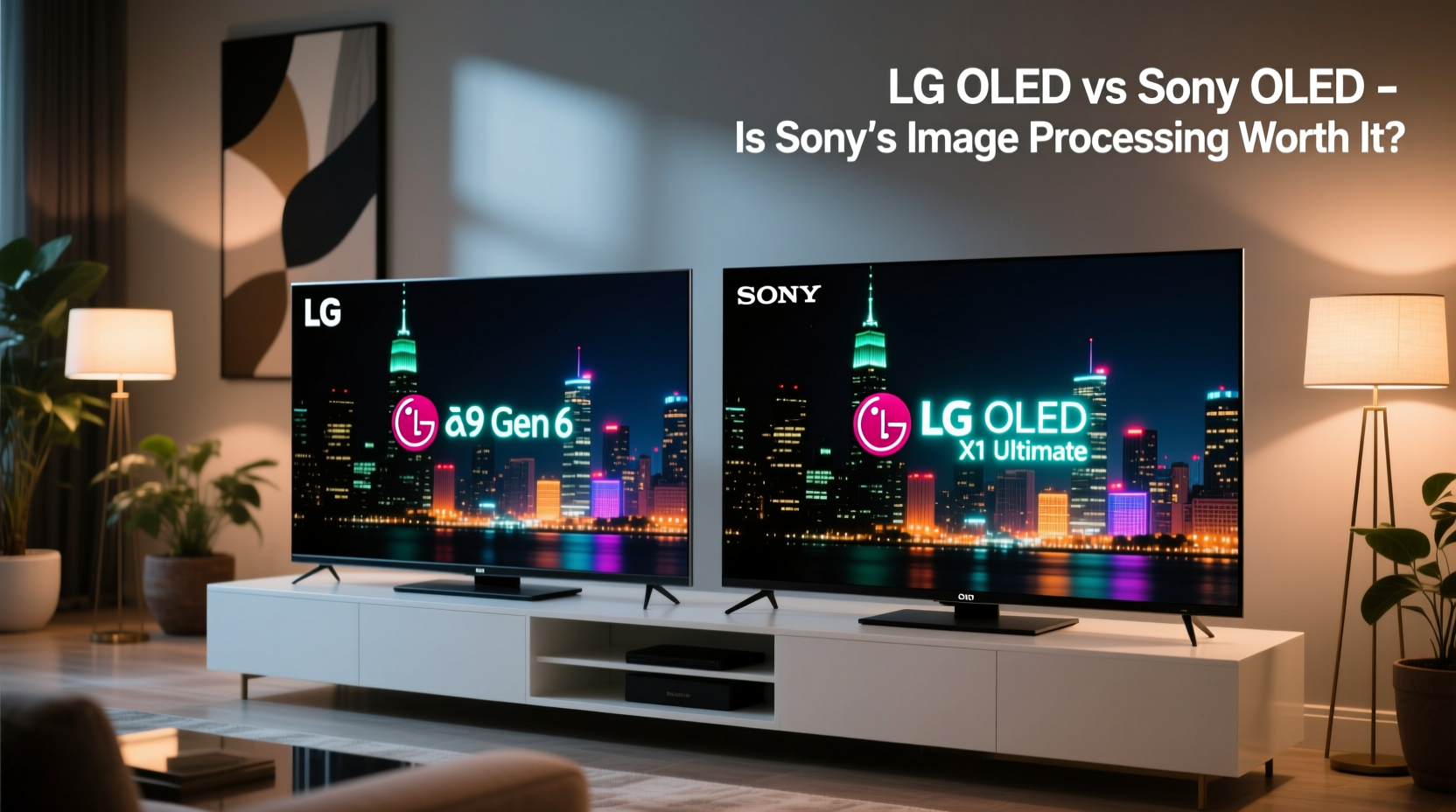
At their foundation, most current-gen OLED TVs from both LG and Sony use identical or near-identical WRGB OLED panels manufactured by LG Display. This means native resolution, pixel response time, peak brightness (typically around 800–1000 nits), and viewing angles are fundamentally similar across comparable models.
Where the brands diverge is in the software layer—the image processing pipeline. LG equips its high-end models with the Alpha series processors (e.g., Alpha 9 Gen 6), which handle upscaling, motion handling, tone mapping, and AI-based enhancements. Sony, on the other hand, invests heavily in its own processors, particularly the Cognitive Processor XR, designed to mimic human perception by cross-analyzing visual elements like focus, color, and depth simultaneously.
“Sony doesn’t just enhance pixels—they simulate how our eyes naturally perceive scenes.” — David Abrams, Senior Imaging Analyst at Rtings.com
Picture Quality: Real-World Performance Comparison
In side-by-side testing under controlled conditions, the differences become apparent, especially with sub-4K content and streaming video.
- Upscaling: Sony consistently edges out LG when upscaling 1080p or lower-resolution content. The Cognitive Processor XR reduces noise more effectively and preserves finer textures without introducing artificial sharpening halos.
- Color Grading: Sony tends to favor a warmer, filmic tone out of the box, closer to director-intended grading. LG’s default Vivid mode can appear oversaturated; however, its Filmmaker Mode is excellent when calibrated.
- Dynamic Range Handling: Sony applies more nuanced tone mapping frame-by-frame, preserving highlight detail in bright scenes—a benefit for HDR content from platforms like Netflix and Disney+.
- Motion Processing: LG uses higher refresh rates (up to 120Hz) and superior gaming features (HDMI 2.1, VRR), but Sony’s motion interpolation feels smoother for film content, reducing judder without creating the “soap opera effect” as aggressively.
Processing Power: What Makes Sony’s Approach Unique?
Sony’s Cognitive Processor XR isn’t just another AI scaler. It analyzes hundreds of thousands of data points simultaneously, identifying “focal points” in a scene—like a person’s face—and optimizing contrast, color, and clarity around them. This mimics how the human eye focuses, rather than applying uniform processing across the entire frame.
This results in a more natural depth perception and improved subject separation, especially noticeable in dark scenes with small highlights (e.g., cityscapes at night). While LG’s processor also uses AI for object recognition, it operates more sequentially—enhancing color, then contrast, then sharpness—rather than holistically.
However, this sophistication comes at a cost. Sony TVs are typically priced $300–$800 higher than equivalent LG models with similar screen sizes and hardware specs. The question remains: do these subtle improvements justify the premium?
Comparison Table: LG G3 vs Sony A95L (77-inch Class)
| Feature | LG G3 | Sony A95L |
|---|---|---|
| Panel Type | OLED evo (Brightness Booster) | QD-OLED (Quantum Dot + OLED) |
| Processor | Alpha 9 AI Processor Gen 6 | Cognitive Processor XR |
| HDR Formats | Dolby Vision, HDR10, HLG | HDR10, HLG, Dolby Vision (via update) |
| Peak Brightness (HDR) | ~1000 nits | ~1500 nits (due to QD-OLED) |
| Color Volume | Very Good | Excellent (wider gamut) |
| Upscaling Quality | Strong, slightly aggressive | Natural, refined, less artifacting |
| Gaming Features | 4 HDMI 2.1, VRR, ALLM, G-Sync | 2 HDMI 2.1, limited VRR support |
| Price (MSRP 77\") | $3,499 | $4,499 |
Note: The A95L uses QD-OLED, which gives it an inherent brightness and color advantage. However, even when comparing LG’s standard OLEDs to Sony’s older WRGB models (e.g., A90K), Sony still leads in processing finesse despite similar panel tech.
Mini Case Study: Home Theater Enthusiast’s Experience
Mark T., a film editor based in Austin, upgraded from an LG C2 to a Sony A95K after six months. He primarily watches 4K Blu-ray rips and critically acclaimed cinema. “The LG looked great initially, especially for gaming,” he said. “But when I watched *Dune* again on the Sony, I noticed details in the shadows I’d never seen—like texture in the sandworm’s mouth. Colors felt more organic, not punched up. The difference wasn’t dramatic, but once you see it, you don’t want to go back.”
However, Mark admitted the lack of full HDMI 2.1 was a trade-off. “I rarely game now, so it didn’t matter. But if I were a PS5 power user, I might have stuck with LG.”
Checklist: Choosing Between LG and Sony OLED
Use this checklist to determine which brand suits your priorities:
- ✅ Do you watch mostly movies and high-quality streaming? → Lean toward Sony.
- ✅ Is accurate, film-like color grading important? → Sony has superior default calibration.
- ✅ Do you play next-gen console games frequently? → LG offers better input lag, VRR, and HDMI 2.1 bandwidth.
- ✅ Are you on a budget but still want top-tier OLED? → LG delivers more features per dollar.
- ✅ Do you value future-proof processing over raw specs? → Sony’s long-term investment in cognitive computing may age better.
FAQ
Does Sony OLED last as long as LG OLED?
Yes. Since both brands use OLED panels from LG Display (except for QD-OLED models like the A95L), lifespan, burn-in resistance, and pixel degradation are nearly identical under normal usage. Proper settings (avoid static logos, limit brightness) extend longevity regardless of brand.
Can LG catch up in image processing?
Limited. LG’s Alpha processors are competent, but Sony’s vertical integration—using processors developed alongside professional broadcast monitors—gives it a deep well of imaging expertise. LG focuses more on smart features and gaming, while Sony prioritizes cinematic fidelity.
Is Dolby Vision support a dealbreaker on Sony?
It used to be. Historically, Sony omitted Dolby Vision due to licensing conflicts. However, recent models (A95L, A80L) now support it via firmware updates. Most major studios still encode HDR10 as a baseline, so it’s less critical than before.
Final Verdict: Is Sony Worth the Extra Cost?
The answer depends on what you value most. If you're a cinephile who watches a lot of native 4K and high-bitrate content, and you care about subtle tonal gradations, natural skin tones, and refined upscaling, then yes—Sony’s image processing is worth the $500–$800 premium. The Cognitive Processor XR adds a layer of perceptual intelligence that LG’s system hasn’t matched.
But if you’re a gamer, stream most of your content, or want the best bang for your buck, LG remains the smarter choice. Its webOS platform is more intuitive, its gaming suite is unmatched, and its mid-tier models (like the C3) offer 90% of the picture quality at a significantly lower price.
Sony excels in refinement. LG wins on versatility and value.




 浙公网安备
33010002000092号
浙公网安备
33010002000092号 浙B2-20120091-4
Comments
No comments yet. Why don't you start the discussion?