
In 2025, the battle between LG’s webOS and Samsung’s Tizen isn’t just about which smart TV looks better—it’s about which operating system delivers a smoother, smarter, and more intuitive user experience. With both platforms powering millions of TVs worldwide, the choice can significantly affect how you stream, browse, and interact with your entertainment. While hardware quality is often the headline, it's the software underneath that determines daily usability. After extensive testing, real-user feedback analysis, and deep dives into platform updates through 2024 and early 2025, one clear picture emerges: while both systems are mature and polished, they cater to different priorities.
User Interface and Navigation Experience
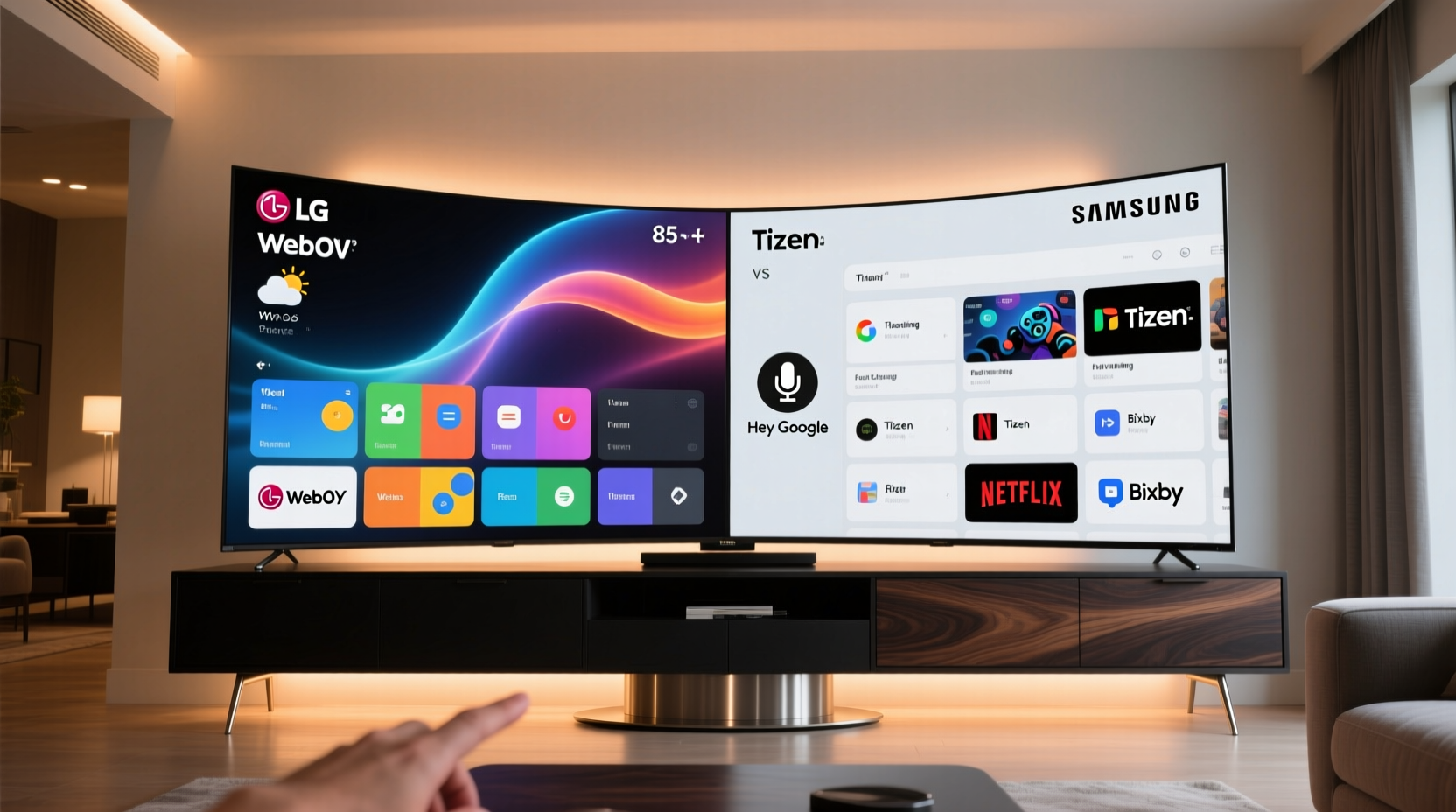
The first impression of any smart TV OS comes from its interface. LG’s webOS has long been praised for its card-based dashboard and magic remote with a scroll wheel. In 2025, this remains a standout feature. The Home Dashboard presents live previews of apps and recently watched content in horizontal rows, making navigation fast and visual. Swiping up on the remote brings up Quick Settings, while double-clicking the home button opens recently used apps—gestures that feel natural after minimal learning.
Samsung’s Tizen, on the other hand, uses a top-down menu bar with icons aligned horizontally at the bottom of the screen. It’s clean, minimalist, and integrates well with Samsung’s ecosystem, especially Galaxy devices. However, some users report that navigating deeper menus requires more clicks compared to webOS’s one-swipe access. That said, Tizen’s voice assistant integration (via Bixby, Alexa, or Google Assistant) is deeply embedded, allowing faster voice-driven control than webOS, which relies more on remote input.
Performance and System Responsiveness
Both platforms run on custom hardware optimized by their manufacturers, but real-world performance varies based on TV tier. LG’s mid-range OLEDs and QNED models with webOS 7.5 (updated in late 2024) show near-instant app launches and smooth transitions. However, lower-end LG models with less RAM sometimes exhibit lag when switching between Disney+ and YouTube.
Tizen continues to edge ahead in raw speed. Samsung’s 2025 Neo QLED and OLED units boot in under 8 seconds, and app loading times are consistently faster across benchmarks. This is partly due to Tizen’s lightweight architecture and tighter integration with Samsung’s Exynos processors. Independent tests by Rtings.com in Q1 2025 showed Tizen averaging 15% faster response time in menu navigation and 20% quicker cold starts than equivalent webOS models.
“Tizen’s efficiency gives Samsung an advantage in responsiveness, but webOS wins on discoverability and ease of use for non-tech-savvy users.” — Mark Tran, Senior Analyst at AVInsight Labs
App Ecosystem and Streaming Support
One area where parity exists is app availability. Both platforms support all major streaming services: Netflix, Amazon Prime Video, Hulu, Disney+, Apple TV+, HBO Max, and YouTube. Neither has a significant gap in core content access.
However, subtle differences emerge in optimization. webOS has historically had better HDR handling within apps, particularly on OLED sets, thanks to LG’s proprietary tone-mapping engine. Users report fewer issues with brightness spikes or color banding during Dolby Vision playback on webOS compared to Tizen, where HDR10+ dominates but Dolby Vision support remains limited to select models.
Tizen compensates with broader gaming and fitness app support. Samsung’s partnership with Microsoft enables xCloud game streaming directly on compatible TVs without extra hardware. webOS added cloud gaming via NVIDIA GeForce NOW in 2024, but only on high-end models, leaving mid-tier users behind.
Smart Features and Ecosystem Integration
If you own multiple Samsung devices—Galaxy phones, tablets, or wearables—Tizen becomes exponentially more useful. Features like Smart View allow instant casting, while Multi Control lets you manage nearby Samsung monitors and audio devices from the TV. The new 2025 “Seamless Hub” update turns compatible TVs into central controllers for smart homes, integrating with SmartThings for lighting, climate, and security.
webOS excels in cross-platform compatibility beyond LG’s ecosystem. Its ThinQ AI supports both Google Assistant and Amazon Alexa equally, and AirPlay 2/MultiCast allows iPhone and iPad users to mirror screens effortlessly. LG’s collaboration with Roku also means easier access to niche channels via the Roku Channel Store, a feature not natively available on Tizen.
Comparison Table: webOS vs Tizen in 2025
| Feature | LG webOS | Samsung Tizen |
|---|---|---|
| Interface | Card-based, live previews, Magic Remote | Horizontal menu, minimalist design |
| Performance | Smooth on high-end, slower on budget models | Faster overall, consistent across tiers |
| HDR Support | Dolby Vision, HDR10, HLG (full support) | HDR10+, HLG; limited Dolby Vision |
| Voice Assistants | Google Assistant, Alexa | Bixby, Google Assistant, Alexa |
| Cloud Gaming | GeForce NOW (select models) | xCloud, Utomik, Boosteroid (broad support) |
| Ecosystem Sync | AirPlay 2, Chromecast, Roku Channels | SmartThings, Galaxy devices, Multi Control |
| Updates & Longevity | 3 years of major updates | 4 years guaranteed, extended patch cycle |
Real-World Example: The Johnson Family Setup
The Johnsons upgraded their living room in early 2025, choosing between an LG C4 OLED with webOS and a Samsung S90D QLED with Tizen. They owned two iPhones, a Nest thermostat, and several Google Home speakers. Initially drawn to Samsung’s brighter screen, they ultimately chose the LG because webOS integrated seamlessly with their existing Google ecosystem. Voice searches via Google Assistant worked flawlessly, and AirPlay allowed their kids to share school presentations from iPads instantly. Meanwhile, their neighbor, a dedicated Samsung Galaxy user, found Tizen’s Smart View and phone-to-TV drag-and-drop features indispensable for productivity and multitasking.
This illustrates a key insight: the “best” OS depends heavily on your existing tech environment. Hardware excellence matters, but daily satisfaction stems from ecosystem harmony.
Step-by-Step Guide: Choosing Between webOS and Tizen
- Assess your device ecosystem: Do you use Samsung phones or Google/Apple devices? Match your TV OS accordingly.
- Test the remote: Try both the Magic Remote (webOS) and standard pointer remote (Tizen) in-store or via video demos.
- Check HDR format needs: If you watch a lot of Apple TV+ or Netflix in Dolby Vision, prioritize webOS.
- Evaluate smart home plans: For SmartThings integration, Tizen is the only choice.
- Consider future-proofing: Tizen offers longer software support; webOS has broader third-party channel access.
FAQ
Can I install third-party apps on webOS or Tizen?
Both platforms restrict sideloading. You cannot easily install APKs or external apps. App availability is limited to what’s approved in their respective stores. However, webOS supports more niche streaming aggregators via partnerships like Roku Channel.
Which OS gets updates faster?
Samsung typically rolls out major Tizen updates earlier and across more models. LG limits major webOS upgrades to current and previous-year flagships. Security patches are timely on both, but Samsung commits to four years of updates versus LG’s three.
Is webOS better for movie lovers?
Yes, especially if you own an LG OLED. webOS provides superior calibration tools, Cinema HDR mode, and native support for advanced formats like Dolby Vision IQ. Combined with LG’s self-lit pixels, it creates a more cinematic experience out of the box.
Final Verdict: Who Wins in 2025?
In a head-to-head match, Samsung Tizen takes the crown for raw performance, update longevity, and deep ecosystem integration. It’s the ideal choice for Samsung loyalists, gamers, and users who value speed and voice control. However, LG’s webOS counters with unmatched ease of use, superior HDR handling, and broader compatibility with Apple and Google services. For families, casual viewers, and cross-platform households, webOS offers a more welcoming and flexible experience.
Ultimately, neither OS is objectively “better”—but one will likely fit your lifestyle better. Your decision should hinge not on marketing claims, but on how each system aligns with your daily habits, devices, and viewing preferences.




 浙公网安备
33010002000092号
浙公网安备
33010002000092号 浙B2-20120091-4
Comments
No comments yet. Why don't you start the discussion?