
When choosing a watch—especially from a brand like Lige, known for its affordable yet stylish timepieces—the decision often comes down to movement type. Quartz or mechanical? While both have their loyal followings, the real question isn’t just about preference—it’s about longevity, maintenance, and aesthetic appeal over time. Understanding the differences between Lige quartz and mechanical watches helps you make a smarter purchase based on how long it will last and how well it will age in appearance.
Durability and Longevity: What Really Lasts?
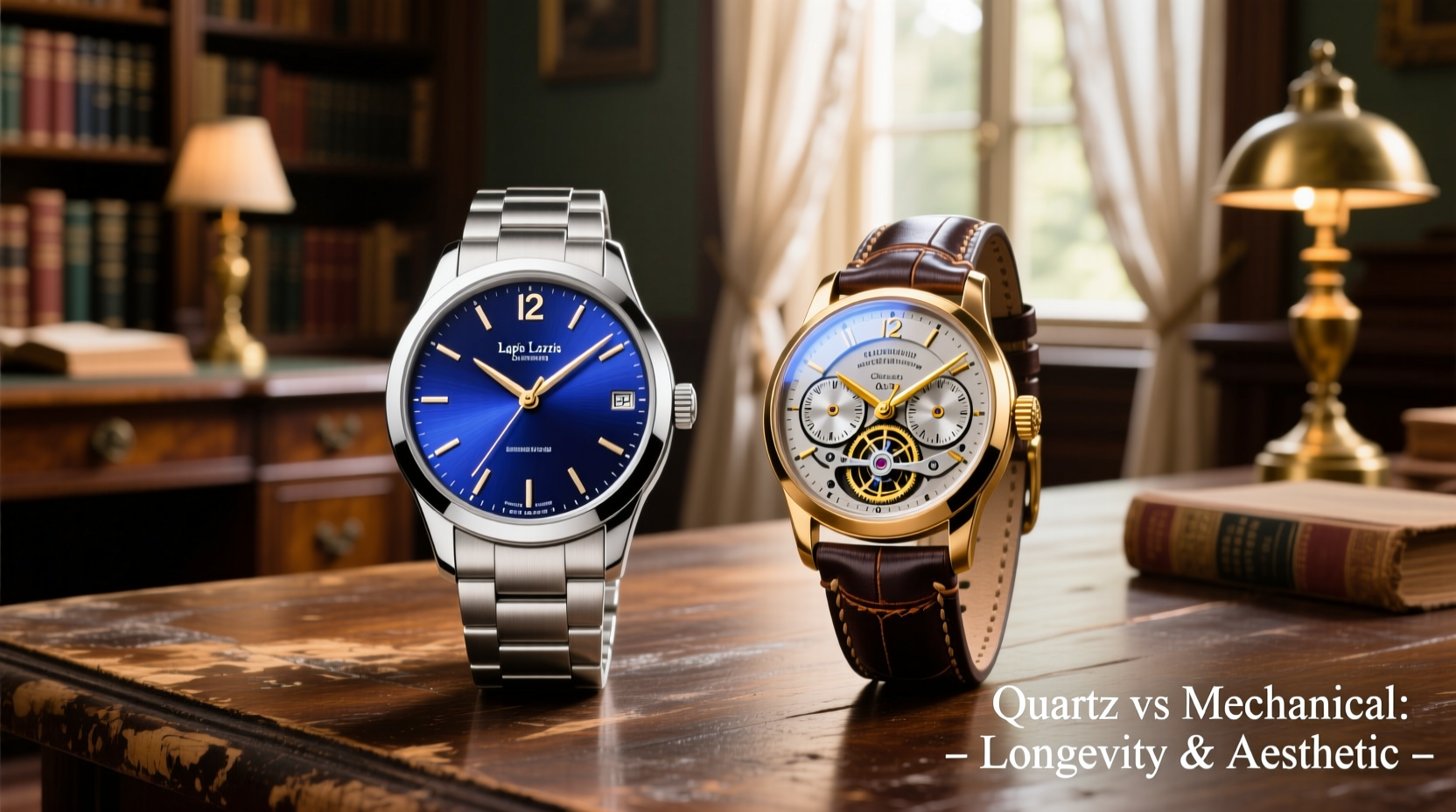
At the heart of any timepiece is its movement—the engine that keeps time. In Lige watches, you’ll typically find two types: quartz and mechanical (specifically automatic or manual-wind). The durability of each varies significantly due to design, components, and required upkeep.
Quartz movements are powered by a battery and regulated by a tiny piece of quartz crystal. When electricity passes through the crystal, it vibrates at a precise frequency, ensuring accurate timekeeping. These movements are inherently more resistant to shocks, require minimal maintenance, and can run reliably for years with only occasional battery changes every 1–3 years.
Mechanical movements, on the other hand, rely on a complex system of gears, springs, and levers. They’re powered either by winding the crown (manual) or through motion of the wearer’s wrist (automatic). While elegant in engineering, they are more delicate. Dust, moisture, magnetism, and physical impact can disrupt their precision. Without regular servicing—recommended every 3–5 years—they may lose accuracy or stop entirely.
“Mechanical watches are like fine instruments—they need care to perform. Quartz watches are built for reliability first.” — Daniel Reeves, Horology Technician
Aesthetic Appeal: Craftsmanship vs. Consistency
Appearance plays a major role in watch selection. Lige designs often mimic high-end Swiss or Japanese styles, offering dressy, minimalist, and vintage-inspired models. But how do quartz and mechanical versions compare visually?
Quartz watches tend to be slimmer and lighter. Their simpler internal mechanisms allow for sleeker cases and thinner profiles—ideal for formal wear or everyday comfort. Many Lige quartz models feature clean dials, minimalist markers, and refined finishes that emphasize modern elegance.
Mechanical watches, even in budget-friendly lines like Lige’s automatic series, carry a sense of tradition and craftsmanship. The sweeping second hand (as opposed to the ticking motion of quartz) is often cited as more pleasing to the eye. Some Lige mechanical models include exhibition case backs, revealing the moving gears—a small but meaningful detail that appeals to enthusiasts.
However, not all mechanical Lige watches deliver flawless finishing. Due to cost constraints, some may show inconsistencies in rotor decoration or hand alignment. Meanwhile, quartz models benefit from tighter quality control, resulting in consistent visual polish across units.
Visual Comparison: Key Aesthetic Differences
| Feature | Quartz (Lige) | Mechanical (Lige) |
|---|---|---|
| Second Hand Motion | Tick once per second | Sweeps smoothly |
| Case Thickness | Thinner | Thicker (due to rotor) |
| Weight | Lighter | Heavier (metal components) |
| Design Complexity | Sleek, minimalist | Bold, intricate |
| Exhibition Back | Rare | Common in automatic models |
Maintenance Requirements Over Time
Long-term ownership isn’t just about initial performance—it’s about what happens after five, ten, or twenty years. Here’s where quartz and mechanical diverge sharply.
Lige quartz watches demand very little. Replace the battery when needed, avoid exposing them to extreme temperatures or water beyond their rating, and occasionally clean the case and strap. That’s usually enough for years of trouble-free use.
Mechanical Lige watches require more attention. Even if they’re labeled “automatic,” prolonged inactivity causes the mainspring to unwind, stopping the watch. Wearing it daily helps, but if stored, it should be wound manually or kept in a watch winder. Over time, lubricants inside the movement dry out, leading to increased friction and wear. Without professional cleaning and re-oiling, this can cause irreversible damage.
Additionally, while Lige offers accessible pricing, finding replacement parts or specialized service for their mechanical movements can be challenging. Unlike Rolex or Seiko, Lige doesn’t have a widespread network of certified repair centers. This means repairs may take longer or cost more relative to the watch’s value.
Step-by-Step Guide: Maintaining Your Lige Watch by Type
- For Quartz Models:
- Check battery every 2 years or when second hand starts jumping in 2-second intervals.
- Clean case and band monthly with a soft cloth and mild soapy water (if water-resistant).
- Store in a dry place away from magnets and electronics.
- Have seals checked every 3–5 years if used near water.
- For Mechanical Models:
- Wear regularly or use a watch winder to keep it running.
- Service every 3–5 years: disassembly, cleaning, re-lubrication, reassembly.
- Avoid sudden impacts—don’t wear during heavy workouts or DIY projects.
- Keep away from strong magnetic fields (phones, speakers, laptops).
- Wind gently if manual; never overwind.
Real-World Example: Two Owners, Two Paths
Consider two friends: Mark chooses a Lige quartz dress watch for his graduation gift. He wears it weekly, replaces the battery twice over ten years, and stores it in a drawer when not in use. Ten years later, it still keeps perfect time and looks nearly new.
Jordan buys a Lige automatic model for the same occasion, drawn to its sweeping second hand and visible movement. He wears it most days but forgets to wind it during travel. After three years, it begins losing time. By year six, it stops altogether. He sends it for servicing, but the technician finds dried oil and minor gear wear. The repair costs nearly half the original price. Jordan decides to replace it instead.
This scenario isn’t uncommon. While mechanical watches offer charm, their longevity depends heavily on user habits. Quartz wins in consistency and resilience.
Expert Insight: What Professionals Say
“The emotional appeal of a mechanical movement is undeniable. But for actual lifespan and reliability, especially in entry-level brands like Lige, quartz is objectively superior.” — Helena Torres, Watch Restoration Specialist
Torres notes that many vintage quartz watches from the 1980s still function perfectly today, while comparable mechanical pieces often require extensive restoration. Simplicity, in horology, often translates to endurance.
FAQ
Do Lige mechanical watches hold value over time?
No significant resale value. Like most fashion watches, Lige models depreciate quickly. Their worth remains sentimental or functional, not collectible.
Can I swim with my Lige quartz or mechanical watch?
Only if rated for water resistance (e.g., 5ATM or higher). Most Lige watches are splash-resistant only. Avoid swimming, diving, or showering with them, regardless of movement type.
Why does the second hand on my Lige quartz tick once per second?
This is normal. Quartz movements use a stepper motor that advances the second hand in one-second intervals. Mechanical watches have a smoother sweep due to higher beat rates (typically 6–8 ticks per second, though visually continuous).
Final Verdict: Which Should You Choose?
If your priority is **longevity and low maintenance**, the Lige quartz watch is the clear winner. It will likely outlive its mechanical counterpart with minimal intervention, retain accuracy, and resist daily wear better. For someone who wants a reliable accessory without constant upkeep, quartz delivers.
If you value **aesthetic tradition and mechanical romance**, then a Lige mechanical watch offers a unique experience—the weight on your wrist, the smooth sweep of the seconds hand, the artistry of gears in motion. Just understand that preserving its beauty and function requires effort and time.




 浙公网安备
33010002000092号
浙公网安备
33010002000092号 浙B2-20120091-4
Comments
No comments yet. Why don't you start the discussion?