
LIGE has built a reputation for offering stylish, affordable timepieces that blend modern design with functional features. Among their most popular offerings are watches equipped with calendar functions—typically displaying the date, and sometimes the day of the week. But for many buyers, the real question isn’t whether the feature exists, but whether it adds meaningful value. Is the convenience of a date window on your wrist enough to justify choosing a calendar-equipped LIGE over a cleaner, minimalist model without one?
This decision isn't just about aesthetics or functionality—it's about how you use your watch and what role it plays in your daily life. Some prioritize simplicity and symmetry; others appreciate practicality at a glance. To help you make an informed choice, we’ll break down the pros and cons, examine real-world usage, and compare key models to determine if the date display is truly worth it.
Understanding the Calendar Function in LIGE Watches
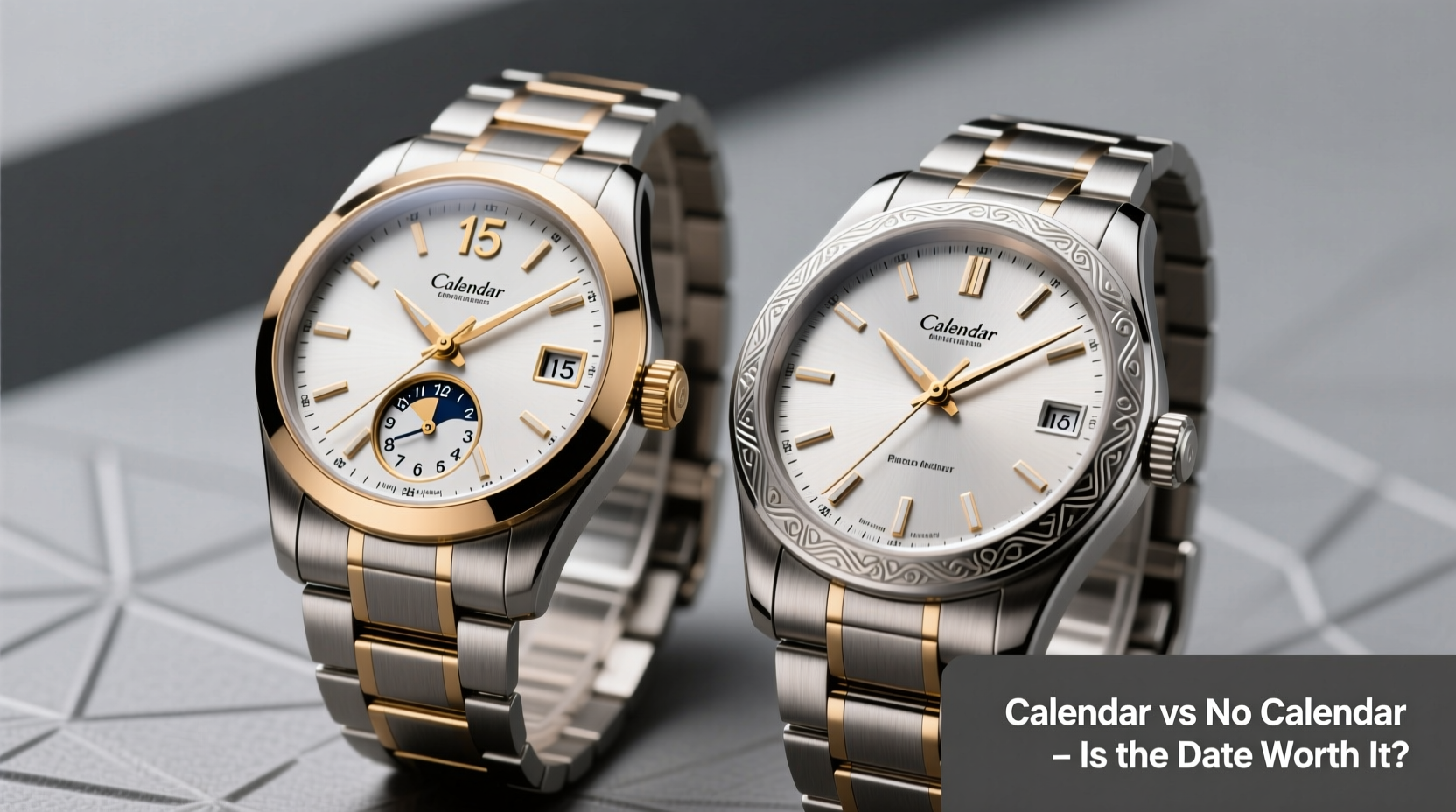
In most LIGE watches, the calendar function appears as a small aperture (window) on the dial, typically positioned at the 3 o’clock or 6 o’clock marker. This window displays the current date, and in some models, it may also include the day of the week—usually abbreviated (e.g., “MON,” “TUE”). These complications are powered by quartz movements, which automatically advance the date at midnight.
The mechanism is reliable and low-maintenance. Unlike mechanical watches, where adjusting the date requires careful manipulation of the crown, LIGE’s quartz-powered calendars can be set quickly using the side crown. However, they do require manual adjustment during months with fewer than 31 days unless the model includes a perpetual calendar—a rare feature in this price range.
Pros and Cons: With Calendar vs Without
Choosing between a LIGE watch with or without a calendar involves trade-offs. Here’s a detailed comparison across several key factors.
| Factor | With Calendar | Without Calendar |
|---|---|---|
| Functionality | Provides quick access to the date—useful for professionals, planners, and those who frequently reference the calendar. | Limited to timekeeping only. Simpler interface. |
| Dial Aesthetics | Date window may disrupt symmetry; some find it cluttered, especially on smaller dials. | Cleaner, more balanced look. Often preferred in minimalist or dress watch designs. |
| Readability | Time and date at a glance. Beneficial for travelers or busy schedules. | Uninterrupted dial improves focus on hour markers and hands. |
| Maintenance | Requires occasional date correction after short months. | No date adjustment needed—set once and forget. |
| Style Versatility | Suits casual and business-casual settings well. | More adaptable to formal occasions due to sleek profile. |
Real-World Use Case: Office Worker vs Outdoor Enthusiast
Consider two users: Maya, a project manager in a fast-paced tech firm, and Jordan, a weekend hiker and photography enthusiast.
Maya checks deadlines, meetings, and deliverables daily. Her schedule is tightly linked to dates. For her, a LIGE watch with a clear date display—like the **LIGE Ranger Pro** with its 3 o’clock aperture—saves time. She doesn’t need to unlock her phone every time she needs to confirm the day. The small window becomes a subtle productivity tool.
Jordan, on the other hand, values rugged simplicity. On trails, he relies on his watch for elapsed time, sunrise tracking, and general orientation. He prefers the uncluttered face of the **LIGE Adventure No-Date Edition**, which offers better legibility under variable lighting and reduces visual distractions. For him, checking the date is a phone task, not a wrist one.
This contrast illustrates that the value of a calendar function isn’t universal—it depends on context, habits, and priorities.
“Many entry-level watch buyers overlook how much a small date window affects the visual balance of a dial. In design terms, it’s not just a feature—it’s a compositional element.” — Daniel Reeves, Watch Designer & Horology Consultant
When the Date Display Makes Sense: A Checklist
Before opting for a LIGE with calendar functionality, ask yourself the following. Check all that apply:
- Do you frequently need to know the date without accessing your phone?
- Do you work in an environment where checking a device is discouraged or inconvenient?
- Do you appreciate multifunctional accessories that reduce dependency on digital devices?
- Are you someone who likes to keep track of monthly cycles (e.g., billing, medication, subscriptions)?
- Do you prefer watches with a slightly busier, more technical appearance?
If you answered “yes” to three or more, a LIGE with a calendar is likely a worthwhile investment.
Step-by-Step Guide: How to Choose the Right LIGE Model for You
Follow this process to make a confident decision:
- Assess Your Daily Routine: Track how often you check the date over a week. If it’s more than twice a day, consider a calendar model.
- Evaluate Your Style Preferences: Try on both types. Notice which feels more comfortable visually and emotionally.
- Check Dial Layout: Examine high-resolution images. Does the date window disrupt the symmetry? Is it too large or poorly placed?
- Consider Formality Needs: If you attend frequent formal events, a no-date model often pairs better with dress attire.
- Review Specific Models: Compare popular LIGE lines like the Classic Series (often no-date) vs. the Chrono or Ranger series (with date).
- Test Adjustability: Ensure the date can be set easily via the crown. Avoid models with stiff or unresponsive adjustments.
- Make Your Choice: Prioritize either utility or elegance based on your findings.
Frequently Asked Questions
Does the date function affect battery life in LIGE watches?
No. The calendar complication in quartz watches uses negligible additional power. Battery life remains consistent—typically 1.5 to 2 years—whether the watch includes a date window or not.
Can I set the date to change at a specific time?
LIGE quartz watches are designed to advance the date around midnight. While you can manually adjust it earlier, you cannot reprogram the internal timing. Avoid changing the date between 9 PM and 3 AM to prevent gear damage.
Are LIGE watches with calendar functions more expensive?
Slightly. Models with date displays typically cost $5–$15 more than their no-date counterparts due to minor movement complexity and design adjustments. However, the price difference is minimal and often offset by added utility.
Final Verdict: Is It Worth It?
The answer depends entirely on how you define value. If your watch is primarily a fashion accessory or a symbol of understated elegance, then a LIGE without a calendar will likely serve you better. The clean dial enhances versatility, particularly with formal wear, and appeals to purists who believe less is more.
But if your watch is a tool—a reliable companion for managing time-sensitive tasks—then the date display adds tangible benefit. It reduces screen dependency, supports time management, and aligns with a pragmatic approach to daily living. For many, that small window pays dividends in convenience.
Ultimately, the date function isn’t inherently better or worse—it’s a matter of alignment with your lifestyle. LIGE’s diverse lineup ensures there’s a perfect match whether you choose utility or minimalism.




 浙公网安备
33010002000092号
浙公网安备
33010002000092号 浙B2-20120091-4
Comments
No comments yet. Why don't you start the discussion?