
It’s a question that quietly lingers in dressing rooms and pre-event group chats: Is there actually a meaningful difference between a light gown and an evening gown, or is it all just semantics? If you’ve ever stood before a rack of flowing dresses, unsure whether what you’re holding qualifies as “evening” or simply “elegant,” you’re not alone. The confusion isn’t imagined—it stems from overlapping styles, evolving fashion norms, and inconsistent labeling. But yes, there *are* distinctions, and understanding them can transform how you shop, dress, and present yourself at formal events.
Defining the Terms: What Exactly Is a Light Gown?
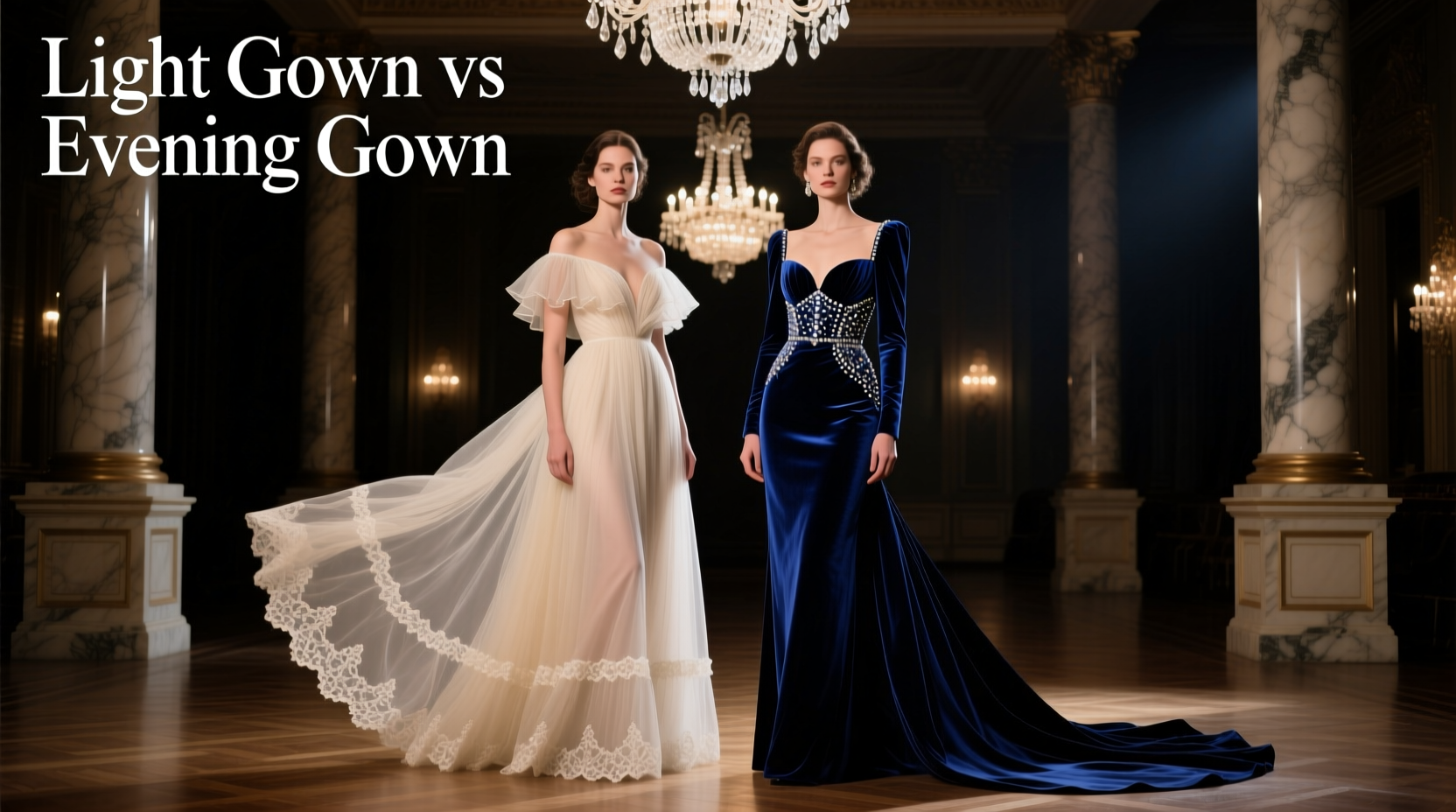
A light gown typically refers to a formal or semi-formal dress made from airy, lightweight fabrics such as chiffon, organza, georgette, or silk crepe. These gowns prioritize movement, breathability, and visual softness. They often feature delicate details—think flutter sleeves, subtle embroidery, or sheer overlays—but stop short of the opulence associated with traditional evening wear.
Light gowns are ideal for spring and summer events, garden parties, cocktail receptions, or outdoor weddings. Their silhouette tends to be flowy and less structured, sometimes resembling a high-end maxi dress more than a classic ballgown. While elegant, they usually lack the architectural elements—boning, heavy linings, or dramatic trains—that define heavier formal attire.
What Constitutes an Evening Gown?
An evening gown is designed for high-formality occasions—black-tie galas, award ceremonies, grand opera nights, or formal winter weddings. These gowns are built for impact. They’re typically constructed from richer materials like satin, velvet, brocade, or heavy silk. Structure is key: think defined waistlines, corsetry, interior boning, and full skirts supported by petticoats.
Evening gowns often feature bold design choices—deep V-necks, plunging backs, long trains, or intricate beadwork. Color may be more dramatic (deep emerald, onyx black, royal purple), and hemlines are almost always floor-length without exception. The intent is not just elegance but presence—a deliberate statement of sophistication and occasion-specific refinement.
“An evening gown isn’t just clothing; it’s ceremonial attire. It carries the weight of tradition and expectation.” — Lila Montgomery, Fashion Historian & Curator at the Metropolitan Dress Archive
Key Differences at a Glance
The distinction isn't always obvious, especially with modern designs blurring the lines. To clarify, here’s a comparison table highlighting the core differences:
| Feature | Light Gown | Evening Gown |
|---|---|---|
| Fabric | Chiffon, georgette, organza, lace overlay | Satin, velvet, taffeta, brocade, heavy silk |
| Structure | Minimal lining, soft drape, no boning | Boned bodice, structured skirt, internal support |
| Occasion | Garden parties, daytime weddings, cocktail events | Black-tie events, galas, formal dinners, red carpets |
| Hemline | Floor-length or tea-length | Strictly floor-length, often with train |
| Embellishments | Subtle beading, floral appliqués, soft shimmer | Heavy sequins, crystals, metallic embroidery |
| Seasonality | Spring/Summer | Fall/Winter (though exceptions exist) |
When the Lines Blur: Modern Fashion Challenges Tradition
Today’s fashion landscape complicates this divide. Designers increasingly create hybrid pieces—lightweight fabrics with evening-level detailing, or structured silhouettes in sheer materials. A nude illusion mesh gown with minimal weight might still demand a black-tie invitation. Conversely, a silk-chiffon column dress in deep burgundy could pass as evening wear depending on context.
This evolution means that while traditional definitions hold value, real-world application depends heavily on setting, accessories, and styling. A light gown paired with statement jewelry, opera gloves, and heels may elevate its formality. Meanwhile, an evening gown worn with flat sandals and a denim jacket instantly becomes deconstructed fashion—not appropriate for the ballroom.
A Real-World Example: Sarah’s Wedding Dilemma
Sarah was invited to two weddings in the same month. One was an afternoon garden ceremony followed by a seated dinner under string lights; the other, a candlelit reception in a historic ballroom with a strict black-tie request. She bought a pale blue chiffon gown with cap sleeves, assuming it would work for both. At the garden wedding, she looked perfectly poised. But at the ballroom event, she felt underdressed among guests in velvet, satin, and full trains. Her gown, though beautiful, lacked the gravitas of the setting. She later realized: her dress was a light gown in an evening gown’s world.
This scenario illustrates that context matters as much as cut. The same garment can succeed or fail based solely on the event’s expectations.
How to Choose the Right Gown: A Practical Checklist
Next time you're shopping or preparing for an event, use this checklist to determine which type of gown fits your needs:
- Check the invitation: Does it say “black tie,” “formal,” or “cocktail attire”? Black tie = evening gown.
- Consider the venue: Ballrooms, hotels, and theaters lean toward evening gowns; gardens, beaches, and rooftops favor light gowns.
- Assess the time of day: Evening events (after 6 PM) typically require more formal wear.
- Evaluate the fabric: Can you see through it? Does it rustle or float? Floating suggests light; stiffness suggests evening.
- Look at the construction: Are there cups, boning, or a zipper with multiple hooks? These are signs of an evening gown.
- Think about accessories: Will you wear diamonds or pearls? Evening gowns pair better with fine jewelry.
Common Misconceptions Debunked
Several myths contribute to the confusion:
- Myth: All floor-length dresses are evening gowns.
Truth: Length doesn’t equal formality. A cotton voile maxi dress is not an evening gown. - Myth: Light gowns are “cheap” or lower quality.
Truth: Many haute couture pieces use feather-light fabrics with exquisite craftsmanship. - Myth: You can’t wear a light gown in winter.
Truth: Layer with a tailored fur or satin coat, and it works beautifully.
Frequently Asked Questions
Can I wear a light gown to a black-tie event?
Generally, no—unless it’s exceptionally well-styled. A lightweight satin or silk crepe gown with dramatic shoulders and full coverage *might* suffice if accessorized formally. However, venues with strict dress codes expect the structural presence of a true evening gown. When in doubt, err on the side of formality.
Is a tea-length dress ever considered an evening gown?
Rarely. Tea-length (ending mid-calf) dresses fall into the cocktail category. Evening gowns are traditionally floor-length. Exceptions exist in vintage or avant-garde fashion, but they remain stylistic choices rather than standard practice.
Do color and pattern affect whether a gown is “light” or “evening”?
Indirectly. Pastels and florals often signal lighter occasions, while deep jewel tones or monochrome designs suggest evening wear. However, a black chiffon gown is still a light gown if it lacks structure—even if the color is formal.
Final Thoughts: It’s Not Just You—But Now You Know
The confusion between light gowns and evening gowns isn’t a personal failing—it’s a reflection of how fashion language has become diluted in the age of fast trends and social media styling. But now you have the tools to distinguish them confidently. Pay attention to fabric, structure, occasion, and context. Respect the unspoken rules of formal dressing, but also recognize where creativity allows for interpretation.
Whether you're attending a moonlit soirée or a sun-dappled vineyard celebration, choosing the right gown isn’t about following arbitrary rules—it’s about honoring the moment with intention. And when you do, you won’t just look the part. You’ll feel it.




 浙公网安备
33010002000092号
浙公网安备
33010002000092号 浙B2-20120091-4
Comments
No comments yet. Why don't you start the discussion?