
In the galaxy far, far away, few symbols are as iconic as the glowing blade of a lightsaber. More than just a weapon, it represents identity, alignment, and philosophy within the Star Wars universe. While the blue and green blades of Jedi Knights are widely recognized, fans have seen an array of colors—from crimson red to rare purple and even yellow. But what determines these hues? Is it personal choice, mystical significance, or something deeper rooted in lore and technology? The answer lies in a blend of in-universe physics, kyber crystal attunement, and narrative symbolism.
The Role of Kyber Crystals in Blade Color
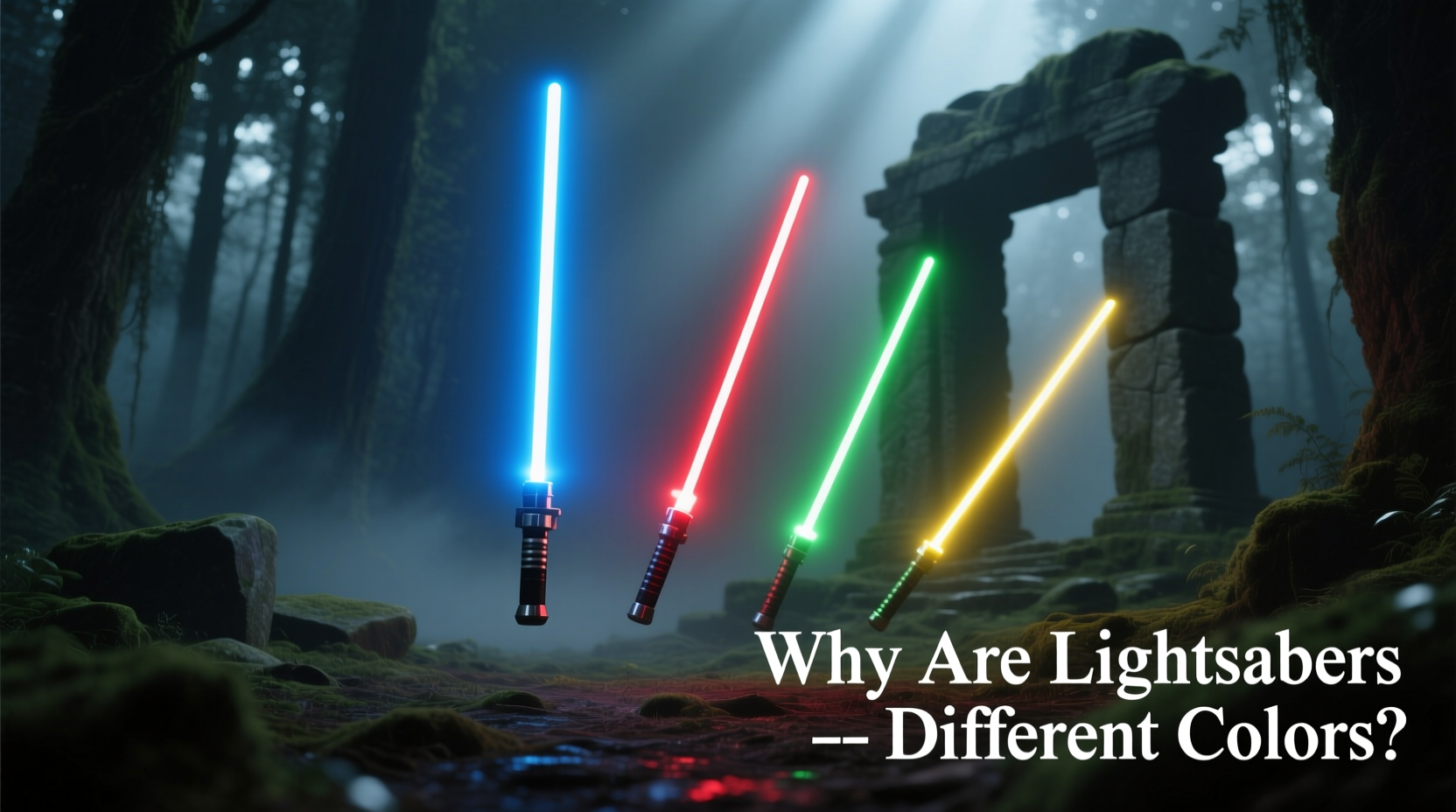
At the heart of every lightsaber is a kyber crystal—a rare, Force-attuned mineral found on planets like Ilum and Jedha. These crystals are not merely power sources; they are sentient in a metaphysical sense, resonating with the Force and choosing their wielders. When a Jedi constructs their lightsaber during a rite of passage, they bond with a kyber crystal through meditation and introspection. This connection influences the final color of the blade.
Naturally, kyber crystals are clear or pale white. However, when a Jedi channels their essence into the crystal during construction, it \"bleeds\" into a specific hue—most commonly blue or green. This transformation reflects the Jedi’s inner balance, emotional state, and affinity with the light side of the Force. The process is deeply personal and cannot be replicated mechanically.
Jedi Lightsabers: Blue, Green, and Beyond
Jedi Knights traditionally wield blue or green lightsabers, but other colors exist within the Order, each carrying subtle connotations:
- Blue – Associated with defenders and guardians. Often carried by Jedi who specialize in combat and protection (e.g., Obi-Wan Kenobi, Anakin Skywalker).
- Green – Favored by Jedi Consulars, who focus on wisdom, diplomacy, and Force mastery (e.g., Yoda, Luke Skywalker post-Empire).
- Purple – Extremely rare. Mace Windu’s unique violet blade symbolized his aggressive yet controlled fighting style. According to creator George Lucas, this color was chosen partly to stand out visually during battle scenes—but in lore, it reflects a Jedi walking the edge between serenity and intensity.
- Yellow – Historically used by Jedi Sentinels, who balanced combat training with scholarly pursuits. More recently, this color has been adopted by Jedi Temple Guards and, in *The Mandalorian*, by Ahsoka Tano’s dual sabers, signaling vigilance and independence.
- White – Once thought impossible, Ahsoka Tano introduced white blades after purifying corrupted kyber crystals taken from Imperial Inquisitors. The color signifies neutrality, redemption, and a path beyond traditional Jedi-Sith binaries.
“Kyber crystals do not serve the dark side willingly. They resist—and scream when broken.” — Lor San Tekka, *Star Wars: Bloodline*
Sith and the Forged Red Blades
Sith Lords and Dark Side users cannot form harmonious bonds with kyber crystals. Instead, they must dominate them through pain, hatred, and emotional torture—a process known as “crystal bleeding.” By pouring their dark essence into a captured crystal, they force it to turn red. This act corrupts the crystal permanently, causing it to emit a blood-red glow that crackles with instability.
Red blades are not inherently more powerful, but they reflect the user’s inner turmoil and rejection of balance. Unlike Jedi crystals, which resonate naturally, Sith lightsabers require constant recalibration due to the forced resonance. This explains the audible hum and visual flicker often seen in red-bladed weapons.
It's important to note: red lightsabers are not exclusive to Sith by birthright. Any Force-sensitive individual who embraces the dark side can bleed a crystal. Even fallen Jedi, like Darth Vader or Kylo Ren, use red blades not because of design preference, but as a manifestation of their internal corruption.
Non-Traditional Colors and Expanded Lore
Beyond mainstream Jedi and Sith, other factions and individuals have developed unique blade colors, often tied to specialized roles or philosophical divergence:
| Color | Wielder / Group | Symbolism / Purpose |
|---|---|---|
| Orange | Avar Kriss (Legends/Canon adjacent) | Represents innovation and leadership within the Jedi Order |
| Teal | Cal Kestis (in-game customization) | Personal expression; no canonical restriction |
| Brown | Prospective Padawans (in training) | Rare; associated with humility and early development |
| Black (Darksaber) | Mandalorian leaders (Sabine Wren, Din Djarin) | Symbol of Mandalorian sovereignty and warrior legacy |
The Darksaber deserves special mention. Unlike standard lightsabers, its blade is flat, black, and edged with white energy. Created by the first Mandalorian Jedi, Tarre Vizsla, it predates the Republic’s fall and functions as both weapon and political artifact. Its color defies conventional kyber logic, suggesting a different technological or alchemical origin.
Real Example: Ahsoka Tano and the White Lightsaber
Ahsoka Tano’s journey exemplifies how lightsaber color can reflect transformation. As Anakin Skywalker’s apprentice, she began with green blades. After leaving the Jedi Order and surviving Order 66, she reclaimed two red kyber crystals from fallen Inquisitors. Rather than discard them, she underwent a prolonged purification ritual, cleansing the dark influence embedded within. Over time, the crystals shifted from red to white—symbolizing her rejection of both institutional Jedi dogma and Sith extremism.
This moment wasn’t just aesthetic. It marked her evolution into a guardian operating outside established systems. Her white blades became a beacon for those seeking justice without blind allegiance—to Republic, Empire, or Jedi Council.
Do’s and Don’ts of Understanding Lightsaber Colors
- ✅ Do interpret color as symbolic of alignment, role, and inner state
- ✅ Do recognize that kyber crystals choose their wielders, not the other way around
- ✅ Do consider context—some colors appear in games or shows for narrative emphasis
- ❌ Don’t assume all red blades belong to Sith by default (some are stolen or coerced)
- ❌ Don’t overlook non-combat roles (e.g., yellow for temple guards)
- ❌ Don’t confuse Legends continuity with current Disney canon unless specified
Frequently Asked Questions
Can a Jedi have a red lightsaber?
Not legitimately within the traditional framework. A Jedi would never bleed a crystal, as it violates their principles. However, a redeemed Sith or former Inquisitor could potentially purify a red crystal and transform it—like Ahsoka did—into white or another hue. A red blade on a Jedi would signal internal conflict or deception.
Why don’t all Jedi have the same color?
Because kyber crystals respond uniquely to each individual’s connection to the Force. Just as no two Jedi have identical personalities or paths, no two crystals resonate in exactly the same way. The diversity of colors reflects the breadth of the Jedi Order itself—warriors, scholars, diplomats, and explorers alike.
Is there a strongest lightsaber color?
No. Blade color does not determine strength, cutting power, or durability. A green saber is not “stronger” than a blue one. Power comes from the wielder’s skill, focus, and connection to the Force. That said, certain designs—like the Darksaber—may offer tactical advantages due to shape or weight distribution.
Conclusion: Choose Your Color Wisely
Lightsaber colors are far more than cosmetic choices—they are windows into character, ideology, and destiny. From the serene glow of a green blade to the menacing pulse of crimson red, each hue tells a story shaped by tradition, trauma, and transformation. Whether you’re drawn to the disciplined blue of Obi-Wan, the defiant white of Ahsoka, or the regal black of the Darksaber, remember: the true power lies not in the color, but in the hand that wields it.




 浙公网安备
33010002000092号
浙公网安备
33010002000092号 浙B2-20120091-4
Comments
No comments yet. Why don't you start the discussion?