
Tomato pie is not just a dish—it’s a seasonal celebration of summer’s peak harvest. Among the most revered versions is Lilo’s Classic Tomato Pie, a recipe passed down through generations and perfected in home kitchens across the American South. More than a simple quiche or tart, this pie balances the bright acidity of vine-ripened tomatoes with a creamy, savory custard and a buttery, flaky crust. It bridges the gap between appetizer and main course, often gracing picnic tables, church suppers, and Sunday dinners. For cooks seeking to master a dish that honors tradition while showcasing fresh produce, Lilo’s method offers both structure and flexibility. This guide details the authentic recipe, explains its culinary significance, and provides professional-level insights on ingredient selection, technique, and service.
Definition & Overview
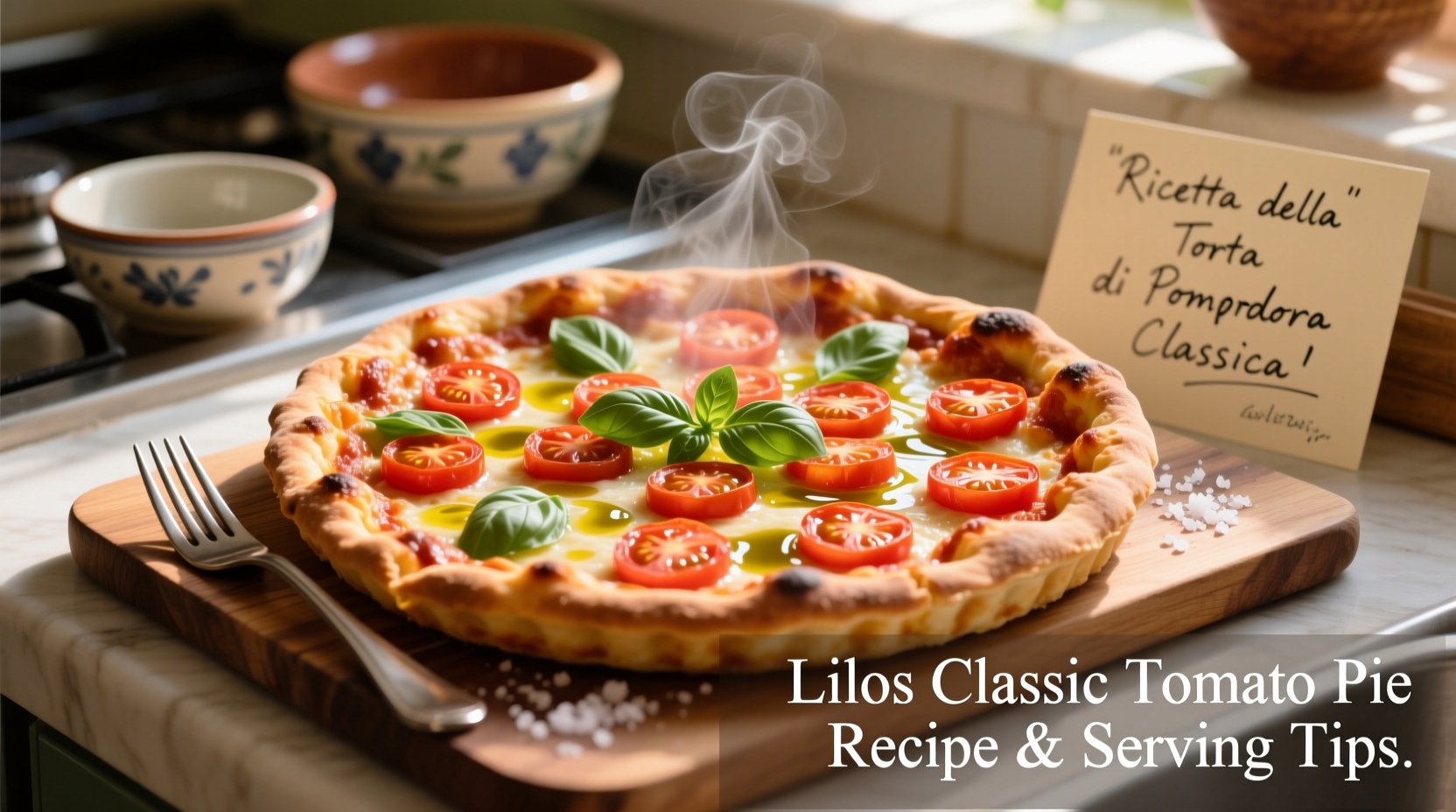
Lilo’s Classic Tomato Pie is a baked savory pie composed of a pre-baked pastry shell filled with a mixture of sliced tomatoes, a seasoned custard base (typically eggs and dairy), sharp cheese, onions, and herbs. Unlike fruit pies, it is served at room temperature or slightly chilled, allowing the flavors to meld and the custard to set without overcooking. The dish belongs to the broader category of Southern vegetable pies, which also includes okra pie and chess pie variants. Its roots trace back to early 20th-century Southern home cooking, where garden abundance demanded preservation and creative use—baking surplus tomatoes into a custard-filled crust was both practical and delicious.
The defining characteristic of Lilo’s version lies in its balance: the tomatoes are lightly salted and drained to prevent sogginess, the custard is rich but not heavy, and the cheese—traditionally sharp cheddar or Parmesan—adds umami depth without overpowering. Fresh basil or thyme often finishes the pie, lending an aromatic lift. While variations exist, Lilo’s recipe maintains a strict adherence to texture control and flavor layering, making it a benchmark for home bakers and culinary professionals alike.
Key Characteristics
| Attribute | Description |
|---|---|
| Flavor Profile | Savory, slightly tangy, with sweet tomato notes and a creamy richness from the custard; cheese adds saltiness and depth. |
| Aroma | Buttery crust, toasted cheese, fresh herbs, and sun-warmed tomatoes. |
| Texture | Crust is crisp and flaky; filling is smooth and custardy with tender tomato slices; slight resistance from cheese crust on top. |
| Color | Golden-brown crust, creamy white custard, deep red tomato layers, green herb flecks. |
| Heat Level | None (unless optional black pepper or cayenne is increased). |
| Culinary Function | Main dish, side dish, or centerpiece for brunch, lunch, or casual dinner. |
| Shelf Life | 3–4 days refrigerated; best served within 24 hours of baking. |
Practical Usage: How to Make Lilo’s Classic Tomato Pie
The success of Lilo’s Tomato Pie hinges on three phases: crust preparation, tomato treatment, and custard integration. Follow these steps precisely for optimal results.
- Prepare the crust: Use a single 9-inch unbaked pie shell made from scratch or high-quality store-bought dough. Blind bake at 375°F (190°C) for 15–18 minutes with pie weights or dried beans to prevent slumping. Cool completely before filling.
- Treat the tomatoes: Slice 2–3 large ripe beefsteak tomatoes (about 1½ pounds) ¼ inch thick. Arrange in a single layer on a wire rack set over a tray. Sprinkle generously with kosher salt (about 1 tsp) and let drain for 30–60 minutes. This draws out excess moisture, preventing a watery filling. Pat dry gently with paper towels before use.
- Build the base layer: Sprinkle ½ cup finely grated sharp cheddar or Parmesan over the cooled crust. Add 2 tablespoons finely minced yellow onion or scallion for subtle bite.
- Layer the tomatoes: Overlap tomato slices in concentric circles over the cheese base. Season lightly with freshly ground black pepper and a pinch of garlic powder (optional).
- Pour the custard: In a bowl, whisk together 3 large eggs, ¾ cup heavy cream or half-and-half, 2 tablespoons mayonnaise (for richness and emulsification), ¼ teaspoon dry mustard, and ¼ teaspoon paprika. Pour slowly over the tomatoes, ensuring even distribution.
- Add final cheese: Top with another ¼ cup grated cheese to form a golden crust during baking.
- Bake: Place on a baking sheet (to catch spills) and bake at 350°F (175°C) for 40–45 minutes, until the custard is set and the top is golden. A knife inserted near the center should come out clean.
- Cool and rest: Allow the pie to cool at room temperature for at least 1 hour before slicing. This resting period allows the custard to fully set and the flavors to harmonize.
Pro Tip: For enhanced flavor, sauté the onions in butter until soft before adding to the crust. Let cool before layering. Alternatively, sprinkle a thin layer of dried breadcrumbs or cornmeal on the pre-baked crust to absorb residual moisture and add textural contrast.
Variants & Types
While Lilo’s original is considered the gold standard, regional and dietary adaptations have emerged. These variations maintain the core concept but adjust ingredients or technique for different outcomes.
- Cream Cheese Tomato Pie: Incorporates 4 oz of softened cream cheese into the custard mixture for a denser, cheesecake-like texture. Ideal for cooler months or as a potluck dish that holds well.
- Gluten-Free Tomato Pie: Uses a nut-based or rice-flour crust. Almond flour crusts pair especially well with the richness of the custard and add a delicate sweetness.
- Vegan Tomato Pie: Replaces eggs with silken tofu blended with plant-based milk and cornstarch; uses vegan cheese and olive oil crust. Requires careful baking to avoid curdling.
- Open-Faced Tart Version: Made in a tart pan with removable bottom, omitting the top crust. Offers more surface area for cheese browning and is visually elegant for entertaining.
- Individual Mini Pies: Prepared in muffin tins or ramekins for portion control and easier serving at gatherings. Bake time reduces to 25–30 minutes.
| Variant | Best For | Adjustments Needed |
|---|---|---|
| Cream Cheese | Richness lovers, fall/winter menus | Add cream cheese to custard; increase baking time by 5–10 min |
| Gluten-Free | Gluten-sensitive diners | Use certified GF crust; monitor browning closely |
| Vegan | Plant-based diets | Substitute all animal products; expect softer set |
| Mini Pies | Cocktail parties, meal prep | Reduce custard pour; check at 20 min |
Comparison with Similar Ingredients/Dishes
Tomato pie is often confused with other tomato-based dishes, but key distinctions set it apart.
| Dish | Similarities | Differences |
|---|---|---|
| Quiche | Uses egg and dairy custard; baked in crust | Quiche typically contains meat/vegetables mixed into custard; tomato pie layers tomatoes whole and emphasizes their texture |
| Tomato Tart | Same primary ingredient; open-faced | Tarts often use puff pastry and lack custard; rely on concentrated tomato reduction or pesto base |
| Stuffed Tomato | Tomato as vessel; savory filling | Individual preparation; filling is usually breadcrumb-based, not custard |
| Spanish Tortilla | Egg-based; served at room temp | No crust; potatoes are primary ingredient; cooked on stovetop |
“The secret to a great tomato pie isn’t hiding the water—it’s managing it. Salt, drain, pat, and build barriers. That’s how you keep the crust crisp and the flavor bold.”
— Chef Elena Martinez, Southern Culinary Institute
Practical Tips & FAQs
What kind of tomatoes should I use?
Beefsteak or heirloom varieties are ideal due to their meaty texture and low seed count. Avoid Roma or cherry tomatoes—they lack the necessary surface area and can be overly acidic. Tomatoes must be ripe but firm; underripe ones lack sweetness, overripe ones release too much juice.
Can I make it ahead of time?
Yes. Assemble the pie up to 6 hours in advance and refrigerate unbaked. However, blind-baked crusts may soften. For best results, bake the day of serving and allow full cooling. Leftovers keep refrigerated in an airtight container for up to 4 days.
Why did my crust get soggy?
Sogginess occurs when moisture from tomatoes seeps into the crust. Ensure thorough salting and draining. Pre-baking the crust (blind baking) is non-negotiable. Adding a moisture barrier like grated cheese, breadcrumbs, or a beaten egg wash (applied to the warm crust post-bake) significantly improves crispness retention.
Can I freeze tomato pie?
Freezing is not recommended. The custard may separate, and tomatoes become mushy upon thawing. If necessary, freeze unbaked pie for up to 1 month—thaw in refrigerator overnight before baking. Expect minor texture loss.
Is mayonnaise necessary in the custard?
While optional, mayonnaise contributes fat, emulsifiers, and tang that enhance mouthfeel and flavor stability. Omit only if allergies or preferences require; substitute with extra cream and a teaspoon of lemon juice for brightness.
How do I prevent cracking on top?
Cracking results from overbaking or rapid temperature changes. Bake at a moderate 350°F and avoid opening the oven door during the first 30 minutes. Tent loosely with foil if the top browns too quickly.
What sides pair well with tomato pie?
Given its richness, pair with light, crisp accompaniments: a mixed green salad with vinaigrette, grilled asparagus, cucumber salad, or stone fruit salsa. For heartier meals, serve alongside roasted chicken or black-eyed peas.
Storage Guide: Refrigerate leftover slices in a covered container. Reheat individual portions gently in a 300°F oven for 10–12 minutes to restore warmth without drying. Do not microwave—this degrades texture.
Summary & Key Takeaways
Lilo’s Classic Tomato Pie stands as a testament to Southern culinary wisdom—simple ingredients elevated through precise technique. At its core, it celebrates ripe, in-season tomatoes, but its excellence depends on moisture management, balanced seasoning, and structural integrity. The pre-baked crust, salt-drained tomatoes, and creamy custard work in concert to deliver a dish that is both comforting and refined.
Key takeaways for mastery:
- Always use ripe, meaty tomatoes and drain them thoroughly.
- Blind bake the crust and consider adding a moisture barrier.
- Balance the custard with dairy, eggs, and a touch of acid or umami (mayo, mustard).
- Allow the pie to rest after baking—patience ensures clean slices and developed flavor.
- Adapt thoughtfully for dietary needs, but preserve the structural principles.
This pie is more than a recipe—it’s a ritual of summer, a gesture of hospitality, and a canvas for garden-fresh ingredients. Whether served at a backyard barbecue or a formal brunch, Lilo’s Classic Tomato Pie earns its place at the table. Try it once, and it will likely become a staple in your seasonal rotation.




 浙公网安备
33010002000092号
浙公网安备
33010002000092号 浙B2-20120091-4
Comments
No comments yet. Why don't you start the discussion?