
When choosing a jacket, one of the most overlooked yet critical design elements is the presence—or absence—of a lining. While it might seem like a minor detail, the decision between lined and unlined jackets can significantly influence how a garment feels, performs, and ages over time. From temperature regulation to movement ease, the internal structure of a jacket plays a pivotal role in daily wearability. Understanding the functional differences helps consumers make informed decisions based not just on style, but on long-term comfort and utility.
The Role of Lining in Jacket Design
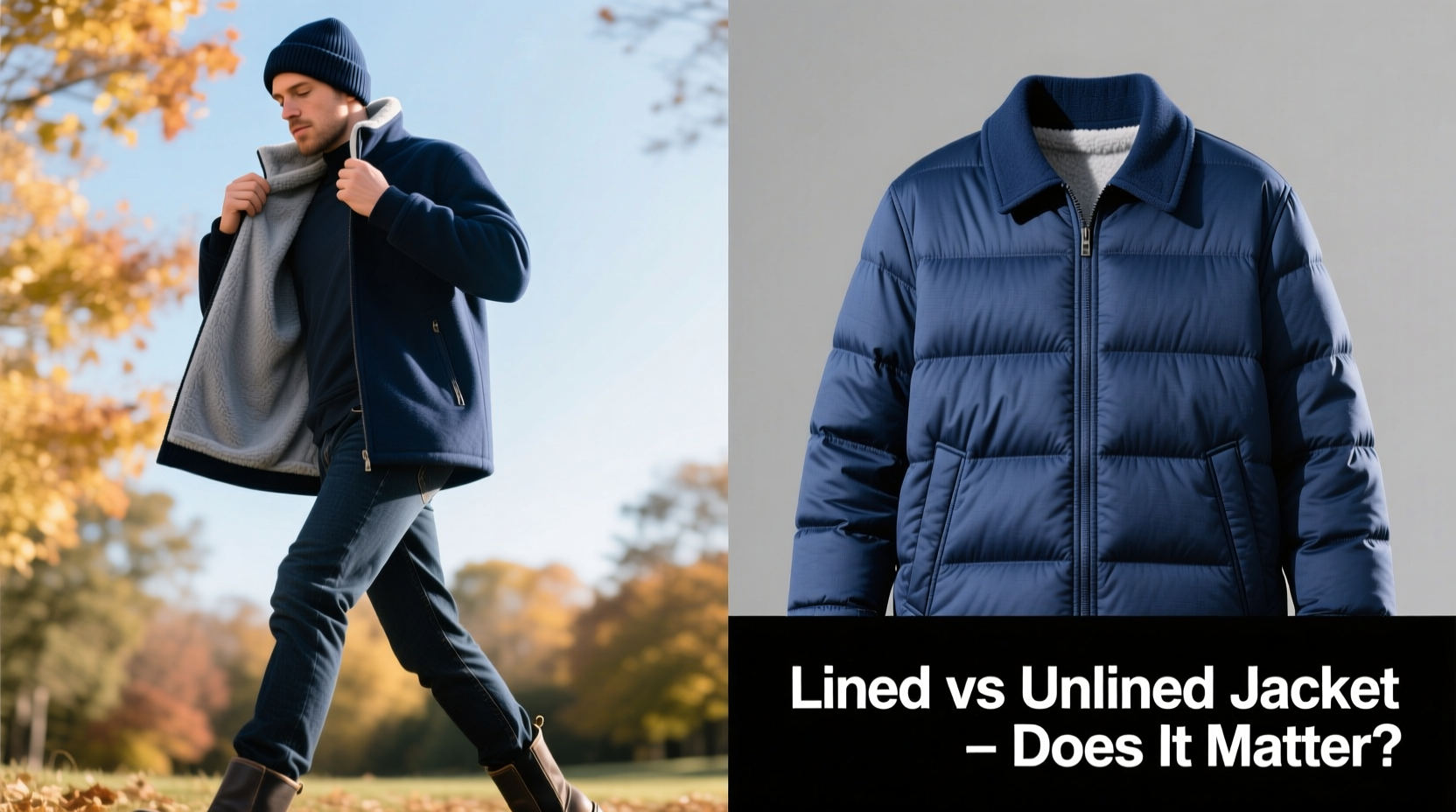
A jacket lining is an inner fabric layer sewn beneath the outer shell. It serves multiple purposes: protecting the main fabric from body oils and sweat, reinforcing the structure, and enhancing thermal performance. Linings are typically made from materials such as polyester, viscose, cupro, or silk, each offering different textures and breathability levels.
In contrast, unlined jackets expose the interior construction—often featuring taped seams, raw edges, or visible stitching. These designs prioritize minimalism and breathability, appealing to those who value lightweight wear and casual aesthetics. However, removing the lining also removes several functional benefits that affect both comfort and durability.
Thermal Performance: Warmth vs Ventilation
One of the most tangible differences between lined and unlined jackets is their ability to retain heat. A full lining acts as a secondary barrier against cold air, trapping warmth close to the body. This makes lined jackets ideal for transitional seasons or colder environments. The lining material itself can contribute to insulation; for example, brushed acetate or flannel linings add softness and extra warmth.
Unlined jackets, by comparison, allow more airflow and are less likely to cause overheating during physical activity or in mild weather. They are commonly found in summer-weight blazers, chore coats, and field jackets designed for active use. However, this breathability comes at the cost of reduced protection when temperatures drop.
Interestingly, some modern jackets use strategic partial linings—such as chest panels or shoulder inserts—to provide targeted warmth without sacrificing ventilation across the back or underarms. This hybrid approach reflects evolving consumer demands for adaptable outerwear.
Comfort and Wearability: How Lining Affects Movement and Feel
Beyond temperature control, lining influences how a jacket moves with the body. A well-finished lining reduces friction between the garment and clothing worn underneath, allowing smoother arm motion and eliminating the \"stickiness\" common in wool or cotton shells against cotton shirts.
Moreover, linings help maintain the jacket’s shape over time. Without one, repeated wear can cause the inner fabric to stretch, crease, or degrade faster due to direct contact with skin and sweat. Linings act as a protective buffer, preserving the integrity of the outer material.
On the other hand, unlined jackets often feel lighter and less restrictive. Many favor them for their “broken-in” texture and relaxed drape. Denim truckers, linen blazers, and certain military-style jackets gain character through visible wear, which would be hidden under a full lining.
“An unlined jacket reveals its soul through use—every fold and fade tells a story. But if you’re wearing it daily in an urban environment, a lining will preserve both the jacket and your comfort.” — Daniel Reeves, Menswear Designer & Textile Consultant
Material Considerations: Matching Lining to Outer Fabric
The effectiveness of a lining depends heavily on its compatibility with the outer fabric. For instance, a heavy tweed jacket benefits from a durable, slightly insulating lining like Bemberg cupro, which resists pilling and wicks moisture. In contrast, a lightweight nylon windbreaker may use a mesh liner to enhance breathability without adding bulk.
Poorly matched linings can create issues. A synthetic lining in a wool coat might trap moisture, leading to discomfort and odor buildup. Conversely, skipping a lining in a structured wool blazer could result in shoulder distortion and inner fabric breakdown.
Here’s a quick reference table comparing common jacket types and typical lining choices:
| Jacket Type | Common Lining | Typical Use Case | Comfort Trade-off |
|---|---|---|---|
| Wool Blazer | Cupro, Viscose | Business, Formal | Lining adds polish and ease of movement |
| Denim Trucker | Unlined or Partial | Casual, Layering | More breathable but wears faster inside |
| Trench Coat | Half-cotton or Nylon | All-season, Rain Protection | Balance of function and airflow |
| Sport Coat (Summer) | Unlined or Quarter-lined | Warm Climates | Maximizes ventilation |
| Winter Parka | Fleece or Polyester | Sub-zero Conditions | High warmth, slight reduction in breathability |
Real-World Example: Commuting in a Transitional Climate
Consider Mark, a city commuter in Portland, Oregon, where mornings are damp and cool, but afternoons warm up quickly. He owns two jackets: a fully lined wool-cotton blend coat and an unlined cotton canvas field jacket.
During winter, the lined jacket keeps him comfortable during early walks to the train station, preventing wind chill and reducing clamminess under layers. In spring, however, he switches to the unlined version. It doesn’t overheat during his brisk walk, allows better airflow when crowded on public transit, and feels lighter throughout the day.
His experience illustrates that neither option is universally superior—the right choice depends on environmental conditions, activity level, and personal tolerance for heat retention.
How to Choose: A Practical Checklist
Deciding between lined and unlined comes down to intended use. Use this checklist to guide your selection:
- Will you wear it in cold or variable temperatures? → Opt for lined or partially lined.
- Do you tend to overheat easily? → Unlined may offer better comfort.
- Is it for formal or structured wear? → A lining enhances drape and longevity.
- Do you want low maintenance and easy care? → Lined jackets often resist inner soiling better.
- Are you layering over thick sweaters? → Ensure the jacket has enough room, especially if lined.
- Do you value a rugged, lived-in look? → Unlined versions age more visibly—and authentically.
Frequently Asked Questions
Does a lining make a jacket last longer?
Yes. A lining protects the inner surface from sweat, oils, and abrasion, reducing wear and helping the jacket maintain its shape over years of use. Jackets without linings may show interior fading, fraying, or stretching much sooner.
Can I wear an unlined jacket in winter?
Generally, no—not as a standalone piece. Unlined jackets lack insulation and wind resistance. However, they can work as mid-layers under heavier coats or in heated indoor environments with brief outdoor exposure.
Are there jackets with removable linings?
Yes. Some three-in-one parkas and technical outerwear feature zip-out linings, offering versatility across seasons. This design combines the adaptability of unlined wear with the option for added warmth when needed.
Final Thoughts: Comfort Is Contextual
The question isn’t whether linings are inherently better, but whether they align with your lifestyle. A lining does make a measurable difference in comfort—but the nature of that difference depends on how, where, and when you wear the jacket.
For everyday urban use, frequent commuting, or cooler climates, a lined jacket typically provides superior comfort, protection, and longevity. For warm weather, casual styling, or a desire for authentic aging, unlined options deliver unmatched breathability and character.
Ultimately, the best jacket is one that supports your routine without compromise. Whether lined or unlined, choose with intention—your comfort depends on it.




 浙公网安备
33010002000092号
浙公网安备
33010002000092号 浙B2-20120091-4
Comments
No comments yet. Why don't you start the discussion?