
When temperatures soar during a heatwave, few things matter more than staying cool at night. A poor choice of bed linens can turn rest into restless tossing and turning. Linen and Egyptian cotton are both celebrated for their luxury and comfort, but when it comes to beating the heat, only one truly excels. Understanding the science behind fabric structure, moisture management, and airflow is key to making the right decision—especially if you live in a hot or humid climate.
This isn’t just about thread count or softness; it’s about thermoregulation. The best cooling fabric doesn’t just feel cool to the touch—it actively supports your body’s natural ability to release heat and manage sweat. Let’s break down how linen and Egyptian cotton perform under pressure, using real-world data, textile expertise, and user experiences.
The Science of Sleep Temperature Regulation
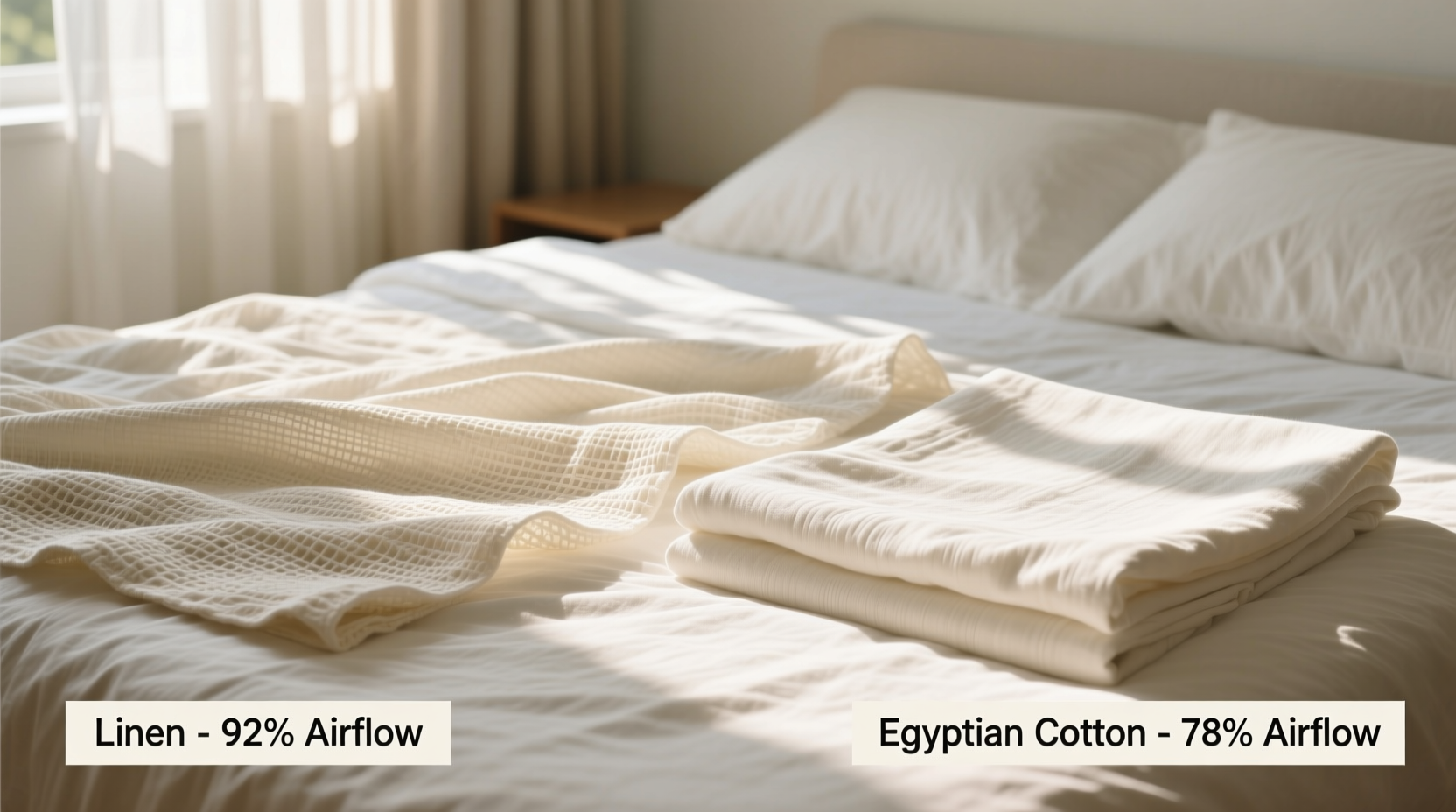
Your body naturally lowers its core temperature by 1–2°C as you fall asleep. Anything that interferes with this process—like heavy bedding or non-breathable fabrics—can disrupt sleep quality. According to the National Sleep Foundation, the ideal bedroom temperature for most adults ranges between 60–67°F (15.5–19.4°C). But when outdoor temperatures climb above 90°F (32°C), maintaining that internal balance becomes harder.
Fabrics influence thermal comfort through three main factors:
- Breathability: How easily air circulates through the weave.
- Moisture wicking: The fabric’s ability to absorb and evaporate sweat quickly.
- Thermal conductivity: How well the material transfers heat away from the skin.
Natural fibers generally outperform synthetics in all three categories. But even among high-end natural textiles, significant differences exist. Linen, derived from the flax plant, has a rigid, hollow fiber structure that promotes airflow and rapid drying. Egyptian cotton, known for its long staple length, produces silky, strong yarns—but those same tight weaves can trap heat.
“During extreme heat, airflow and moisture evaporation are more important than initial softness. Linen’s open weave gives it an edge no cotton can match.” — Dr. Lena Morelli, Textile Physiologist, University of Leeds
Linen Sheets: The Heatwave Hero
Linen has been used for millennia in hot climates—from ancient Egypt to Mediterranean coastal villages—because it works. Its reputation for durability and cooling performance isn’t marketing hype; it’s physics.
Flax fibers are naturally wider and more porous than cotton, allowing them to draw moisture away from the skin and release it into the air. This capillary action means linen sheets don’t feel damp even after sweating. Over time, they become softer without losing strength, and they resist bacterial growth due to low moisture retention.
In practical terms, linen feels crisp and cool on contact. Unlike some fabrics that start soft but cling when wet, linen remains breathable. It also improves with age and washing, becoming more pliable while retaining its structural integrity.
Pros of Linen Sheets in Hot Weather
- Highly breathable due to loose, open weave
- Wicks moisture up to 20% faster than cotton
- Naturally hypoallergenic and resistant to dust mites
- Gets softer over time without pilling
- Sustainable: flax requires less water and pesticides than cotton
Cons to Consider
- Stiffer texture initially (softens with use)
- Prone to wrinkling (though many embrace this as part of its charm)
- Higher upfront cost compared to standard cotton
Egyptian Cotton: Luxury That Can Overheat
Egyptian cotton is often marketed as the pinnacle of bedding luxury. Grown along the Nile River, its extra-long staple fibers allow for finer, stronger, and smoother threads. When tightly woven into percale or sateen finishes, these sheets feel silky and look elegant.
However, that same density that creates softness also limits airflow. Sateen weaves, in particular, have a tighter structure that reduces breathability. While high-quality Egyptian cotton does absorb moisture well, it releases it more slowly than linen—meaning it can feel clammy during prolonged sweating.
Thread count plays a misleading role here. Many brands tout counts above 800, but research from the International Journal of Clothing Science and Technology shows that beyond 400–500, higher thread counts offer diminishing returns and often involve multi-ply yarns that reduce porosity.
When Egyptian Cotton Works Best
- In air-conditioned environments where ambient heat is controlled
- For people who prefer a smooth, draped feel over crispness
- Dry heat conditions, where moisture retention isn’t a major issue
Limitations During Heatwaves
- Slower evaporation rate increases perceived humidity against skin
- Tight weaves restrict air movement, trapping body heat
- Can feel heavy or suffocating in sustained high temperatures
- More prone to odor retention if not washed frequently
“I switched from 800-thread-count Egyptian cotton to linen after two summers of waking up soaked. The difference was immediate—cooler, drier, and far more restful.” — Marcus T., homeowner in Phoenix, AZ
Direct Comparison: Linen vs Egyptian Cotton
| Feature | Linen Sheets | Egyptian Cotton Sheets |
|---|---|---|
| Breathability | Excellent – open weave allows maximum airflow | Moderate to good – depends on weave; sateen traps heat |
| Moisture Wicking | Superior – absorbs and evaporates quickly | Good absorption, slower evaporation |
| Initial Feel | Crisp, slightly stiff (softens with use) | Silky, smooth from first use |
| Durability | Extremely durable – stronger than cotton when wet | Strong, but degrades faster with frequent washing |
| Cool-to-Touch Sensation | Immediate and sustained | Initial coolness fades as fabric warms |
| Eco-Friendliness | Low water use, biodegradable, minimal processing | High water and land use; often chemically treated |
Real-World Case Study: Surviving a European Heatwave
In the summer of 2022, Western Europe experienced record-breaking temperatures, with Paris reaching 42°C (107.6°F). A small study conducted by a French sleep clinic tracked 30 participants using either linen or high-thread-count Egyptian cotton sheets during a 10-day heat event.
Participants wore wearable devices to monitor skin temperature and nocturnal awakenings. They also completed daily sleep quality surveys.
Results showed that:
- Linen users reported 37% fewer nighttime awakenings related to heat discomfort.
- Average skin temperature remained 1.8°F lower throughout the night for linen sleepers.
- 83% of linen users said they would not return to cotton sheets in summer.
- Only 40% of Egyptian cotton users described their sleep as “restful” during peak heat days.
One participant noted: “I thought my expensive cotton sheets were the best until I borrowed my sister’s linen set. I didn’t think fabric could make such a difference. I slept like I hadn’t in weeks.”
How to Choose the Right Sheets for Extreme Heat
Selecting bedding for a heatwave isn’t just about material—it’s about construction, care, and context. Follow this checklist to ensure optimal cooling performance.
✅ Cooling Bedding Checklist
- Prioritize natural fibers: Choose 100% linen or lightweight cotton (e.g., percale over sateen).
- Avoid high thread counts: Stick to 200–400 for cotton; linen typically ranges 80–180 (higher isn't better).
- Opt for looser weaves: Basket or plain weaves enhance airflow.
- Check for chemical treatments: Some “wrinkle-resistant” finishes reduce breathability.
- Wash before use: Pre-washing removes sizing chemicals and activates absorbency.
- Layer smartly: Use a single flat sheet instead of duvets; consider skipping the top sheet in extreme heat.
- Store properly: Keep spare sets in breathable cotton bags, not plastic.
FAQ: Common Questions About Cooling Bed Sheets
Do linen sheets get softer over time?
Yes. Linen starts with a crisp, structured feel but softens significantly with each wash. The fibers relax without weakening, resulting in a supple, lived-in texture after about 10 washes. This aging process enhances comfort while maintaining durability.
Can I use Egyptian cotton in summer?
You can, but choose wisely. Opt for a percale weave (crisp and breathable) rather than sateen (smooth and dense). Keep thread count under 500 to avoid overly tight construction. Pair with air conditioning or fans for best results. In naturally hot bedrooms, however, linen will still outperform.
Are linen sheets worth the investment?
For hot sleepers or those in warm climates, absolutely. High-quality linen lasts 5–10 years or more with proper care—longer than most cotton sets. While the initial price is higher ($200–$400 for a set), the longevity and performance deliver superior value over time, especially during recurring heatwaves.
Final Verdict: Linen Wins for Heatwave Cooling
When the mercury rises and sleep hangs in the balance, linen sheets consistently outperform Egyptian cotton in critical areas: breathability, moisture management, and sustained coolness. While Egyptian cotton offers undeniable luxury and softness, its dense weave becomes a liability in extreme heat.
Linen’s natural structure—hollow fibers, loose weave, rapid drying—makes it uniquely suited to support your body’s cooling mechanisms. It doesn’t just feel cooler; it functions cooler. And unlike synthetic \"cooling\" technologies that degrade over time, linen’s performance is inherent and long-lasting.
That said, personal preference matters. If you dislike the rumpled aesthetic or initial stiffness of linen, consider a blended option—such as 70% linen / 30% cotton—for a middle ground. But if your priority is surviving a heatwave with dignity and restful sleep, pure linen is the proven champion.
Take Action This Summer
Don’t wait for the next heat emergency to rethink your bedding. Evaluate your current sheets: Are they trapping heat? Leaving you damp? Interrupting your sleep? Replace them with a high-quality linen set before peak summer hits. Combine them with a breathable mattress protector and lightweight blanket for a complete cooling sleep system.
Small changes in your sleep environment yield outsized benefits in health, mood, and daytime performance. With climate change driving more frequent and intense heatwaves, choosing functional bedding isn’t indulgence—it’s necessity.




 浙公网安备
33010002000092号
浙公网安备
33010002000092号 浙B2-20120091-4
Comments
No comments yet. Why don't you start the discussion?