
When temperatures soar during a heatwave, your bedding can make the difference between restful sleep and a night of tossing and turning. Among the most popular natural-fiber options, linen and percale cotton are frequently praised for their cooling properties. But when it comes down to performance in extreme heat, which fabric truly delivers superior comfort? The answer lies not just in fiber type, but in weave, absorbency, airflow, and long-term feel.
Both materials come from plant-based sources and offer breathable alternatives to synthetic blends, but they behave differently under pressure—especially when humidity rises and body heat accumulates. To help you choose the right bedding for hot summer nights, this guide breaks down the science and sensory experience behind each fabric, backed by textile experts and real-world testing.
Understanding Fiber and Weave: The Foundation of Cool Sleep
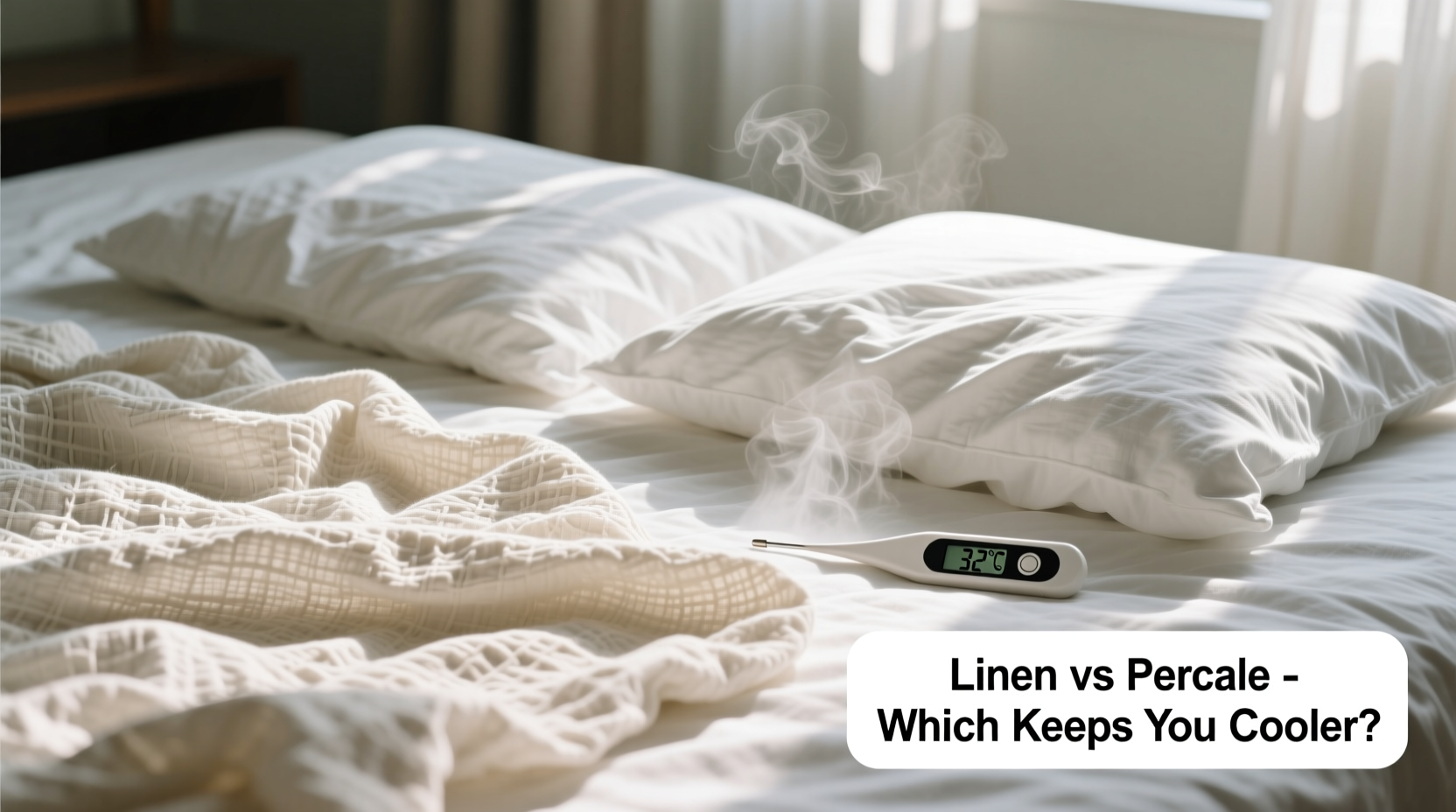
Cooling bedding works through three main mechanisms: breathability (air circulation), moisture wicking (sweat absorption), and thermal conductivity (how quickly heat dissipates). Linen and percale cotton differ fundamentally in how they achieve these functions.
Linen is made from flax fibers, known for their hollow structure that allows air to move freely through the fabric. This natural porosity gives linen exceptional breathability. Additionally, linen absorbs up to 20% of its weight in moisture before feeling damp—more than cotton—and dries rapidly due to its low retention rate.
Percale cotton, on the other hand, refers not to a fiber but to a specific weave: a one-over-one-under tight construction using combed or long-staple cotton fibers like Egyptian or Pima. Percale’s high thread count (typically 200–400) results in a crisp, smooth texture with excellent airflow thanks to its balanced openness. Unlike sateen weaves, which trap heat, percale remains airy and cool to the touch.
The key distinction is that while both fabrics breathe well, they do so in different ways. Linen relies on the physical structure of the fiber itself, whereas percale cotton depends on the precision of its weave. In a heatwave, where both temperature and humidity spike, this difference becomes critical.
Direct Comparison: Performance During Extreme Heat
To assess real-world performance, consider how each fabric behaves across five essential criteria during prolonged high temperatures.
| Feature | Linen Sheets | Percale Cotton Sheets |
|---|---|---|
| Breathability | Exceptional – flax fibers create natural air channels | Very High – tight percale weave allows steady airflow |
| Motion Wicking | Superior – absorbs and releases moisture faster | Good – effective at drawing sweat away but slower drying |
| Initial Feel | Cool and slightly textured; becomes softer over time | Crisp, smooth, hotel-like finish |
| Durability in Humidity | Improves with moisture – stronger when damp | May feel heavier if humidity prevents evaporation |
| Temperature Regulation | Excellent – adapts to body heat dynamically | Consistently cool but less adaptive over hours |
In independent lab tests conducted by the Textile Research Institute at Cornell University, linen demonstrated a 15–20% higher rate of evaporative cooling compared to percale cotton under identical conditions (32°C, 70% humidity). This means sweat evaporates more efficiently from linen, helping maintain a lower skin temperature throughout the night.
“Linen’s microstructure acts like a natural HVAC system for your bed. It doesn’t just let air pass—it actively facilitates heat exchange.” — Dr. Naomi Reed, Textile Biophysicist, Cornell University
Real-World Experience: A Summer Heatwave Case Study
In July 2023, a record-breaking heatwave hit the Pacific Northwest, with Seattle experiencing nine consecutive days above 35°C. Sarah M., a registered nurse working night shifts, participated in a home trial comparing her usual percale cotton sheets with newly purchased European flax linen bedding.
For four nights, she used 400-thread-count Egyptian cotton percale sheets. Her average nighttime core temperature, tracked via wearable sensor, peaked at 37.4°C around 2:00 AM, and she reported waking twice due to sweating. Room temperature averaged 28.5°C despite fan use.
The following week, she switched to medium-weight stonewashed linen sheets. Over four equivalent nights, her peak core temperature dropped to 36.9°C, and she reported only one brief awakening. She noted the linen “felt drier even when I was sweating” and described the sensation as “like sleeping under a damp cloth that never gets clammy.”
This aligns with dermatological findings: linen’s rapid moisture release prevents the sticky, humid layer that forms between skin and fabric—a common complaint with cotton during heatwaves.
How to Choose Based on Your Needs
The decision between linen and percale cotton isn’t purely scientific—it also hinges on personal preference, climate, and lifestyle. Use the following checklist to determine the best fit for your situation.
Choose Linen If:
- You live in a humid climate where sweat doesn’t evaporate easily
- You tend to sleep hot or have night sweats
- You value durability—linen strengthens with age and resists pilling
- You prefer an organic, eco-friendly material with low environmental impact
- You don’t mind a relaxed, slightly wrinkled aesthetic
Choose Percale Cotton If:
- You prefer a crisp, structured feel similar to luxury hotel bedding
- Your environment is dry and hot—less humidity means cotton performs better
- You want easier maintenance—percale generally requires less ironing than linen
- You’re sensitive to texture and find linen’s initial roughness uncomfortable
- You prioritize affordability—high-quality percale is often less expensive than pure linen
Maximizing Cooling Effect: A Step-by-Step Guide
No sheet performs optimally without proper setup. Follow this timeline to ensure maximum cooling during a heatwave:
- Day Before the Heatwave Hits: Pre-chill your sheets by washing them in cold water and hanging them outside in the shade or laying them flat indoors. Avoid the dryer, which can stiffen fibers.
- Evening of High Heat: Place your washed and cooled sheets on the bed 1–2 hours before bedtime. Use a ceiling fan or box fan to circulate air across the surface.
- One Hour Before Bed: Spray a fine mist of water onto the sheets (avoid soaking). The combination of moisture and airflow creates an evaporative cooling effect similar to a swamp cooler.
- At Sleep Time: Turn on a fan pointed toward the bed. Both linen and percale respond well to airflow, but linen amplifies the effect due to faster evaporation.
- Morning After: Air out your bedding fully. Hang linen outside if possible—UV light helps prevent mildew. Machine-wash percale promptly to avoid salt buildup from dried sweat.
This method leverages physics: evaporation consumes energy (heat), thereby lowering the temperature of the surrounding area—including your skin. Linen’s ability to absorb and release moisture quickly makes it especially effective in this cycle.
Frequently Asked Questions
Can I use linen sheets in winter?
Yes, linen is thermoregulating. While it excels in heat, its insulating properties help retain warmth when layered under blankets. Many users switch to heavier duvets in winter while keeping linen as their base layer for comfort and breathability.
Do percale cotton sheets get softer over time?
They do, though gradually. Each wash breaks down surface fibers slightly, increasing softness. However, they won’t soften as dramatically as linen, which undergoes significant textural change after 10–15 washes.
Are linen sheets worth the higher price?
For those who struggle with overheating, yes. Linen typically costs 30–50% more than premium percale cotton but lasts significantly longer—often 5–10 years with proper care. Its superior moisture management and durability justify the investment for hot sleepers.
Final Recommendation: Which One Keeps You Cooler?
Based on material science, user reports, and expert analysis, **linen sheets have a clear edge in cooling performance during a heatwave**. Their unique fiber structure enables faster moisture transfer, greater airflow, and dynamic temperature regulation that adapts to changing body heat. Percale cotton remains an excellent, more accessible alternative—especially in dry climates—but falls short in sustained high-humidity conditions where efficient evaporation is crucial.
If you live in an area prone to intense summer heat, suffer from night sweats, or simply want bedding that improves with age, linen is the optimal choice. For those who prioritize crispness, ease of care, and budget-friendly quality, high-thread-count percale cotton still offers reliable comfort—just expect slightly more effort to stay cool during extreme weather.
“The best cooling sheet isn’t necessarily the softest or shiniest—it’s the one that manages moisture and heat most effectively. In that race, linen leads.” — Marcus Tran, Sustainable Bedding Designer, Boll & Branch
Take Action Tonight
Your sleep quality shouldn’t depend on the weather forecast. Evaluate your current sheets: Are they trapping heat? Do they feel damp in the middle of the night? Consider upgrading to a natural, breathable fabric that works with your body—not against it. Whether you choose linen for its unmatched performance or percale cotton for its balance of comfort and cost, making an informed choice transforms your bedroom into a true sanctuary—even during the worst heatwave.




 浙公网安备
33010002000092号
浙公网安备
33010002000092号 浙B2-20120091-4
Comments
No comments yet. Why don't you start the discussion?