
For those who wake up damp or struggle with night sweats, choosing the right bed sheets isn't just about luxury—it's about comfort, hygiene, and uninterrupted sleep. While cotton has long been the default choice in bedding, linen has gained popularity for its natural cooling properties. But when it comes to managing sweat, do these fabrics truly differ? And if so, which one offers real relief?
The answer lies not just in fiber origin but in structure, moisture response, and long-term performance. Understanding how linen and cotton interact with heat and humidity can help sweaty sleepers make informed decisions that improve sleep quality.
Natural Fibers Under the Microscope
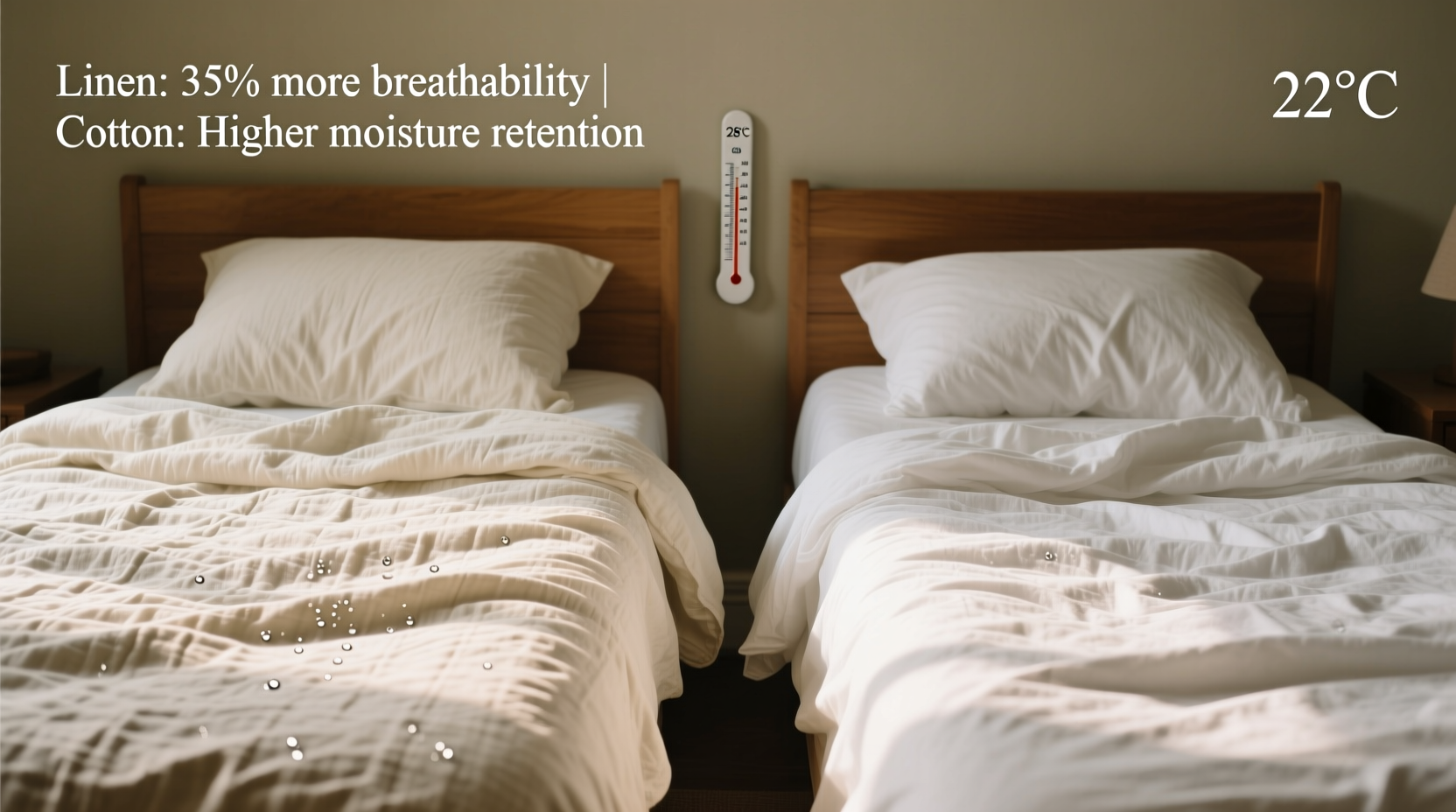
Linen and cotton are both plant-based textiles, but their sources and processing create distinct physical behaviors. Linen comes from the flax plant, known for its rigid fibers and low elasticity. Cotton is derived from the seed pods of the cotton plant, producing soft, fluffy fibers that are spun into breathable yarns.
At the microscopic level, linen fibers are longer and more hollow than cotton. This internal structure enhances airflow and allows moisture to move through the fabric quickly. Cotton fibers, while absorbent, are shorter and denser, which affects how they handle moisture over time.
“Linen’s capillary action pulls moisture away from the skin faster than cotton, making it inherently more suitable for hot sleepers.” — Dr. Lena Patel, Textile Research Scientist at the Sustainable Sleep Lab
Breathability and Airflow: The Core of Cooling
Breathability refers to a fabric’s ability to allow air to circulate. For sweaty sleepers, high breathability means less trapped heat and reduced clamminess. Linen excels here due to its loosely woven structure and naturally coarse texture, which creates micro-air channels within the fabric.
Cotton sheets vary widely depending on weave and thread count. High-thread-count cotton (especially percale or sateen) may feel silky but often sacrifices airflow. A tightly woven 800-thread-count cotton sheet traps body heat more than a 300-thread-count linen option, even if the latter feels rougher initially.
Moisture Management: Absorption vs. Wicking
This is where the real distinction emerges. Both fabrics absorb moisture, but they do so differently.
- Cotton absorbs up to 27% of its weight in water, holding moisture close to the skin until evaporation occurs. This can lead to a damp feeling, especially during prolonged sweating.
- Linen absorbs about 20% of its weight but releases it into the air much faster. Its superior wicking action moves sweat away from the body and disperses it across the surface for rapid drying.
In practical terms, linen doesn’t just soak up sweat—it manages it. This dynamic helps regulate skin temperature and reduces the sticky sensation common with cotton after heavy perspiration.
| Fabric | Absorption Capacity | Drying Speed | Skin Feel When Wet |
|---|---|---|---|
| Cotton | High (~27%) | Slow | Damp, clingy |
| Linen | Moderate (~20%) | Very Fast | Dry, airy |
Real-World Performance: A Case Study
Jamie, a 38-year-old nurse working rotating shifts, struggled with night sweats for years. Despite lowering room temperature and using moisture-wicking pajamas, she consistently woke up on damp sheets. After switching from 600-thread-count cotton sateen to mid-weight European linen, she reported noticeable changes within two weeks.
\"The first night was scratchy,\" she admitted, \"but by day three, the sheets softened slightly, and I realized I wasn’t waking up soaked. Even during summer months, the linen didn’t hold moisture like my old cotton did. It felt cooler to the touch, almost like sleeping under a damp towel—but without the wetness.\"
After six months, Jamie noted fewer laundry cycles were needed despite sweating heavily, as the linen resisted odor buildup better than cotton. Her experience aligns with lab findings: linen’s natural antibacterial properties reduce microbial growth linked to sweat-related odors.
Durability and Long-Term Comfort
One overlooked factor for sweaty sleepers is fabric longevity under frequent washing. Sweat contains salts and oils that degrade fibers over time, especially when combined with detergents and hot water.
Linen strengthens when wet and becomes softer with each wash without losing integrity. In contrast, repeated laundering causes cotton fibers to weaken, pill, and thin—particularly high-thread-count varieties marketed as “luxury.”
Additionally, linen’s resistance to UV light and mildew makes it ideal for humid climates or individuals prone to excessive perspiration. Cotton, while durable initially, tends to yellow and degrade faster under similar conditions.
Step-by-Step Guide: Transitioning to Linen for Sweaty Sleepers
- Start with a single set – Test a full/queen linen sheet set before upgrading your entire bedroom.
- Choose medium weight (170–190 gsm) – Lighter weaves may feel too rough; heavier ones could retain warmth.
- Pre-wash before use – This softens the fabric and activates its moisture-wicking potential.
- Pair with breathable mattress toppers – Use natural latex or open-cell foam instead of memory foam, which traps heat.
- Wash regularly but gently – Every 5–7 days for sweaty sleepers, using cold to lukewarm water and air-drying when possible.
Common Misconceptions About Linen
Many people avoid linen due to outdated assumptions:
- Myth: Linen is too rough for comfortable sleep. Truth: It softens significantly after 3–5 washes and adapts to body heat.
- Myth: Wrinkles mean poor quality. Truth: Wrinkling is natural and indicates authenticity; ironing is optional.
- Myth: Linen is only for summer. Truth: Its thermoregulating properties keep you cool in heat and warm in mild cold.
For sweaty sleepers, embracing linen’s natural imperfections often leads to greater comfort than chasing the smooth perfection of processed cotton.
FAQ: Your Questions Answered
Can I use linen sheets year-round if I sweat a lot?
Yes. Linen’s ability to regulate temperature makes it effective in all seasons. In winter, layer with a wool or down duvet—the sheets will still manage moisture without overheating.
Do I need a higher thread count in cotton to stay cool?
No. Higher thread counts often reduce breathability. Opt for 200–400 thread count cotton percale if sticking with cotton, as this weave allows more airflow than sateen.
Are blended sheets a good compromise?
Some linen-cotton blends (like 50/50) offer moderate cooling and improved softness. However, they typically don’t wick moisture as efficiently as pure linen. For serious night sweats, 100% linen remains the superior option.
Checklist: Choosing the Right Sheets for Night Sweats
- ☐ Prioritize natural fibers over synthetics (e.g., polyester traps heat)
- ☐ Select loose weaves—avoid tight sateen finishes
- ☐ Consider weight: 170–190 gsm for balanced breathability and durability
- ☐ Check care instructions—machine-washable linen is practical for frequent cleaning
- ☐ Look for Oeko-Tex or GOTS certification to ensure non-toxic dyes and processing
Final Thoughts: Does the Fabric Really Make a Difference?
For sweaty sleepers, the choice between linen and cotton isn’t subtle—it’s transformative. While cotton provides initial softness and widespread availability, it often fails under sustained thermal stress. Linen, though stiffer at first, outperforms cotton in moisture dispersion, airflow, and durability.
The investment in quality linen pays off in fewer nighttime disruptions, reduced laundry frequency, and consistent comfort. More importantly, it supports healthier sleep hygiene by minimizing damp environments where bacteria and mold thrive.




 浙公网安备
33010002000092号
浙公网安备
33010002000092号 浙B2-20120091-4
Comments
No comments yet. Why don't you start the discussion?