
Choosing the right everyday bag isn’t just about style—it’s about function, comfort, and how well it fits into your routine. Two popular options often debated in fashion and utility circles are the Lingge Chain and the Open Tote. While both have loyal followings, they serve different needs and lifestyles. One leans toward elegance with structured minimalism; the other embraces practicality with open accessibility. Understanding their strengths and limitations can help you decide which truly earns a spot in your daily rotation.
Design Philosophy: Form Meets Function
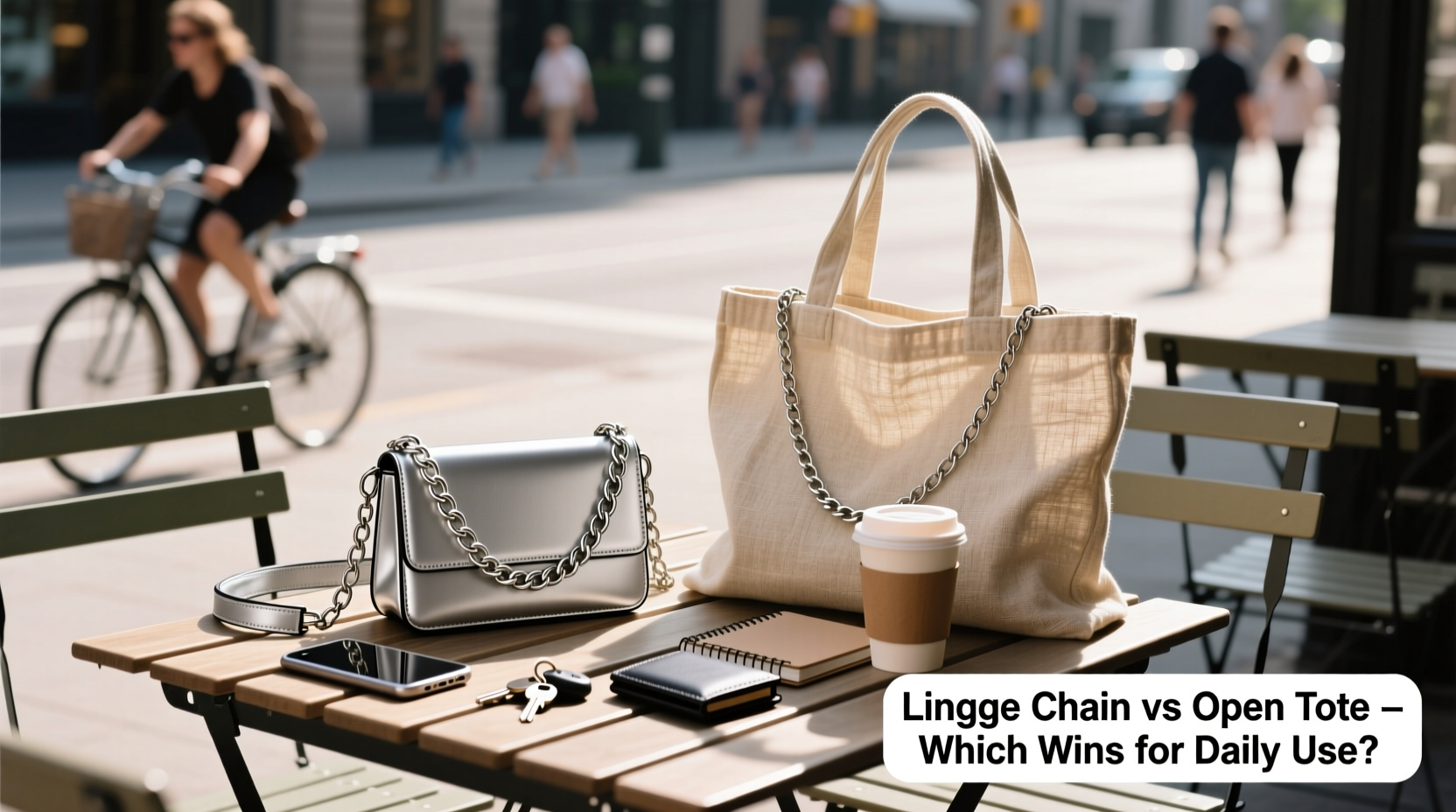
The Lingge Chain typically features a compact silhouette with a signature metal chain strap—often doubling as a crossbody or shoulder carry. It’s designed with clean lines, minimal hardware, and a focus on premium materials like textured leather or synthetic alternatives. Its aesthetic draws from minimalist luxury, making it ideal for those who prioritize polish over bulk.
In contrast, the Open Tote embraces utilitarian design. Most versions lack zippers or closures, favoring wide-mouth access and spacious interiors. Constructed from durable canvas, nylon, or reinforced leather, these totes are built to carry laptops, books, gym clothes, or groceries without strain. Handles are usually long enough for hand-carry or elbow drape, and some include detachable straps for versatility.
The fundamental difference lies in intent: the Lingge Chain is crafted for curated essentials and aesthetic cohesion, while the Open Tote exists to transport more, faster, with less fuss.
Capacity and Organization Compared
One of the most critical factors in everyday convenience is how much you can realistically carry—and how easily you can find things inside. The Open Tote excels here. With typical dimensions ranging from 13 to 16 inches wide and deep storage pockets (some even padded for laptops), it accommodates everything from a 15-inch MacBook to water bottles and folded jackets.
Lingge Chains, by comparison, are intentionally restrictive. Their interior space rarely exceeds 8–10 liters, often divided into two main compartments with no internal organization. This forces users to pare down to wallet, phone, keys, lipstick, and perhaps sunglasses. For many, this limitation is a feature, not a flaw—it promotes intentionality and reduces clutter.
| Feature | Lingge Chain | Open Tote |
|---|---|---|
| Average Capacity | 6–10 liters | 15–25 liters |
| Main Closure | Magnetic snap or flap | None (open-top) |
| Internal Pockets | Minimal (1–2 slip pockets) | Multiple (laptop sleeve, zip pocket, phone slot) |
| External Access | Limited | High (wide opening) |
| Best For | Evening outings, light commutes | Daily workloads, multitasking |
Comfort and Wearability Over Time
No bag is convenient if it causes discomfort after an hour of use. The Lingge Chain’s thin metal chain, while stylish, can dig into shoulders during prolonged wear—especially when loaded beyond its intended capacity. Some models offer leather-padded chains or dual straps to mitigate this, but weight distribution remains a challenge due to the small base and high center of gravity.
Open Totes, particularly those with wide, reinforced handles or optional shoulder straps, distribute weight more evenly. Carrying 10–15 pounds in a well-constructed tote feels manageable because the load rests against the body and spreads across both arms or one shoulder. However, constant hand-carrying can lead to grip fatigue, especially in larger formats.
“Ergonomics matter more than aesthetics when selecting a daily bag. A beautiful bag that hurts to carry defeats its purpose.” — Daniel Park, Product Designer at Urban Carry Co.
For urban commuters who walk or bike frequently, the Open Tote’s adaptability gives it an edge. It can be slung over a shoulder, tucked under an arm, or placed upright on public transit floors. The Lingge Chain, meanwhile, often requires one hand to keep it secure, limiting mobility.
Real-Life Scenario: A Day in the Life
Consider Sarah, a graphic designer working remotely three days a week and commuting to her studio the other two. On studio days, she needs her laptop, sketchbook, charger, headphones, lunch container, and reusable bottle. She also stops at the post office and grocery store on the way home.
With the Lingge Chain, Sarah would need a secondary bag or risk overloading the delicate frame. Even then, retrieving her laptop badge at building security becomes awkward—she must set the bag down, fumble through a narrow opening, and re-secure it. By evening, her shoulder aches from the chain’s pressure.
Switching to an Open Tote, she places items in designated pockets: laptop in the padded sleeve, wallet in the front zip compartment, umbrella tucked into the side mesh. Everything is visible and accessible. She swings it onto the subway seat beside her, lifts it effortlessly after work, and carries all her purchases without repacking. The experience is seamless.
This doesn’t mean the Lingge Chain fails—it shines on evenings out, client meetings where minimalism reads as confidence, or weekends when only essentials are needed. But for full-spectrum daily use, the Open Tote proves more adaptable.
Security and Environmental Factors
An open-top design raises valid concerns about security, especially in crowded spaces. Pickpocketing risks increase when contents are exposed and unzipped. The Lingge Chain, with its enclosed structure and secure closure, offers greater peace of mind in transit hubs or busy markets.
However, modern Open Totes address this with subtle innovations: magnetic snap gussets that partially close the top, RFID-blocking interior linings, and hidden zipper panels at the base. Some brands even integrate roll-top closures or fold-over flaps with buckle details, blending openness with protection.
Weather resistance is another consideration. Many Open Totes use water-resistant fabrics or come with rain covers, whereas Lingge Chains—often made of untreated leather or delicate textiles—are prone to staining and warping in rain. Without protective treatment, exposure can ruin the finish within minutes.
FAQ
Can the Lingge Chain hold a tablet or small laptop?
Most standard Lingge Chains can fit a slim tablet (like an iPad Air) but not a traditional laptop. Larger variants exist, but they compromise the bag’s proportions and balance. If digital devices are part of your daily carry, the Open Tote is the safer choice.
Are Open Totes professional enough for office environments?
Yes—especially structured versions made from polished leather or tailored technical fabric. Brands like Cuyana, Dagne Dover, and Bellroy offer sleek open totes that look refined in corporate settings while maintaining functionality.
Which bag lasts longer with daily use?
Durability depends on material and care. Open Totes made from ballistic nylon or waxed canvas often outlast leather-based Lingge Chains under heavy use. However, high-end Lingge models with robust stitching and quality hardware can endure years of moderate wear. Regular maintenance extends both.
Checklist: Choosing Your Everyday Bag
- Evaluate your daily carry: List every item you bring regularly.
- Assess commute type: Do you walk, drive, or use public transit?
- Test comfort: Wear sample bags loaded with equivalent weight for 30+ minutes.
- Consider weather patterns: Will you face rain, snow, or dust often?
- Check organizational needs: Do you need quick access or secure storage?
- Match to lifestyle rhythm: Frequent transitions favor totes; streamlined routines suit compact chains.
Final Verdict: Practicality Wins for Daily Use
While the Lingge Chain wins points for elegance and occasion-specific refinement, the Open Tote emerges as the more genuinely convenient option for everyday life. Its superior capacity, ease of access, ergonomic design, and adaptability across roles—from office to errands to travel—make it a reliable companion. It accommodates unpredictability, supports productivity, and reduces friction in daily logistics.
That said, owning both is not excessive. Think of them as tools for different jobs. Reserve the Lingge Chain for days when looking put-together matters most. Let the Open Tote handle the rest.




 浙公网安备
33010002000092号
浙公网安备
33010002000092号 浙B2-20120091-4
Comments
No comments yet. Why don't you start the discussion?