
When summer arrives with its sweltering heat and relentless humidity, maintaining a fresh, matte complexion becomes a daily battle—especially for those with oily skin. Makeup that looks flawless at 9 a.m. can begin to slide off by noon, leaving behind shine, separation, and unwanted streaks. At the heart of this struggle lies a critical choice: liquid or powder foundation? While both have loyal followings, their performance under high temperatures and excess sebum production varies significantly. Understanding the science behind each formula, how they interact with oily skin, and what real-world conditions favor one over the other can make all the difference in achieving long-lasting, breathable coverage during peak summer months.
The Science of Oily Skin in Summer
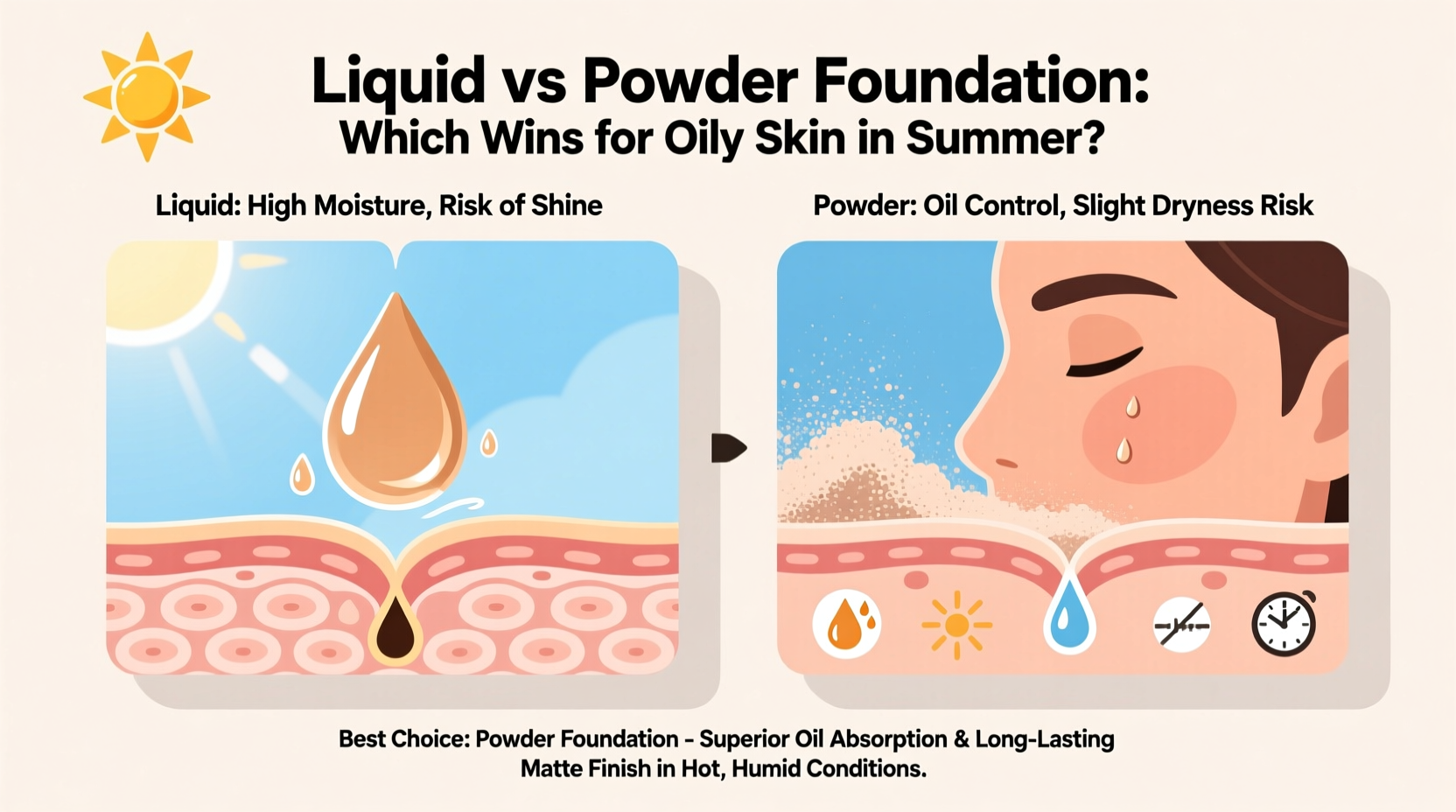
Oily skin is primarily driven by overactive sebaceous glands, which produce sebum—a natural oil that protects and moisturizes the skin. In summer, rising temperatures and increased humidity stimulate these glands even more, leading to excess oil production. This not only creates a shiny appearance but also disrupts makeup adherence. When sebum mixes with sweat and environmental pollutants, it forms an unstable surface layer that causes foundation to break down, settle into pores, or oxidize unevenly.
For oily skin types, the goal isn’t to eliminate oil completely—doing so can trigger rebound oiliness—but to manage it effectively while maintaining a balanced, healthy-looking complexion. The ideal foundation should absorb or control excess oil, resist melting, and provide breathable coverage without clogging pores. It must also work synergistically with skincare and setting techniques to extend wear time.
Liquid Foundation: Strengths and Limitations for Oily Skin
Liquid foundations dominate the market due to their versatility in finish (dewy, satin, matte), buildable coverage, and compatibility with various skin types. However, their performance on oily skin during summer depends heavily on formulation.
Modern matte liquid foundations are often designed with oil-controlling ingredients like silica, clay, or salicylic acid. These help absorb sebum and minimize shine throughout the day. Some even include time-release technology that activates as oil levels rise. Despite these advancements, traditional liquid formulas tend to emulsify when mixed with sweat and oil, leading to creasing and fading—particularly around the T-zone.
Another concern is longevity. While many claim 12-hour wear, few deliver full integrity beyond six hours in hot climates without touch-ups. Additionally, heavier liquid foundations can feel suffocating in extreme heat, potentially exacerbating breakouts if they contain comedogenic ingredients.
That said, liquid foundations excel in providing seamless, airbrushed coverage and blending effortlessly with moisturizers or primers. For those who prioritize a polished look over absolute oil resistance, a well-formulated matte liquid can still be a viable option—with the right prep and finishing steps.
Powder Foundation: Built for Oil Control?
Powder foundations, particularly mineral-based and pressed varieties, are inherently more compatible with oily skin. Their dry texture absorbs surface oil immediately upon application, creating a matte effect that resists shine longer than most liquids. Because they lack emollients and oils common in liquid bases, powders are less likely to slip or migrate when exposed to heat and sweat.
Many dermatologists recommend powder foundations for acne-prone and oily individuals precisely because of their non-comedogenic nature and lightweight feel. They allow the skin to breathe while offering adjustable coverage—from sheer to medium—and are easily layered throughout the day without buildup.
One of the biggest advantages of powder foundation in summer is convenience. Unlike liquid, which typically requires brushes or sponges and risks contamination in humid environments, powder compacts are travel-friendly and hygienic. Reapplication is quick and mess-free, making them ideal for midday touch-ups at work or outdoor events.
However, powder isn’t without drawbacks. On dehydrated or flaky areas, it can emphasize texture and appear cakey if not properly prepped. It may also lack the depth of pigment found in liquid formulas, making it less effective for concealing severe discoloration or scars. Still, for those whose primary concern is shine control and minimal maintenance, powder stands out as a practical summer solution.
“Powder foundations act like a blotting agent from the moment they’re applied—they don’t just mask oil, they actively manage it.” — Dr. Lena Torres, Board-Certified Dermatologist
Comparative Analysis: Liquid vs Powder in Real Summer Conditions
| Feature | Liquid Foundation | Powder Foundation |
|---|---|---|
| Oil Absorption | Moderate; relies on added ingredients | High; inherent drying effect |
| Longevity in Heat | 4–8 hours (with touch-ups) | 6–10+ hours (often reapplicable) |
| Coverage Flexibility | Buildable (light to full) | Light to medium (limited buildability) |
| Skin Feel in Humidity | Can feel heavy or sticky | Lightweight and breathable |
| Reapplication Ease | Requires blending tools | Quick press-and-go with sponge or brush |
| Suitability for Acne-Prone Skin | Varies; some formulas clog pores | Generally safer, especially mineral-based |
This comparison highlights why powder foundations often outperform liquids under intense summer conditions. While liquid offers superior coverage and finish refinement, powder wins in durability, comfort, and ease of maintenance—all crucial factors when battling oily skin.
Real-World Scenario: A Week in Bangkok
Consider Maria, a marketing executive based in Bangkok, where average summer temperatures hover around 35°C (95°F) with 80% humidity. She has combination-oily skin and wears makeup daily for client meetings. Last June, she tested two routines:
- Week 1: Used a popular full-coverage matte liquid foundation with silicone primer and setting spray.
- Week 2: Switched to a mineral-based pressed powder foundation with a hydrating gel primer and translucent setting powder.
In Week 1, her makeup looked impeccable after application but began to separate around her nose and chin by 11 a.m. By 3 p.m., she experienced noticeable shine and required blotting and touch-ups with a sponge, which caused pilling. In contrast, during Week 2, her skin remained matte until late afternoon. She reapplied powder twice using a puff—each time taking less than a minute—and reported feeling more confident and comfortable throughout the day. Notably, she also experienced fewer breakouts that week, which she attributes to reduced product load and better breathability.
This case illustrates that while liquid foundation can perform adequately with rigorous routine support, powder delivers greater resilience and simplicity in extreme conditions.
Step-by-Step Guide: Optimizing Foundation Choice for Summer
Follow this five-step process to determine and implement the best foundation strategy for oily skin in summer:
- Assess Your Skin’s Behavior in Heat – Monitor how quickly oil appears post-cleansing. If shine develops within 1–2 hours, you likely need maximum oil control.
- Switch to Lightweight Skincare – Use water-based moisturizers and oil-free sunscreens to avoid adding extra greasiness beneath makeup.
- Choose the Right Primer – Opt for mattifying primers containing dimethicone or clay. Apply only to oily zones (T-zone) to prevent dryness elsewhere.
- Select Foundation Based on Priority:
- If coverage is paramount → Choose a matte, long-wear liquid foundation labeled “oil-free” and “non-comedogenic.”
- If longevity and low maintenance matter most → Go for a mineral or silica-infused powder foundation.
- Set and Maintain – Regardless of base, always set with a translucent setting powder. Carry blotting papers and a compact powder for touch-ups. Avoid layering liquid over liquid unless necessary.
Hybrid Approach: Can You Use Both?
Yes—and many professionals do. A growing trend among makeup artists is the “baked” or “sandwich” method: applying liquid foundation only to areas needing coverage (like redness or blemishes), then dusting powder over the entire face to unify tone and absorb oil. This hybrid technique combines the best of both worlds: targeted correction and overall shine control.
Another variation involves using liquid foundation as a base but immediately setting it with a loose powder, then lightly buffing with a dense brush to create a smooth, second-skin effect. Known as the \"powder-over-liquid\" method, it enhances longevity without sacrificing coverage. However, caution is needed to avoid heaviness or caking, especially in dry patches.
Frequently Asked Questions
Can powder foundation cause my skin to dry out in summer?
Not necessarily. While powders have a drying effect on surface oil, they don’t dehydrate the skin internally. To prevent dryness, maintain a solid hydration routine with a lightweight serum and gel moisturizer before makeup. Avoid over-applying powder, and focus only on oily areas.
Is liquid foundation outdated for oily skin in summer?
No, but it must be the right kind. Advances in cosmetic chemistry have produced liquid foundations specifically engineered for oily skin, featuring temperature-responsive polymers and microsponges that trap oil. Look for terms like “long-wear,” “matte,” “oil-free,” and “transfer-resistant” on labels.
Do I still need setting spray if I use powder foundation?
Setting spray can enhance adhesion and reduce powderiness, but choose wisely. Matte or oil-control setting sprays are preferable. Avoid dewy or hydrating mists, as they may reactivate oil production and undo the matte finish.
Final Recommendations and Action Plan
For most people with oily skin facing summer conditions, powder foundation offers superior oil management, comfort, and ease of upkeep. It’s particularly effective for everyday wear, outdoor activities, and humid climates. That said, liquid foundation remains valuable when high coverage is essential—for events, photoshoots, or video calls—provided it’s paired with strategic prep and setting techniques.
The key isn’t choosing one over the other rigidly, but adapting your approach to your environment and needs. Rotate products seasonally. Keep a powder compact in your bag for emergency touch-ups, even if you start the day with liquid. Prioritize skincare harmony—no foundation will last if your base isn’t balanced.
“The best foundation for oily skin in summer isn’t just about the product—it’s about the system: cleanse, prime, apply, set, maintain.” — Jamal Reed, Celebrity Makeup Artist
Take Control of Your Summer Glow
Your skin doesn’t have to fall victim to summer shine. Whether you lean toward liquid for its flawless finish or powder for its oil-fighting power, informed choices and consistent habits make all the difference. Experiment with formulations, track your results, and refine your routine based on real-life performance—not just marketing claims. Share your experiences, ask questions, and empower others to beat the heat with confidence.




 浙公网安备
33010002000092号
浙公网安备
33010002000092号 浙B2-20120091-4
Comments
No comments yet. Why don't you start the discussion?