
For cat owners, a clean and accessible litter box is essential—but cleanliness isn’t the only factor that determines whether your cat will use it consistently. The location of the litter box plays a crucial role in your cat’s willingness to eliminate there. Poor placement can lead to inappropriate elimination, stress, and even long-term behavioral issues. Understanding feline instincts, preferences, and environmental needs helps ensure your cat feels safe, private, and confident when using their litter box.
Cats are creatures of habit with strong territorial instincts. They prefer predictable environments where they can control their surroundings. When a litter box is placed in a high-traffic area, near loud appliances, or too close to food and water, cats may avoid it altogether—even if it’s spotless. This article explores the science behind litter box behavior, outlines best practices for placement, and provides actionable strategies to optimize usage.
Understanding Feline Behavior and Elimination Preferences
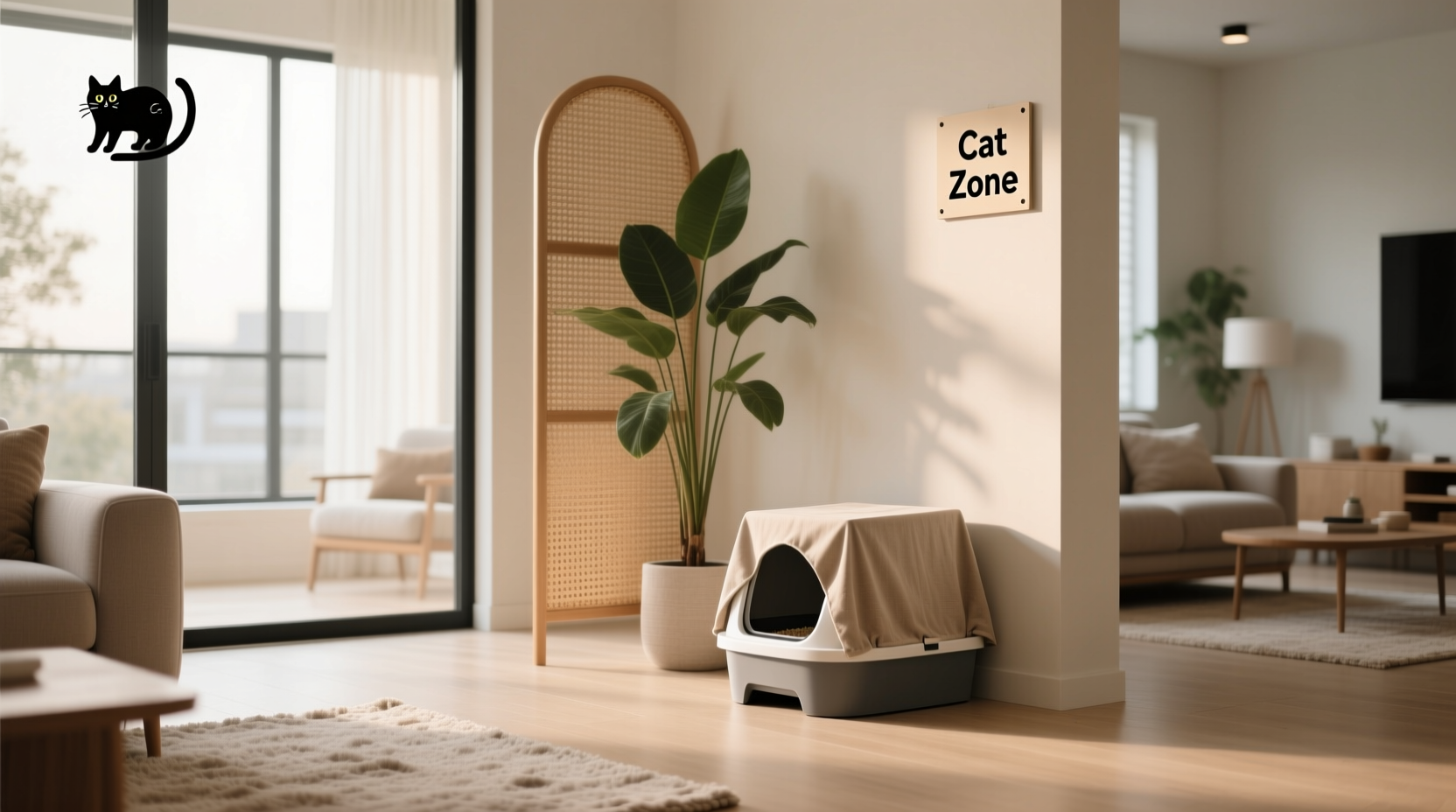
Cats evolved as solitary hunters who value privacy and safety. In the wild, they bury their waste to avoid attracting predators and signaling their presence to rivals. This instinct remains strong in domestic cats, which is why they typically cover their waste and seek out quiet, low-disturbance areas to eliminate.
When choosing a litter box location, consider how your cat perceives risk. A cat that feels exposed or startled during elimination may associate the litter box with discomfort or danger. Over time, this can lead to avoidance behaviors such as urinating on soft surfaces (like beds or laundry) or eliminating outside the box entirely.
Additionally, cats have sensitive hearing and smell. Locations near washing machines, dishwashers, or HVAC units can startle them mid-use. Similarly, placing a litter box next to food and water bowls violates a natural instinct: cats avoid eliminating near eating areas to prevent contamination.
Key Factors in Optimal Litter Box Placement
Choosing the right spot involves more than just finding an empty corner. Several environmental and behavioral factors influence a cat’s acceptance of a litter box location.
Privacy and Quiet
Cats need a sense of seclusion when using the litter box. High-traffic areas like hallways, living rooms, or entryways are generally unsuitable. Instead, select a quiet room or alcove where foot traffic is minimal and noise levels are low.
Accessibility
The box must be easy to reach at all times. Avoid placing it in areas requiring stairs for older or arthritic cats. Multi-level homes should have at least one litter box per floor. Kittens and senior cats especially benefit from ground-floor access.
Stability and Surface
Ensure the litter box sits on a non-slip surface. A box that shifts or slides during use can deter cats from returning. Place it on a rubber mat or textured flooring to prevent movement.
Avoiding Negative Associations
Never place a litter box near loud appliances (e.g., furnaces, dryers), as sudden noises can scare a cat mid-use. Also avoid locations associated with punishment or stress, such as basements used for scolding or storage rooms with infrequent human presence.
“Cats are highly sensitive to their environment. A poorly placed litter box—even if cleaned daily—can trigger avoidance due to perceived insecurity.” — Dr. Sarah Thompson, DVM, Feline Behavior Specialist
Do’s and Don’ts of Litter Box Placement
| Do’s | Don’ts |
|---|---|
| Place boxes in quiet, low-traffic rooms (e.g., spare bathroom, laundry room) | Put the box in a noisy utility room with frequent appliance use |
| Ensure multiple exits in larger rooms to prevent feeling trapped | Corner the box in a dead-end space with only one entry |
| Keep at least one box per floor in multi-level homes | Limit boxes to basement or attic areas |
| Separate litter boxes from food, water, and sleeping areas | Place the box beside food bowls or in the same enclosure |
| Use covered boxes in open areas only if the cat prefers them | Assume all cats like enclosed boxes—some feel trapped |
Step-by-Step Guide to Finding the Ideal Location
Follow this structured approach to determine the best possible placement for your cat’s litter box:
- Observe your cat’s current habits. Note where they spend most of their time, when they eliminate, and any signs of hesitation near existing boxes.
- Identify quiet, accessible rooms. Consider bathrooms, guest bedrooms, or hall closets with partial doors left open.
- Eliminate potential disturbances. Avoid areas near loud appliances, heavy foot traffic, or other pets’ feeding zones.
- Test one location at a time. Place the box temporarily and monitor usage over 3–5 days. Look for consistent use or signs of avoidance.
- Adjust based on behavior. If your cat hesitates, circles excessively, or eliminates nearby, relocate the box incrementally—no more than a few feet per day—to a quieter or more convenient spot.
- Add additional boxes if needed. Follow the “n+1” rule: one box per cat, plus one extra, especially in multi-cat households.
Real-Life Scenario: Solving a Multi-Cat Household Issue
In a home with three cats, the owner noticed one cat, Luna, consistently urinated on a hallway rug. All three litter boxes were located in the basement utility room—clean, but noisy due to the furnace and washer/dryer cycles. The room had only one entrance, making some cats feel vulnerable.
After consulting a behaviorist, the owner relocated two boxes: one to a quiet guest bathroom and another to a corner of the main-floor office. Each new location offered visual barriers (furniture or half-walls) and was away from appliances. Within a week, Luna stopped urinating on the rug and began using the bathroom box exclusively. The other cats continued using the basement box, showing no preference change.
This case highlights how subtle environmental stressors—noise, single-entry spaces, and distance from resting areas—can disproportionately affect individual cats, even in seemingly adequate setups.
Checklist for Optimal Litter Box Setup
- ☑ Place the box in a quiet, low-traffic area
- ☑ Ensure easy access for all cats, including seniors and kittens
- ☑ Keep at least one box per floor in multi-level homes
- ☑ Separate the litter box from food, water, and sleeping areas
- ☑ Provide multiple exit routes in the room (avoid corner traps)
- ☑ Avoid proximity to loud appliances or sudden noises
- ☑ Use non-slip mats under the box to prevent sliding
- ☑ Monitor usage and adjust placement if avoidance occurs
- ☑ Follow the “n+1” rule for multi-cat households
- ☑ Clean boxes daily and replace litter regularly
Frequently Asked Questions
Can I keep the litter box in the closet?
Yes, but only if the door remains open at all times and ventilation is sufficient. A closed closet creates confinement and odor buildup, which deters most cats. Ensure the box is easily accessible and the space doesn’t feel cramped.
Is it okay to place a litter box in the bedroom?
If the room is quiet and not heavily trafficked, yes. Many owners successfully place boxes in spare bedrooms or ensuite bathrooms. Just ensure the box is away from the bed and not directly under air vents. Regular cleaning is critical to maintain air quality.
Why does my cat scratch the wall after using the box?
This behavior may indicate the box is too close to a wall or corner, limiting movement. Cats naturally scratch after elimination to mark territory and stretch. Provide enough clearance around the box so your cat can turn around and scratch safely. Consider switching to a larger or lower-sided box if mobility is restricted.
Conclusion: Prioritize Comfort, Consistency, and Choice
Litter box placement is not a one-size-fits-all decision. What works for one cat may fail for another, especially in multi-cat homes. By respecting feline instincts—privacy, safety, and separation of resources—you create an environment where your cat feels secure and willing to use the litter box consistently.
The key is observation and adaptability. Pay attention to subtle cues: lingering near the box without entering, excessive digging, or eliminating nearby. These are signs that the current location isn’t meeting your cat’s needs. Small adjustments can yield dramatic improvements in behavior and hygiene.




 浙公网安备
33010002000092号
浙公网安备
33010002000092号 浙B2-20120091-4
Comments
No comments yet. Why don't you start the discussion?