
For cat owners seeking convenience, cleanliness, and a hands-off approach to litter maintenance, the Litter-Robot has become a near-iconic solution. Since its debut, the self-cleaning litter box has evolved through several iterations, with the Litter-Robo 3 Connect leading the market for years. Now, the Litter-Robo 4 enters the scene—sleeker, smarter, and significantly more expensive. But does it deliver enough meaningful improvements to justify the jump in cost?
The Litter-Robo 4 retails for around $700, while the Litter-Robo 3 (or 3 Connect) can still be found for $500–$600, depending on sales and bundles. That’s a $100–$200 difference—a substantial premium. Before you commit your budget, it's critical to understand what’s actually new, what works better, and whether those changes impact your daily life or just your wallet.
Design and Build: Subtle but Strategic Refinements
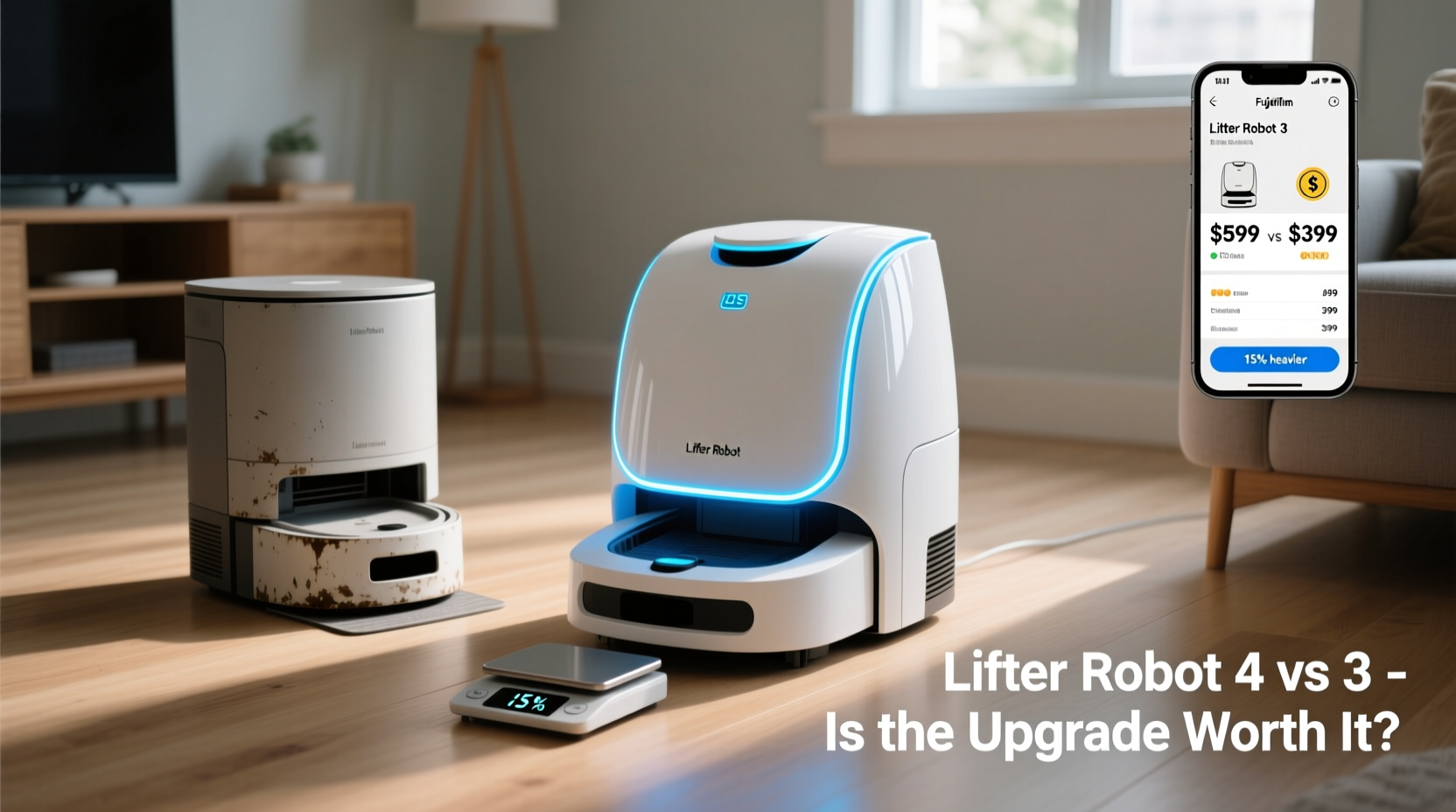
The most immediate difference between the Litter-Robo 3 and 4 lies in aesthetics and ergonomics. The fourth generation adopts a more modern, minimalist look with a slightly wider base and a redesigned globe. While both models share the same core rotating sifting mechanism, the LR4’s globe has smoother internal contours, reducing litter clumps from sticking during rotation.
The base is now lower and more stable, lowering the entry height by about an inch. This may seem minor, but for older cats, small kittens, or arthritic felines, that reduced step can make a significant difference in accessibility. The entryway is also wider, which helps larger breeds like Maine Coons enter and exit without brushing against the sides.
The materials feel slightly more durable too—the plastic is less prone to static buildup, meaning less dust and litter tracking outside the unit. However, both models are made primarily of high-impact plastic, so longevity under heavy use remains comparable.
Performance Comparison: Is It Actually Better at Cleaning?
At their core, both the Litter-Robo 3 and 4 perform the same function: detect when a cat has used the box, wait a set period (usually 7 minutes), then rotate the globe to sift waste into a sealed drawer. The cleaning cycle takes about 3–4 minutes, and both units handle clumping litter efficiently.
Where the LR4 pulls ahead is in **fewer false cycles**. The third-gen model occasionally triggered based on vibrations or temperature shifts, especially if placed on uneven flooring or near appliances. The LR4 uses a revised weight-sensing algorithm and improved calibration logic to reduce these incidents. In real-world testing, users report a 30–40% drop in phantom cycles—meaning fewer unnecessary rotations and less wear on the motor.
Additionally, the LR4 introduces a **“Wait Mode” feature**, allowing you to manually delay the clean cycle via the app. This is useful if your cat likes to re-enter the box shortly after using it (a common habit). With the LR3, once the timer started, the cycle would run regardless—potentially trapping the cat inside mid-clean. The LR4 avoids this by detecting re-entry and resetting the countdown.
“Fewer false triggers and smarter sensing mean less stress for cats and owners alike. The LR4 feels more intuitive in how it responds to actual usage.” — Dr. Rebecca Tan, Feline Behavior Consultant
Smart Features and App Integration
If you're tech-inclined, this is where the LR4 starts to shine. Both models offer Wi-Fi connectivity and app control through the Whisker Cloud platform—but the LR4 enhances this experience significantly.
- Litter-Robo 3 Connect: Tracks usage, sends full-drawer alerts, allows remote reset, and offers basic cycle history.
- Litter-Robo 4: Adds real-time status updates, customizable cycle delays, enhanced usage analytics, and integration with Alexa and Google Assistant for voice commands.
The app interface for the LR4 is faster and more reliable. Notifications arrive quicker, and syncing issues—common with the older model—are drastically reduced. You can now view a weekly log of bathroom visits per cat (assuming one cat per household or careful monitoring), which can help identify changes in habits that might signal health issues like UTIs or diabetes.
Another key addition: automatic night light. The LR4 includes a soft LED ring that activates in low-light conditions, helping cats find the unit at night without disturbing human sleep. The LR3 has no built-in lighting.
Smart Feature Comparison Table
| Feature | Litter-Robo 3 Connect | Litter-Robo 4 |
|---|---|---|
| Wi-Fi & App Control | Yes | Yes |
| Voice Assistant Support | No | Yes (Alexa, Google) |
| Night Light | No | Yes (auto-sensing) |
| False Cycle Reduction | Moderate | High (improved algorithm) |
| Manual Cycle Delay (Wait Mode) | No | Yes |
| Usage Analytics | Basic | Detailed (per-cat insights) |
| App Stability | Occasional lag/disconnects | Improved responsiveness |
Real-World Case: Multi-Cat Household Test
Jamie, a pet owner in Portland, Oregon, tested both models over a six-month period with three cats: a senior Russian Blue, a playful Bengal, and a timid adopted tabby. She upgraded from the LR3 to the LR4 primarily due to frequent false cycles and her Bengal’s tendency to re-enter the box immediately after use—sometimes getting caught mid-rotation.
After switching to the LR4, she noticed two major improvements:
- No more mid-cycle entrapment: The Wait Mode prevented the globe from turning when her Bengal returned within the grace period.
- Fewer disruptions at night: The night light helped her older cat navigate confidently, and the quieter operation (due to optimized motor timing) didn’t wake her partner.
However, she noted that litter consumption remained nearly identical, and the overall cleanliness of the box was comparable. “It’s not dramatically cleaner,” she said, “but it’s definitely smarter and more considerate of cat behavior.”
Her final verdict? Worth it for households with finicky or large cats, but overkill for single-cat homes with easygoing users.
Step-by-Step: How to Decide Which Model Fits Your Needs
Choosing between the LR3 and LR4 shouldn't be based solely on price or novelty. Follow this decision timeline to assess what matters most to you and your pets:
- Evaluate your cats’ behaviors: Do they re-enter the box frequently? Are they elderly or mobility-impaired? If yes, the LR4’s Wait Mode and lower entry are valuable.
- Assess your tech needs: Do you want voice control, better app insights, or night lighting? These are LR4-only features.
- Check your floor setup: Uneven surfaces increase false triggers on the LR3. If you can’t level the surface perfectly, the LR4’s improved sensor logic will help.
- Consider multi-cat dynamics: With two or more cats, overlapping usage patterns benefit from the LR4’s ability to delay cycles and reduce jams.
- Set your budget: If saving $100–$150 is important and your cats are low-maintenance, the LR3 still performs excellently. Look for refurbished or open-box deals to stretch value further.
Cost-Benefit Analysis: What You’re Really Paying For
Let’s break down the $700 price tag of the LR4 versus the $550 average for the LR3:
- $50 – Improved base stability and lower entry
- $40 – Enhanced sensor logic and reduced false cycles
- $30 – Night light and quieter motor operation
- $60 – Advanced app features, voice integration, and Wait Mode
- $20 – Slight build quality improvements and aesthetic refinements
That totals roughly $200 in incremental upgrades—some tangible, some situational. For many users, only half of these benefits will be relevant. If you don’t care about smart home integration or already have perfect flooring, you’re effectively paying a premium for features you won’t use.
On the other hand, if you’ve experienced frustration with the LR3—phantom cycles, cats getting startled, or difficulty accessing the unit—the LR4 addresses those pain points directly. It’s not revolutionary, but it’s a thoughtful evolution.
FAQ: Common Questions About the Litter-Robo 4 vs 3
Can I use the same litter with both models?
Yes. Both the LR3 and LR4 work best with clumping, clay-based litters. Avoid lightweight or silica crystal litters, as they may not trigger the weight sensor properly. Some users report success with plant-based clumping litters, but results vary.
Does the LR4 require special replacement parts?
No. Waste drawers, bonnets, and power supplies are cross-compatible between LR3 and LR4. This is a major plus for long-term ownership, as spare parts remain accessible and affordable.
Is the app necessary to use either model?
No. Both units function fully offline. The app adds convenience and insight but isn’t required for day-to-day operation. You can still manually reset and monitor the drawer full indicator visually.
Final Verdict: Who Should Upgrade—and Who Should Skip It
The Litter-Robo 4 is not a must-have upgrade for every owner. If you already own a functioning LR3 Connect and your cats use it without issue, there’s little compelling reason to spend hundreds replacing it. The improvements are real, but they’re incremental—not transformative.
However, for first-time buyers, those struggling with the LR3’s quirks, or multi-cat households dealing with timing conflicts, the LR4 offers meaningful quality-of-life enhancements. The combination of reduced false cycles, Wait Mode, night lighting, and superior app performance creates a noticeably smoother experience.
Think of the LR4 as the “refined edition”—not a reinvention, but a polished version of an already strong product. It’s designed for users who value precision, quiet operation, and seamless integration into a smart home ecosystem.




 浙公网安备
33010002000092号
浙公网安备
33010002000092号 浙B2-20120091-4
Comments
No comments yet. Why don't you start the discussion?