
When shopping for a portable Bluetooth speaker, two battery-related features often dominate the conversation: long playtime and quick charge capability. Manufacturers highlight these specs heavily—some boast 20+ hours of playback, while others promise a full charge in under 30 minutes. But which one actually delivers more value in daily use? The answer isn’t universal. It depends on how, when, and where you use your speaker.
Understanding the practical implications of each feature helps you make a smarter purchase—one that aligns with your habits rather than marketing claims. Let’s break down both options, compare real-world scenarios, and determine which feature truly matters based on lifestyle needs.
Battery Longevity: Why Playtime Still Matters
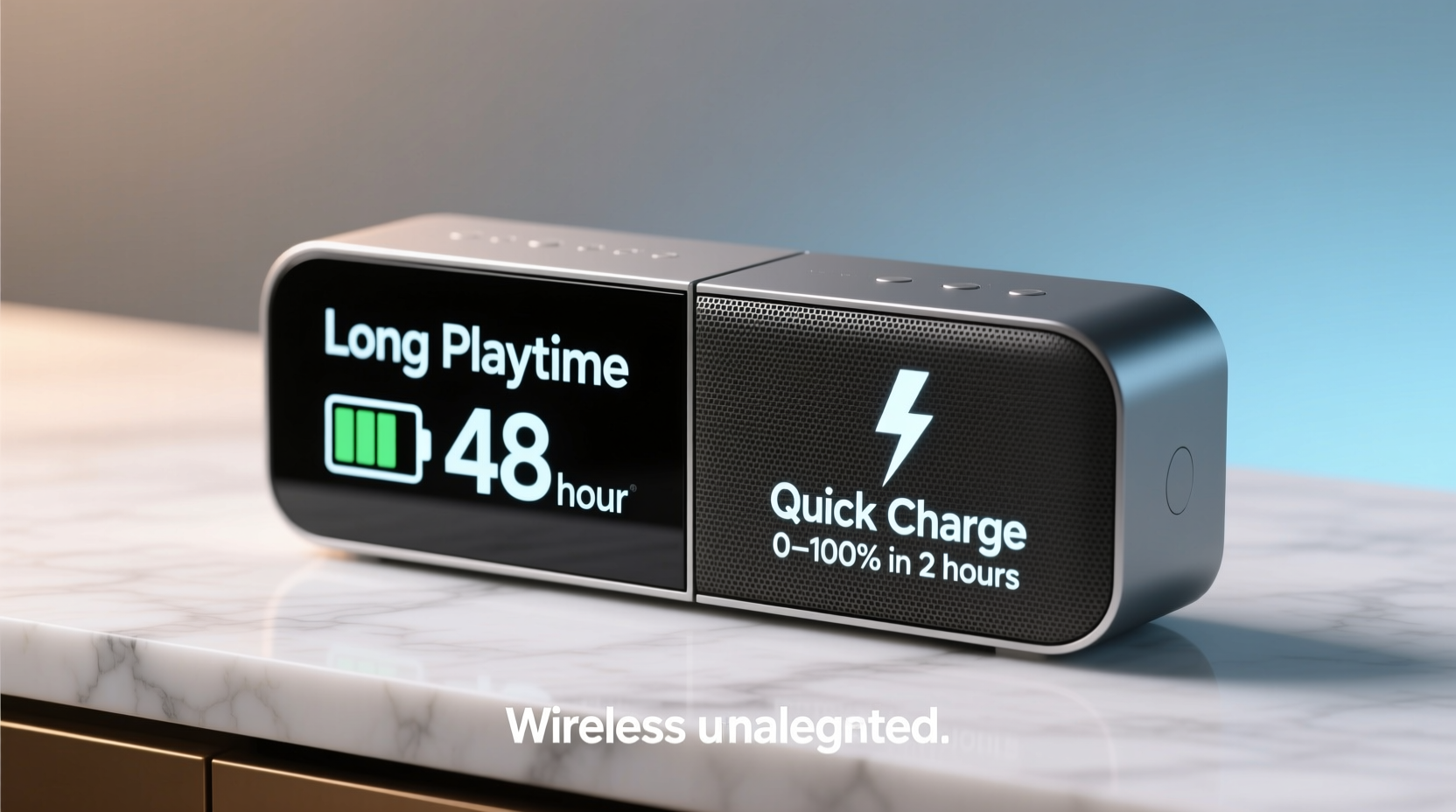
A speaker with extended playtime—say, 15 to 30 hours on a single charge—offers undeniable peace of mind. Whether you're hosting an all-day backyard party, camping off-grid, or traveling without reliable power access, long battery life ensures uninterrupted music without scrambling for outlets or power banks.
High-capacity batteries are especially valuable in outdoor settings. For example, beach trips or hiking excursions rarely offer charging opportunities. In such cases, a speaker that lasts from morning until sunset—or longer—is far more functional than one requiring midday recharging.
However, it's important to note that advertised playtimes are often based on moderate volume levels and may not reflect high-volume use. Realistically, cranking up the bass and volume can cut claimed battery life by as much as 40%. Always check independent reviews for actual performance data.
Quick Charge: Convenience for On-the-Go Users
Fast charging has become a selling point across electronics—and for good reason. A speaker that gains several hours of playback from a 10- to 15-minute charge offers flexibility for users with irregular schedules. Imagine forgetting to charge your speaker before a picnic but plugging it in while packing snacks and gaining enough juice for three hours of music.
Some models support USB-C fast charging, delivering 50% battery in 20 minutes. This feature is ideal for urban dwellers, commuters, or those who use their speaker sporadically. Instead of planning around charging cycles, they can top up during short breaks—like coffee prep or a bathroom visit—and get usable playback time.
“Fast charging transforms user behavior—it shifts from dependency on full charges to opportunistic top-ups.” — David Lin, Audio Product Strategist at SoundEdge Labs
Still, quick charge only works if you have consistent access to power. Without nearby outlets or portable chargers, even the fastest charging tech becomes irrelevant. It’s a convenience feature, not a necessity for everyone.
Comparing Real-World Usage Scenarios
To understand which feature serves you better, consider your typical usage patterns. Below is a comparison table outlining different lifestyles and the preferred battery feature:
| Lifestyle | Primary Need | Recommended Feature | Rationale |
|---|---|---|---|
| Campers & Hikers | Extended unplugged use | Long Playtime | No charging access; multi-day trips require sustained battery |
| Urban Commuters | Short bursts of use | Quick Charge | Can charge during work breaks; need reliability on demand |
| Party Hosts | All-day playback | Long Playtime | Events last 8–12 hours; frequent interruptions disrupt charging |
| Students | Flexible, moderate use | Both (Balanced) | Dorm rooms allow charging; study sessions vary in length |
| Frequent Travelers | Adaptability | Quick Charge + Power Bank Compatibility | Airports and hotels offer charging; portability and speed matter |
Mini Case Study: Sarah’s Weekend Dilemma
Sarah, a freelance photographer, planned a weekend shoot in a remote forest. She brought her favorite compact speaker, drawn by its sleek design and 30-minute quick charge claim. The manufacturer said it delivered 3 hours of playback after a half-hour charge. Excited, she assumed this would be enough.
On Saturday morning, she played ambient music during setup. By noon, the battery died. No outlets were nearby, and her power bank was already drained from camera use. She spent the rest of the day in silence, wishing she’d chosen a model with 12+ hours of continuous play instead of relying on fast charging.
The lesson? Quick charge is only helpful when power is accessible. In off-grid situations, raw battery capacity wins every time.
Step-by-Step Guide: Choosing Based on Your Lifestyle
Follow this simple decision-making process to identify which battery feature suits you best:
- Assess your typical usage duration: Do you listen for 1–2 hours daily, or do you host events lasting 8+ hours?
- Evaluate charging accessibility: Are you near outlets often, or do you go hours without access?
- Consider your environment: Urban settings favor quick charge; rural or outdoor areas favor long playtime.
- Check real-world reviews: Look beyond marketing claims. See what users report about actual battery performance.
- Prioritize balance if uncertain: Some models offer both decent playtime (10–15 hrs) and 30-minute fast charging—ideal for mixed use.
Checklist: What to Look for Before Buying
- ✅ Minimum 10 hours real-world playtime (not just lab-tested numbers)
- ✅ Fast charge capability (e.g., 20 mins for 4+ hours of playback)
- ✅ USB-C or standard charging port compatibility
- ✅ Battery indicator (so you know remaining charge)
- ✅ Water and dust resistance if used outdoors
- ✅ Compatibility with external power banks
FAQ
Is quick charge worth it if I already have a long-lasting speaker?
Yes, if you occasionally forget to charge it. Even with strong battery life, quick charge acts as a safety net—giving you emergency playback when needed. However, if your speaker consistently lasts through your use cases, it’s a nice-to-have, not essential.
Can fast charging damage the speaker’s battery over time?
Potentially. Repeated rapid charging generates heat, which can degrade lithium-ion batteries faster. High-quality models include thermal management systems to mitigate this, but cheaper units may lack such protections. For longevity, avoid daily reliance on fast charging when a full overnight charge suffices.
Do any speakers offer both long playtime and quick charge?
Yes, many mid-to-high-end models now combine both. Brands like JBL, Ultimate Ears, and Sony offer speakers with 15+ hours of play and 15–20 minute quick charge capabilities. These represent the best of both worlds but come at a higher price point.
Conclusion
The debate between long playtime and quick charge isn’t about which spec is technically superior—it’s about alignment with your lifestyle. If you value uninterrupted playback in remote locations, long battery life is non-negotiable. If you live in a connected environment and use your speaker in short bursts, quick charge offers unmatched convenience.
The smartest buyers don’t chase headlines. They assess their habits, anticipate usage patterns, and choose technology that fits seamlessly into their lives. Whether you prioritize endurance or agility, understanding your real needs turns a simple speaker into a reliable companion.




 浙公网安备
33010002000092号
浙公网安备
33010002000092号 浙B2-20120091-4
Comments
No comments yet. Why don't you start the discussion?