
Walk into any closet, streetwear shop, or casual wardrobe, and you’ll find two dominant players: the long sleeve graphic tee and its minimalist counterpart, the plain tee. One shouts personality with bold prints and slogans; the other whispers sophistication through clean lines and neutral tones. But beyond aesthetics, what actually separates them? Is the graphic tee’s design a meaningful expression of identity, or just fleeting fashion hype? And can a plain tee truly compete in terms of style impact? The answer isn’t as simple as “it depends.” It lies in understanding function, longevity, personal branding, and how clothing operates in both social and practical contexts.
The Role of Design in Personal Expression
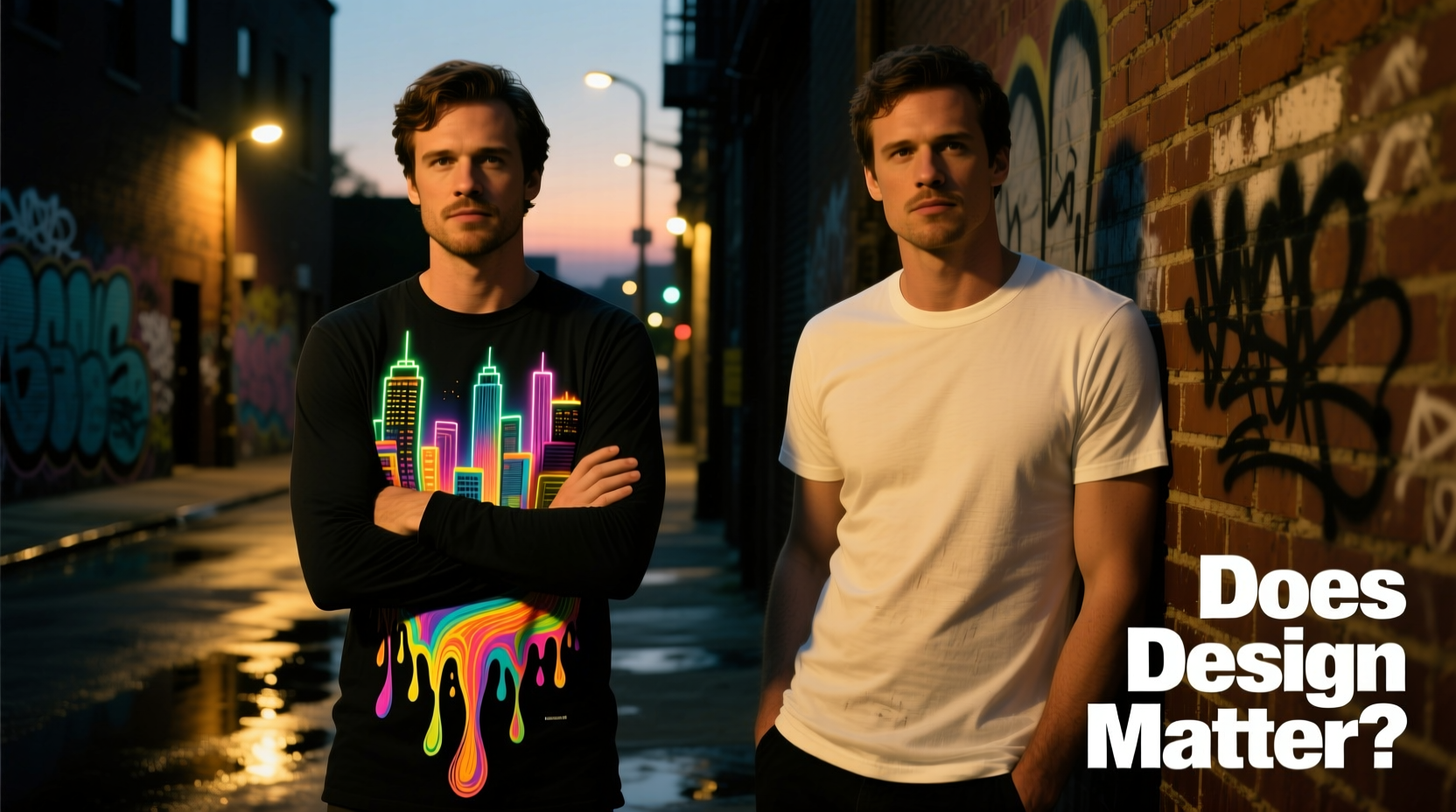
Clothing has always been a medium for self-expression. From tribal markings to punk patches, humans use garments to communicate beliefs, affiliations, and moods. The long sleeve graphic tee amplifies this by turning the torso into a canvas. Band logos, abstract art, political statements, or vintage advertisements — each design tells a story, whether intentional or subconscious.
However, not all designs age well. Trends shift, humor becomes dated, and cultural references lose relevance. A graphic that felt edgy five years ago might now seem cringeworthy. This impermanence raises a critical question: are you investing in a statement piece, or just temporary flair?
“Graphic tees are cultural snapshots. They capture moments, movements, and moods — but like photographs, their emotional resonance can fade over time.” — Marcus Tran, Fashion Anthropologist & Curator at the Urban Style Archive
In contrast, the plain long sleeve tee operates on subtlety. It doesn’t announce anything overtly. Instead, it relies on fit, fabric quality, and context. Its strength lies in neutrality — it adapts rather than declares. This makes it inherently more timeless, though potentially less memorable in a crowd.
Functionality and Wardrobe Versatility
Versatility is where the plain tee often dominates. Because it lacks visual noise, it layers seamlessly under jackets, blazers, and cardigans. It pairs equally well with tailored trousers or distressed jeans. In professional-casual environments, a well-fitted plain long sleeve tee in black, gray, or navy can pass as smart attire when styled correctly.
Graphic tees, meanwhile, demand attention. That same band logo that looks cool with ripped jeans may clash under a wool coat in a boardroom-adjacent coffee shop. Their visual weight limits pairing options and often confines them to casual or thematic settings.
Comparative Breakdown: Graphic vs Plain Long Sleeve Tees
| Feature | Graphic Tee | Plain Tee |
|---|---|---|
| Style Impact | High — instantly noticeable | Moderate — relies on cut and context |
| Wardrobe Flexibility | Low to moderate | High — works in most casual to semi-formal settings |
| Lifespan (Style Relevance) | 1–3 years (trend-dependent) | 5+ years (timeless appeal) |
| Layering Potential | Limited — graphics may peek awkwardly | Excellent — ideal base layer |
| Cost Efficiency (Per Wear) | Lower — worn less frequently over time | Higher — worn consistently across seasons |
The Hype Factor: Marketing, Scarcity, and Social Proof
Let’s address the elephant in the room: hype. Streetwear brands have mastered the art of turning graphic tees into collectible items. Limited drops, celebrity endorsements, and influencer unboxings inflate perceived value. A $70 black tee with a small embroidered logo sells out in minutes, not because of utility, but because of narrative.
This phenomenon disproportionately benefits graphic tees. Plain tees don’t generate the same buzz. You won’t see someone livestreaming the “unboxing” of a basic heather gray long sleeve. Yet, ironically, that same unassuming tee will likely be worn twice as often.
Hype creates short-term desirability but doesn’t guarantee long-term usefulness. A graphic tee from a viral brand might dominate Instagram feeds today, but if it doesn’t align with your personal aesthetic beyond the moment, it ends up folded at the back of the drawer.
Real Example: The Festival Tee Graveyard
Consider Alex, a 28-year-old designer who collects concert and festival long sleeve graphic tees. He owns seven from major events over the past five years. While each holds sentimental value, only two are still regularly worn. The others feel too loud for daily wear, too niche for new social circles, or simply outdated in design. Meanwhile, his three plain black and charcoal long sleeve tees from sustainable basics brands rotate weekly — under denim jackets, with chinos, even under knit vests for winter brunches.
The lesson? Emotional connection matters, but so does practical integration. Sentiment shouldn’t override functionality in a functional wardrobe.
Building a Balanced Wardrobe: A Step-by-Step Approach
Instead of choosing sides, the most effective strategy is balance. Here’s how to build a long sleeve tee collection that serves both personality and practicality:
- Assess Your Lifestyle: How often do you attend casual events vs. semi-formal gatherings? If 70% of your outfits lean toward relaxed settings, graphic tees have more room to shine.
- Start with Neutrals: Build a foundation of 2–3 high-quality plain long sleeve tees in black, gray, and white. Prioritize fabric (e.g., 100% organic cotton, cotton-blend with stretch) and fit (slim but not tight).
- Select Graphics Intentionally: Choose designs that reflect enduring interests — a favorite artist, a cause you support, a timeless quote — not just what’s trending.
- Limit Quantity: Stick to 1–3 graphic tees per season. Rotate them in and out to avoid visual fatigue.
- Evaluate Annually: Once a year, review your tees. Ask: “Have I worn this in the last six months?” If not, consider donating or repurposing.
Checklist: Choosing the Right Long Sleeve Tee
- ✅ Does the fit complement my body type?
- ✅ Is the fabric breathable and durable?
- ✅ Will this still feel relevant in 2 years?
- ✅ Can I layer this easily?
- ✅ Does the color work with at least 3 other items in my wardrobe?
- ✅ Am I buying this for style, hype, or actual use?
Frequently Asked Questions
Can a plain long sleeve tee be stylish?
Absolutely. Style isn’t solely about decoration. A well-fitted plain tee in a rich color like burgundy, olive, or deep navy exudes quiet confidence. Paired with the right accessories — a minimalist chain, quality watch, or structured jacket — it becomes a signature look rather than an afterthought.
Are graphic tees worth the price if they go out of style quickly?
Only if you value them beyond fashion. If a graphic tee commemorates a life event, supports a cause you believe in, or represents genuine artistic appreciation, then yes — it’s worth it, even as a one-season piece. But if you’re paying premium prices purely for clout, reconsider. Hype fades; cost-per-wear should guide investment decisions.
How do I stop my graphic tee from cracking or fading?
Wash inside out in cold water, avoid direct dryer heat, and steer clear of bleach. Screen-printed graphics last longer than plastisol if cared for properly. Also, limit sun exposure during drying — UV rays accelerate ink degradation.
Conclusion: Design Matters — But So Does Purpose
The debate between long sleeve graphic tees and plain tees isn’t about which is better, but which serves you better. Design does matter — it communicates, inspires, and connects. But it shouldn’t overshadow durability, adaptability, and personal authenticity. Hype may sell millions of limited-edition tees, but it won’t make them wearable every day.
A truly functional wardrobe honors both expression and efficiency. Keep the graphic tees that mean something. Invest in plain tees that perform. Let your choices reflect intention, not impulse. When you open your drawer, you shouldn’t see clutter — you should see clarity.




 浙公网安备
33010002000092号
浙公网安备
33010002000092号 浙B2-20120091-4
Comments
No comments yet. Why don't you start the discussion?