
When introducing children to traditional Chinese culture through clothing, hanfu stands out as both elegant and meaningful. However, comfort during daily activities—especially play—is just as important as cultural authenticity. Parents often face a dilemma: should they choose long-sleeved, floor-length hanfu robes or opt for shorter, more practical versions? The answer depends on age, activity level, fabric quality, and design details. Understanding how each style impacts movement, safety, and ease of wear can help caregivers make informed choices that balance tradition with childhood freedom.
Mobility and Range of Motion: How Length Affects Play
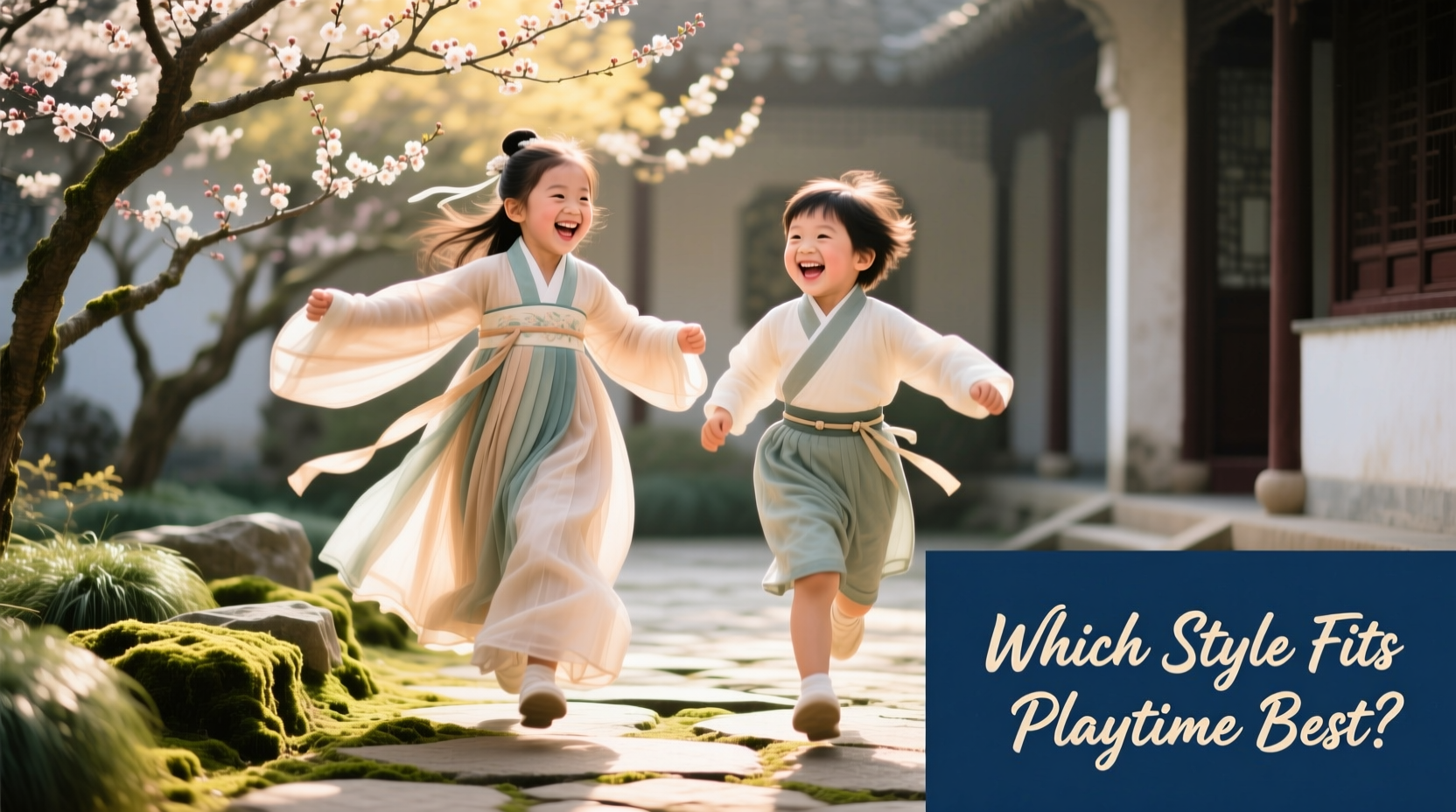
Children are naturally energetic. Whether running across a playground, climbing on furniture, or engaging in group games, unrestricted movement is essential. Long hanfu, typically extending past the ankles, can restrict motion significantly. The trailing hem often requires constant adjustment, increasing the risk of tripping. In contrast, short hanfu—ending at mid-calf or knee-level—allows greater leg extension and faster transitions between sitting, standing, and jumping.
Sleeve length also plays a crucial role. Traditional long sleeves (often 30–50 cm beyond the fingertips) may flap during motion, obstruct vision, or get caught on objects. Shorter sleeves or slightly tapered designs reduce interference while preserving the aesthetic silhouette of classical attire.
Safety Considerations by Age Group
Safety should never be compromised for style. Younger children, especially those under six, lack full coordination and spatial awareness. Long garments increase fall hazards, particularly on stairs or uneven surfaces. In school settings or cultural festivals where multiple children gather, tangled hems can lead to chain falls or collisions.
Older children (ages 7–12) may handle longer styles better, especially if trained in graceful walking techniques or participating in performances rather than free play. Even then, modified long hanfu with raised hems or detachable overskirts offer safer alternatives.
“Clothing should enhance a child’s experience of culture, not hinder their natural development. For daily wear or play, simplicity and safety must come first.” — Dr. Lin Mei, Cultural Education Specialist, Beijing Institute of Early Childhood Development
Comfort Comparison: Fabric, Fit, and Climate
The material used in hanfu greatly influences comfort regardless of length. Lightweight linen, cotton, and modern moisture-wicking blends are ideal for active wear. Heavy silk or brocade fabrics, common in ceremonial long hanfu, are less suitable for physical activity due to weight and heat retention.
Short hanfu generally uses less fabric, making it lighter and easier to move in. It also promotes better airflow, reducing sweat buildup—a key factor in warmer climates or indoor environments without climate control.
Fitting accuracy matters too. Ill-fitting long robes may bunch at the shoulders or drag excessively, requiring constant pulling up. Shorter cuts are easier to tailor proportionally to a child’s body, ensuring sleeves don’t cover hands and hems stay clear of feet.
Key Comfort Factors Compared
| Factor | Long Hanfu | Short Hanfu |
|---|---|---|
| Mobility | Limited; high tripping risk | High; allows running and jumping |
| Heat Regulation | Poor; traps warmth | Better; improved airflow |
| Fabric Use | High; heavier garment | Lower; lighter construction |
| Wash & Care Frequency | Less frequent but more labor-intensive | Easier to wash and dry quickly |
| Suitability for Outdoor Play | Low | High |
Real-Life Scenario: The School Cultural Festival
A primary school in Hangzhou organized an annual Spring Culture Day, encouraging students to wear hanfu. Teachers observed that younger children dressed in full-length robes struggled during outdoor games. One kindergartener tripped over her hem while dancing, another rolled up his sleeves repeatedly because they covered his hands. In contrast, children wearing short-style hanfu participated fully—climbing, drawing, and playing tag without interruption.
After feedback from parents and staff, the school revised its guidelines: for active events, short hanfu became the recommended option. Full-length styles were reserved for stage performances or photo sessions where controlled movement was expected. This change improved safety and inclusivity, allowing all children to enjoy cultural expression without restriction.
Step-by-Step Guide: Choosing the Right Hanfu for Active Kids
- Assess the child’s age and activity level. Toddlers and energetic elementary students benefit most from short styles.
- Determine the occasion. Is it for play, performance, or display? Choose accordingly.
- Select breathable, durable fabrics. Cotton, ramie, or lightweight polyester blends work well for daily wear.
- Check sleeve and hem length. Sleeves should end just past the wrist; hems should clear the ground by at least 5 cm.
- Look for functional design features. Elastic cuffs, adjustable belts, and reinforced seams improve usability.
- Involve the child in selection. Let them try on options and express preferences—comfort includes emotional confidence.
- Test mobility before finalizing. Have the child walk, squat, and raise arms to ensure no restrictions.
Checklist: What to Look for in Kid-Friendly Hanfu
- ✔ Hem does not drag on the floor
- ✔ Sleeves allow full hand use
- ✔ Made from soft, breathable fabric
- ✔ Easy-to-fasten closures (buttons, ties, or snaps)
- ✔ Reinforced stress points (shoulders, seams)
- ✔ Machine-washable or easy to hand-wash
- ✔ Non-toxic dyes and safe trims
- ✔ Gender-neutral or inclusive styling options
FAQ
Can long hanfu ever be safe for kids to play in?
Only under strict supervision and in controlled environments. Modified versions with elevated hems, snap-on trains, or foldable skirts can reduce risks. However, for unstructured play, long hanfu remains impractical and potentially hazardous.
Are short hanfu still culturally authentic?
Yes. Historical records show various lengths of hanfu worn by children and laborers. Simpler, shorter forms were common for everyday tasks. Modern adaptations maintain cultural essence while prioritizing function.
How do I explain the choice to family members who prefer traditional styles?
Frame it as honoring culture responsibly. Emphasize that protecting a child’s safety and comfort reflects deeper respect than rigid adherence to form. Share examples of schools and museums adopting similar practices for practicality.
Conclusion: Prioritizing Joy Over Tradition Alone
Cultural clothing should invite connection, not constraint. While long hanfu holds symbolic beauty, short hanfu offers real-world advantages for children engaged in dynamic, physical exploration. By choosing practical designs, parents and educators support both heritage appreciation and healthy development. Comfortable children are confident children—and confident children become passionate stewards of tradition.




 浙公网安备
33010002000092号
浙公网安备
33010002000092号 浙B2-20120091-4
Comments
No comments yet. Why don't you start the discussion?