
For commuters navigating the Phoenix metropolitan area, Loop 101 is more than just a freeway—it’s a lifeline connecting major employment centers, residential communities, and key transportation hubs. However, frequent closures and unexpected delays can disrupt daily routines, increase travel times, and create ripple effects across regional mobility. Understanding the causes behind these disruptions—and knowing where to find accurate, real-time updates—can make a significant difference in how effectively drivers adapt to changing conditions.
Understanding Loop 101: A Critical Arterial Route
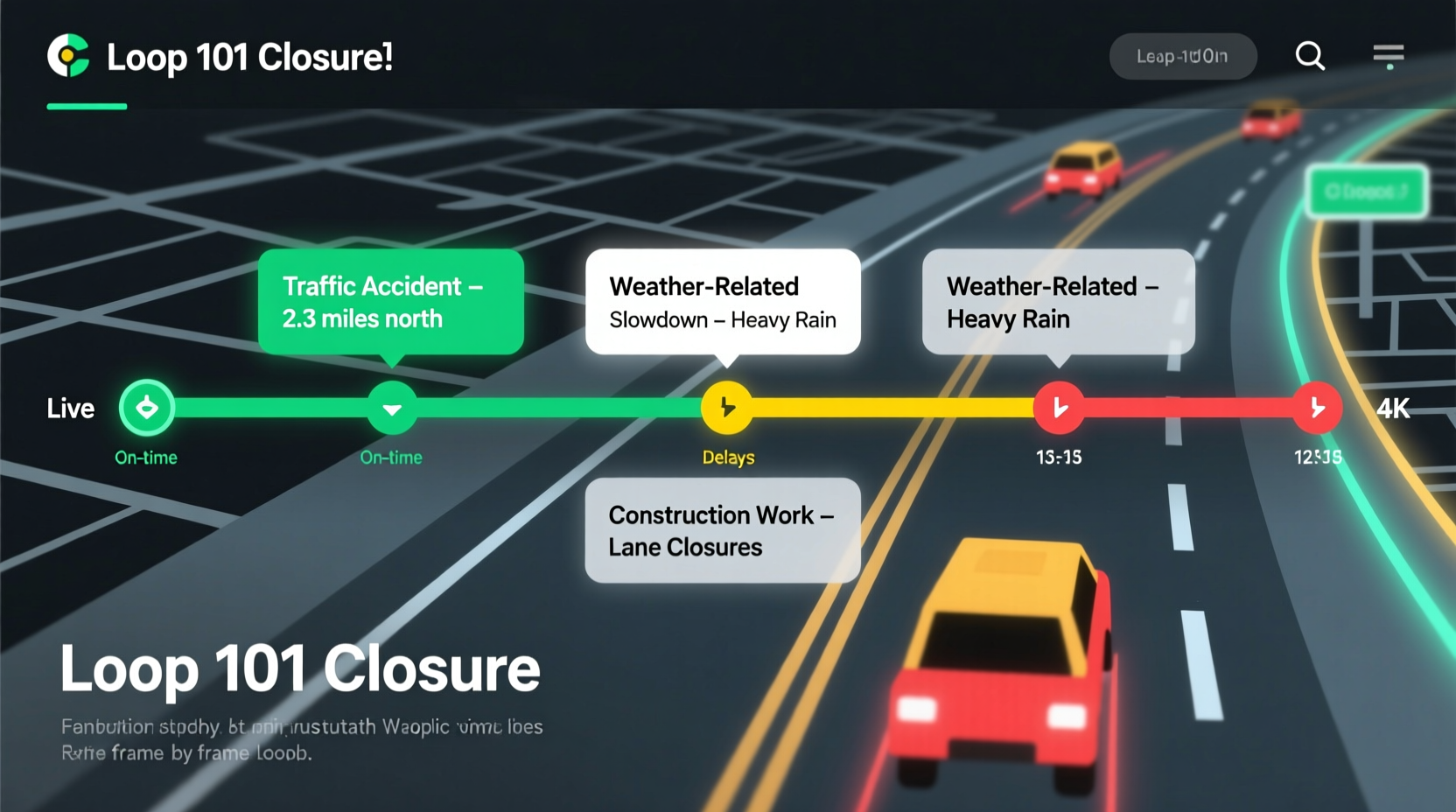
Officially known as the Agua Fria Freeway in the west and the Price Freeway in the east, Loop 101 spans over 60 miles around the Phoenix metro. It serves as a primary bypass for I-17 and US 60, reducing congestion through high-occupancy vehicle (HOV) lanes, ramp metering, and intelligent transportation systems. Despite its modern infrastructure, Loop 101 remains vulnerable to bottlenecks due to high traffic volume, especially during peak hours between 6–9 AM and 4–7 PM.
The Arizona Department of Transportation (ADOT) and the Maricopa Association of Governments (MAG) continuously monitor traffic flow using cameras, sensors, and incident response teams. Still, unplanned events such as accidents, construction, or extreme weather often lead to sudden lane closures and extended delays.
Common Reasons for Loop 101 Closures and Delays
While some closures are scheduled and communicated in advance, many occur without warning. The following factors are among the most frequent contributors to disruption on Loop 101:
- Traffic Accidents: Rear-end collisions, multi-vehicle pileups, and rollovers frequently cause full or partial lane closures, particularly near interchanges like Scottsdale Road, 51st Avenue, or Dobson Road.
- Road Construction: Ongoing improvement projects—including lane widening, bridge repairs, and sound wall installations—require overnight or weekend closures that sometimes extend beyond planned timelines.
- Weather Conditions: Monsoon rains in summer can trigger flash flooding, especially in low-lying areas near the Salt River. Standing water and reduced visibility often prompt ADOT to close sections temporarily.
- Emergency Incidents: Hazardous material spills, disabled vehicles blocking lanes, or law enforcement operations (e.g., suspect pursuits) result in immediate shutdowns for public safety.
- Maintenance Work: Routine activities like pothole repair, striping, and signal upgrades may require short-term lane restrictions during off-peak hours.
“Even minor incidents can cascade into major delays on Loop 101 due to limited alternate routes and high dependency on this corridor.” — Carlos Mendez, Senior Traffic Engineer at MAG
How to Access Real-Time Updates on Loop 101 Closures
Staying ahead of disruptions requires proactive monitoring. Fortunately, several reliable tools provide up-to-the-minute information about current conditions on Loop 101.
Recommended Sources for Live Traffic Data
| Source | Type of Information | Access Method | Update Frequency |
|---|---|---|---|
| ADOT Traveler Information Map | Live camera feeds, active closures, construction zones | Website & mobile app | Real-time |
| Google Maps / Waze | User-reported accidents, police presence, estimated ETAs | Mobile navigation apps | Dynamic, crowd-sourced |
| Valley Metro Transit Alerts | Bus detours related to freeway closures | Text alerts, website | As events occur |
| Local News Traffic Reports | Live helicopter updates during rush hour | Broadcast TV & radio | Every 10–15 minutes |
For automated notifications, consider enabling push alerts from the ADOT app or signing up for email updates via the “Notify Me” feature on their website. These services deliver instant messages when incidents are reported within specified corridors, including Loop 101 segments.
Step-by-Step Guide to Navigating Loop 101 During Disruptions
When faced with an active closure or severe delay, follow this sequence to minimize impact on your schedule:
- Check Multiple Sources: Cross-reference ADOT’s map with Waze or Google Maps to confirm the nature and location of the incident.
- Assess Alternatives: Identify viable detours—such as Bell Road, Indian School Road, or Southern Avenue—depending on your direction of travel.
- Adjust Departure Time: If possible, leave earlier or later to avoid peak congestion caused by rerouted traffic.
- Use HOV Lanes Strategically: On weekday mornings and evenings, solo drivers with Flex Pass transponders may access managed lanes to bypass slower general-purpose lanes.
- Report Hazards: Use the “Report Incident” function in navigation apps if you observe debris, stalled vehicles, or unsafe conditions.
- Stay Calm and Informed: Avoid aggressive driving; listen to traffic radio (e.g., KTAR 620 AM) for continuous updates while en route.
Mini Case Study: Handling a Sudden Closure Near Scottsdale
Last August, a tanker truck overturned near the Loop 101 and Scottsdale Road interchange, spilling non-hazardous fluid and closing all eastbound lanes for nearly three hours. First responders secured the scene quickly, but cleanup delayed reopening until mid-morning.
Commuters relying solely on GPS guidance faced confusion as default reroutes directed them through narrow residential streets ill-equipped for heavy traffic. Those who checked ADOT’s live camera feed noticed that surface streets like McDowell Road and Camelback Road were already gridlocked.
The most effective strategy employed by informed drivers was to exit early—at 51st Avenue or even I-17—and use loop roads parallel to the freeway until past the affected zone. This case highlights the importance of combining real-time data with local knowledge to make smarter routing decisions under pressure.
Do’s and Don’ts When Facing Loop 101 Delays
| Do’s | Don’ts |
|---|---|
| Verify closure details through official channels before changing plans | Blindly follow GPS reroutes without checking traffic ahead |
| Allow extra travel time during monsoon season or construction periods | Engage in distracted driving while navigating complex detours |
| Keep emergency supplies (water, flashlight, phone charger) in your vehicle | Attempt U-turns or reverse on the freeway to escape congestion |
| Share verified traffic updates with coworkers or family traveling the same route | Ignore electronic message board warnings about upcoming closures |
Frequently Asked Questions
How long do typical Loop 101 closures last?
Duration varies widely. Minor incidents like vehicle removals may clear in 30–60 minutes. Major crashes or construction-related shutdowns can last several hours, especially if structural work or hazardous materials are involved.
Are weekend closures on Loop 101 pre-announced?
Yes, most planned weekend work is posted at least 48 hours in advance on ADOT’s project pages and social media accounts. However, emergency repairs may still occur without notice.
Can I avoid Loop 101 delays entirely?
Complete avoidance isn't always feasible, but strategic planning helps. Consider flexible work hours, carpooling through Valley Metro Rideshare, or using alternative north-south freeways like I-17 or SR 51 when possible.
Conclusion: Take Control of Your Commute
Loop 101 remains a vital artery for the Valley, but its reliability depends not only on infrastructure but also on driver preparedness. By understanding the root causes of closures—from accidents to seasonal weather—and leveraging real-time tools effectively, you can reduce uncertainty and maintain control over your daily journey.




 浙公网安备
33010002000092号
浙公网安备
33010002000092号 浙B2-20120091-4
Comments
No comments yet. Why don't you start the discussion?