
Knit sweaters are more than just winter staples—they’re expressions of personality, comfort, and seasonal rhythm. But when it comes to choosing between loose and fitted styles, the decision often feels less about practicality and more about aesthetic intuition. Is one inherently better? Does fit influence warmth, longevity, or versatility? Or is it simply a matter of personal vibe?
The truth lies somewhere in between. While both loose and fitted knit sweaters have their place in a well-rounded wardrobe, understanding their functional differences—and how they align with your lifestyle—can elevate your choices from trendy to timeless.
The Anatomy of Fit: What Defines Loose and Fitted Knits?
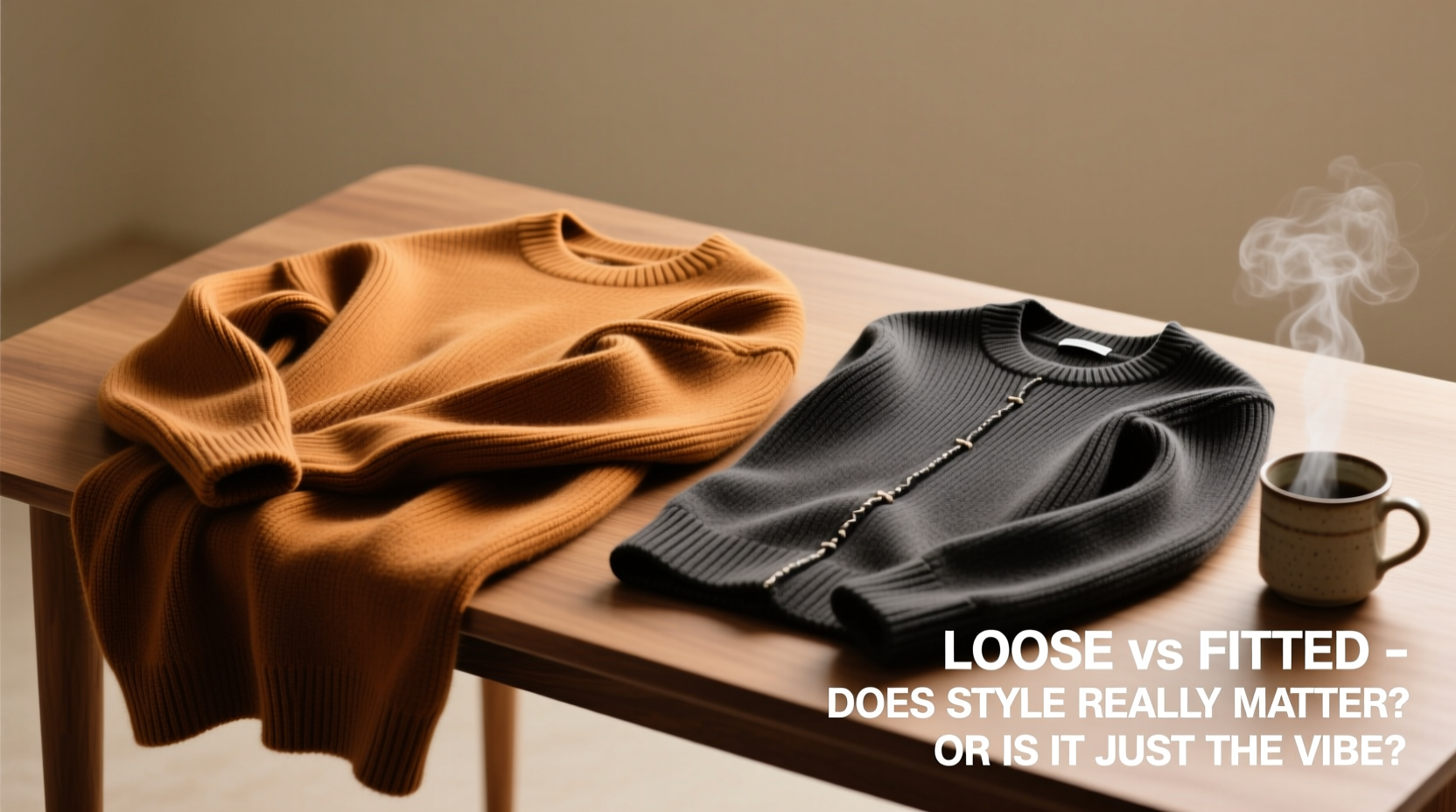
At its core, the distinction between loose and fitted knit sweaters comes down to silhouette, fabric tension, and intended wear.
- Fitted knits follow the body’s natural lines, offering a tailored appearance. They’re typically made with tighter gauges and minimal ease (the difference between garment size and body measurement).
- Loose knits, on the other hand, embrace volume. They feature dropped shoulders, extended hems, and relaxed silhouettes that drape rather than cling. These often use looser stitches and generous cut patterns.
Fit isn’t just visual—it affects movement, layering potential, and even breathability. A close-fitting turtleneck might trap heat efficiently, while an oversized cardigan allows air circulation and eases layering over bulkier pieces.
Functionality: Warmth, Mobility, and Layering
One common misconception is that looser sweaters are warmer because they “hold more air.” In reality, insulation depends more on fiber type, yarn weight, and stitch density than overall size.
A tightly knit merino wool pullover—even if slim-fitting—will retain heat more effectively than a loosely woven acrylic fisherman’s knit. However, a loose sweater can be layered strategically: worn over a shirt and vest, it creates multiple insulating pockets without restricting motion.
Mobility is where loose knits shine. Their unstructured design accommodates sitting, reaching, and moving freely—ideal for creative professionals, parents, or anyone who values comfort without sacrificing style.
Fitted styles, meanwhile, excel in polished settings. Paired with tailored trousers or a pencil skirt, they project intentionality and precision. They also tuck cleanly into high-waisted pants, making them versatile for transitional weather.
“Fit influences not only how a garment looks but how it performs. A sweater should move with you, not against you.” — Lena Torres, Sustainable Fashion Designer
Style Implications: Vibe vs. Versatility
It’s true: loose knits carry a certain aura—effortless, bohemian, introspective. Think of the writer curled in an armchair with a book, draped in a slouchy oatmeal-colored cable knit. That’s a deliberate aesthetic, cultivated through silhouette.
Fitted knits, conversely, signal control and clarity. They suggest preparedness, whether in a boardroom or at a dinner party. The clean lines communicate confidence without needing to speak.
But vibes don’t exist in a vacuum. Consider the context:
| Situation | Best Fit Choice | Why |
|---|---|---|
| Casual weekend outing | Loose | Comfort-forward; pairs well with jeans and boots |
| Office meeting | Fitted | Looks sharp under blazers; avoids bulk |
| Cold outdoor event | Loose (with layers) | Allows thermal base layers without constriction |
| Date night | Either | Loose = cozy charm; Fitted = sleek intimacy |
The real question isn’t which style is superior, but which aligns with your daily rhythm and emotional tone.
Real-Life Example: Two Women, Two Wardrobes
Take Sarah and Mia, both 32, living in Chicago. Both love knitwear, but their lifestyles shape their preferences.
Sarah works remotely as a UX designer. Her days involve video calls, dog walks, and late-night reading. She owns five oversized cashmere blends—soft, roomy, easy to throw on. “I don’t want anything tight after staring at screens all day,” she says. “My sweaters feel like a pause button.”
Mia is a corporate lawyer. She commutes, wears blazers, and values polish. Her go-tos are fine-gauge merino crewnecks in charcoal and navy. “If it doesn’t tuck smoothly, I won’t buy it,” she explains. “A sloppy look undermines credibility, no matter how soft the fabric.”
Neither is wrong. Their choices reflect environment, profession, and self-expression. The “vibe” is real—but so are the constraints and comforts that come with each cut.
How to Choose: A Practical Checklist
Instead of chasing trends or ideals, ask yourself these questions before buying:
- Do I need this for layering? → Opt for loose.
- Will I wear it under a coat or blazer? → Fitted prevents bunching.
- Am I prioritizing comfort or structure? → Loose for ease, fitted for form.
- What’s my dominant body shape? → Hourglass figures often balance well with loose knits; straighter frames may benefit from fitted definition.
- How will I care for it? → Loose knits with complex textures may require hand-washing; fitted styles in smooth knits are often easier to maintain.
Common Missteps to Avoid
- Assuming bigger means more comfortable: Oversized doesn’t always equal cozy. Poor shoulder seams or dragging hems can cause chafing or imbalance.
- Ignoring fabric behavior: Cotton knits stretch over time. A perfectly fitted cotton sweater today may sag tomorrow. Wool retains shape better.
- Overlooking proportion: Pairing a voluminous sweater with wide-leg jeans can drown your frame. Balance volume with fitted elements elsewhere.
- Buying based on runway looks: Designers exaggerate silhouettes for impact. Street-level wear demands wearability.
FAQ: Your Knitwear Questions Answered
Can a loose sweater look professional?
Yes—if styled intentionally. Pair a structured loose knit (with defined waist or clean neckline) with tailored trousers and minimalist footwear. Avoid excessive slouch or frayed edges in formal environments.
Do fitted knits wear out faster?
Possibly. Constant stretching at stress points (shoulders, cuffs) can accelerate pilling and deformation, especially in lower-stretch fibers. Rotate fitted pieces regularly and avoid pulling them over the head roughly.
Is one style more sustainable?
Not inherently. Sustainability depends on material origin, production ethics, and lifespan. However, versatile pieces—often found in medium-fit or adjustable designs—tend to stay in rotation longer, reducing consumption.
Conclusion: Style Matters, But So Does Intention
The debate between loose and fitted knit sweaters isn’t about declaring a winner—it’s about recognizing that fit is a tool, not a rule. The right sweater doesn’t just match your body; it matches your life.
Loose knits offer breathing room—literal and metaphorical. They invite relaxation, creativity, and self-possession. Fitted styles provide containment, focus, and sartorial clarity. One isn’t deeper than the other; they serve different moments.
Next time you reach for a knit, pause. Ask not just “How do I look?” but “How do I want to feel?” Whether it’s the snug assurance of a second skin or the enveloping calm of a cloud-like drape, your sweater should echo your inner state.




 浙公网安备
33010002000092号
浙公网安备
33010002000092号 浙B2-20120091-4
Comments
No comments yet. Why don't you start the discussion?